
Review · E-BIKE TOURS
Historical Kyoto E-Bike Tour
Kyoto’s great sights are spread across the city, and this small-group e-bike tour links several of them in one long morning and afternoon. You pedal through ordinary streets, then park and walk around temples, shrines, and the Arashiyama bamboo grove.
I like the way the electric bikes reduce the strain of crossing Kyoto, and I like the group size, capped at eight. Guides including Jody, Pohan, Diego, Jorge, George, and Benjamin are praised for clear explanations and careful riding. The main drawback is that cycling takes place among cars, buses, mopeds, pedestrians, and other bikes, so you should be comfortable riding in city traffic.
Key points to know before you book
- Four major Kyoto sights in one day: Visit Kitano Tenmangu, Kinkaku-ji, Arashiyama Bamboo Grove, and Tenryu-ji.
- E-bikes make the distance manageable: You can cover far more ground than on foot, with less effort on longer stretches.
- A group of no more than eight feels personal: Guides can answer questions and adjust the pace more easily.
- The ride includes quiet Kyoto streets: The route is not just a string of famous gates and photo stops.
- Lunch is part of the day, but food costs extra: Bring yen, especially for a cash-only ramen stop.
- City cycling requires attention: This suits confident riders, older children, teens, and adults more than complete beginners.
Why an e-bike is a smart way to see Kyoto
The useful idea here is not simply riding a bicycle. It is connecting parts of Kyoto that can feel awkward to combine by train, bus, and foot in a single day.
Kitano Tenmangu and Kinkaku-ji are in the northwest. Arashiyama is farther west. On foot, these places would require too much time and energy. Public transport can get you near them, but you lose time changing routes and walking between stops. The e-bike lets you move between them while seeing the streets in between.
You still need to pedal, but the motor takes the edge off. That matters on a 5 to 6 hour outing, especially when you also spend time walking through temple grounds. Several bikes have been described as newer, comfortable, and easy to use.
The riding is not a race. You follow the guide through Kyoto streets, often using smaller roads and back routes. That gives you a look at the city beyond the main tourist corridors. At times, though, you share the road with local traffic. Stop signs, turning cars, buses, mopeds, pedestrians, and other cyclists require steady attention.
I would choose this tour if you already ride a bicycle with confidence. It is a poor match for someone who feels nervous on city streets, even if the e-bike itself is simple to operate.
More E-Bike Tours in Japan
- Hidden Kyoto E-Biking tour
★ 5.0 · 1,843 reviews - 5 Top Highlights of Kyoto Full Day Bike Tour (E-bike option)
★ 5.0 · 511 reviews - Kyoto: Memory Kyoto E-Bike Tour
★ 4.8 · 297 reviews
Meeting the group and getting started
The tour begins at Memory Kyoto Bike Tour in Nakagyo Ward, at 8-6 Umaryo-cho, Nishikyo Nakagyo-ku. The activity returns to this same meeting point at the end.
The starting location is near public transportation, but allow time to find the entrance. One person found it tucked down a back road with little signage, while another found the ticket directions clear. That difference tells you to avoid arriving at the last minute. Have the address ready on your phone and look carefully for the bike-tour location.
You receive a bike, helmet, and water. The maximum group size is eight, a useful limit for a route that includes road crossings and busy public places. Some outings have had only five people, while a full group can still receive fairly close attention from the guide.
The tour offers two morning start choices. The exact start time is important because you are fitting four major stops, cycling time, walking, and lunch into one day. Confirm your selected time when booking.
Kitano Tenmangu and the story of learning
Kitano Tenmangu is the first listed stop, with about 30 minutes to explore. The shrine is linked to Sugawara no Michizane, a historical figure honored as a deity of learning.
This is a good first stop because it introduces you to the way Japanese religious places connect history, custom, and everyday hopes. Your guide can explain what you are seeing rather than leaving you to guess at the gates, offerings, and shrine layout.
The grounds are also known for roughly 1,000 plum trees. Early spring is the special season here, when the blossoms give the shrine a softer, more scenic setting. Outside blossom season, the visit remains worthwhile for its cultural meaning, but the floral display will not be the same.
Thirty minutes is enough for a guided look, basic photographs, and a short explanation. It is not enough for a slow, detailed exploration of every corner. That is a fair trade on a tour designed to cover a large section of Kyoto.
Kinkaku-ji, the Golden Pavilion
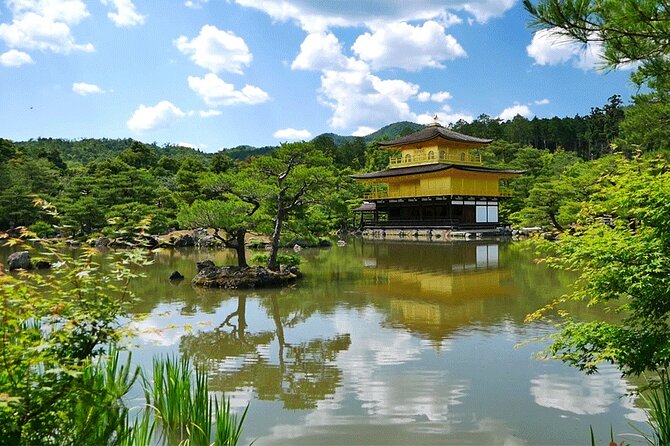
The next major stop is Kinkaku-ji, usually called the Golden Pavilion. You have about 45 minutes here, with admission included.
The pavilion is covered in gold leaf and reflects in the pond in front of it. This is one of Kyoto’s most recognizable views, and the reflection is the reason many people place Kinkaku-ji high on their list. Your guide adds the background that turns a quick photograph into a more meaningful visit.
Expect crowds. Kinkaku-ji is one of the city’s best-known sights, and the short visit is built around the main view rather than a quiet, private experience. You follow the established visitor route, take photographs, and continue through the grounds.
The stop works well in this format because arriving by bike avoids spending extra time getting there. The drawback is that 45 minutes may feel brief if you want to linger, shop, or study every detail. If Kinkaku-ji is your single top priority, a separate visit could give you more freedom. If your goal is to see several headline sights in one day, the time is sensible.
A winter visit can be especially striking. Snow on the gold pavilion creates a very different picture from the usual green and sunny scenes, though weather can also force the guide to adjust the order of the day.
More Historic Bike Tours in Japan
- Kyoto: Fushimi Inari Shrine and Tofukuji Temple E-Bike Tour
★ 5.0 · 75 reviews - 4.5-hr Kyoto Historical Highlights Bike Tour with UNESCO
★ 4.7 · 13 reviews - 5-Hour Osaka Bike Tour to the Neighborhood of Osaka Castle
★ 5.0 · 319 reviews - Half-day Himeji Castle Town Bike Tour with Lunch
★ 5.0 · 81 reviews
Lunch and the value of a local stop
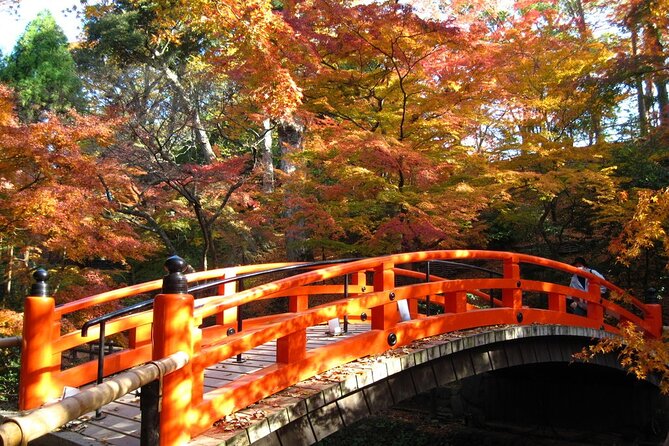
The remaining time is not spent entirely at attractions. You also ride between locations and stop for lunch.
The lunch arrangements can vary, but the food stop has included ramen, Japanese restaurants, and food-court choices. A riverside meal has also been a highlight for some groups. One restaurant used robot carts to deliver food, giving the break a distinctly modern Kyoto touch.
Bring yen. Food is not presented as part of the $99.49 tour price, and some lunch places are cash only. Low-value coins are also useful if you want to take part in shrine or temple customs, such as candles, offerings, or making a wish.
I like having lunch built into the day because it prevents the tour from becoming a nonstop chain of temple visits. You get time to eat, ask questions, and meet the other people in the group. The tradeoff is that you may spend around 45 minutes at a restaurant even if you would rather keep sightseeing. If you have strict dietary needs, tell the guide early. A guide has accommodated food requests in the past, but the available choices depend on the lunch location that day.
Walking through Arashiyama Bamboo Grove
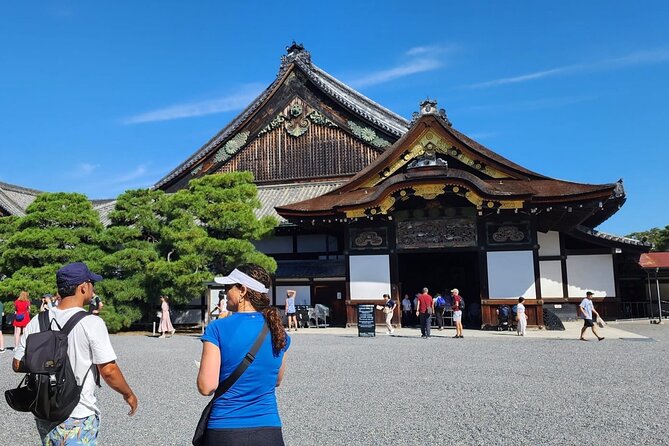
The Bamboo Forest Trail is allotted about 45 minutes. You park the bikes and walk among the tall bamboo stalks, one of Kyoto’s most famous scenes.
The grove feels different from the open temple grounds. The bamboo rises above you and narrows the view to a corridor of stalks, leaves, and shifting light. It is one of the best places on this route for photographs, though it is also a popular stop and can be crowded.
Do not expect the e-bike to carry you through the grove. This section is on foot, and the tour includes quite a lot of walking at the major sites. That is worth keeping in mind if you booked the ride mainly to rest your legs.
A useful touch is that guides may let the group choose where to finish the walk in Arashiyama. One possible extra sight is the Kimono Forest, a colorful installation near the area’s transport hub. It is not listed as a guaranteed main stop, so treat it as a possible addition rather than a promise.
Tenryu-ji and one of Kyoto’s finest gardens
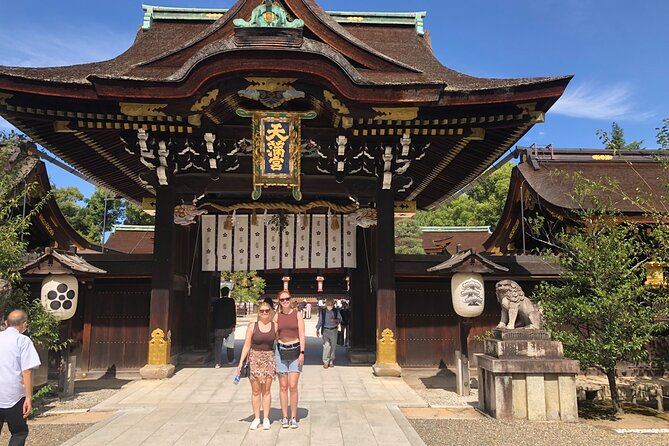
Tenryu-ji receives about 45 minutes. The temple is a UNESCO World Heritage site, and the focus here is its garden.
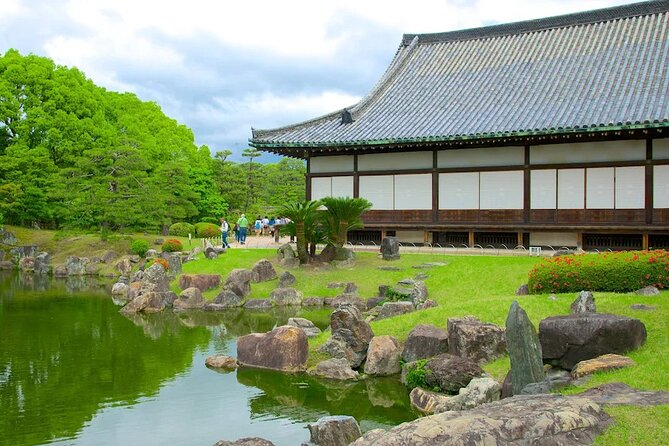
After the narrow bamboo paths, the garden gives you a more open setting. Its design helps explain why Kyoto temples are valued not only for buildings and religious meaning, but also for the way paths, ponds, rocks, trees, and borrowed views are arranged.
This is another stop where the guide’s explanations matter. You can walk through a Japanese garden on your own, but you may miss the ideas behind its layout and the customs connected with the temple. The allotted time lets you see the main garden without turning the tour into a full study visit.
Because the route ends in the Arashiyama area before cycling back, you get a strong final stretch of sightseeing. The return ride also reminds you that this is an active day, not a bus tour with short steps off the vehicle.
Guides, explanations, and group care
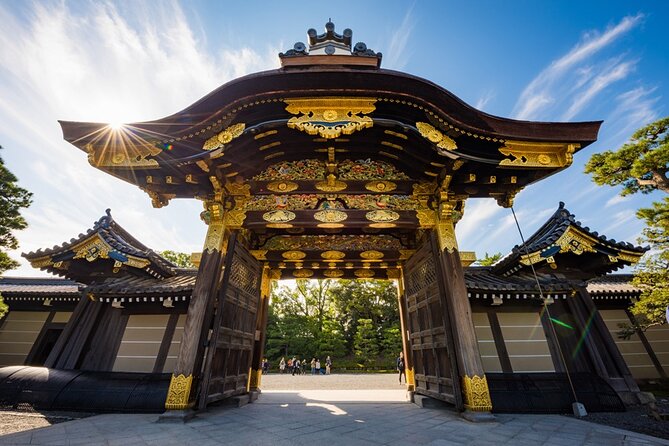
The guide is a large part of the experience. Names associated with the tour include Jody and Jodie, Pohan, Diego, Jorge, George, and Benjamin. The strongest guide qualities are clear teaching, humor, patience, and careful handling of city traffic.
Guides explain shrine rituals, temple customs, Japanese religion, local streets, and bicycle rules. One guide with long experience living in Japan was especially good at explaining the country from both an outsider’s and resident’s point of view. Another had worked as a teacher, which showed in the way information was presented.
Safety receives repeated attention. Guides explain street crossings and local riding rules, and on some outings one guide rides at the front while another stays at the back. That is helpful when a family or a mixed-ability group needs to stay together.
The small group also allows for useful adjustments. Guides have changed the order of stops during heavy rain or snow, and they have adapted the day around the comfort of the group. That does not mean the route can change without limits, but it gives the day some practical flexibility.
The information is not limited to dates and names. You can ask why a ritual is performed, how a shrine differs from a temple, or what a particular custom means. For me, that cultural context is one of the main reasons to choose a guided ride instead of simply renting a bike.
Price, pace, and who gets the best value
At $99.49 per person, this is not the cheapest way to rent a bicycle for a few hours. The price makes more sense when you count the e-bike, helmet, guide, admission to the listed sites, water, route planning, and the amount of ground covered.
You are getting a full 5 to 6 hour day with four major stops, rather than a short rental and a map. The current rating is 4.9 from 181 reviews, with 98 percent recommending the experience, which supports the idea that the combination of guide and route is working well. Still, the price does not cover every possible expense. Plan to pay for lunch and any optional offerings or purchases yourself.
This tour suits:
- Adults who want to see several distant sights in one day
- Families with older children or teens who ride confidently
- People with limited time in Kyoto
- Visitors who want history and customs explained on site
- Cyclists who enjoy seeing back streets rather than only famous monuments
I would hesitate to book it for very young children, nervous city riders, or anyone seeking a slow, unstructured day. The tour moves at a steady pace, and you need to be alert while riding. It also includes substantial walking, so the e-bike reduces exertion but does not remove it.
Practical advice for a smoother day
Wear clothing that works for both cycling and walking. You will spend time on a bike, then walk through temple grounds, shrine paths, and the bamboo grove.
Bring cash in yen for lunch, especially if the group stops at a cash-only ramen restaurant. Keep a few low-value coins if you want to make offerings or take part in shrine customs.
Arrive early at the meeting point. The start is near public transportation, but the entrance can be easy to miss because it is down a back road and may not have prominent signage.
Expect the weather to affect the day. Rain and snow have led guides to change the order of stops, but poor conditions can still make cycling less comfortable. The tour has free cancellation up to 24 hours before the start time. Cancellations or changes inside that window are not refunded or accepted.
Should you book the Historical Kyoto E-Bike Tour?
Book it if you want a well-organized way to connect Kinkaku-ji, Kitano Tenmangu, Arashiyama, and Tenryu-ji without losing a day to transport. The strongest reasons are the small group, capable guides, e-bike assistance, and the chance to see ordinary Kyoto streets between the famous sights.
Skip it if you are not comfortable riding in traffic, want long unhurried visits at one or two temples, or dislike fixed lunch stops. For confident cyclists with only a short time in Kyoto, the $99.49 price is fair because it combines transport, admissions, guiding, and a full day of sightseeing in one package.
FAQ
How long does the Historical Kyoto E-Bike Tour last?
The tour lasts approximately 5 to 6 hours, including cycling between stops, visits, walking, and lunch.
What sights are included?
The route includes Kitano Tenmangu Shrine, Kinkaku-ji Temple, the Arashiyama Bamboo Grove, and Tenryu-ji Temple.
Is an e-bike provided?
Yes. Each participant can use an e-bike, and a helmet is also provided.
Is water included?
Yes. A bottle of water is included with the tour.
How large is the group?
The tour has a maximum of eight travelers.
Where does the tour start and finish?
It starts at Memory Kyoto Bike Tour at 8-6 Umaryo-cho, Nishikyo Nakagyo-ku, Kyoto city, and ends back at the same meeting point.
Are temple and shrine admission fees included?
Admission tickets are included for the listed stops at Kitano Tenmangu and Kinkaku-ji, and the tour also visits Tenryu-ji and the Bamboo Forest Trail.
Is lunch included in the price?
Lunch is part of the tour schedule, but you should bring yen for food purchases. Some lunch locations are cash only.
Do I need to be an experienced cyclist?
You should be comfortable riding on city streets. The route can include cars, buses, mopeds, pedestrians, other cyclists, and limited dedicated bike paths.
Can I cancel for a full refund?
You can cancel up to 24 hours before the experience start time for a full refund. Cancellations or changes made less than 24 hours before the start are not refunded or accepted.
More Historic Bike Tours in Kyoto
- Historical Singapore Bike Tour on Full-Sized Bicycles
★ 5.0 · 1,421 reviews - Barcelona: 2.5-Hour Bike or E-Bike Historical Tour
★ 4.5 · 1,262 reviews - Asheville Historic Downtown Guided Electric Bike Tour with Scenic Views
★ 5.0 · 1,234 reviews - Krakow: Bike Tour of Old Town, Jewish Quarter and the Ghetto
★ 4.9 · 1,155 reviews
More E-Bike Tours in Kyoto
- E-Bike Tours of the highlights of Kyoto!!!
★ 5.0 · 291 reviews - Kyoto: City Secrets eBike Tour
★ 4.9 · 196 reviews - Kyoto: Hidden Gems E-Bike Tour with Local Japanese Guide
★ 4.9 · 189 reviews - Arashiyama Bamboo Forest E-Biking Tour
★ 5.0 · 183 reviews
Latest bike tours added in Kyoto
- Kyoto: City Secrets eBike Tour★ 4.9 · 196 reviews
- Best of Kyoto: Ginkakuji & Path of Philosophy E-Bike Tour★ 4.9 · 79 reviews
- Kyoto: Hidden Gems E-Bike Tour Through Backstreets & Temples★ 4.9 · 54 reviews
- Kyoto: Tailored E-Bike Tour to Highlights & Hidden Gems★ 4.9 · 32 reviews
- Kyoto: Full Day Bike Tour★ 4.9 · 39 reviews
- Kyoto: Hidden Gems E-Bike Tour with Local Japanese Guide★ 4.9 · 189 reviews
- Kyoto: Half-day Guided Bike Tour with Fushimi Inari★ 4.9 · 21 reviews
- Kyoto: Early Bird E-Bike Tour with Lunch★ 5.0 · 14 reviews
E-Bike Tours, compared.
3-Hour Porto Highlights on a Electric Bike Guided Tour
Read our review →
Hills, Alfama, and Mouraria Tour by Electric Bike
Read our review →
Athens Scenic Electric Bike Tour with optional Acropolis visit
Read our review →
City Highlights 3-Hour Guided Electric Bike Tour
Read our review →
Rome EBike Tour: Appian Way, Catacombs & Roman Aqueducts
Read our review →
Top Highlights & Hidden Gems Tour by Cannondale E-Bike
Read our review →Browse the lists this tour appears in