
Review · KYOTO BIKE TOURS
Kyoto: Full Day Bike Tour
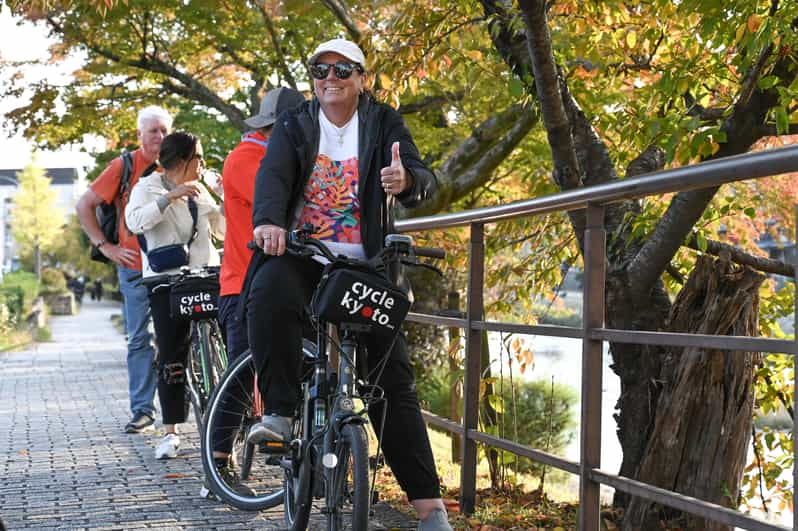
Kyoto is much easier to understand from a bicycle seat. This full-day ride connects major temples and shrines with quiet lanes, shopping arcades, river paths, and ordinary neighborhoods that a sightseeing bus simply cannot reach. You cover a lot, but the route is broken up by walks, photo stops, lunch, and temple visits.
I especially like the mix of famous sights and local streets, plus the small group of no more than nine people. The English-speaking guides, including Shawn, Juan, Karl, and Jay, add history and local pointers without making the day feel like a lecture. The main drawback is simple: this is a long, active day, with roughly 18 miles of riding, so you need to be comfortable on a bike.
Key points
- A full Kyoto sweep: Visit eight major cultural stops, including Golden Pavilion and Fushimi Inari.
- A local food break: A traditional Japanese lunch is included, with the restaurant chosen according to availability.
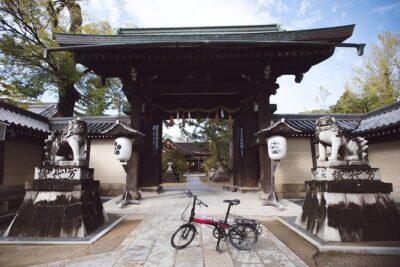
- Good bikes: Ride a maintained Giant or Trek cross bike, or request an e-bike.
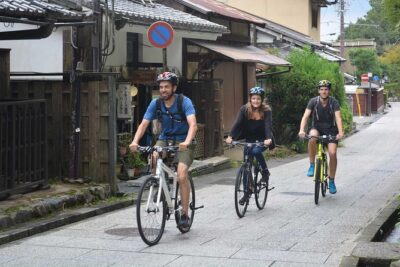
- Back-street access: Ride through Gion, along the Kamo River, and through neighborhood lanes.
- A real workout: The city is fairly flat, but this is still a 7.5-hour outing.
- Useful for first-time visitors: You get a broad introduction to Kyoto in one carefully planned day.
Why two wheels work so well in Kyoto
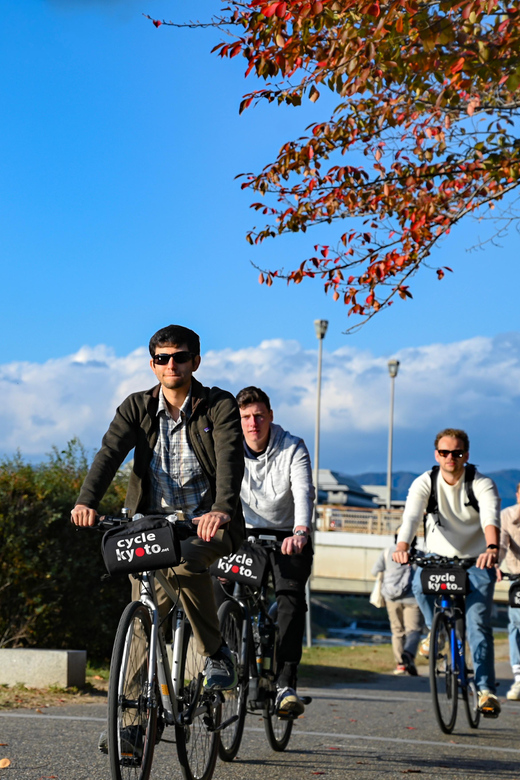
Kyoto’s main sights are spread across the city. A train helps with longer jumps, but it does not take you from a temple gate to a quiet lane, or from a river path into the back streets of Gion. A bicycle does.
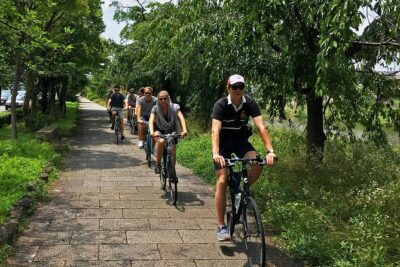
The route uses a mixture of city streets, shopping areas, low-traffic roads, and the Kamo River. One review recorded a little over 18 miles, which gives you a useful idea of the day’s scale. The tour is not a gentle pedal from one café to the next. It is a sightseeing ride with plenty of stops, but you should still arrive ready to keep moving.
The bikes are cross bikes from Giant and Trek, and they are described as well maintained. E-bikes are available if you request one. Kyoto is relatively flat, so a standard bike can be manageable for a reasonably active rider, but an e-bike is a sensible choice if you dislike exertion, are unsure about your stamina, or expect a hot day.
You meet at Cycle Kyoto at 9:15 AM for the 9:30 start. That early arrival matters because the tour begins with bike fitting and a safety briefing. Wear practical clothing and shoes that stay comfortable for several hours. A helmet, water, sunscreen, and a hat belong on your checklist.
More full-day rides in Kyoto:
- 5 Top Highlights of Kyoto Full Day Bike Tour (E-bike option)
★ 5.0 · 511 reviews - Full Day Biking Tour Exploring the Best of Kyoto
★ 5.0 · 498 reviews - Kyoto: Full-Day City Highlights Bike Tour with Light Lunch
★ 5.0 · 52 reviews
Toji begins the morning with a useful orientation
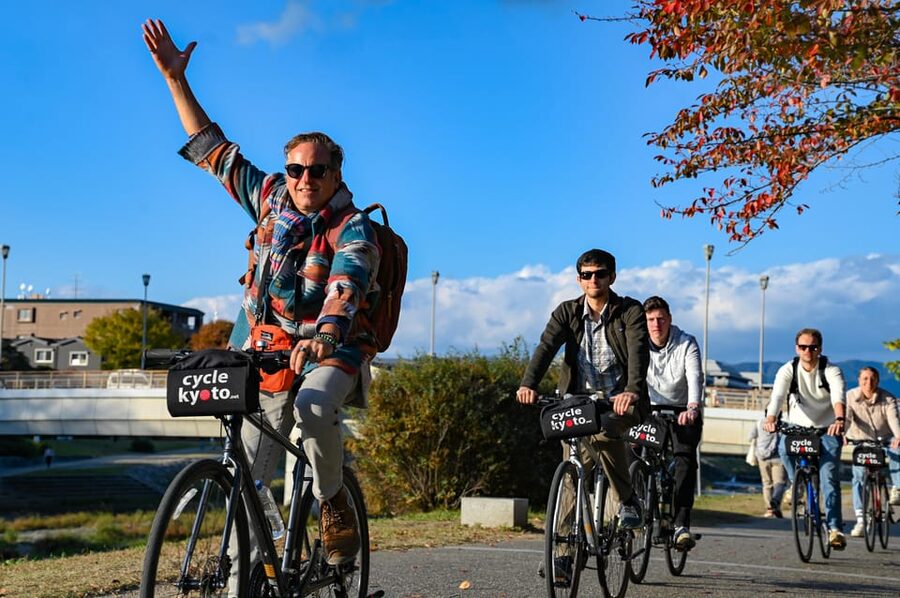
The first stop is Toji, described here as Kyoto’s oldest temple. The opening safety briefing takes about 25 minutes, followed by roughly 30 minutes to visit the temple.
This is a smart first stop. You are not thrown straight into city traffic without preparation, and the guide has time to check your bike and explain how the group will ride. The temple also gives you an early cultural anchor before the day’s longer route begins.
The visit is relatively short, so expect an introduction rather than an exhaustive examination of every building. That is part of the tradeoff. You see many places in one day, but no single temple receives the slow, unhurried treatment you might get on a dedicated temple morning.
Nishi Honganji adds scale and ceremony
From Toji, it is about a 10-minute ride to Nishi Honganji. The guided visit lasts around 50 minutes, giving you more time to look around than at the opening stop.
Nishi Honganji is a large Buddhist temple complex, and its broad spaces make a strong contrast with Kyoto’s narrow lanes. Your guide can help you understand what you are looking at, which is useful when several temples begin to blend together during a busy sightseeing trip.
I like this early pairing of Toji and Nishi Honganji. You get two substantial religious sites before the route shifts into shopping streets and neighborhoods. At the same time, the amount of information can be considerable, so keep your questions coming if you want to connect the buildings and rituals to daily life in Japan.
Sanjo and Shinsen-en show the city between the sights
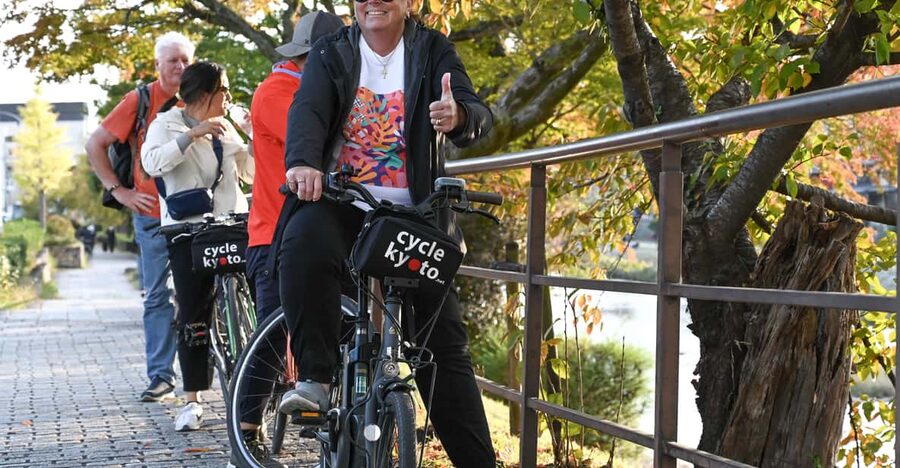
After Nishi Honganji, the ride heads north through the Sanjo Shopping arcade. This is one of the route’s more ordinary but valuable sections. Instead of moving only between postcard stops, you pass through a working part of Kyoto where shopping and daily errands continue around you.
There is also a short stop at Shinsen-en gardens. Its picturesque setting provides a calmer pause before the next major shrine. These smaller transitions are important because they give the day texture. Kyoto is not only polished temple compounds; it is also arcades, side roads, bicycles, storefronts, and residential lanes.
This is where the small group helps. A group capped at nine can move through tighter streets more easily than a large organized procession. You still need to follow the guide carefully and watch traffic, but the ride should feel more personal and flexible.
More bike tours in Kyoto:
- Hidden Kyoto E-Biking tour
★ 5.0 · 1,843 reviews - Bike Tour Exploring North Kyoto plus Lunch
★ 5.0 · 1,087 reviews - Arashiyama Bamboo Forest & Hidden Gems Bike Tour (Early Bird)
★ 5.0 · 613 reviews - Kyoto: Memory Kyoto E-Bike Tour
★ 4.8 · 297 reviews
Kitano Tenmangu brings a longer shrine visit
The next major stop is Kitano Tenmangu, with about an hour for a guided visit. You walk the grounds rather than simply stopping for a photograph.
The shrine is one of the day’s better opportunities to slow down and ask questions. The guide can point out features you might pass without noticing, and the hour gives you enough time to take in the layout and atmosphere. The route is not built only around famous names. It also leaves room for places that many short sightseeing plans skip.
One useful feature of a guided bike day is the ability to adjust the conversation. Shawn, Juan, Karl, and Jay are named as guides associated with the experience, and the feedback gives each a reputation for being engaging and well prepared. Reports also describe guides offering suggestions for other Kyoto sights, so you may leave with ideas for the days after the tour.
Golden Pavilion is the headline stop
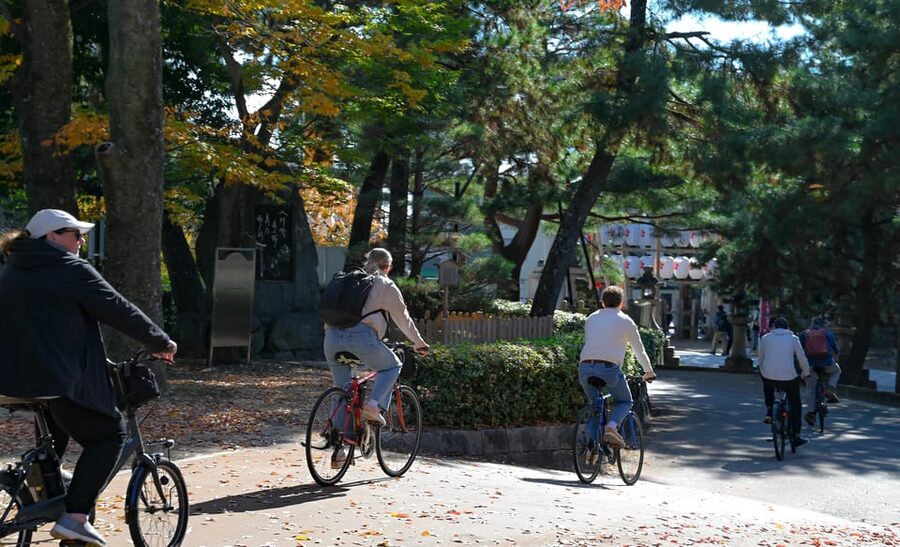
Kinkaku-ji, better known as the Golden Pavilion, is usually the most instantly recognizable sight on this route. Entry is included, and you spend about an hour at the site, with approximately 25 minutes specifically described for exploring the pavilion area.
The pavilion’s gold exterior reflected in the pond is the kind of scene that explains why Kyoto can feel almost unreal at times. It is also one of the busiest stops on the route. Do not expect solitude or unlimited time beside the water. The included entrance fee saves you one small decision, and the guide helps keep the visit moving.
This stop shows the tour’s overall style: efficient rather than leisurely. You see a major sight without giving it half a day. If you want a long, quiet visit to Kinkaku-ji, come back independently. If you want to combine it with seven other important stops, the allotted time is practical.
Lunch gives your legs and mind a break
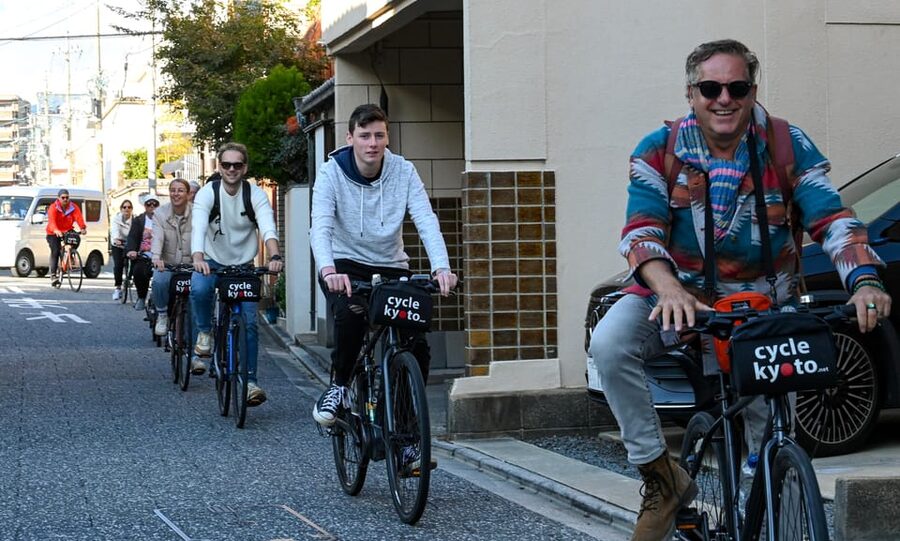
Lunch takes about an hour at a local restaurant, and a traditional Japanese meal is included in the price. The location can change depending on availability, so you should not book this expecting one fixed restaurant or a guaranteed menu.
That flexibility is worthwhile. One meal described by a rider was ramen with a special duck broth, while another praised the restaurant choice as somewhere they would not have found alone. Those details point to the real value here: the guide chooses a place within the day’s route, and you get a proper pause rather than eating hurriedly from a convenience store.
Lunch is also the natural midpoint of a long ride. You can refill your water, rest your legs, and reset before the eastern part of the route. If you have dietary restrictions, the supplied information does not specify how they are handled, so ask the operator before booking.
The Imperial Palace provides a broad change of scale
After lunch, the route continues to the Kyoto Imperial Palace, with about an hour for the visit. The palace grounds offer a different feel from the compact temple and shrine compounds earlier in the day. Open spaces and formal planning give you a sense of Kyoto as an imperial capital, not simply a collection of religious buildings.
This is another stop where a guide adds value. The grounds can be impressive but confusing without context, especially after a morning filled with unfamiliar names and traditions. An hour gives you time to walk and take photographs without making the palace the entire focus of the afternoon.
By this point, you will also know how your legs feel. If you are tiring, the remaining route still includes several important places. That is why I would not choose this tour for a first-ever day on a bicycle.
The Kamo River ride changes the rhythm
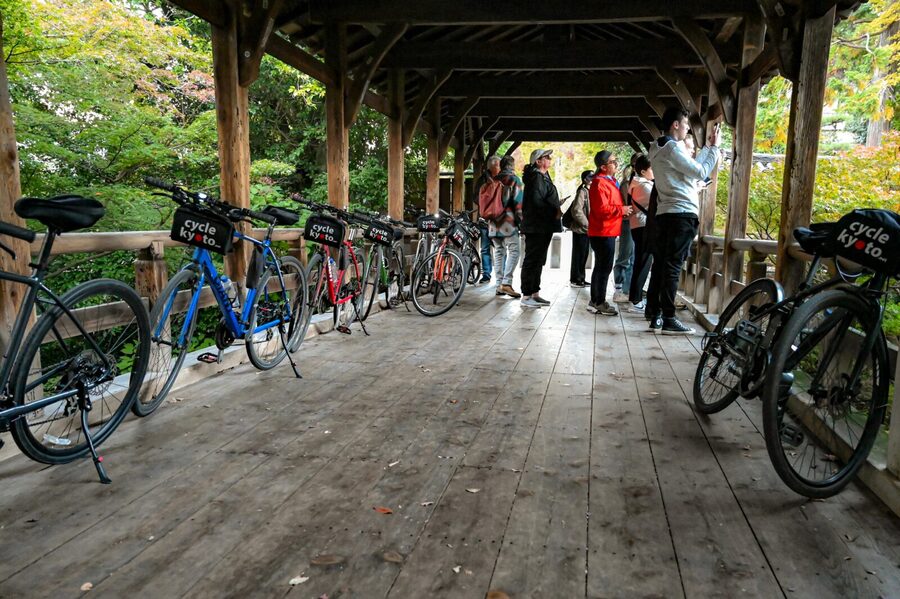
The route picks up the Kamo River and heads south, with about 40 minutes for a photo stop. This section is likely to feel like a welcome release after the formal sites.
Riverside riding gives you a chance to see Kyoto from a lower, more relaxed angle. It also creates a natural link between the Imperial Palace area and Gion. You are still moving, but the scenery and pace should feel different from city streets.
The river section is also useful for photography. Bring a camera, but keep personal belongings light. Storage space on the bikes is limited, although larger luggage can be left in the secure shop space at Cycle Kyoto.
Gion reveals Kyoto’s famous old lanes
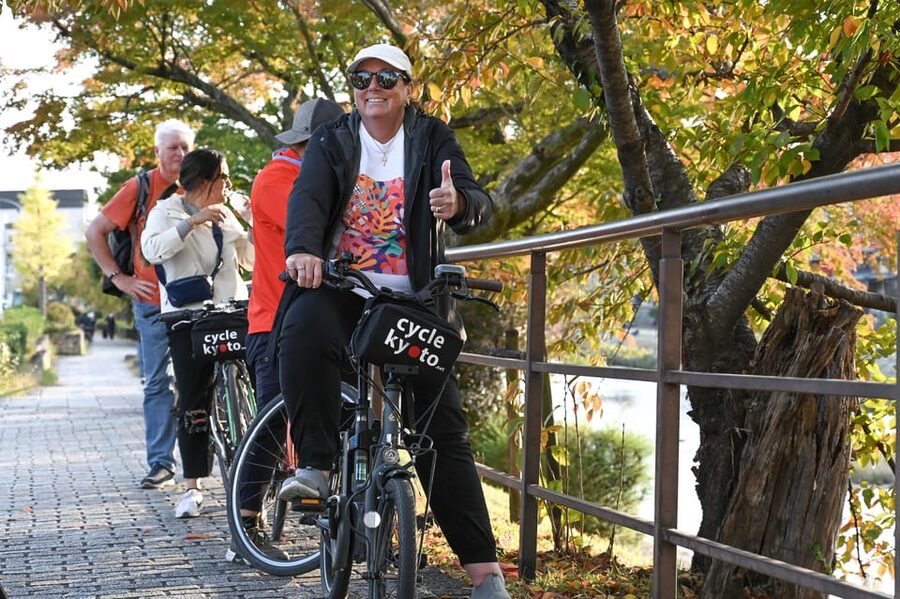
Gion receives about an hour of guided touring. The district is known for geisha culture, traditional buildings, and narrow streets, but it is also an active neighborhood. Treat it as a living part of Kyoto rather than a stage set.
The bicycle lets you approach Gion through smaller roads, then park and walk where needed. That combination is better than trying to pedal through every lane. Your guide can explain what you are seeing and help you behave respectfully in a district where residents and working performers share the streets.
One rider described seeing a geisha during the day, though you should not book the tour expecting that to happen. The reliable promise is access to the district, local context, and time to look around.
Tofukuji and Fushimi Inari finish the day strongly
The final leg heads south to Tofukuji Temple, where you have about 30 minutes for a photo stop. It is a shorter visit, but it breaks up the ride before the last major destination.
Then comes Fushimi Inari Taisha, with a guided visit to the Senbontorii, the famous rows of red torii gates. The shrine visit lasts about an hour. This is an excellent final stop because the gates create a completely different visual experience from the gold of Kinkaku-ji and the open grounds of the Imperial Palace.
You do not walk the entire mountain route in this schedule. The time is designed for the shrine’s striking lower sections and torii corridor, then you ride back to Cycle Kyoto. If exploring every upper trail at Fushimi Inari is a priority, plan a separate visit.
What the $116 price includes
At $116 per person, the tour is not the cheapest way to see Kyoto. But the cost includes the bike, helmet, Golden Pavilion entrance, traditional Japanese lunch, an English-speaking guide, and a full 450-minute program.
The value is strongest if you want to see a lot in one day and would otherwise need to arrange bike rental, route planning, temple tickets, restaurant reservations, and navigation yourself. You are also paying for the local connections between sights. Those back streets and river routes are difficult to reproduce from a basic map.
The price is less compelling if you prefer to spend half a day at one temple, dislike group schedules, or already know Kyoto well. A private guide would offer more control, but this small-group format keeps the experience more social and usually more affordable than a private full-day arrangement.
The tour has a 4.9 rating from 39 reviews, with particularly strong praise for the guides, organization, comfortable bikes, lunch, and mix of major sights with local neighborhoods. Those are exactly the areas that matter most on a day this long.
Who should book this ride
I would choose this tour if you:
- Have one full day for a broad first look at Kyoto
- Enjoy active sightseeing and can ride for several hours
- Want major temples plus ordinary streets and river paths
- Prefer an English-speaking guide to explain cultural details
- Like the convenience of lunch and one entrance fee included
- Are comfortable in a group of up to nine
I would skip it if you cannot ride a bicycle, are pregnant, are under 12, or want a slow temple-focused day. High heels are not suitable, and comfortable clothing is essential. The tour may not run in all weather, and heavy rain leads to cancellation with a refund.
Canceling up to 24 hours before departure gives you a full refund, and you can reserve now and pay later. Those policies help if your Kyoto plans are still shifting.
Should you book the Kyoto full-day bike tour?
Book it if you want to cover a remarkable amount of Kyoto without spending the day underground on trains or stuck in traffic. The route is ambitious, but it is thoughtfully broken up by temple walks, a proper lunch, riverside riding, and neighborhood stops.
My main advice is to respect the word full-day. This is not a casual two-hour cycle. Bring water, use sunscreen, arrive 15 minutes early, and request an e-bike if you have any doubt about your endurance. If you do that, the tour offers a strong blend of famous Kyoto and the quieter streets between the famous places.
FAQ
Where does the bike tour start and finish?
The tour starts and ends at Cycle Kyoto.
What time does the tour begin?
The tour starts at 9:30 AM sharp. You should arrive 15 minutes early for bike fitting and preparation.
How long does the tour last?
The stated duration is 450 minutes, or about 7.5 hours.
What language is the tour conducted in?
The tour is conducted in English by a live guide.
How many people are in the group?
The group is limited to nine participants.
Is bike rental included?
Yes. Bike rental and a helmet are included.
What type of bikes are provided?
The standard bikes are maintained cross bikes made by Giant and Trek. E-bikes are available upon request.
Is lunch included?
Yes. A traditional Japanese lunch is included. The restaurant may vary based on availability.
Is the Golden Pavilion entrance fee included?
Yes. The entrance fee to the Golden Pavilion, also called Kinkaku-ji, is included.
Who cannot join the tour?
The tour is not suitable for children under 12, pregnant women, or people who cannot ride a bicycle.
Latest bike tours added in Kyoto
- Kyoto: City Secrets eBike Tour★ 4.9 · 196 reviews
- Best of Kyoto: Ginkakuji & Path of Philosophy E-Bike Tour★ 4.9 · 79 reviews
- Kyoto: Hidden Gems E-Bike Tour Through Backstreets & Temples★ 4.9 · 54 reviews
- Kyoto: Tailored E-Bike Tour to Highlights & Hidden Gems★ 4.9 · 32 reviews
- Kyoto: Half-day Guided Bike Tour with Fushimi Inari★ 4.9 · 21 reviews
- Kyoto: Hidden Gems E-Bike Tour with Local Japanese Guide★ 4.9 · 189 reviews
- Kyoto: Early Bird E-Bike Tour with Lunch★ 5.0 · 14 reviews
- Kyoto: Full-Day City Highlights Bike Tour with Light Lunch★ 5.0 · 52 reviews
Kyoto Bike Tours, compared.
Arashiyama Bamboo Forest & Hidden Gems Bike Tour (Early Bird)
Read our review →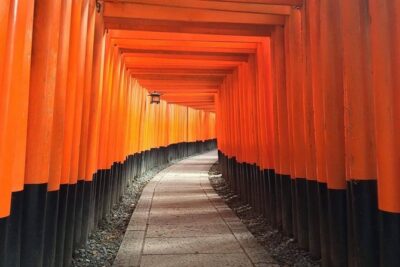
5 Top Highlights of Kyoto Full Day Bike Tour (E-bike option)
Read our review →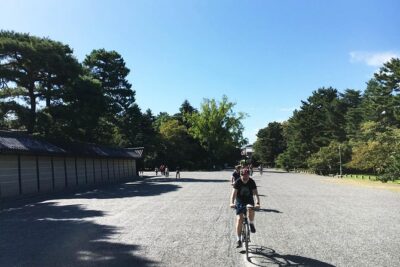
Full Day Biking Tour Exploring the Best of Kyoto
Read our review →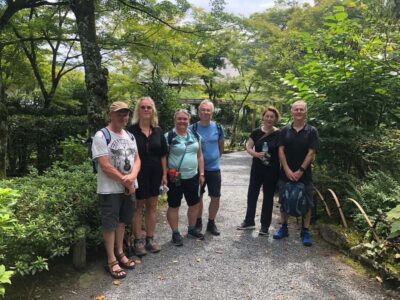
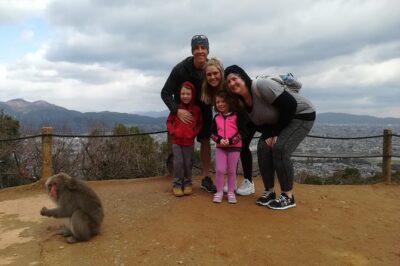
Afternoon Kyoto Bike Tour: Bamboo Forest, Monkeys & Hidden Spots
Read our review →Browse the lists this tour appears in