
Review · KYOTO BIKE TOURS
Cycle Kyoto’s Hidden Gems & Gion Stroll
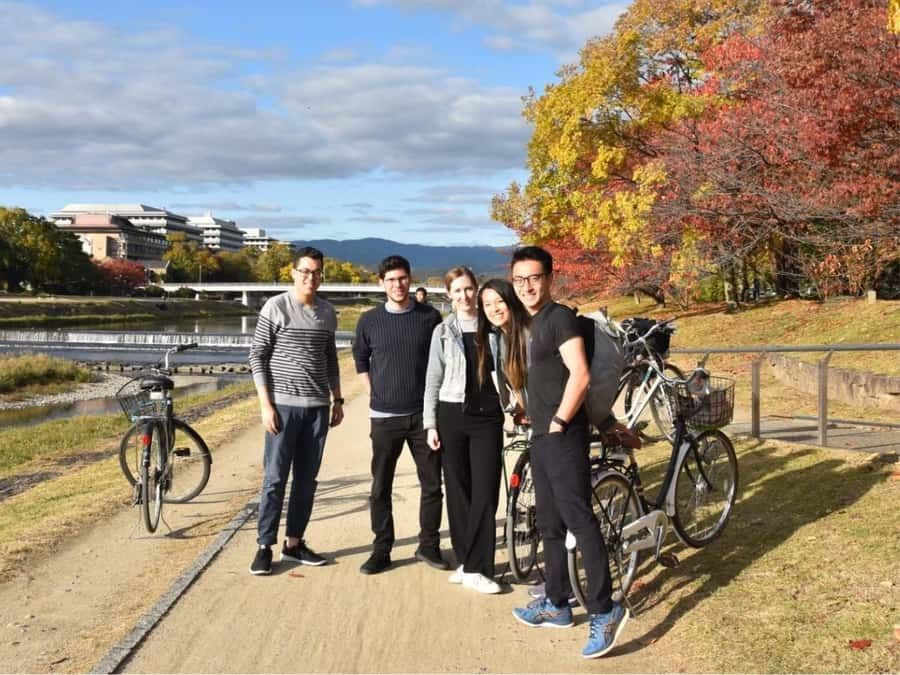
Kyoto reveals a different face from a bicycle. This 3.5-hour ride takes you along riverside paths, through calm residential streets, past university campuses, and into places that are easy to miss when you move around by bus. You finish with a 30-minute walk through Gion or Pontocho, where your guide explains the world of geisha and points out the photogenic Flower Towns.
I like two things especially. First, the route mixes major sights such as the Imperial Palace and Shimogamo Shrine with quieter stops where you can slow down. Second, the included Japanese tea and sweet at a traditional snack shop give the ride a pleasant local pause. The main consideration is simple: you need to ride a bicycle confidently, and the tour is not suitable for children under nine.
Key points to know before booking
- Riverside cycling: Begin with a peaceful road beside the water, then follow scenic river routes back toward central Kyoto.
- Big sights and quiet corners: The route includes the Imperial Palace, a Zen temple, Shimogamo Shrine, university areas, and residential streets.
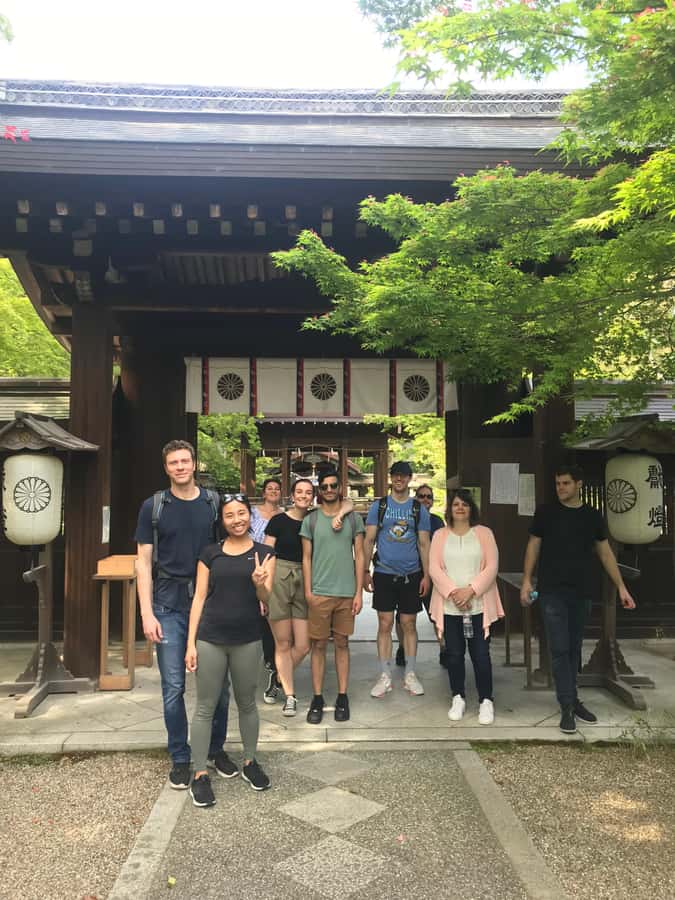
- Shimogamo Shrine: Visit a UNESCO World Heritage site with an old-growth forest feel and striking traditional buildings.
- Tea and sweets included: Stop at a traditional snack shop for Japanese tea and a small sweet.
- Gion or Pontocho afterward: Learn about geisha culture and get restaurant or bar suggestions suited to your requests.
- Family-friendly with limits: Children nine and older can join, but every participant must be able to cycle.
Why a bicycle works so well in Kyoto
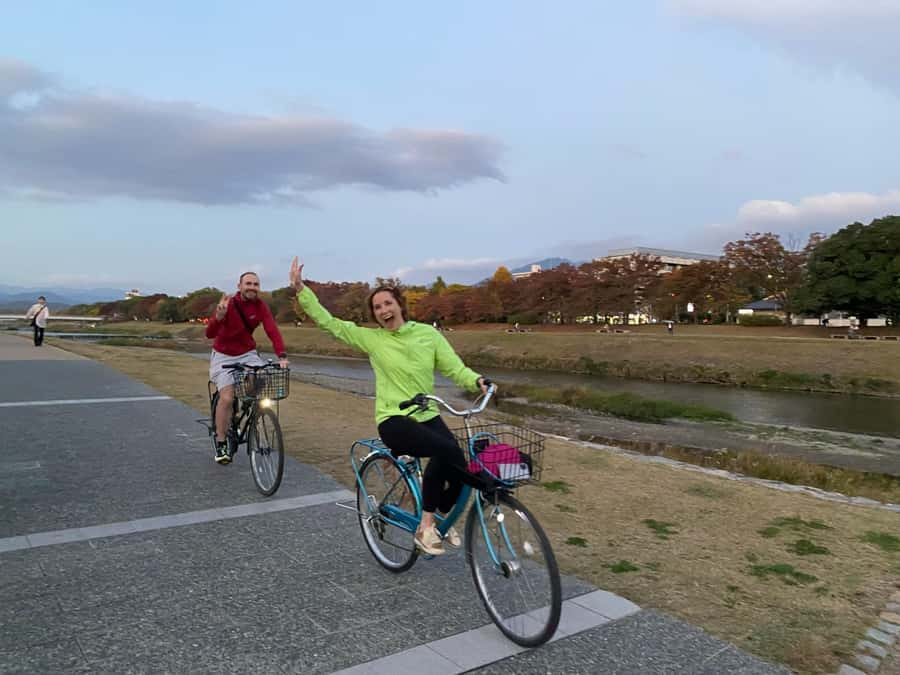
Kyoto is compact on a map, but its most pleasant areas do not always connect neatly by public transport. Buses can be slow, and walking between distant sights takes time. A bicycle gives you a practical middle ground. You cover more ground than on foot, yet you still notice the river, trees, side streets, and small shrines around you.
This tour is built around that advantage. It does not try to pack in every famous temple. Instead, it links several important places with stretches of ordinary Kyoto, including peaceful neighborhoods and university campuses. That mix helps you understand the city as a lived-in place, not just a collection of photo stops.
You should expect a refreshing ride rather than a hard athletic workout. The route includes frequent stops, and the guides are used to helping families and mixed-age groups. Claire, for example, is praised for choosing a comfortable rhythm with stops spaced well for the group. Mr. Go is noted for being patient and kind with children aged nine and ten. Those details matter if you are booking with younger riders.
The ride takes place in rain or shine, so check the forecast and dress sensibly. Comfortable shoes, water, a camera, and weather-appropriate clothing are the right basics. Pets, smoking, luggage, and large bags are not allowed, so arrive ready to ride rather than carrying your day’s full luggage.
More bike tours in Kyoto:
- Hidden Kyoto E-Biking tour
★ 5.0 · 1,843 reviews - Bike Tour Exploring North Kyoto plus Lunch
★ 5.0 · 1,087 reviews - Arashiyama Bamboo Forest & Hidden Gems Bike Tour (Early Bird)
★ 5.0 · 613 reviews
Starting beside Sanjo Ohashi
The meeting point is at the kneeling man statue on the southeast corner of the Sanjo Ohashi intersection. From the east end of Sanjo Ohashi Bridge, cross the street and look for the statue. If you arrive by subway, it is quicker to come up to street level first, then find the meeting place.
This is a useful central starting point, but allow a little time to locate the statue. The instructions are specific, and the supplied map link can help. The tour returns to this same meeting point at the end, which makes the day easier to plan around.
Your rental bicycle is included. An electric bike costs an extra 1,000 yen if you request one, payable on the spot. The extra charge may be worthwhile if you are not used to cycling or expect the weather to be hot and humid. The regular bikes have received positive comments for being comfortable to ride, but the right choice depends on your own fitness and confidence.
Before setting off, use the chance to settle your saddle, check the brakes, and ask about the route. The ride is not suitable for anyone who cannot ride a bike, and you will enjoy it much more if you are comfortable starting, stopping, and steering around city streets.
Following Kyoto’s riverside roads
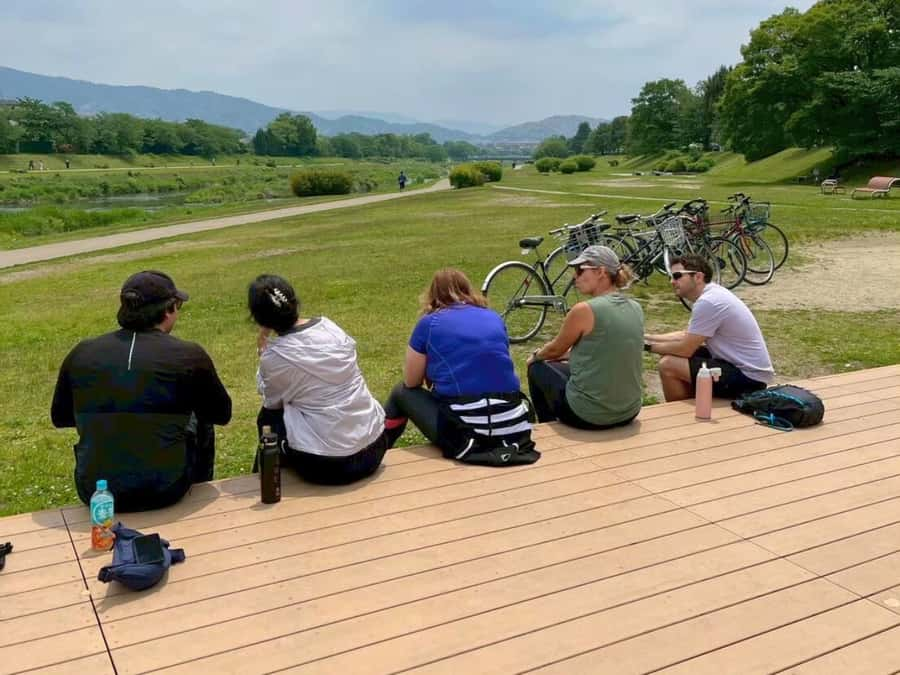
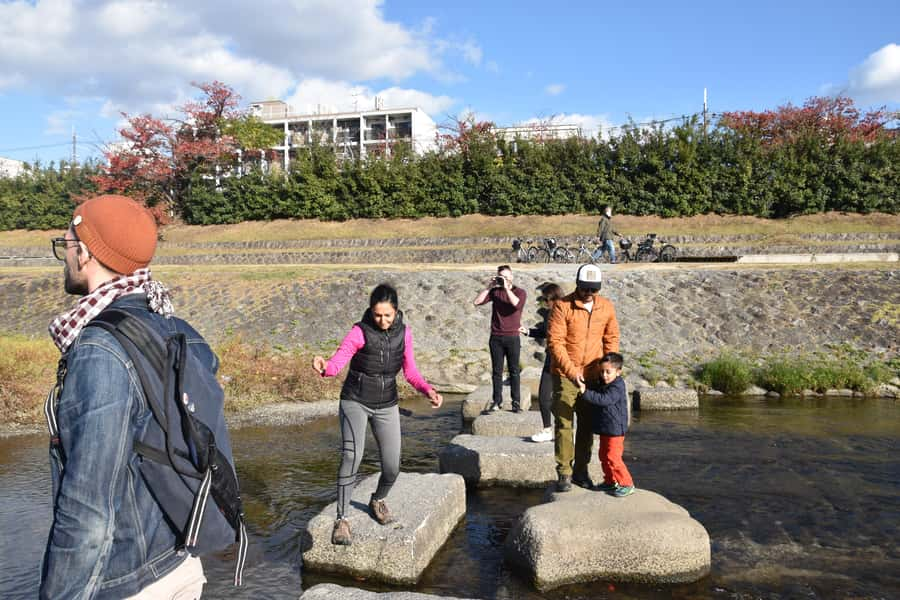
The first part of the route uses a peaceful riverside road. This is a smart way to begin because you get away from heavy city traffic and settle into the pace of the tour. You can feel the air and see more of Kyoto than you would from inside a bus or taxi.
The route includes a stop at a lesser-known shrine where you can try pure natural spring water. It is a small moment, but it gives the outing a sense of place. Rather than rushing from one famous building to another, you pause for something tied to the local setting.
Riverside cycling also makes this a good option on a warm day. One family enjoyed riding next to the river during hot, humid weather, and that makes practical sense: open air and moving water can feel far better than a crowded indoor or paved route. Still, Kyoto’s summer heat can be tiring, so carry water and use the stops to rest.
The route is not presented as a race. You should have time to take photographs, listen to explanations, and enjoy the changing scenery. If you want a fast ride with few stops, this is probably not your ideal cycling experience. If you like a relaxed outing with regular points of interest, the pace should suit you better.
The Imperial Palace and a Zen temple
The Imperial Palace gives the ride a grand change of scale. After the smaller riverside and shrine stops, you reach a broad historic area with plenty of room to appreciate Kyoto’s former imperial center. Your guide provides context as you ride or stop nearby, helping you connect the palace grounds to the rest of the city.
The itinerary also includes a famous Zen temple. The exact destinations can change, especially in rainy weather, so you should treat these stops as examples rather than a fixed promise of every listed site. Entrance fees for a temple or shrine visited as an alternative plan on a rainy day are included.
The value here is not only seeing another major sight. Your bicycle lets you link the palace and temple with quieter parts of town, avoiding the feeling that Kyoto is just a checklist of isolated attractions. You will see how grand public spaces give way to ordinary streets, campuses, and residential areas.
Those transitions are among the strongest parts of the tour. The city feels more understandable when you move through it at street level. You may pass areas you would never choose on your own, yet they help fill in the gaps between the headline sights.
Another way to spend a morning on two wheels:
- 5 Top Highlights of Kyoto Full Day Bike Tour (E-bike option)
★ 5.0 · 511 reviews - Full Day Biking Tour Exploring the Best of Kyoto
★ 5.0 · 498 reviews - Kyoto: Memory Kyoto E-Bike Tour
★ 4.8 · 297 reviews - E-Bike Tours of the highlights of Kyoto!!!
★ 5.0 · 291 reviews
Entering Shimogamo Shrine’s old forest
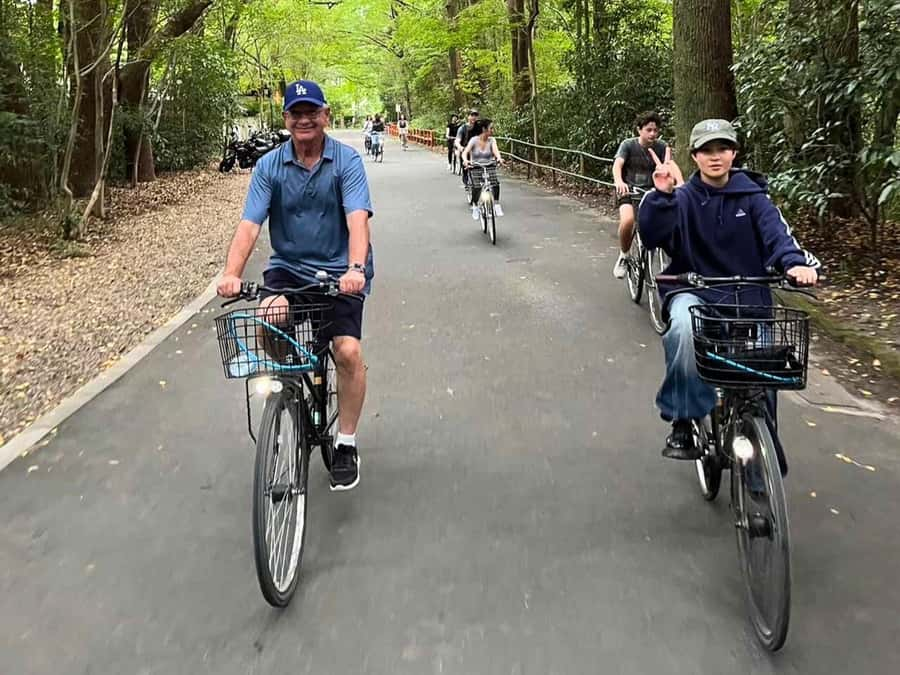
Shimogamo Shrine is one of the main reasons to choose this route. It is a UNESCO World Heritage site, but its appeal is not limited to its official status. The shrine is set among a primitive forest, giving the visit a quieter and more natural character than many central Kyoto attractions.
You can expect beautiful traditional buildings and a change in mood from the open riverside roads. The forest helps soften the city around you. It is a good place to slow down, take in the architecture, and listen to the guide’s explanation of the shrine.
The stop also shows why a bicycle tour can reach places that feel awkward by public transport. You are not simply dropped at a major entrance and hurried onward. You arrive as part of a route, with the earlier river, palace, temple, and neighborhood sections still fresh in your mind.
The guides are a major part of the experience here. Ko is described as kind and informative, and Benjamin is praised for explaining places clearly while keeping the ride running smoothly. The names of the guides can vary, but the common strength is attentive help at the stops rather than a rushed commentary from a distance.
The river junction and the return ride
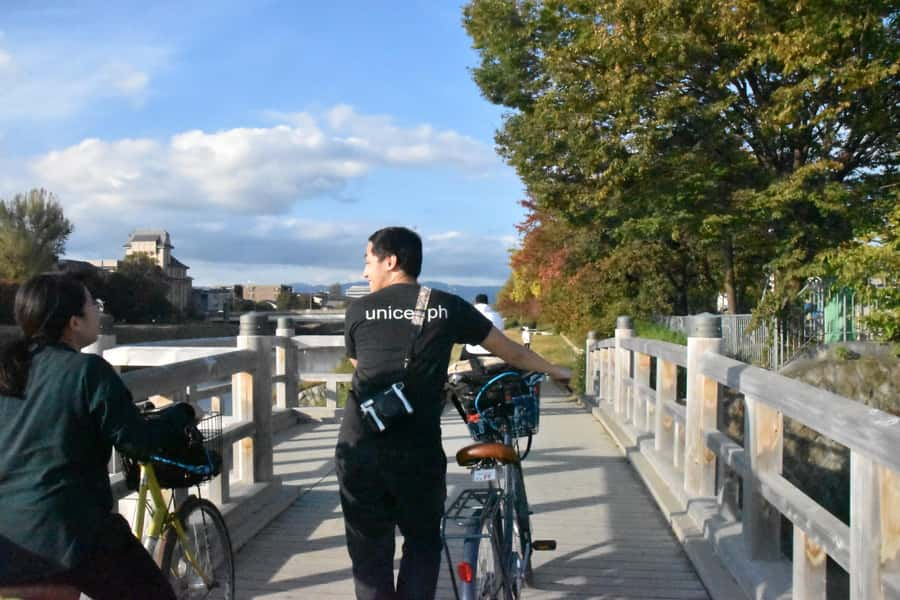
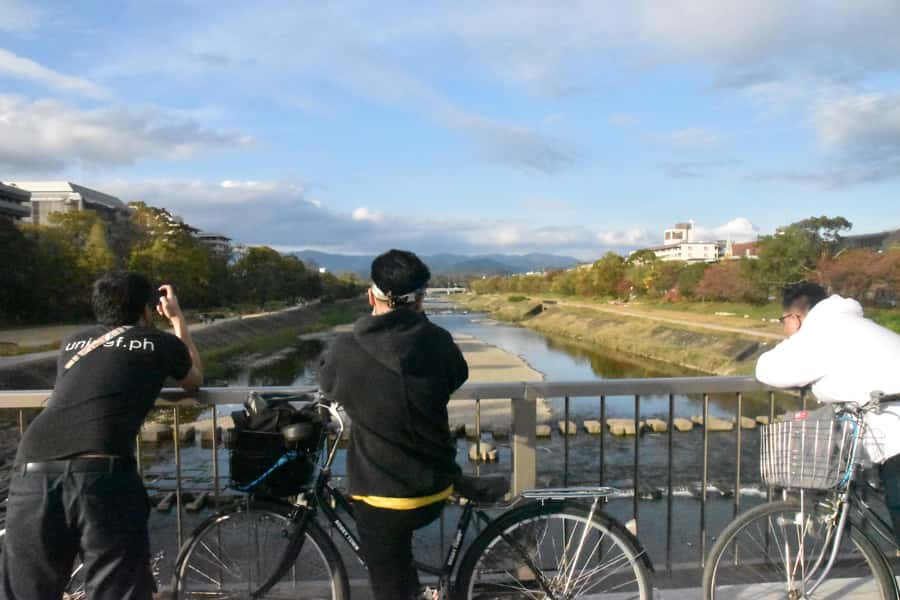
After Shimogamo Shrine, the route heads toward a distinctive river junction point. This is a memorable geographical stop because you see waterways meet before following the river again. From there, you ride along a scenic, lighted-up riverside route back toward the starting area.
This return section gives the tour a pleasing sense of shape. You begin beside the river, leave it for palaces, temples, campuses, and neighborhoods, then come back to the water after the shrine. The ride feels like a circuit rather than a straight transfer between attractions.
The route’s exact stops can change, and weather is one reason. That flexibility is useful, but it also means you should not book expecting every single named location in a rigid order. The benefit is that your guide can adapt the outing while still including temple or shrine time when rain affects the cycling plan.
If you are hoping for a tour focused only on famous buildings, the quieter stretches may feel less exciting. I see them as a strength. They give you breathing room and help prevent the outing from becoming a packed sightseeing sprint.
Tea, sweets, and a traditional pause
A Japanese sweet and tea at a traditional snack shop are included. This break adds more than a snack. It gives you a chance to sit, cool down, and experience a small piece of everyday food culture after cycling.
The stop was a clear favorite for Ko’s group, who enjoyed having tea and a sweet in a typical tea-house setting. You should not expect a full meal. Think of it as a modest cultural pause, so plan lunch or dinner separately.
The food stop also helps families. Young riders get a break, and adults can ask questions or simply enjoy a slower moment. If you have dietary restrictions, the supplied details do not specify alternatives, so ask the operator before booking if the sweet is important to your plans.
A short walk through Gion or Pontocho
After returning the bicycles, you take a leisurely 30-minute walk through either Gion or Pontocho. These are Kyoto’s best-known entertainment districts, with narrow streets, traditional buildings, and the Flower Towns associated with geisha.
Your guide explains the culture and system of geisha, which gives the walk more substance than simply hunting for a pretty street. You may be lucky enough to see a geisha, but that is not guaranteed. Treat any sighting as a bonus and keep your behavior respectful.
Gion and Pontocho are attractive places for photographs, but they are also working neighborhoods and entertainment areas. The walk is short, so it will not replace a full evening exploration. It does give you a useful introduction and helps you recognize the main areas later if you return after dark.
The guide can also recommend restaurants and bars based on your requests. This is practical at the end of a Kyoto day, when you may want noodles, a casual meal, or a drink but do not know which direction to take. Ask specific questions about budget and food preferences during the walk.
What the $73 price gets you
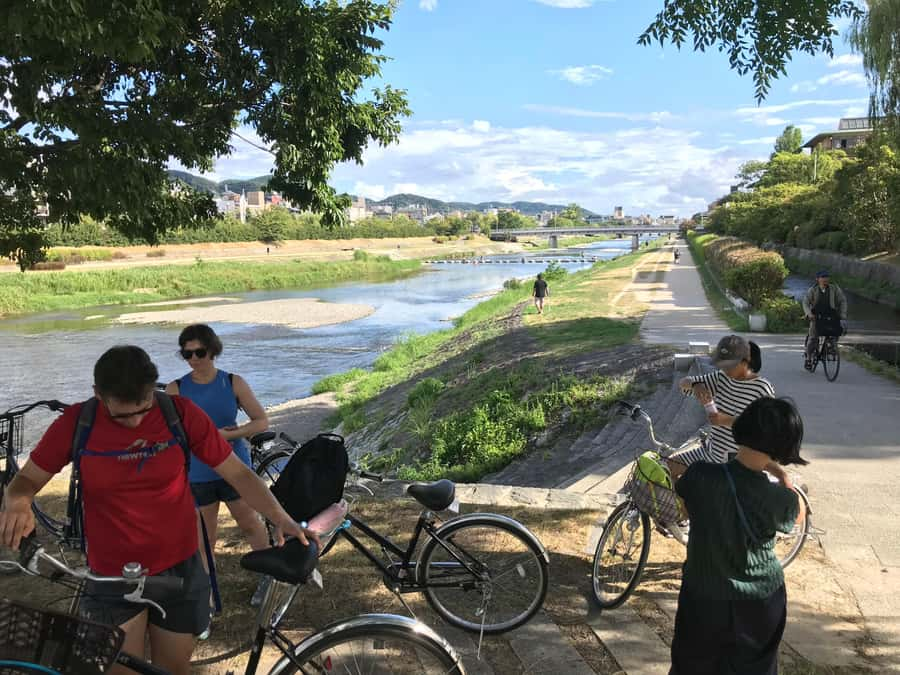
At $73 per person, the tour offers solid value if you want several kinds of Kyoto experience in one outing. You receive a rental bike, an English-speaking guide, the cycling route, the Gion or Pontocho walk, Japanese tea, a sweet, and entrance fees for a temple or shrine used as a rainy-day alternative.
The strongest value is the local routing. You could visit the Imperial Palace and Shimogamo Shrine independently, but connecting them by bicycle with smaller shrines, riverside paths, neighborhoods, and explanations would take extra planning. The tour saves you that work while keeping the day active.
The price is less attractive if you already know Kyoto well, own access to a bicycle, and are comfortable planning your own route. It is also not the right spend for someone who wants a long temple visit with lots of free time at each site. This is a broad introduction, not a specialist architecture tour.
An electric bike costs another 1,000 yen. I would consider it if you are unsure about cycling in heat or want to conserve energy for the Gion walk. Strong cyclists may prefer the standard bike and keep the extra money.
Who should book this ride
This experience suits families with children aged nine and older, couples, and solo visitors who want an active way to see Kyoto. It is especially helpful on a first visit, when you want orientation without spending the whole day inside major tourist sites.
You should be comfortable on a bicycle and ready for a 3.5-hour outing that combines riding and walking. The tour is not suitable for children under nine, people who cannot ride, or anyone bringing pets, smoking materials, luggage, or large bags.
The guides appear to be one of the biggest strengths. Benjamin, Ko, Claire, and Mr. Go are all associated with warm, helpful handling of the tour, with particular praise for patience with children, good route pacing, and clear explanations. The guide you receive may vary, but the experience depends heavily on that personal attention.
Should you book Cycle Kyoto’s Hidden Gems and Gion Stroll?
Book it if you want to see Kyoto by bicycle, enjoy quieter roads, and prefer a well-linked route over a long stay at one famous temple. The combination of riverside riding, Shimogamo Shrine, the Imperial Palace, tea and sweets, and a short Gion or Pontocho walk gives you a broad taste of the city in half a day.
Skip it if you cannot ride confidently, dislike changing weather, or want a slow, detailed temple tour. Also think twice if your schedule is so tight that a 3.5-hour activity feels restrictive.
For most active visitors, the tour earns its place because it shows Kyoto between the landmarks. You get fresh air, local streets, a useful introduction to geisha culture, and practical restaurant advice before returning to the central meeting point.
FAQ
How long does the activity last?
The experience lasts about 3.5 hours for the bicycle portion and includes a 30-minute town walk.
Where does the tour start?
It starts at the kneeling man statue on the southeast corner of the Sanjo Ohashi intersection, near the east end of Sanjo Ohashi Bridge.
Where does the tour finish?
The activity ends back at the same meeting point.
What sights are included on the bicycle route?
The route includes the Imperial Palace, a famous Zen temple, Shimogamo Shrine, riverside roads, a shrine with natural spring water, university campuses, residential areas, and a river junction point.
Is Shimogamo Shrine included?
Shimogamo Shrine is one of the planned stops. It is a UNESCO World Heritage site with a primitive forest and traditional buildings.
What happens during the walking portion?
You stroll through Gion or Pontocho, visit the main Flower Town areas, learn about geisha culture, and may receive restaurant and bar recommendations.
Is tea included?
Yes. Japanese tea and a Japanese sweet at a traditional snack shop are included.
Can I use an electric bicycle?
Yes. An electric bike is available for an extra 1,000 yen, paid on the spot.
Is the tour suitable for children?
It is suitable for children aged nine and older. Children under nine cannot join.
What should I bring?
Bring comfortable shoes, a camera, water, and clothing suited to the weather. Pets, smoking, luggage, and large bags are not allowed.
Latest bike tours added in Kyoto
- Kyoto: City Secrets eBike Tour★ 4.9 · 196 reviews
- Best of Kyoto: Ginkakuji & Path of Philosophy E-Bike Tour★ 4.9 · 79 reviews
- Kyoto: Hidden Gems E-Bike Tour Through Backstreets & Temples★ 4.9 · 54 reviews
- Kyoto: Tailored E-Bike Tour to Highlights & Hidden Gems★ 4.9 · 32 reviews
- Kyoto: Half-day Guided Bike Tour with Fushimi Inari★ 4.9 · 21 reviews
- Kyoto: Full Day Bike Tour★ 4.9 · 39 reviews
- Kyoto: Hidden Gems E-Bike Tour with Local Japanese Guide★ 4.9 · 189 reviews
- Kyoto: Early Bird E-Bike Tour with Lunch★ 5.0 · 14 reviews
Kyoto Bike Tours, compared.
Arashiyama Bamboo Forest & Hidden Gems Bike Tour (Early Bird)
Read our review →
5 Top Highlights of Kyoto Full Day Bike Tour (E-bike option)
Read our review →
Full Day Biking Tour Exploring the Best of Kyoto
Read our review →
Afternoon Kyoto Bike Tour: Bamboo Forest, Monkeys & Hidden Spots
Read our review →Browse the lists this tour appears in