
Review · JAPAN BIKE TOURS
Hiroshima in a Nutshell: Morning Bike Adventure
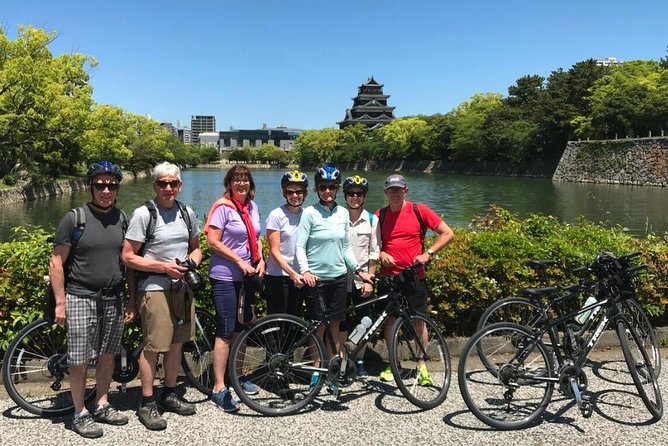
Hiroshima is spread out just enough that a bike makes good sense. In three to four hours, you can move from the quiet paths of Peace Memorial Park to the Atomic Bomb Dome, Hiroshima Castle, and Shukkei-en Garden without spending much of the morning waiting for buses. The route is mostly flat, and the group is limited to eight people.
I like the way the ride combines serious history with ordinary city life, including canals, back streets, and green spaces between the major sights. I also like the guides’ practical approach: Awais, James, Melissa, Yuki, Levi, and Ihsan are praised for clear explanations, steady pacing, safety advice, and a willingness to answer questions.
The main consideration is that this is not a quiet sightseeing ride with little commentary. Guides may spend much of the tour explaining the bombing, its aftermath, and Hiroshima’s wider story. That is valuable, but it can feel emotionally heavy, and some of the stops involve getting off the bike several times.
Key points at a glance
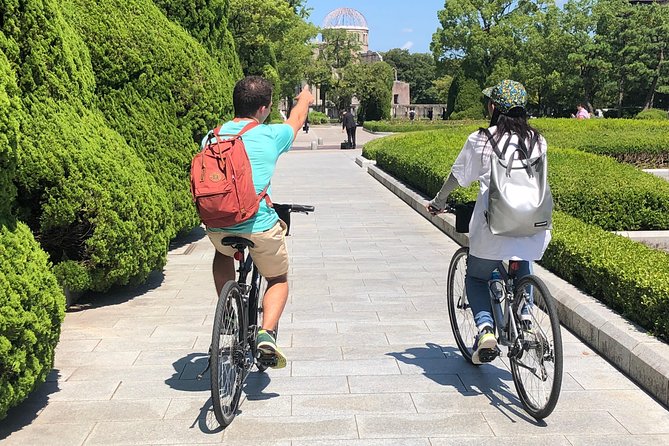
- Peace Park comes first: Begin with a slow ride and time for reflection before visiting the Atomic Bomb Dome.
- Four major sights in one morning: Cover Peace Memorial Park, the Atomic Bomb Dome, Hiroshima Castle, and Shukkei-en Garden.
- Mostly flat cycling: The route is manageable for ordinary riders, though an e-bike may be worth the extra 2,000 yen if you are out of practice.
- Small group size: A maximum of eight people allows room for questions and individual help with bike setup.
- History is central: Expect detailed explanations about Hiroshima before, during, and after 1945.
- Good for a short stay: The tour gives you a useful first look if you have only one or two days in the city.
Why a bicycle works so well in Hiroshima
Hiroshima’s key sights are not all clustered around one station. Peace Memorial Park sits in the city center, Hiroshima Castle is farther north, and Shukkei-en Garden lies near the castle area. Walking between them takes time, while a car or bus cannot always bring you as close to the smaller paths and canal-side routes.
A bike lets you cover that distance without turning the morning into a transport exercise. You can ride between stops, park close by, and continue on foot when a monument or garden deserves a slower look. I particularly like that balance. You get the reach of a vehicle with more of the city’s street-level feel.
The route is described as mostly flat, and the pace is steady rather than race-like. One ride covered about 6.81 miles over more than four hours, though your exact distance and timing may vary with the group and guide. The bikes were described as being in good condition, and the guide normally checks the fit, adjusts the seat, and explains hand signals before setting off.
This is still an active outing. You will cycle for several hours, stop and start, and get on and off the bike at the sights. If you have not ridden a regular bicycle for some time, ask about an e-bike in advance. An e-bike costs extra, reported as 2,000 yen, and availability is limited.
More early starts in Japan:
- Kyoto: Arashiyama Bamboo Forest Morning Tour by Bike
★ 5.0 · 115 reviews - Private-group Morning Cycling Tour in Hida-Furukawa
★ 5.0 · 105 reviews - 3-Hour Morning Bike Tour of Jaipur
★ 5.0 · 1,253 reviews
Starting at Cycle Hiroshima at 10 a.m.
The meeting point is Cycle Hiroshima at 4-chōme-5-4 Ōtemachi in Naka Ward. The tour starts at 10 a.m. and finishes back at the same place, so you do not need to arrange a second pickup location.
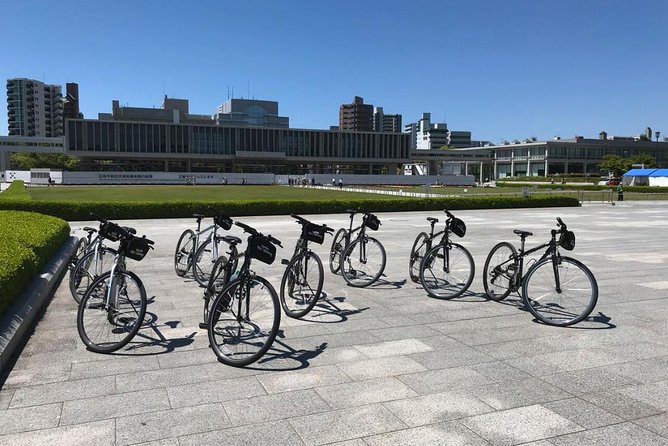
The operator supplies the bicycle, helmet, and bottled water. You do not need to bring your own bike. Before riding, the guide gives safety instructions and makes basic adjustments. This early preparation matters in a small group because riders may have different heights and levels of confidence.
The group limit of eight is one of the strongest practical features. It gives the guide a better chance to watch traffic, keep the group together, and answer questions without turning the experience into a large procession. Guides such as James and Awais have been praised for explaining hand signals and checking that everyone was comfortable before leaving.
Do not expect hotel pickup or drop-off. You need to make your own way to the shop, and you will return there at the end. The mobile ticket is useful for keeping your booking details on your phone.
Peace Memorial Park: beginning with quiet reflection
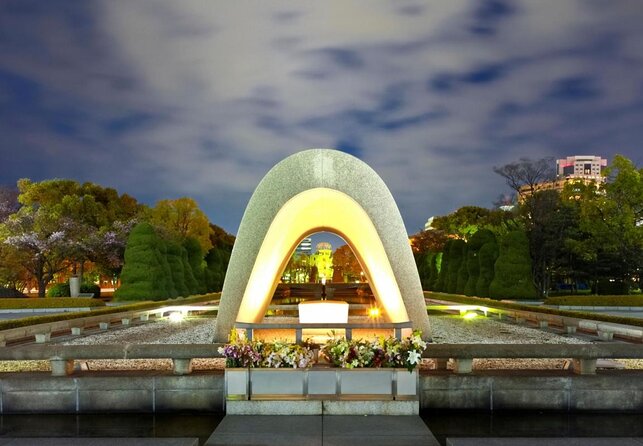
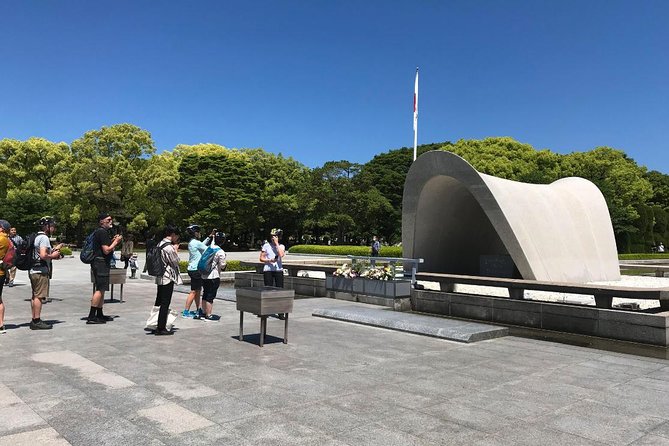
The first major stop is Hiroshima Peace Memorial Park. The planned visit lasts about 20 minutes, though the guide may spend more or less time here depending on the group and the day’s pace.
This is not simply a quick photo stop. The ride through the park is slow and quiet, with commentary and old photographs showing what the area looked like before the war. That contrast helps you understand that this was once a normal part of a working city, not an empty memorial zone created solely for remembrance.
A bike is useful here because the park contains several points of interest spread along open paths. You can move through it without rushing from one landmark to the next. At the same time, the bike does not replace walking. You will want to dismount, listen, and give yourself a moment to take in the setting.
Expect the tone to become thoughtful quickly. Guides including Awais, Melissa, Levi, Amy, and Ihsan have been praised for explaining the events of 1945 with care, while also discussing Hiroshima’s recovery and present-day message of peace. The subject is difficult, so this is best approached with patience rather than as a checklist of monuments.
Some rides have included making origami cranes at the Children’s Peace Monument, but this is not listed as a guaranteed part of every departure. Treat it as a possible extra rather than a promised stop.
The Atomic Bomb Dome: Hiroshima’s most recognizable reminder
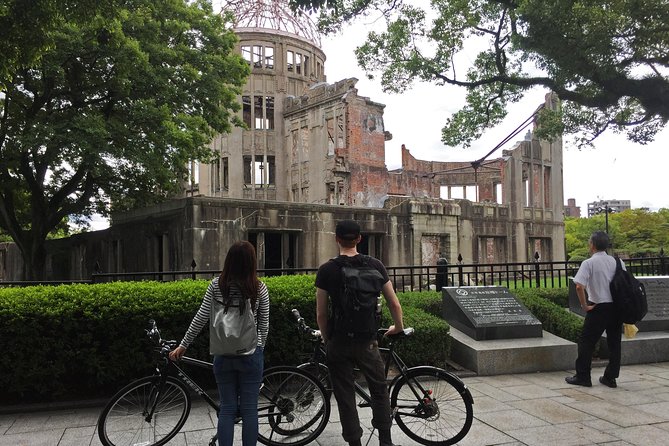
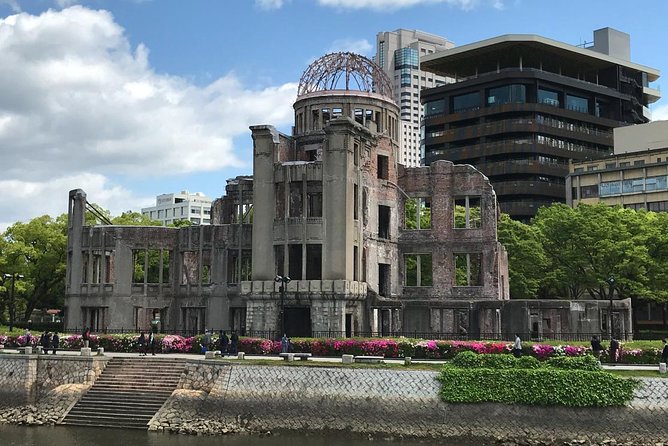
The Atomic Bomb Dome is a short but important stop, planned for about 10 minutes. You will have time to see the structure, take photographs, and hear about what happened here.
The dome is powerful partly because it is so visually direct. Unlike a museum display, it is an actual surviving building in the middle of the city. The guide’s explanation gives the structure context, while the surrounding park helps connect it to the larger memorial area.
Ten minutes may sound brief, but that is enough for an introduction. If the dome has a strong effect on you, you can return later on your own and spend more time nearby. This is one reason I see the bike tour as an orientation rather than a complete replacement for Hiroshima’s museums and memorial sites.
The commentary can be detailed. Awais, James, and Levi have received especially strong praise for answering questions and explaining both the bombing and the city’s recovery. You should feel free to ask questions, but also expect that the guide may present historical and political subjects in a direct way.
More bike tours in Japan:
- Hidden Kyoto E-Biking tour
★ 5.0 · 1,843 reviews - Tokyo Guided Small-Group Biking Tour
★ 5.0 · 1,250 reviews - Bike Tour Exploring North Kyoto plus Lunch
★ 5.0 · 1,087 reviews - Tokyo Great Cycling Tour
★ 5.0 · 811 reviews
Hiroshima Castle: a change of mood and subject
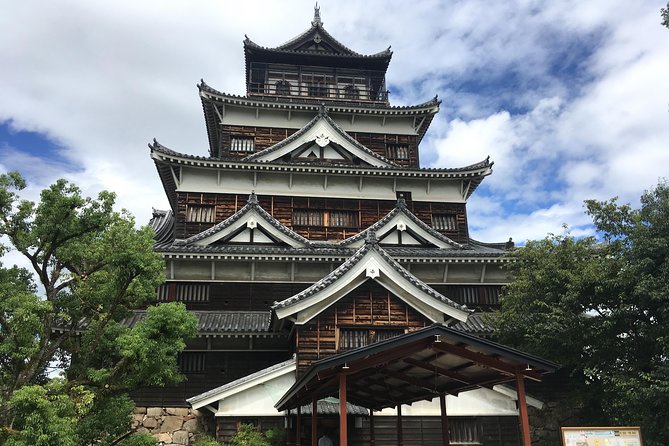
After the memorial area, the ride continues to Hiroshima Castle. The planned stop lasts about 25 minutes and includes the castle grounds, gardens, and photo opportunities.
This is an important change of pace. After the emotional weight of Peace Memorial Park, the castle offers a chance to consider Hiroshima’s older identity and its role as a Japanese castle town. You will ride through the grounds, hear about the castle’s past, and see a more traditional side of the city.
The stop focuses on the exterior and grounds rather than a long indoor museum visit. If you want to explore the castle building in depth, you may need to return independently. The tour’s purpose is to give you a broad introduction to several parts of Hiroshima, not to spend an hour at each attraction.
The bike makes the move from the peace park to the castle practical. By car or bus, this part of the morning can involve extra waiting and walking. On two wheels, the journey itself becomes part of the experience, with the group passing through regular city streets rather than moving between isolated tourist zones.
Shukkei-en Garden: a calm finish
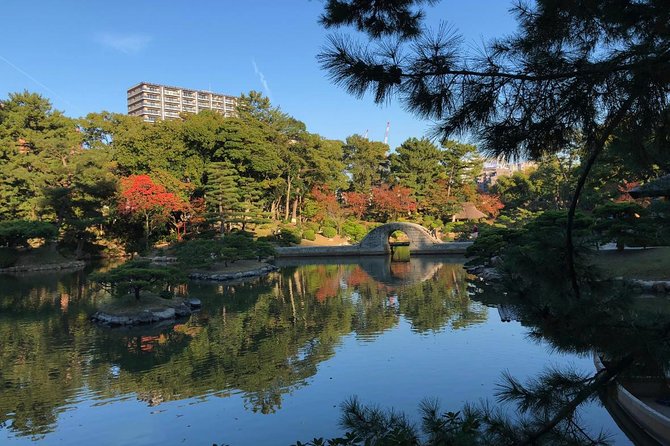
Shukkei-en is the final listed stop, with about 25 minutes inside the garden. Admission is included, which makes this more than a quick roadside viewing.
The garden is valued for its greenery, ponds, paths, and carefully balanced Japanese design. The guide explains how the garden was constructed and how its parts work together. After the memorial sites and castle, Shukkei-en provides a gentler finish to the morning.
Twenty-five minutes gives you a useful first impression, but it is not a full garden visit. If you enjoy Japanese gardens or want time for photographs, you may later decide to return on your own. The tour helps you decide which places deserve a longer visit.
This stop also shows why the route works as a city introduction. In one morning, you see Hiroshima as a place of memory, a historic castle city, and a modern Japanese city with carefully tended gardens. The bike connects those subjects without making the tour feel like four unrelated transfers.
The guides make the difference
The strongest part of this experience is the guiding. The tour has earned a 4.9 rating from 524 reviews, with 98 percent recommending it, and the praise is remarkably consistent: clear history, warm personalities, careful cycling, and a good pace.
Awais is repeatedly singled out for detailed explanations, strong English, friendliness, and an ability to answer questions. James is praised for safety instructions, steady riding, and genuine care when a delay threatened one rider’s train connection. Melissa is described as energetic, well prepared, and especially good with families.
Other named guides include Yuki, Levi, Ihsan, and Amy. Their styles may differ. Levi begins with a history lesson, while other guides tell stories as the group moves through the city. That means your exact experience can vary by departure, but the common theme is an informed guide who treats the subject seriously without making the ride stiff.
One point is worth keeping in mind: guides may express historical and political views plainly. Most people will value that frankness, but you may occasionally find the discussion challenging, especially when national perspectives differ. The tour aims to explain Hiroshima’s story, not reduce it to a simple sightseeing script.
Pace, comfort, and physical demands
The cycling is described as comfortable and not especially strenuous because the terrain is mostly flat. Still, this is not suitable for every age or height. Children aged 12 and under are not recommended, and riders under 140 centimeters cannot take part.
The standard bike is included, along with a helmet and water. Bring clothing suitable for the forecast, since the activity depends on good weather. If the weather is poor, the tour may be canceled and you will be offered another date or a full refund.
The ride includes frequent stops, which helps with sightseeing but means you will repeatedly leave and return to the saddle. One account found that there was not a lot of continuous biking, while another described a route lasting more than four hours. Those details are not contradictory. The experience is a sightseeing tour by bike, not an endurance ride.
If you are unsure about a regular bicycle, arrange an e-bike before the tour rather than waiting until the morning. There are limited e-bike options, and the added cost is not part of the listed price.
Is the $72.96 price good value?
At $72.96 per person, the tour is not the cheapest way to see Hiroshima. You could visit the public areas of Peace Memorial Park, the Atomic Bomb Dome, Hiroshima Castle grounds, and parts of the city on your own for less.
The value comes from the guide, the bike, and the time saved. You do not need to plan a route between widely spaced sights, rent equipment, or work out how Hiroshima’s history fits together. You also receive bottled water, a helmet, and admission to Shukkei-en.
For a first visit, I think the price is reasonable if you have only a day or two in Hiroshima. It is especially useful for a cruise passenger with one day in port or anyone trying to see the city before moving on by train. The tour gives you a clear map in your head, then lets you return to the places that deserve more time.
If you are already familiar with Hiroshima, prefer museums over outdoor sightseeing, or want a very slow private experience, the value is weaker. You may find more satisfaction choosing two sites and exploring them at your own pace.
Who should book this morning ride?
I would choose this tour if you want:
- A fast first look at Hiroshima
- A small group and an English-speaking guide
- More ground covered than on foot
- A mix of memorials, city streets, a castle, and a garden
- A structured introduction to the events of 1945
- A practical option for a short stay
I would think twice if you dislike cycling, are below the 140-centimeter height requirement, or want long, unhurried visits at each attraction. You should also be comfortable with serious discussion. The tour is respectful, but Hiroshima’s story cannot be made light.
The 10 a.m. start leaves the afternoon open for the Peace Memorial Museum, additional time at the Atomic Bomb Dome, lunch, or another part of the city. Since the activity returns to the starting point, it is easy to continue your day from there.
Should you book Hiroshima in a Nutshell?
Yes, if you are visiting Hiroshima for the first time and want a well-organized introduction in one morning. The route covers the essential memorial area, adds Hiroshima Castle and Shukkei-en, and uses a bicycle to cut down on transport time.
Book it with realistic expectations. The cycling is mostly flat and manageable, but the history is serious, the stops are fairly short, and the experience depends in part on your guide. If you receive Awais, James, Melissa, Yuki, Levi, Ihsan, or Amy, expect a guide who puts real effort into explanation and group safety.
I would choose the standard bike for most reasonably active riders and reserve the e-bike ahead of time if you are uncertain. At $72.96, this is best viewed as a time-saving orientation with strong historical context, not simply a bicycle rental with sightseeing attached.
FAQ
How long does the Hiroshima bike tour last?
The tour lasts approximately three to four hours. It begins at 10 a.m. and ends back at Cycle Hiroshima.
What sights are included?
The route includes Hiroshima Peace Memorial Park, the Atomic Bomb Dome, Hiroshima Castle, and Shukkei-en Garden.
Are the bicycle and helmet included?
Yes. Bike rental, a helmet, bottled water, and an English-speaking guide are included.
Can children join the tour?
The activity is not recommended for children aged 12 and under. Riders must be at least 140 centimeters tall.
Are e-bikes available?
E-bikes may be available for an extra 2,000 yen, but options are limited. It is best to arrange one ahead of time.
What happens if the weather is bad?
The tour may be canceled because of poor weather. You will then be offered an alternative date or a full refund. You can also cancel for a full refund if you cancel at least 24 hours before the start time.
Latest bike tours added in Japan
- Private E-MTB guided cycling around Mt. Aso volcano & grasslands★ 5.0 · 16 reviews
- Tokyo: West-Side Cycling and Food Tour with Guide★ 5.0 · 37 reviews
- Tokyo: Private Cycling Tour with cute E-bike★ 5.0 · 11 reviews
- Tokyo Bay Area: Sunset Night View 3h E-bike Guided Bike Tour★ 5.0 · 11 reviews
- Tokyo: Hidden Gems Guided Bike Tour with Lunch★ 4.5 · 30 reviews
- Tokyo Bike Tour: Shibuya, Harajuku & Hidden Gems★ 5.0 · 20 reviews
- Tokyo: 3h Private E-bike Tours, Starting at Your Hotel★ 5.0 · 36 reviews
- Tokyo: 3-hour Guided E-Bike Tour of the City’s Hidden Gems★ 4.8 · 251 reviews
Japan Bike Tours, compared.
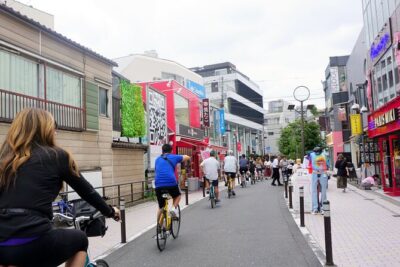
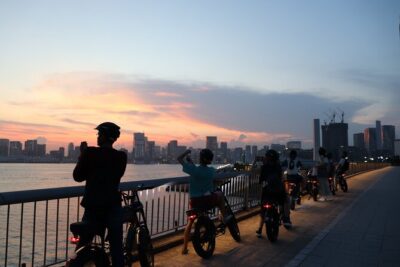

3h Tokyo E-Bike Tour: Hidden Gems, and Local Life with guide
Read our review →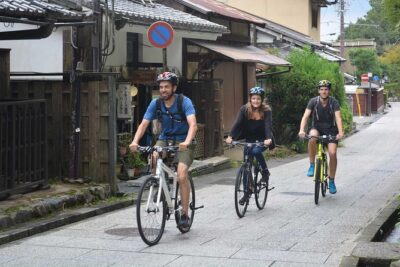
Arashiyama Bamboo Forest & Hidden Gems Bike Tour (Early Bird)
Read our review →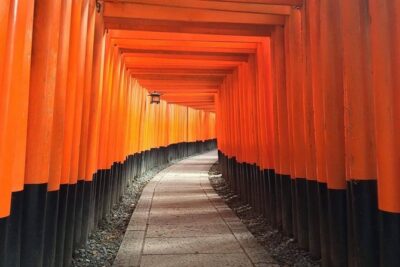
5 Top Highlights of Kyoto Full Day Bike Tour (E-bike option)
Read our review →Browse the lists this tour appears in