
Review · FOOD & MARKET BIKE TOURS
Tokyo: West-Side Cycling and Food Tour with Guide
Tokyo’s west side is best understood at bicycle speed. On this 3.5-hour outing, you pedal through Nakano, Koenji, and Asagaya, using narrow back streets, riverside paths, and everyday shopping areas that most visitors never reach. The ride is part sightseeing, part food crawl, and part lesson in how Tokyo works.
I like the chance to see Tokyo’s mamachari bicycles, complete with front baskets, and I like the way guide Andy connects food, transport, architecture, and local customs. The two street foods and simple lunch add real value to the $110 price. The main caution is that the ride covers 12 to 15 kilometers on sometimes narrow, crowded, or uneven streets, and the tour usually runs even in rain.
Key points to know before you book
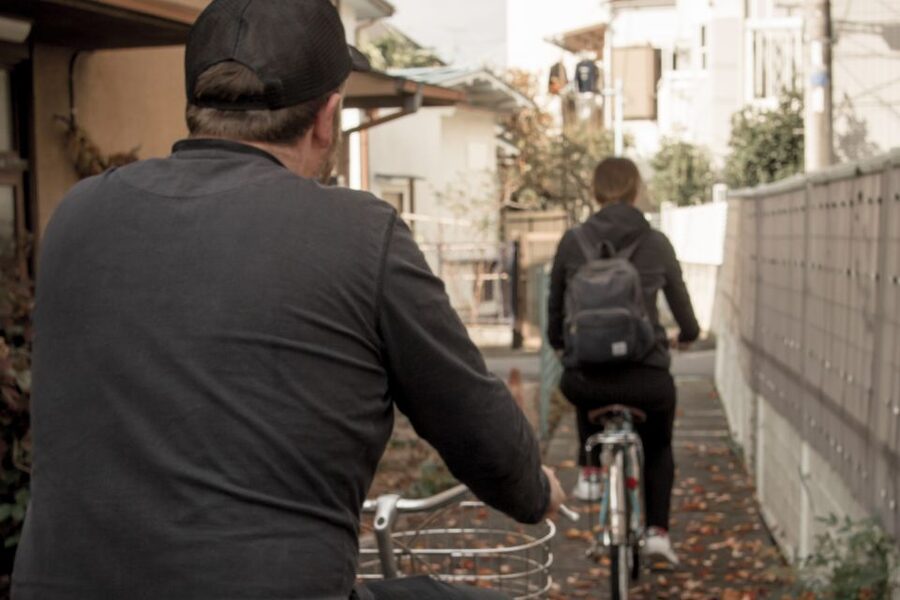
- Ride a real mamachari: These practical Japanese bicycles may creak and squeak, but they are maintained and easy to use.
- See three local neighborhoods: Nakano, Koenji, and Asagaya offer a closer look at residential Tokyo beyond Shinjuku and Shibuya.
- Eat along the way: The price includes two street foods, a simple lunch, and one bottled drink.
- Learn from Andy: His explanations cover Japanese habits, food, bicycle use, vending machines, and daily life.
- Expect a steady ride: You need reasonable cycling confidence, a minimum height of 140 centimeters, and comfort on uneven streets.
- Meet at Koenji Station: Find the guide outside the ticket gates five minutes before departure, wearing a baseball cap.
Why west Tokyo makes a better bike ride than central Tokyo
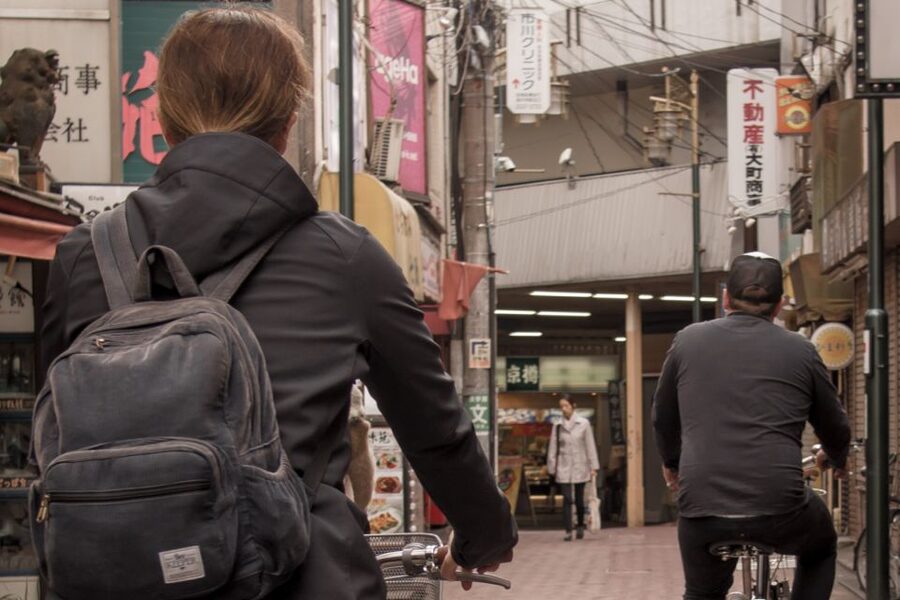
Central Tokyo delivers famous sights, but the inner west side gives you a clearer view of ordinary city life. Koenji, Nakano, and Asagaya are not presented as grand sightseeing districts. Their appeal comes from the way people live there: commuting, shopping, eating quick meals, parking bicycles, and moving through tight streets built for local use.
A bicycle lets you cover more ground than a walking tour without turning the experience into a bus ride. You notice the small changes from one block to the next. A broad activity hub can give way to a quiet lane, then to a riverside path, then to a row of small shops or a compact neighborhood restaurant.
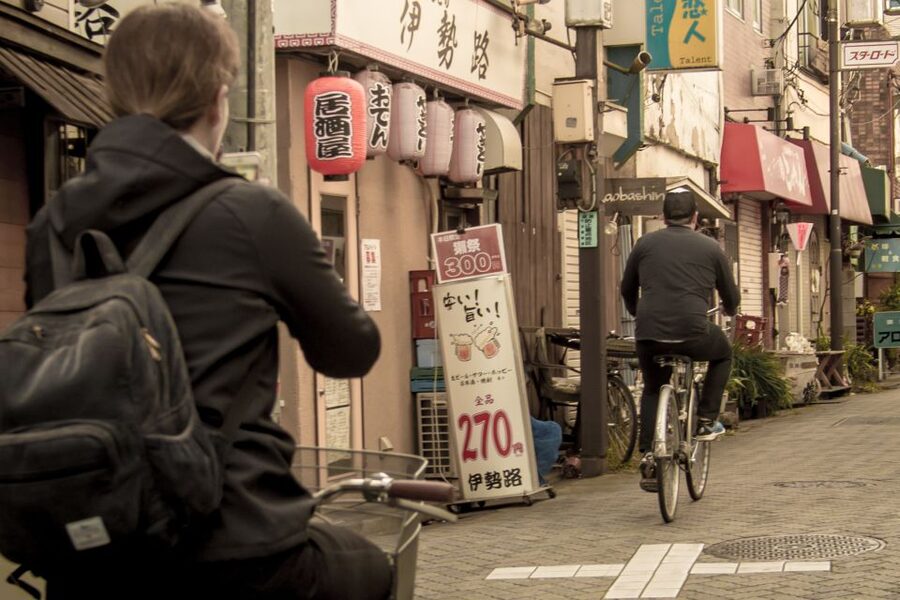
I especially like the focus on Tokyo’s bicycle culture. Bicycle parking is not an afterthought here. You’ll see how carefully bikes are handled in a city where space is limited, and bicycle parking fees are included in the tour price. That practical detail tells you something about city planning and daily routines that a standard sightseeing route would skip.
The neighborhoods also give Andy room to explain local habits. His role is not only to point out buildings. He can help you understand customs, food choices, vending machine drinks, and the social rhythm of the streets. That was one of the most praised parts of the experience, and it is likely to be the lasting value of the tour.
More Food Bike Tours in Tokyo:
- Versailles Palace Bike Tour with Market & Marie-Antoinette hamlet
★ 5.0 · 2,680 reviews - Madrid: 3 h. Guided Highlights Bike Tour with Optional Tapas
★ 4.9 · 1,623 reviews - Rome: Appian Way & Aqueducts E-Bike Tour (Catacombs & Food)
★ 4.9 · 1,498 reviews
Meeting Andy at Koenji Station
The tour begins at Koenji Station on the JR train network. Koenji is six minutes from Shinjuku and about 18 minutes from Shibuya, so you can reach the starting point without a long trip across Tokyo.
The guide waits directly outside the ticket gates five minutes before departure and wears a baseball cap. This is a simple meeting point, but the tour leaves on time. Do not assume a few extra minutes will be harmless. If you arrive late, the group may already be cycling away.
Koenji is a useful starting point because you begin in a neighborhood rather than at a major monument. You can get your bearings quickly, meet the guide, and prepare for a ride that mixes cycling with short walks and food stops.
The activity is offered privately or in small groups. That matters on narrow streets, where a large group would be awkward and harder to manage. A small group also gives you more room to ask Andy about customs, food, or anything you notice along the route.
Getting used to the mamachari bicycle
The bicycle is a salvaged mamachari, the sturdy everyday style widely associated with practical Japanese urban cycling. It has a front basket, which is handy for small belongings, and the bicycles are described as maintained even if some are a little creaky or squeaky.
Do not expect a sleek road bike or a high-performance city rental. The mamachari is built for ordinary errands, not speed. That is part of the point. You are using a bicycle that feels connected to local life rather than a piece of specialist sports equipment.
You should be at least 140 centimeters tall to ride comfortably. You also need to handle a bicycle in narrow streets, around other people, and over uneven surfaces. The pace is leisurely, but the distance is not trivial. At 12 to 15 kilometers, this is a proper half-day ride rather than a short orientation spin.
Andy leads the group through changing street conditions, including twisting lanes and riverside paths. You should be ready for occasional sharp turns and crowded sections. If you are nervous on a bike, have not ridden for years, or prefer wide traffic-free routes, this may not be the right Tokyo activity for you.
Nakano, Koenji, and Asagaya by back street
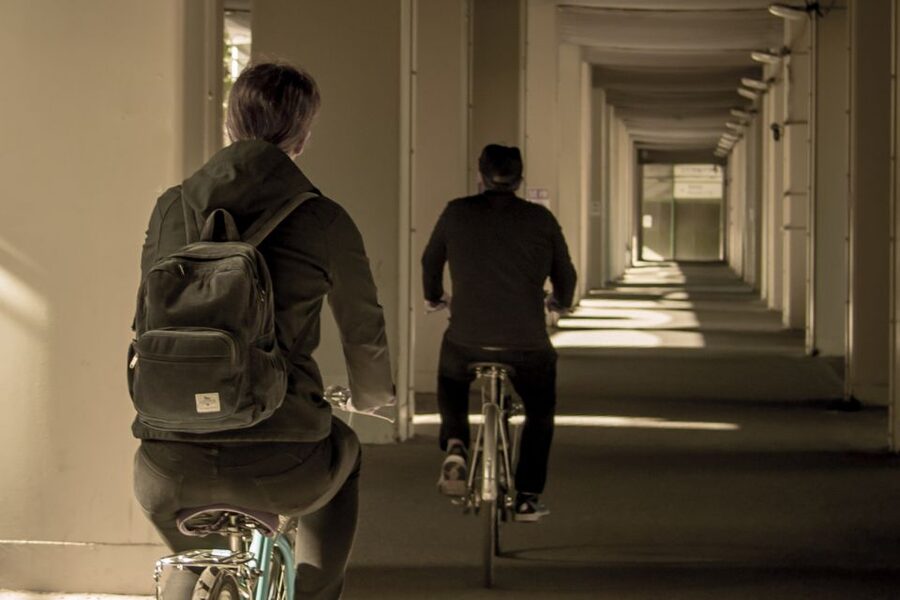
The route links three west-side neighborhoods, each adding a different piece to the picture.
Nakano gives you a sense of Tokyo beyond its better-known central districts. You ride through local streets rather than simply passing a major landmark, and Andy uses the surroundings to explain how people live and move through the area. The value here is context. Instead of seeing Tokyo as a collection of postcard locations, you see how an actual neighborhood fits together.
Koenji brings more activity and personality. It is a good place to notice the contrast between main routes and side streets. The tour takes you away from the tourist strip, where small details become easier to spot: bicycles, local shops, compact buildings, and people going about their day.
Asagaya adds another residential area to the route. Cycling between the neighborhoods helps you understand their relationship instead of treating them as isolated stops. You are not only collecting names. You are learning how close districts can feel different while sharing the same dense urban setting.
The precise order and stops can vary, but the basic appeal stays the same: you are moving through places that would be easy to overlook from a train window. On foot, you might cover only one area. By bike, you can connect several neighborhoods while keeping the focus on the street level.
More guided departures in Tokyo:
- Tokyo Guided Small-Group Biking Tour
★ 5.0 · 1,250 reviews - Tokyo Top Highlights 3h Guided E-bike Tour
★ 5.0 · 714 reviews - 3h Tokyo E-Bike Tour: Hidden Gems, and Local Life with guide
★ 5.0 · 670 reviews - Tokyo: 3-hour Guided E-Bike Tour of the City’s Hidden Gems
★ 4.8 · 251 reviews
Street food, lunch, and the value of eating locally
Food is not a token extra on this tour. The $110 price includes two popular street foods, a simple Japanese lunch, and one bottled drink. That makes the experience easier to budget, especially in Tokyo, where small purchases can add up during a day of sightseeing.
The street food stops offer a chance to try familiar local snacks in their normal setting. You are not sitting down for a long formal meal. You are sampling food as part of the neighborhood ride, then continuing on. This keeps the pace varied and gives Andy a natural way to explain eating habits and local preferences.
Lunch is simple rather than elaborate. Past outings have included a small noodle bar, where you can eat alongside local office workers. That kind of stop is more useful than a polished restaurant designed for visitors. It shows you how an ordinary midday meal fits into city life.
Do not book this tour expecting a custom food menu. The activity does not cater to personal tastes, allergies, or dietary requirements, and it is not suitable for vegans. If you have food restrictions, you should choose another activity or confirm directly before booking. This is an important limitation, not a minor footnote.
The included bottled drink is also practical. Andy can help explain the choices available from Japanese vending machines, a small detail that can make an unfamiliar city feel easier to navigate later in your trip.
What Andy adds to the ride
A bicycle route alone would be pleasant, but the guide is what turns it into a cultural introduction. Andy is an Australian guide with strong local experience, and his style combines Japanese hospitality with Australian humor. That mix helps keep the tour conversational rather than formal.
His explanations cover Japanese society, neighborhood habits, food, transport, and everyday customs. You can ask questions as you ride or during meal stops, and the tour works best if you are curious about small things. Why are bicycles parked in a certain way? How do people use vending machines? What makes one neighborhood feel different from another? These are the questions that give the ride its purpose.
Andy has also helped people with recommendations after the tour. That can be useful if you are early in your Tokyo stay and want ideas for where to eat or which districts to visit next. The tour works well near the start of a trip because it gives you practical cultural context. It can also be a strong final activity, when you are ready to move beyond major sights and see the city at a calmer pace.
The English-language format is best suited to people who enjoy conversation. You will get more from the experience if you ask questions instead of treating it as a silent bike ride behind a guide.
Rain, traffic, and the practical side of cycling
This is an all-season, all-weather outdoor activity. In rain, the tour generally continues, so you should be prepared to get wet. Check the forecast before you leave Koenji Station and dress for the conditions.
The route includes narrow and sometimes crowded streets. That does not mean a dangerous race through traffic, but you must be comfortable steering, stopping, and staying aware of people around you. Uneven surfaces are also part of the experience.
Bring a passport or ID card, hand sanitizer or tissues, and a garbage bag. The last item may seem unusual, but it is useful for carrying small rubbish when public bins are not nearby. Bicycle parking fees and cycling liability insurance are included.
The tour lasts 210 minutes, or three and a half hours. That is long enough to cover several neighborhoods without taking an entire day. You still need to plan around it. Do not schedule a timed attraction immediately afterward if you dislike rushing, especially since the ride ends after food stops and neighborhood cycling rather than at a major central station.
Is $110 a fair price?
At $110 per person, this is not the cheapest way to spend a morning in Tokyo. You could walk through a neighborhood for free, buy inexpensive snacks, and use the train between districts.
The price becomes easier to justify when you count what is included: a bicycle, a local English-speaking guide, bicycle parking fees, liability insurance, two street foods, lunch, and a bottled drink. More important, you are paying for access and interpretation. Andy handles the route, helps you navigate unfamiliar streets, and explains the ordinary details that are easy to miss alone.
I see the best value for people who want a fast introduction to local Tokyo life rather than a list of famous sights. If you mainly want architecture, temples, or major shopping areas, you may find better use for your money elsewhere. If you want to understand how neighborhoods function, the cost is reasonable for a private or small-group half-day experience with meals included.
Free cancellation up to 24 hours before departure and reserve-now, pay-later booking add flexibility. The key is to decide based on the cycling requirements and food limitations, not only the price.
Who should book this Tokyo bike tour?
I would recommend it to adults and children aged 10 or older who are comfortable cycling in city conditions. It suits first-time visitors who want an introduction to local neighborhoods, as well as repeat visitors who have already covered Shinjuku, Shibuya, and the famous central sights.
It is also a good choice for people who enjoy food in ordinary settings. You do not need to be a serious cyclist, but you should be happy riding 12 to 15 kilometers at a leisurely pace.
I would not choose it for anyone under 140 centimeters, anyone who cannot ride confidently, or anyone with serious food allergies or dietary restrictions. It is also a poor fit if rain would ruin your day, since the activity normally continues in wet weather.
FAQ
Where does the Tokyo cycling tour begin?
It begins outside the ticket gates at Koenji Station on the JR train network. The guide waits there five minutes before the start and wears a baseball cap.
How long is the experience?
The tour lasts 210 minutes, or three and a half hours.
How far do we cycle?
You should expect to cycle roughly 12 to 15 kilometers at a leisurely pace.
What food and drinks are included?
The price includes a simple local lunch, two popular street food items, and one bottled drink.
Is the tour suitable for people with food allergies or vegan diets?
No. The activity does not cater to personal tastes, dietary requirements, or allergies, and it is not suitable for vegans.
Does the tour operate in the rain?
The tour generally proceeds in rainy weather, so you should be ready for the possibility of getting wet.
Should you book it?
Book this tour if you want to see Tokyo through ordinary streets, local food, and bicycle travel, not just major attractions. Andy’s explanations, the small-group format, and the chance to ride through Nakano, Koenji, and Asagaya give you a useful sense of how west Tokyo works.
Skip it if you dislike cycling in narrow city streets, need a special diet, or want a dry-weather-only activity. For everyone else, this is a lively and practical way to spend half a day, with enough food and local detail to make the $110 cost feel worthwhile.
Latest bike tours added in Tokyo
- Tokyo: Private Cycling Tour with cute E-bike★ 5.0 · 11 reviews
- Tokyo Bay Area: Sunset Night View 3h E-bike Guided Bike Tour★ 5.0 · 11 reviews
- Tokyo Bike Tour: Shibuya, Harajuku & Hidden Gems★ 5.0 · 20 reviews
- Tokyo: 3h Private E-bike Tours, Starting at Your Hotel★ 5.0 · 36 reviews
- Tokyo: Hidden Gems Guided Bike Tour with Lunch★ 4.5 · 30 reviews
- Tokyo: 3-hour Guided E-Bike Tour of the City’s Hidden Gems★ 4.8 · 251 reviews
- Tokyo: 3-Hour Bike or E-Bike Tour of City’s Hidden Gems★ 4.7 · 81 reviews
- Tokyo: 2-Hour Night Bike Tour of the City’s Hidden Gems★ 4.9 · 25 reviews
Food & Market Bike Tours, compared.

Versailles Palace Bike Tour with Market & Marie-Antoinette hamlet
Read our review →
3 h. Guided Highlights Bike Tour with Optional Tapas
Read our review →
Appian Way & Aqueducts E-Bike Tour (Catacombs & Food)
Read our review →
Tuscany Bike Tours Through the Chianti Hills with Wine Tasting
Read our review →
Rome by Night – Ebike Small Group Tour – Food and Wine (Option)
Read our review →
Rome by Night: E-bike Small Group Tour -Food & Wine (Option)
Read our review →
Electric Bike Beach Adventure with Tequila Tasting and Lunch
Read our review →
Versailles Bike Tour with Market, Gardens & Guided Palace Tour
Read our review →Browse the lists this tour appears in