
Review · E-BIKE TOURS
3h Tokyo E-Bike Tour: Hidden Gems, and Local Life with guide
Tokyo is easier to understand from a bicycle seat. In three hours, you can move from office towers and palace moats to old food streets, neighborhood lanes, and the sumo district without spending half the tour underground on trains. The electric-assist bikes make the distance manageable, while guides such as Yo, Jenny, Take, Ted, Kazu, and Yoshiko add local stories and practical Tokyo know-how.
I especially like the choice of two routes: the morning ride leans toward Tokyo Station, the Imperial Palace, Ginza, Tsukiji, and Nihonbashi, while the afternoon ride reaches Akihabara, Kappabashi, Asakusa, and Ryogoku. I also like the small groups, capped at six people, and the useful chance to leave luggage at the shop.
The trade-off is simple: you must already know how to ride a bicycle and feel comfortable on busy city streets. Tokyo traffic can be demanding, and the tour may be canceled for rain or dangerous summer heat. At $63.01 per person, it is good value if you want a broad first look at central Tokyo, but it is not a gentle sightseeing ride for someone uneasy on a bike.
Key points to know before you book
- Two routes, two different Tokyos: Choose morning for the Imperial Palace, Ginza, and Tsukiji, or afternoon for Akihabara, Kappabashi, Asakusa, and Ryogoku.
- Small groups make a difference: The maximum is six people, so the guide can keep the group together and answer questions.
- The e-bike covers serious ground: You can see several districts in three hours without arriving exhausted, especially in hot weather.
- The tour begins near Kanda Station: The shop is about a one-minute walk from the west exit of JR Kanda Station, with restrooms and luggage storage.
- You need basic cycling confidence: The route uses city streets, and one rider who falls behind can affect the group.
- Weather matters: Rain can cancel the tour, and severe July or August heat may also stop departure or shorten the ride.
Why an e-bike works so well in central Tokyo
Tokyo is enormous, but many of its most interesting central districts sit within cycling distance of one another. The problem is not only distance. It is the effort required to cross the city in heat, humidity, and traffic while still having enough energy to explore when you arrive.
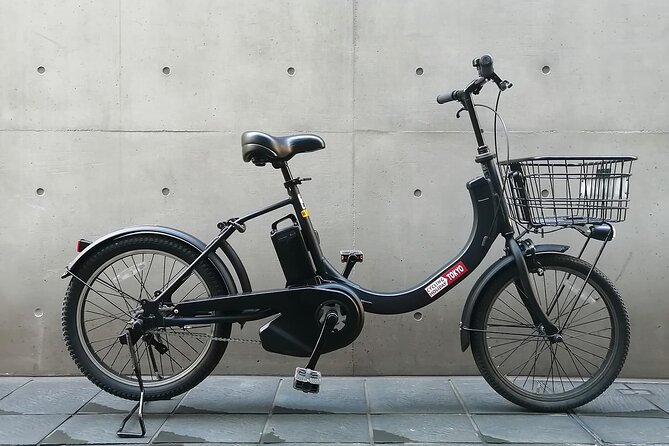
That is where the electric assist earns its keep. You still pedal, but the motor takes the sting out of starts, hills, and long stretches between stops. The bikes are described as easy to operate, with sturdy frames and front baskets useful for a water bottle or small bag. Helmets are included and must be worn.
I would not mistake this for a lazy ride. You need to steer, brake, watch traffic, and keep up with the guide. But the electric assistance lets you cover much more ground than a walking tour. One three-hour outing can give you a useful map of Tokyo, then help you decide which areas deserve a longer visit on foot.
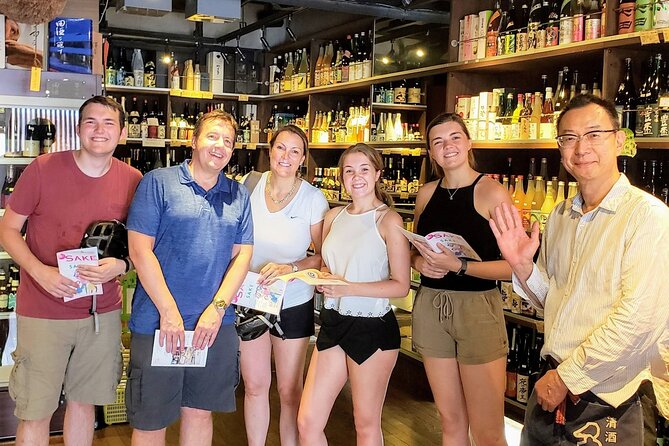
The small group is another real advantage. Six is the stated maximum, and some departures may have fewer people. A guide can stop for photographs, explain a temple custom, adjust the pace, or make sure nobody has been left behind. The group still needs to ride together, but this is far more personal than a large bus excursion.
More E-Bike Tours in Japan
- Tokyo Top Highlights 3h Guided E-bike Tour
★ 5.0 · 714 reviews - Tokyo: 3-Hour Bike or E-Bike City Highlights Tour
★ 4.8 · 435 reviews - Tokyo: 3-hour Guided E-Bike Tour of the City’s Hidden Gems
★ 4.8 · 251 reviews
Starting in Kanda, where working Tokyo meets old alleyways
The meeting point is Cycling Holiday Tokyo at 3-chōme-8-6 Uchikanda, near JR Kanda Station. The shop is roughly a minute from the station’s west exit, which makes the start easy to reach even if you are still learning Tokyo’s train system.
Kanda is a useful place to begin because it shows an everyday side of central Tokyo. It is a compact business district, but its narrow streets contain small Japanese-style bars and local restaurants. In the evening, office workers fill these places after work. During the tour, your guide may point out the contrast between the polished main roads and the more intimate lanes nearby.
Allow time to arrive, use the restroom, and get fitted with a helmet. Luggage storage is available, apart from valuables, so you do not need to carry every suitcase around the city. The shop also provides simple rain gear, winter gloves, and summer cooling items when appropriate.
A quick safety briefing and bike check should not be treated as wasted time. Tokyo’s roads are orderly, but they are not empty. Make sure you understand the brakes, electric assist, and group signals before setting off.
The morning route: Tokyo Station, palace walls, Ginza, and Tsukiji
The morning ride is the better choice if you want Tokyo’s grand civic sights mixed with old commercial streets. It begins by moving through the financial center, where modern office buildings provide a sharp contrast to the older neighborhoods near Kanda.
Tokyo Station and Marunouchi
At Tokyo Station, the main visual stop is Marunouchi Station Square and the view from Gyoko-dori Street. The red-brick station building is one of the city’s most recognizable pieces of architecture. Your guide explains the station’s history while you take photographs.
The stop itself is brief, listed at about five minutes, so do not expect a full station tour. That is part of the value of the bicycle format: you get the essential view and context, then continue instead of spending an hour inside a single attraction.
The surrounding Marunouchi area is Tokyo at its most polished, with broad streets and modern office buildings. It gives you a clear sense of the capital’s business center before the route turns toward the Imperial Palace.
More E-Bike Tours in Tokyo:
- 3-Hour Tokyo Private E-Bike Tour Starting from Your Hotel
★ 5.0 · 117 reviews - Tokyo: 3-Hour Bike or E-Bike Tour of City’s Hidden Gems
★ 4.7 · 81 reviews - Tokyo: 3h Private E-bike Tours, Starting at Your Hotel
★ 5.0 · 36 reviews - Tokyo: Private Cycling Tour with cute E-bike
★ 5.0 · 11 reviews
Otemon Gate and the Imperial Palace area
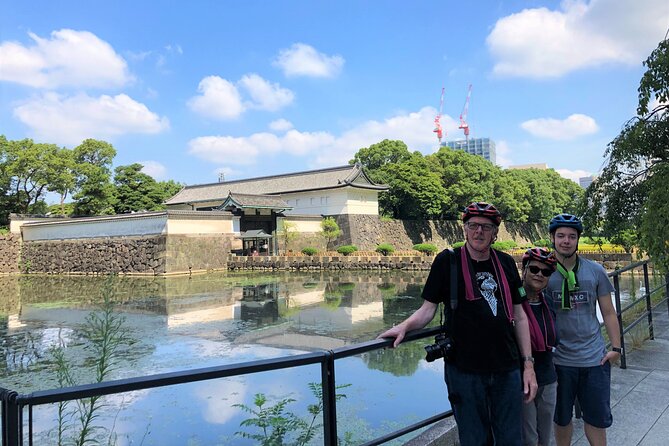
At Otemon Gate, you look across the moat toward the Fujimi-yagura tower. The stonework, water, and formal gate create a calmer scene than the surrounding avenues. The stop is short, but the setting gives your guide a chance to explain the palace grounds and the role of the old castle defenses.
The route also includes the spacious park next to the Imperial Palace. Its large open area is striking because it sits in the middle of one of the world’s busiest cities. You may see seasonal flowers and broad stretches of greenery, though the exact view depends on the time of year.
Sakuradamon is another highlight. Passing through or near this traditional castle gate gives the ride a strong historical pause without requiring a museum visit. The main limitation is timing. You are seeing the palace from public roads and outer areas, not touring the Imperial Palace interiors.
Ginza backstreets and the Tsukiji Outer Market
The route can pass through Ginza’s main streets or quieter back lanes, depending on traffic and conditions. Ginza is famous for luxury brands, but its side streets reveal a less polished and more local side of the district. This is one of the places where a bicycle has an advantage. You can move between major avenues and small lanes quickly.
At Tsukiji Outer Market, the focus is on the old-fashioned food shops lining the streets. The tour does not include food, and anything you buy is your own expense. The stop is about ten minutes, so treat it as a quick introduction rather than a full market crawl.
If you want to eat at Tsukiji, you may need to return later with more time. The market can be crowded, and a bicycle group cannot simply stop wherever it likes. Still, the guide can point out the character of the area and help you understand why this market remains important after the wholesale fish market moved to Toyosu.
Nihonbashi and local streets
Nihonbashi Bridge adds another useful piece of Tokyo geography. Traditionally, road distances were measured from this point, and the bridge remains a symbolic center of the city.
Between the major stops, the route uses local streets and passages that are practical for bicycles. This is often the most rewarding part of the morning ride. You see residential blocks, small businesses, and ordinary city life rather than moving from one famous photo stop to another.
The exact streets can change with traffic, pedestrians, weekday conditions, weekends, and the season. That flexibility is sensible. A fixed route would be less safe and less enjoyable when roads are crowded.
The afternoon route: Akihabara, kitchen tools, Asakusa, and sumo
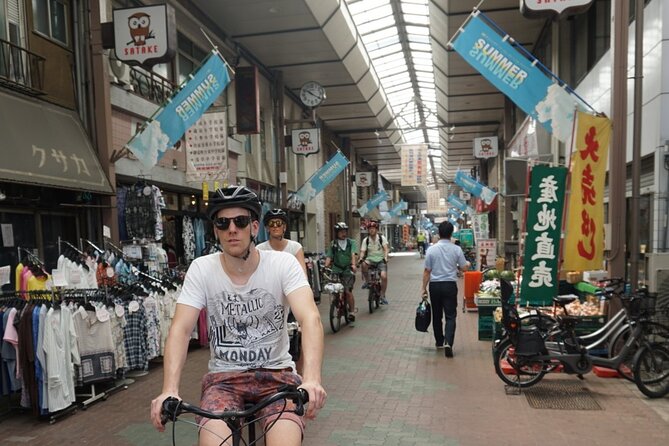
The afternoon route gives you a different picture of Tokyo. It is more focused on popular culture, traditional shopping streets, temples, and the Ryogoku sumo district.
Akihabara and Tokyo’s subculture districts
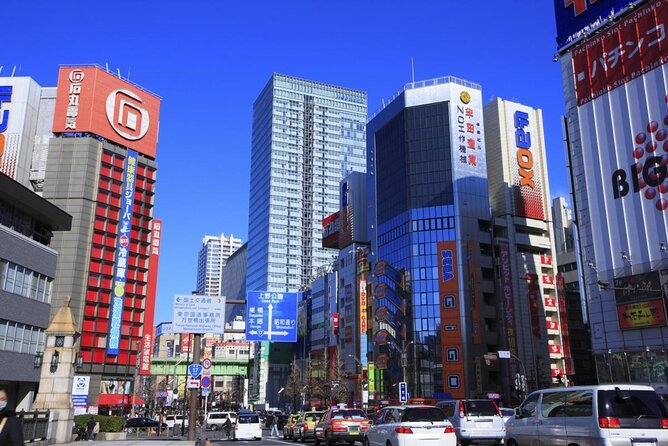
Akihabara is the center of anime, manga, electronics, gaming, and youth culture. The stop is short, around five minutes, so the guide provides an introduction rather than a shopping expedition.
This is useful if you are curious about Akihabara but do not want to spend an entire afternoon there. You will learn more than the familiar maid-café image and see how the area fits into Tokyo’s wider culture.
If you already have a long Akihabara shopping list, you may prefer to return independently. The bike tour gives you orientation, not extended time inside shops.
Kappabashi Tool Street
Kappabashi is one of the afternoon route’s most distinctive stops. Its shops sell kitchen utensils, professional cooking equipment, Japanese knives, restaurant supplies, and other tools used by food businesses.
The tour allows about ten minutes to look around and shop if time permits. That is enough to get a taste of the street, but not enough for a leisurely search for a special knife or ceramic set. If you plan to buy anything large or fragile, remember that you still need to ride back to the starting point.
This stop is particularly useful because it feels different from Tokyo’s usual sightseeing circuit. It connects the city to food culture and working businesses, not only temples and department stores.
Asakusa and its temple traditions
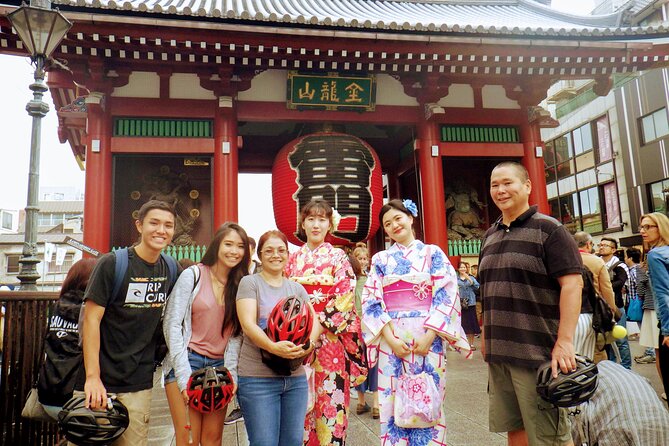
Asakusa is the afternoon route’s major traditional sight. It is known for Tokyo’s oldest temple and is one of the city’s most recognizable historic areas. You can expect a brief stop for photographs and an explanation of temple customs and rituals.
That guidance matters. Knowing how to behave at a temple, what the cleansing ritual means, and how the worship sequence works will help you throughout the rest of your time in Japan. The tour does not replace a longer visit to Asakusa, but it gives you enough background to return with greater confidence.
Asakusa is also one of the busiest parts of the ride. Pedestrians, shopfronts, and narrow streets require careful attention. Stay close to the guide and do not assume the group can move at the same speed as an empty road.
Ryogoku and the sumo connection
Ryogoku is Tokyo’s sumo district. The route passes through an area associated with the sport, and you might see active sumo wrestlers if the timing is lucky. That possibility is a bonus, not a promise.
Even without a wrestler sighting, Ryogoku adds a strong local theme to the afternoon. It is a chance to connect the city with one of Japan’s most traditional sports. Your guide can also help explain what you are seeing around the arena and neighborhood.
The afternoon route ends by returning toward Nihonbashi and the Kanda starting point. Since the activity finishes where it began, you can leave luggage at the shop and collect it afterward.
The guides shape the quality of the ride
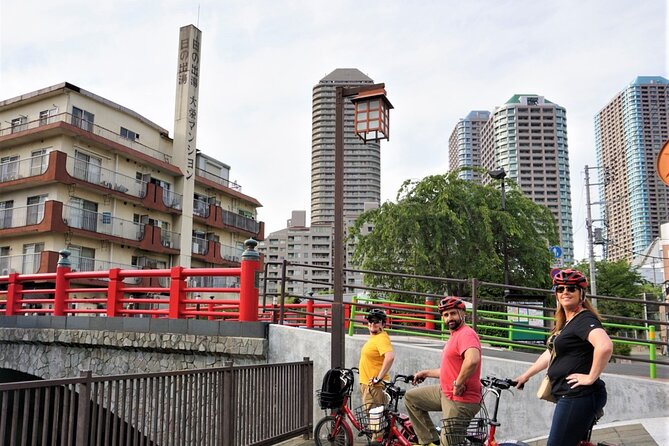
The strongest part of this experience is not any single landmark. It is the guide riding at the front and turning a string of city streets into a story.
Different guides lead different departures. Yo, also known as Yoshiko, is described as patient, friendly, and easygoing. Ted is praised for answering questions, keeping the ride safe, and explaining neighborhoods and seasonal sights. Jenny is noted for showing quieter streets and practical places to eat, including less expensive options near Ginza.
Take brings history, food information, and a lively manner, while Kazu is known for explaining the city as the group rides through it. Ninja has led the Imperial Palace and bay-area route, with particular attention to safety and the strength of the bikes. These details matter because a bike tour depends heavily on the person setting the pace and choosing where to stop.
You should expect an English-speaking local guide, but the exact guide is not guaranteed. If you care about a particular person, contact the operator before booking rather than assuming that guide will lead your departure.
Is $63.01 good value for three hours?
At $63.01 per person, this is not the cheapest way to see Tokyo. You could walk through one district for less, and the city’s trains are efficient and affordable.
The value comes from the amount of ground covered and the help you receive along the way. The price includes the electric-assist bicycle, helmet, English guide, insurance, simple rain gear, winter gloves, and summer cooling products. Luggage storage is also available, except for valuables. Food and drinks are not included.
If you tried to connect Kanda, Tokyo Station, the Imperial Palace, Ginza, and Tsukiji on foot, you would spend much of the day walking. By train, you would save time but miss the gradual change between districts. The bike fills that gap.
I see the best value for first-time visitors who want orientation early in their stay. You can note places to revisit, learn how the districts connect, and pick up local tips about food and customs. Families with children aged 12 and over can also enjoy it, provided everyone meets the minimum height of 147 centimeters and rides confidently.
Heat, rain, and city traffic deserve serious attention
Tokyo summers can be hot and muggy, especially in July and August. Bring water, sunscreen, and a small towel. An electrolyte drink is a smart choice on very hot days. The electric motor reduces effort, but it does not remove the heat.
The operator uses the heat stress index when deciding whether to run a tour. If conditions become unsafe during the ride, the guide may stop and return to the shop. A full refund is offered in that situation according to the provided conditions.
Rain can also cancel the ride. The decision is generally made after checking the forecast the day before, but a sunny forecast does not rule out rain during the tour. Simple rain gear is supplied, though you may still want glasses or gloves for comfort.
Traffic is the main physical consideration. You should be able to brake, turn, watch for pedestrians, and keep a steady pace. One person who is uncomfortable on city streets can find the experience stressful, even with a patient guide. If that sounds like you, choose a walking tour instead.
Who should book this Tokyo e-bike tour?
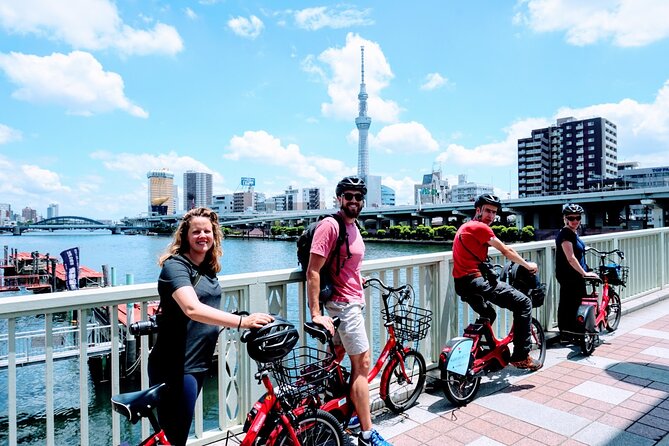
Book it if you want a fast, practical introduction to central Tokyo and enjoy being outdoors. It suits couples, families with older children, small friend groups, and first-time visitors who want both famous sights and ordinary neighborhoods.
It also works well early in your trip. The ride can help you understand where Kanda, Ginza, Tsukiji, Asakusa, Nihonbashi, and the Imperial Palace sit in relation to one another. Later, you can return by train or on foot to spend more time in the areas that caught your interest.
Choose the morning route for imperial architecture, Tokyo Station, Ginza, Tsukiji, and quieter local streets. Choose the afternoon route for Akihabara, kitchen tools, Asakusa temple customs, and sumo country.
I would skip it if you cannot ride a bicycle, dislike traffic, need a slow and fully accessible pace, or are visiting during a period when heat and rain are likely to disrupt plans. The route and stops can change for safety, so you need to be comfortable with a little flexibility.
My verdict on the three-hour ride
This is a strong value for seeing Tokyo as a connected city rather than a list of isolated attractions. The electric bike saves energy, the small group keeps the outing personal, and the local guides add the context you would miss on your own.
The best moments are likely to come between the headline sights: Kanda’s small bars, Ginza’s side streets, residential lanes, and the quick changes from business center to temple district. If you can ride confidently and want to cover ground without being trapped underground, I would book it, ideally near the beginning of your Tokyo stay.
FAQ
Where does the Tokyo e-bike tour begin?
It begins at Cycling Holiday Tokyo, 3-chōme-8-6 Uchikanda, Chiyoda City, Tokyo. The shop is about a one-minute walk from the west exit of JR Kanda Station.
How long does the tour last?
The activity lasts approximately three hours and finishes back at the meeting point.
What is included in the price?
The price includes an electric-assist bike, helmet, English-speaking guide, insurance, simple rain gear, winter gloves, and summer cooling products when appropriate. You may also leave luggage at the shop, except for valuables.
Which sights are included on the morning route?
The morning route may include Kanda, Tokyo Station and Marunouchi, Otemon Gate and the Imperial Palace area, Sakuradamon, Ginza, Tsukiji Outer Market, local backstreets, and Nihonbashi Bridge.
Which sights are included on the afternoon route?
The afternoon route may include Kanda, Akihabara, Kappabashi Tool Street, Asakusa, Ryogoku, and Nihonbashi Bridge.
What are the age and height requirements?
The minimum age is 12, and the minimum height is 147 centimeters. You must be able to ride a bicycle.
What happens if it rains or becomes dangerously hot?
The tour may be canceled because of rain or unsafe summer heat. You may then be offered another date or a full refund. If conditions become dangerous during the ride, the guide may stop the tour and return to the starting point.
More three-hour rides in Tokyo
- Tokyo Bay Area: Sunset Night View 3h E-bike Guided Bike Tour
★ 5.0 · 11 reviews - 3-Hour Porto Highlights on a Electric Bike Guided Tour
★ 5.0 · 4,392 reviews - 3-hour Complete Prague Bike Tour
★ 5.0 · 3,674 reviews - Porto: City Highlights 3-Hour Guided Electric Bike Tour
★ 4.8 · 3,092 reviews
Latest bike tours added in Tokyo
- Tokyo: West-Side Cycling and Food Tour with Guide★ 5.0 · 37 reviews
- Tokyo: Private Cycling Tour with cute E-bike★ 5.0 · 11 reviews
- Tokyo Bay Area: Sunset Night View 3h E-bike Guided Bike Tour★ 5.0 · 11 reviews
- Tokyo: Hidden Gems Guided Bike Tour with Lunch★ 4.5 · 30 reviews
- Tokyo Bike Tour: Shibuya, Harajuku & Hidden Gems★ 5.0 · 20 reviews
- Tokyo: 3h Private E-bike Tours, Starting at Your Hotel★ 5.0 · 36 reviews
- Tokyo: 3-hour Guided E-Bike Tour of the City’s Hidden Gems★ 4.8 · 251 reviews
- Tokyo: 3-Hour Bike or E-Bike Tour of City’s Hidden Gems★ 4.7 · 81 reviews
E-Bike Tours, compared.
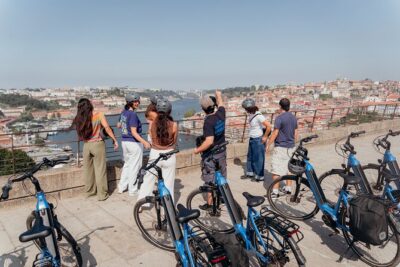
3-Hour Porto Highlights on a Electric Bike Guided Tour
Read our review →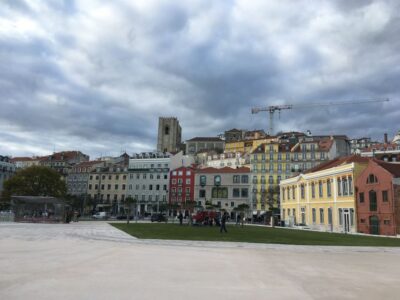
Hills, Alfama, and Mouraria Tour by Electric Bike
Read our review →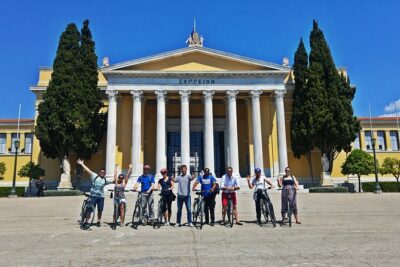
Athens Scenic Electric Bike Tour with optional Acropolis visit
Read our review →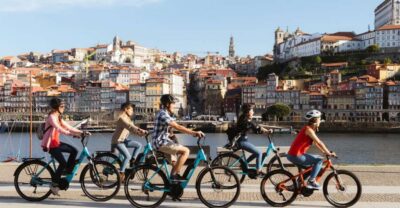
City Highlights 3-Hour Guided Electric Bike Tour
Read our review →
Rome EBike Tour: Appian Way, Catacombs & Roman Aqueducts
Read our review →
Top Highlights & Hidden Gems Tour by Cannondale E-Bike
Read our review →Browse the lists this tour appears in