
Review · BERLIN BIKE TOURS
Berlin: From East to West & Wall Tour by Bike with a Guide
Berlin reveals itself quickly from a bicycle. In about four hours, you ride from Friedrichshain in the former East to the Brandenburg Gate, Reichstag, Tiergarten, and Berlin’s central sights, while also passing through quieter residential streets and parks. It is a useful way to see how Berlin’s divided past fits into its modern city life.
I like the local perspective from Michael, a Berlin resident for almost 30 years who studied history and political science. I also like the strong value: a conventional bike, helmet, water, kids’ equipment, and even a small Berlin souvenir are included for $34. The main consideration is the distance. Twenty-one kilometers is flat and manageable for regular cyclists, but it is still a serious half-day ride.
Key points at a glance
- A full East to West route: Cover major sights from East Berlin’s Friedrichshain and East Side Gallery to Brandenburg Gate, Tiergarten, and the Reichstag.
- Michael brings local context: His German and English commentary connects old photographs, Berlin’s Cold War division, and the city you see today.
- Flat, mostly low-traffic cycling: The route uses bike lanes, parks, side streets, and paths near the River Spree.
- Useful for families: Children’s bikes start at a minimum height of 120 centimeters, with free child seats and helmets available.
- Good value at $34: Standard bikes and basic weather equipment are included, while an e-bike costs an extra €10.
- A compact group format: The activity is described as a small-group tour, with capacity information ranging from 10 to 12 people, so confirm the exact number when booking.
Why a bicycle is a smart way to see Berlin
Berlin is spread out. The Brandenburg Gate, East Side Gallery, Museum Island, Victory Column, and Friedrichshain are not packed into one walkable historic center. On foot, you would spend much of a day moving between them. On a bus, you would cover the distance but miss the feel of the neighborhoods between the famous sights.
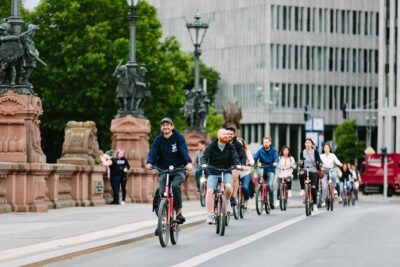
This ride gives you both reach and contact with the city. You pass through residential streets, public parks, bike lanes, and paths along the Spree. The result is not just a checklist of monuments. You get a sense of Berlin as a green, open city that is still changing.
The route is flat, which matters. You do not need mountain-bike fitness or special cycling experience. Still, 21 kilometers, or about 13 miles, is more than a casual pedal around a park. The many stops and breaks make the pace easier, and the youngest participant recorded for the tour was seven, with the oldest 77. You should still be comfortable riding for several hours.
The bikes are conventional models, included in the price. A limited number of e-bikes can be reserved after booking for an additional €10, payable in cash on the day. If you prefer electric assistance, ask early rather than assuming one will be available.
More guided departures in Berlin:
- Berlin: Sights and Highlights Bike Tour with a Local Guide
★ 4.8 · 2,698 reviews - Berlin: The Wall and Third Reich Guided Bike Tour
★ 4.8 · 578 reviews - Berlin: Guided Bike Tour to Explore the Highlights
★ 4.8 · 506 reviews
Starting in Friedrichshain near the Velodrom
The meeting point is at Cotheniusstraße 8, in front of the bike shop. The building is on a corner and also contains the Blaue Adria restaurant, a useful landmark when you arrive.
This starting point is about 3 kilometers east of Alexanderplatz and close to Friedrichshain. It is particularly convenient if you are staying in Friedrichshain, Prenzlauer Berg, Mitte, Pankow, or Lichtenberg. Landsberger Allee S-Bahn station is nearby, served by lines S41, S42, S8, and S85. Trams M5, M6, M8, and M10 also serve the area, and bus 200 stops at Conrad-Blenkle-Straße.
The location is not in the postcard center, so allow time to get there. That small inconvenience is balanced by the chance to begin in a real Berlin neighborhood rather than at a crowded monument.
The first major stop is Volkspark Friedrichshain. The park gives you a quick introduction to Berlin’s layers of history. It contains two large bunkers built during the Nazi period, now covered and absorbed into the park’s green setting. You also see the Märchenbrunnen, or fairy-tale fountain, with figures from the Grimm stories.
This is one of the more relaxed parts of the ride. You have time for photographs, and the park is a natural place for a short break. The tour information also points to beer and ice cream nearby, though you should not count on a long café stop unless the guide’s timing allows it.
From the East Side Gallery to the Spree
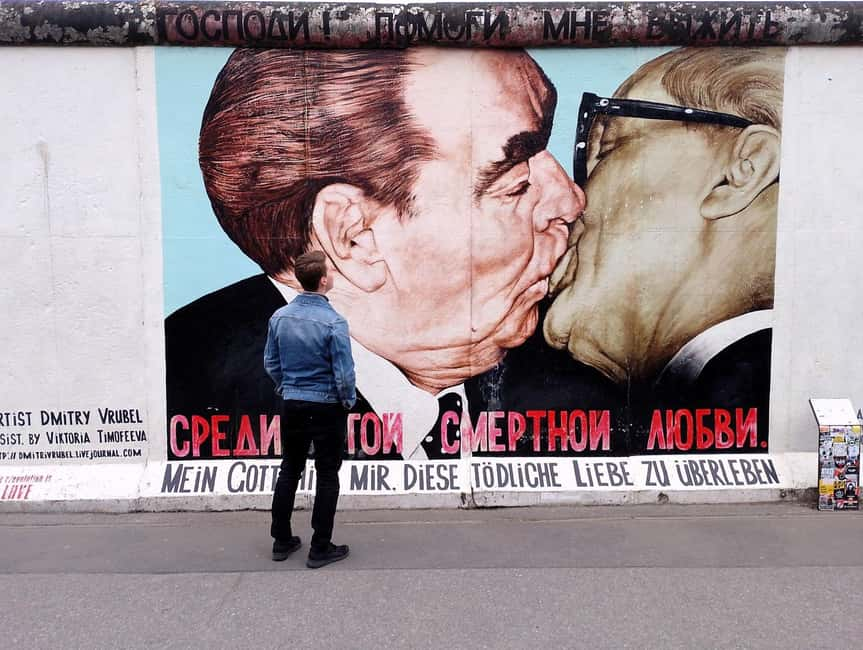
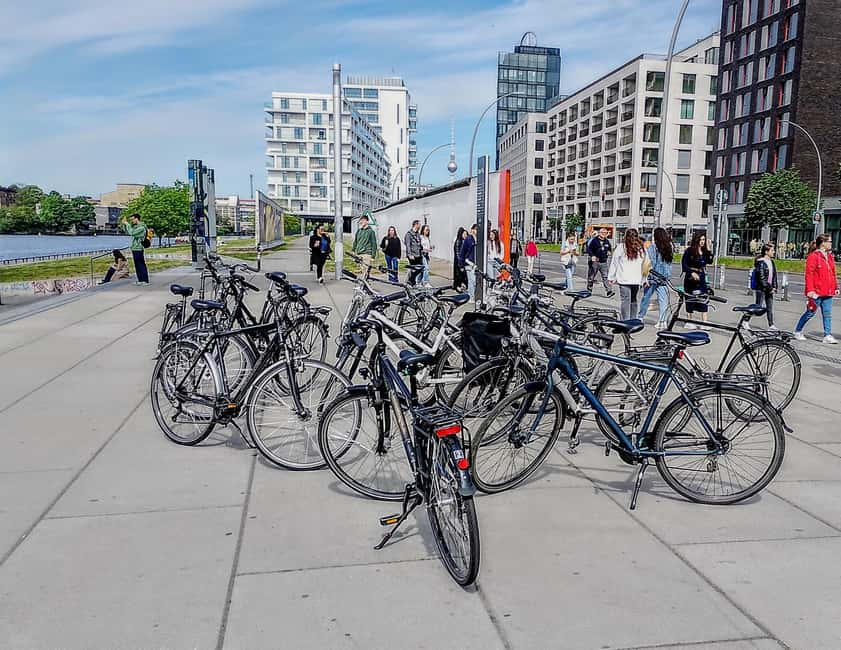
From Friedrichshain, the route heads toward the East Side Gallery. This long surviving section of the Berlin Wall is covered with murals and has become one of the city’s best-known outdoor art sites.
The stop works well on a bicycle because you can arrive without dealing with a large vehicle or a long walk from a distant drop-off point. You get time for photographs and a guided explanation, then continue toward central Berlin.
The Wall is worth seeing, but it is easy to treat it as a colorful photo backdrop. The guide’s use of before-and-now pictures helps correct that. You see how the barrier once divided the city, then compare it with the open streets, river paths, and new development that now cross the old boundary.
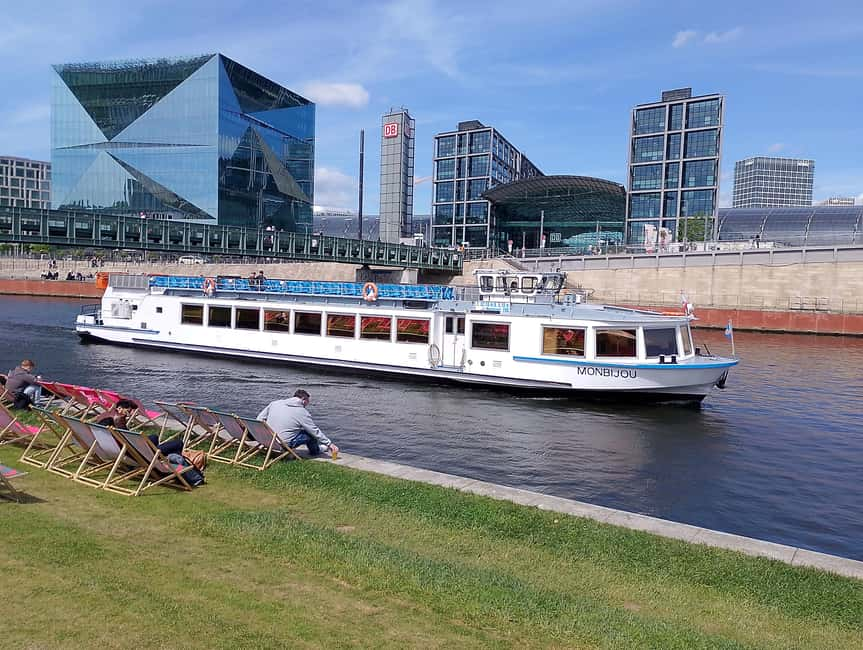
The route also shows Berlin’s relationship with water. Sections near the Spree offer scenic views and a break from traffic. This is one reason I prefer the ride to a standard coach tour. You are close enough to notice the shifts in architecture and street life, not just the next monument on the schedule.
Nikolaiviertel, Alte Münze, and the Berlin Palace
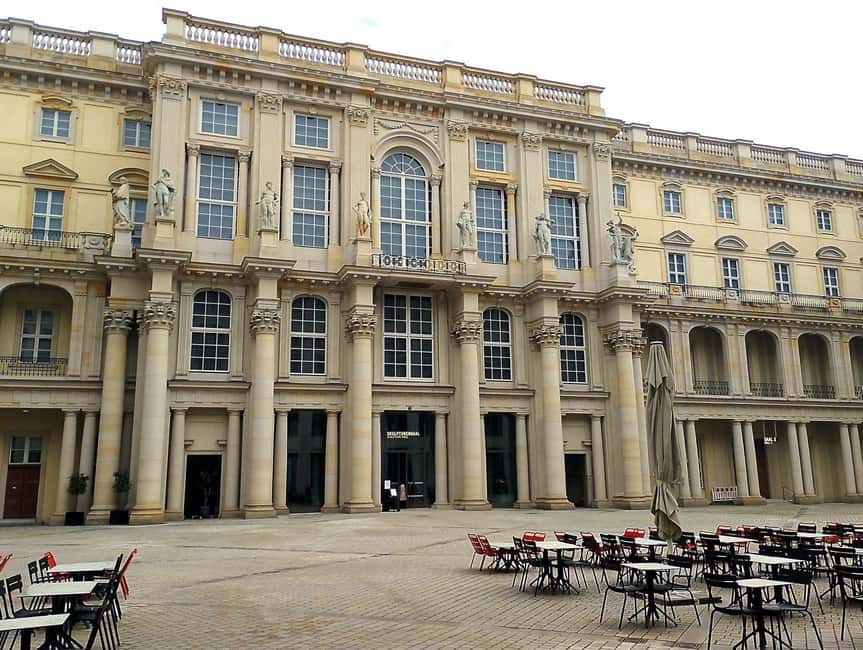
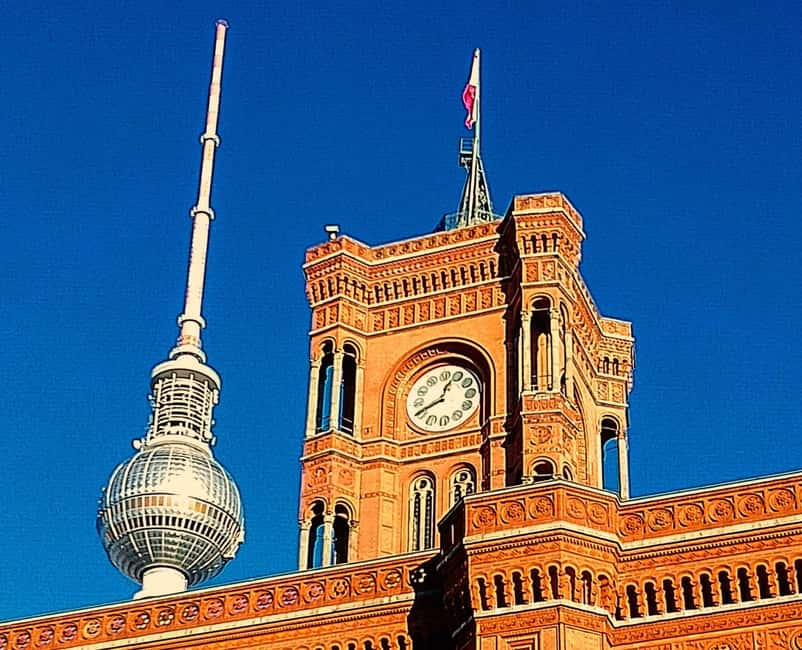
The ride continues into Mitte, where the city’s history becomes more concentrated. At Alte Münze, you stop for views and an explanation of the former mint site. The area now serves as a cultural and event space, adding a modern layer to central Berlin.
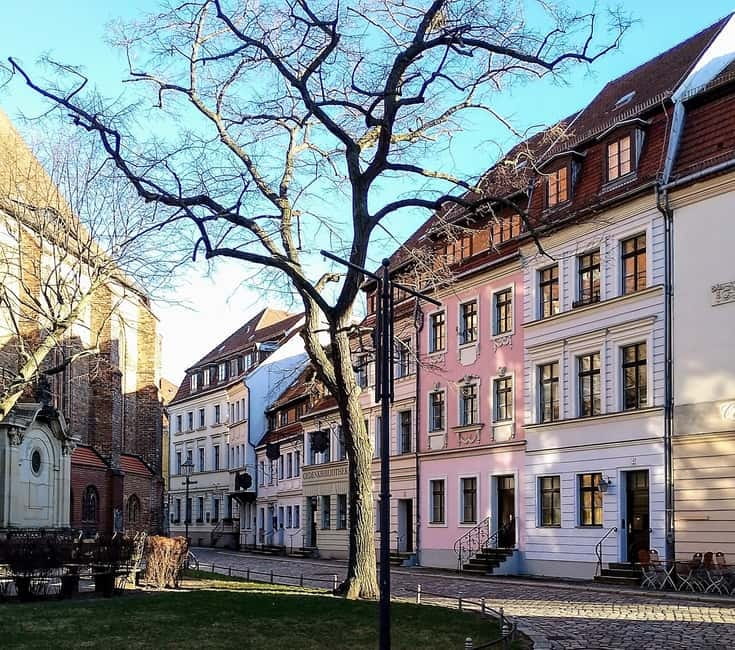
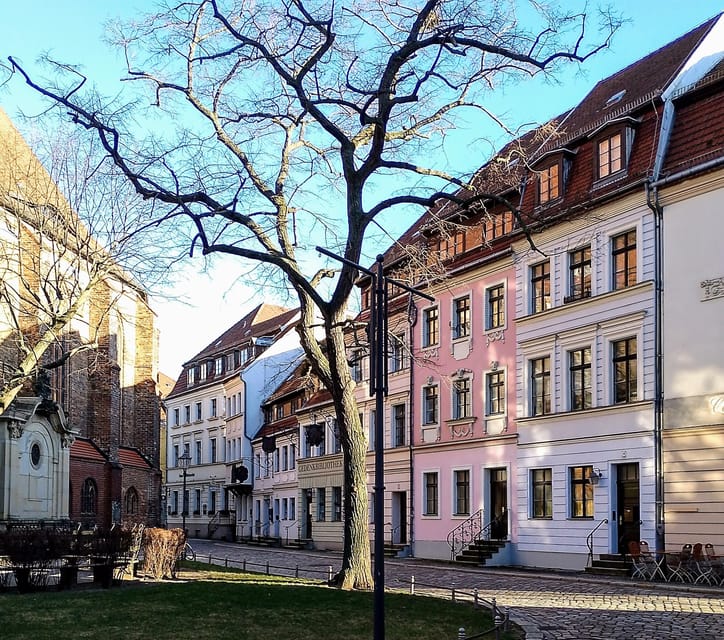
Next comes Nikolaiviertel, the small quarter around Berlin’s oldest church. Its restored and reconstructed streets give you a more intimate setting than the broad avenues nearby. It is one of the few places in central Berlin where you can pause and see a compact old-town style district.
The Berlin Palace follows. The original palace was heavily damaged in the Second World War and later replaced by the Palace of the Republic during East German rule. The present building houses the Humboldt Forum, which combines reconstructed palace façades with modern exhibition spaces.
A bicycle stop cannot replace a museum visit inside the Humboldt Forum, but it does give you the essential visual story. You see how architecture in Berlin often carries arguments about memory, power, and what the city chooses to rebuild.
Museum Island is included as a photo stop. You see the island’s famous museum buildings from outside, but entry tickets are not part of this activity. If you want time inside the Pergamon Museum, Neues Museum, or another institution, plan that for a separate visit.
More bike tours in Berlin:
- Berlin Highlights 3-Hour Bike Tour
★ 5.0 · 948 reviews - Berlin City Bike Tour with Beer Garden Stop
★ 5.0 · 917 reviews - Berlin Highlights: 3-Hour Bike Tour
★ 4.9 · 809 reviews - Berlin Highlights Sightseeing Bike Tour in Small Groups
★ 5.0 · 652 reviews
Unter den Linden and the Brandenburg Gate
The ride then follows Unter den Linden, Berlin’s grand central boulevard. The avenue links Museum Island with the Brandenburg Gate and passes important buildings, monuments, and formal public spaces.
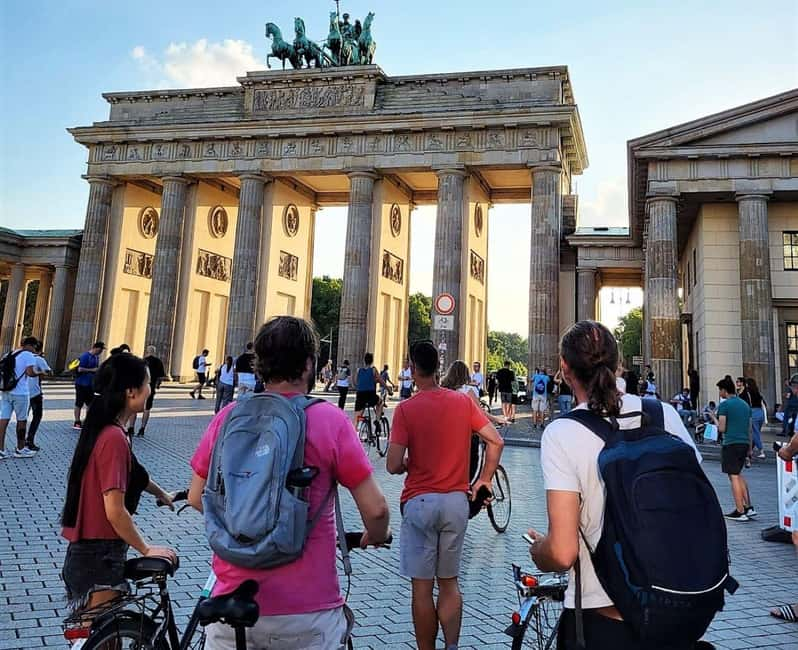
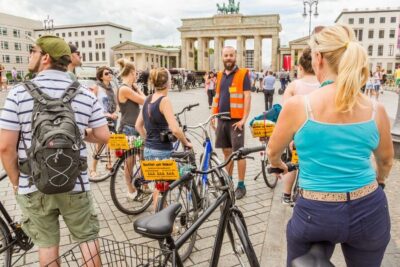
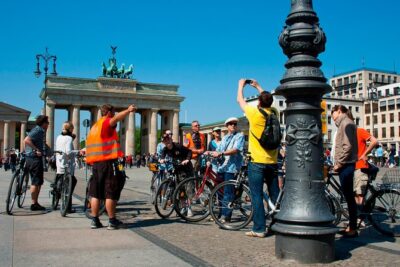
The Brandenburg Gate is the natural centerpiece of this section. It once sat beside the Berlin Wall and symbolized division. Today it is one of the clearest images of reunified Berlin. The guide stops here for photos, commentary, and a short break.
You should expect other people around the gate. This is one of Berlin’s busiest sightseeing areas, and a bicycle does not make the monument private. The advantage is that you arrive with the route’s earlier context. After seeing the Wall in Friedrichshain, you have a better sense of why this gate mattered so much during the Cold War.
The tour does not try to turn every stop into a long lecture. That is useful during a bike ride. You receive the main story, have a chance to ask questions, then keep moving before the day becomes tiring.
Tiergarten, the Victory Column, and the Reichstag
From Brandenburg Gate, you enter Tiergarten, Berlin’s large central park. This is another welcome change of pace. The city’s formal core gives way to trees, paths, and open space, and you continue cycling away from heavy car traffic.
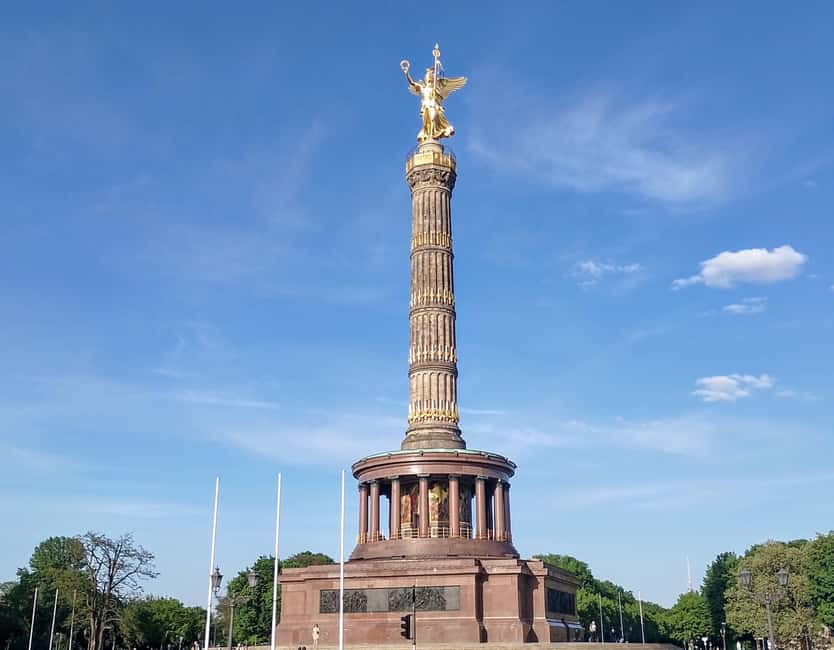
The Victory Column rises near the center of the park. Its golden statue is easy to recognize from a distance, but seeing it close up gives you a better sense of its scale and its role in Prussian and German public memory. The tour includes a guided stop and photographs. It does not include climbing the column.
The Reichstag is another important exterior stop. Its glass dome and historic façade represent both Germany’s political past and its current parliamentary system. The guide explains the building from outside, but entry to the dome is not part of the bike ride. If you want to visit the dome, arrange that separately and do not assume the tour provides access.
Cycling through Tiergarten is one of the strongest practical features of the route. You cover ground without feeling as if every minute is spent beside traffic. The park also gives you a better impression of Berlin’s scale than a sequence of indoor attractions would.
Scheunenviertel and the return through Berlin neighborhoods
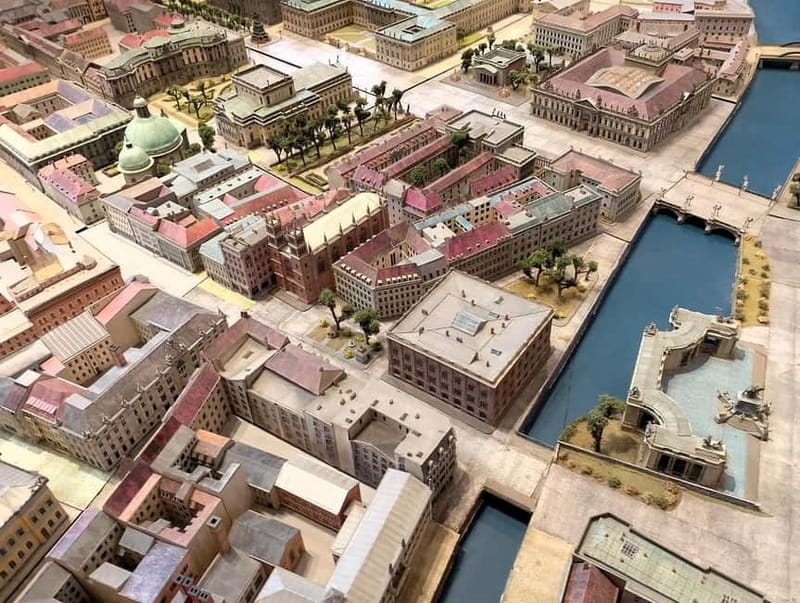
The return route passes through Scheunenviertel, an area in Mitte with a long Jewish and urban history. Today, the district is known for its streets, courtyards, shops, galleries, and changing city life. The tour treats it as part of the ride rather than stopping at every address.
That is an important distinction. This is a highlights tour with neighborhood context, not a specialist Jewish history tour or an architectural walking tour. If you want an intensive look at one theme, choose a more focused activity. If you want to understand how several parts of Berlin fit together, this broader route is more useful.
The ride finishes back at Cotheniusstraße 8. Because it is a round trip, you do not have to arrange transport from a distant final stop. The total time is about three and a half to four hours, including the stops and breaks.
What the guide adds to the ride
Michael is a German native speaker who has lived in Berlin for nearly three decades. He speaks English and German, and the language used during a particular outing may depend on the group. If you need a fully English-language experience, confirm that before booking.
His background in history and political science fits this route well. Berlin’s sights are rarely simple. The Wall, the palace, the Reichstag, the Victory Column, and the city’s parks all carry several layers of meaning. A guide who can connect those layers makes the ride more than a fast pass through central Berlin.
A particularly useful feature is the use of before-and-now images. Berlin changed sharply after reunification, and many parts of the city look nothing like they did during the Cold War. Seeing the earlier view beside the current one helps you understand the speed and scale of that change.
The guide also adjusts to the group’s pace and questions. That matters on a small ride. You can ask for clarification, request a little more time for a photograph, or get help with the bike if something feels wrong. One participant had a problem with a chain early in the ride and received a replacement bike promptly, which is the kind of practical response you want from a cycling operator.
Bikes, weather, and family details
Standard bikes are included in the $34 price. The equipment is described as well maintained, and helmets are available, although German law does not require adults to wear them. Water is provided, and gloves or hats are available at no extra cost in cold or rainy weather.
Those extras are modest but useful. Berlin’s weather can change quickly, and a four-hour ride feels much longer if you are cold. You should still dress for the forecast and wear comfortable clothing suitable for cycling.
Children’s bikes are available for riders at least 120 centimeters tall. Baby and child seats are free, as are helmets. The tour has already accommodated ages from seven to 77, but your child should be able to manage the length of the ride and follow group cycling instructions.
The route is mostly separated from car traffic, using bike lanes, parks, and side streets. That makes it less stressful than riding in a busy central road. Even so, you are still cycling in a capital city, so you should remain alert at crossings and shared paths.
Is $34 a good value?
At $34 per person, this is a strong deal if you want a broad first look at Berlin. You receive a guide, bike, helmet, water, family equipment, several hours of sightseeing, and a souvenir. The route covers enough ground that visiting the same sights independently by foot would take much longer.
The value is especially good for a first day or second day in the city. You can use the ride to identify places you want to revisit later, such as Museum Island, the East Side Gallery, or the Humboldt Forum.
An e-bike costs €10 extra and must be requested after booking. I would consider that upgrade if you do not cycle often, if you are worried about the distance, or if your group includes riders with different fitness levels. The route is flat, so electric assistance is not essential for most regular cyclists.
The main limitation is that a single ride cannot provide extended time inside museums or detailed treatment of every historical site. You are buying a broad city overview, not a collection of full guided visits.
Who should book this Berlin bike tour?
I would choose this ride if you want to see major Berlin sights in one morning or afternoon and prefer moving through the city under your own power. It is a good fit for solo visitors, couples, families, and small groups who enjoy outdoor sightseeing.
You will get the most from it if you can ride comfortably for several hours and are happy with exterior visits and short stops. It is less suitable if you want a slow museum day, a specialist focus on the Nazi period or Cold War, or a fully private route with long stops at each monument.
The small-group format helps keep the outing personal. The published information describes a maximum of 10 participants, while the provider’s logistical notes mention up to 12. Ask for the exact group size when you reserve, especially if that detail matters to you.
Free cancellation up to 24 hours before the start and reserve-now, pay-later booking make the plan fairly flexible. The tour also offers a 25 percent discount if you later rent a bike during your Berlin stay, which can be useful if the ride convinces you to cycle more.
Should you book it?
Book this tour if you want maximum city coverage with a local guide, especially early in your Berlin visit. Michael’s long connection with the city, the before-and-now images, the flat route, and the mix of major sights with residential districts give you a grounded introduction rather than a simple monument parade.
Skip it if 21 kilometers sounds tiring or if your main goal is to spend hours inside museums. For most active visitors, though, $34 buys a lot of Berlin in four hours, with enough historical context to help you make better choices for the rest of your stay.
FAQ
How long is the Berlin bike tour?
The ride lasts about three and a half to four hours, including stops and breaks.
How far do you cycle?
The total distance is about 21 kilometers, or 13 miles. The route is flat.
What sights are included?
Stops and photo breaks include Volkspark Friedrichshain, the East Side Gallery, Alte Münze, Nikolaiviertel, the Berlin Palace, Museum Island, Brandenburg Gate, Tiergarten, the Victory Column, the Reichstag, Scheunenviertel, and the Märchenbrunnen.
Is the tour available in English?
Yes. The guide speaks English and German. The language used may depend on the language mix of the group.
Is a bicycle included in the price?
Yes. A conventional adult or child-sized bicycle is included. Helmets, water, child seats, and some cold-weather equipment are also provided.
Can I use an e-bike?
A limited number of e-bikes are available for an additional €10. You need to request one after booking, and the fee can be paid in cash.
Can children join the tour?
Yes. Children’s bikes are available for riders with a minimum height of 120 centimeters. Free child seats and helmets are also available.
Where does the tour start and finish?
The tour starts and ends at Cotheniusstraße 8, 10407 Berlin, in front of the bike shop. The building also contains the Blaue Adria restaurant.
What happens if I need to cancel?
You can cancel up to 24 hours before the activity for a full refund. Reserve-now, pay-later booking is also available.
Latest bike tours added in Berlin
- Small-Group Historical Bike Tour in Berlin★ 4.5 · 103 reviews
- Berlin Wall and Cold War Bike Tour in Small Groups★ 5.0 · 114 reviews
- Alternative Berlin Bike Tour – Off the Beaten Tracks in Small Groups★ 5.0 · 99 reviews
- Potsdam Bike Tour with Rail Transport from Berlin★ 4.5 · 81 reviews
- Berlin: Guided Private Bike Tour to Explore the Highlights★ 5.0 · 12 reviews
- Half-Day Bike Tour of Berlin’s Lesser Known And Historical Sites★ 5.0 · 10 reviews
- 3-Hour Bike Tour of Tiergarten and Berlin’s Hidden Places★ 5.0 · 26 reviews
- Berlin : Guided Private Sightseeing Tours with Funbikes, Teambikes★ 5.0 · 20 reviews
Berlin Bike Tours, compared.
Sights and Highlights Bike Tour with a Local Guide
Read our review →
Berlin Highlights Sightseeing Bike Tour in Small Groups
Read our review →
Alternative Bike Tour of Kreuzberg & Friedrichshain
Read our review →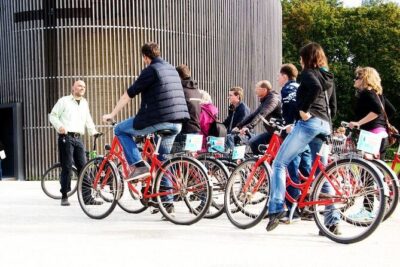
Browse the lists this tour appears in