
Review · HISTORIC & LANDMARK BIKE TOURS
Half-Day Bike Tour of Berlin’s Lesser Known And Historical Sites
Berlin’s famous sights tell only part of the story. This bike tour heads east, into Prenzlauer Berg, Lichtenberg, and Weissensee, where Cold War housing, old industrial ground, former Stasi sites, and quiet lakes reveal a less polished but more everyday side of the city. You spend about four hours riding with a guide and a maximum of eight people.
I like the route for two clear reasons: it gives you real context about daily life in East Berlin, and it uses green paths and neighborhood streets rather than simply linking one major sight to the next. Guides including Katrin, Kathrin, Markus, and Ferenz have been praised for warmth, humor, and personal knowledge. The main consideration is that this is not a greatest-hits tour. If you want the Brandenburg Gate, Reichstag, or Museum Island, choose another ride.
Key points before you book
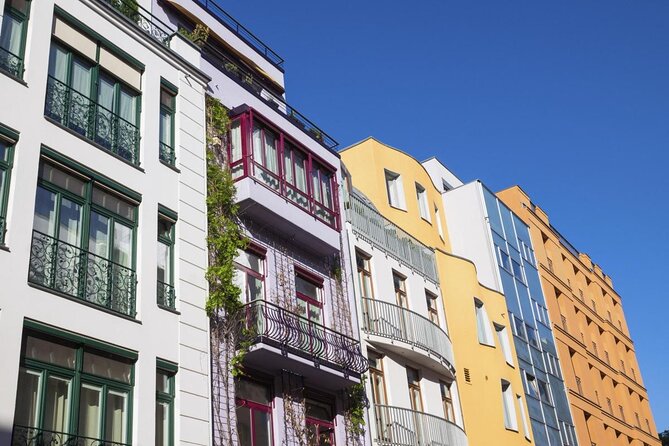
- East Berlin beyond the postcard sights: See communist-era apartments, former industrial areas, and districts most first-time visitors skip.
- A small group of up to eight: The size makes conversation with the guide easier and allows the route to feel personal.
- Cold War stories with local detail: Learn about East German daily life, the Stasi network, border crossings, and the former prison site.
- A surprisingly green route: Prenzlauer Berg, the Weissensee area, Orankesee, and Obersee add parks, water, and quieter streets to the ride.
- A manageable half-day outing: The tour lasts about 3.5 to 4 hours, starts at 10:00 am, and returns to its meeting point.
- Good value for a city tour: At $36.88 per person, the price includes a bicycle, driver-guide, and local guide, but not food, drinks, or transport to the start.
Why this route tells a different Berlin story
Most first-time Berlin itineraries stay close to the historic center. That makes sense, but it can leave you with a city made up of famous buildings and memorials rather than ordinary neighborhoods. This ride shifts the focus to places shaped by work, housing, political control, recreation, and the division between East and West.
You see where people lived, how large state institutions operated, and what happened to areas once tied to slaughterhouses and breweries. The story is not limited to 20th-century tragedy. The route also shows how Berlin’s eastern districts include parks, lakes, apartment blocks, and everyday public spaces.
I especially like the balance between stops and riding. You are not sitting through a long lecture in one place. Instead, the guide can explain an apartment block, a former border station, or a Stasi site, then connect it to the next neighborhood as you ride.
The tone also seems suited to people who prefer conversation over formal guiding. The guides are described as funny, accommodating, and able to adjust the emphasis when participants already know central Berlin. That matters if you have visited the main historic sights before and want something less predictable.
More Historic Bike Tours in Germany
- Berlin: Cold War & Berlin Wall History Guided Bike Tour
★ 4.8 · 422 reviews - Berlin Wall History Small Group Cycling Tour
★ 4.9 · 152 reviews - Small-Group Historical Bike Tour in Berlin
★ 4.5 · 103 reviews
Starting at Bornholmer Strasse and entering Prenzlauer Berg
The meeting point is Bornholmer Str. 75A, 10439 Berlin, with a 10:00 am start. The tour ends back at the same meeting point, and the location is near public transportation. You will want to allow enough time to reach the start without rushing, since the activity does not include hotel pickup.
Prenzlauer Berg receives the longest stop, about one hour. That is a good sign for anyone interested in how Berliners lived, rather than only where major events happened. The district provides the setting for explanations of East German daily life and communist-era apartment housing.
The most useful part of this stop is the chance to connect architecture with politics. Apartment blocks were not just backdrops. They shaped family life, privacy, neighborhood ties, and the experience of living under a state socialist system. A guide with personal or local knowledge can make these subjects easier to understand than a museum label.
You should not expect a single grand monument here. The value comes from the district as a whole, from the housing areas and streets to the way the neighborhood fits into Berlin’s changing identity. The stop also gives you time to settle into the bicycle and the pace of the tour.
Old slaughterhouses, breweries, and the working city
The route passes former slaughterhouse sites and breweries, adding an industrial layer to the story. These places help explain how eastern Berlin functioned as a working city, not simply as the political center of the German Democratic Republic.
Industrial sites can be easy to overlook when walking through Berlin. On a bicycle, you can cover more ground and see how work areas connected with housing and public facilities. The guide can point out what used to happen in these spaces and how the city has changed around them.
This portion also helps prevent a narrow view of Cold War Berlin. The era was not only about walls, spies, and government offices. It was also about food production, beer, jobs, transport, housing, and planned urban growth.
Because the tour is short, you should expect selected examples rather than a full industrial history of Berlin. Still, the combination of old work sites and residential districts gives the ride a useful rhythm. You move from the personal scale of apartment life to the larger systems that supported the city.
The Stasi museum and former prison site
A major stop concerns the Stasi, East Germany’s state security service. The route takes you to the former Stasi headquarters and prison area, with a short stop of about five minutes listed for the memorial and former prison.
That time is brief, so do not book this tour expecting a long museum visit or an extended indoor examination of documents. The purpose here is to place the institution in the city and understand its size, reach, and role in East German society.
The Stasi relied on a wide network of official staff and informers. Its work touched far more than high-profile political opponents. Understanding that network helps explain why ordinary conversations, friendships, travel plans, and personal ambitions could carry political risk.
The physical scale of the former headquarters is part of the lesson. It was not a tiny secret office hidden in a back room. The site represented a large state system with offices, records, personnel, and a prison. A guide can make that abstract system feel more concrete by explaining what the location meant to people living nearby.
The stop is best treated as a concise introduction. If the Stasi is a major reason for your visit, set aside separate time for a longer museum experience. On this tour, the site is one part of a wider eastern Berlin story.
More Historic Bike Tours in Berlin:
- Berlin (E)Bike Tour Historical Highlights in Small groups
★ 4.5 · 24 reviews - Historical Singapore Bike Tour on Full-Sized Bicycles
★ 5.0 · 1,421 reviews - Barcelona: 2.5-Hour Bike or E-Bike Historical Tour
★ 4.5 · 1,262 reviews - Asheville Historic Downtown Guided Electric Bike Tour with Scenic Views
★ 5.0 · 1,234 reviews
Ernst-Thälmann-Park and the GDR housing idea
The ride continues to Ernst-Thälmann-Park, described as a GDR-era park and housing area with a planetarium. The stop lasts about ten minutes.
This is a useful place to see how recreation, public space, and housing were planned together. The park and apartment setting show an attempt to create a complete urban district rather than isolated buildings. It also gives you a break from the denser streets and industrial references earlier in the route.
The planetarium adds another angle. Public science and education had a place in the GDR, and a facility like this fits into the wider idea of building shared civic amenities. The tour does not promise admission, so expect to see the area and hear about its purpose rather than take part in a planetarium program.
Ten minutes is enough for orientation and explanation, but not for a detailed architectural study. If you enjoy socialist-era planning, pay close attention here and ask the guide questions while the group is small.
A former border station at November 9 Square
The route reaches Platz des 9. November 1989, a former border station and Berlin Wall site, for about 15 minutes. The date refers to the fall of the Wall, making this one of the clearest links between the neighborhood ride and the event that reshaped Berlin.
A former border station can say more than a surviving stretch of concrete. It helps you picture how movement was controlled and how a local crossing fit into the larger division of the city. The stop also brings the Cold War story forward to 1989, when the political system began to collapse.
This is a good example of why the ride works best for people who have already seen the central Wall memorials. You get a different setting and a more local sense of the border. It is not presented as a giant memorial complex, so the guide’s explanation matters.
The stop is short, but it should give you enough time to understand the location and ask a few questions. Do not expect a long museum visit or a large collection of exhibits.
Orankesee and Obersee: water in the city
The route then passes Orankesee and Obersee, two inner-city lakes. Each stop is listed at about five minutes, so these are quick pauses rather than long lakeside visits.
Their value is partly visual and partly social. After apartment blocks, industrial sites, and state institutions, the lakes show another side of eastern Berlin: local recreation and open space. The artificial Obersee also reflects how urban land was shaped for public use.
These stops help keep the ride from becoming too heavy. Berlin’s Cold War story includes fear and surveillance, but also ordinary leisure. People lived, worked, walked, and spent time near water. The lakes make that everyday side visible.
You may want to keep expectations realistic. Five minutes is not enough for a swim, a long walk, or a full lake circuit. Think of the stops as short pauses that widen the picture of the district.
Weissensee and the final stretch
The tour spends about 45 minutes in Weissensee, the longest neighborhood section after Prenzlauer Berg. This gives the guide room to connect housing, local streets, green areas, and the wider development of Berlin’s eastern districts.
The final lake stop is Strandbad Weissensee, where the group pauses for about ten minutes. Together, Weissensee and its lakeside bathing area give the route a relaxed ending. You are still learning about the city, but the setting is less formal than the Stasi or border sites.
The area also reinforces one of the tour’s strongest features: the eastern districts are not simply a collection of political landmarks. They include places where people live, meet, exercise, and spend free time. That range makes the ride feel like a look at a functioning part of Berlin rather than a memorial-only excursion.
The tour also includes an athletic facility where famous Olympic athletes trained, according to the experience description. The route’s sports and recreation references fit naturally with the parks, lakes, and public facilities found in this part of the city.
What the four-hour pace feels like
The tour is described as about 3.5 hours, while the booking information gives an approximate duration of four hours. Plan your morning around the longer figure. The itinerary includes several brief stops, one-hour neighborhood sections, and plenty of time moving between districts.
The physical demand appears moderate. The route is described as manageable for cycling, and the strongest feedback emphasizes a relaxed ride on good bicycles. Most people can participate, but you should still be comfortable riding for several hours.
The small group is a real advantage. With no more than eight participants, the guide can answer questions and adjust the conversation. One especially useful feature is that the tour can run with only two participants, with no stated minimum group size in the booking details. That can make the experience feel more like a private outing, though the activity still notes that a minimum number may be required for the booking to operate.
You receive the bicycle, a driver-guide, and a local guide. Food and drinks are not included, so plan around the morning timing. Smart-casual clothing is requested, and children must be accompanied by an adult.
Is $36.88 a fair price?
At $36.88 per person, this is a strong value if you want a guided look at districts that are difficult to connect on your own. The price includes the bicycle and about four hours of guiding, not just a short rental or a quick loop around one neighborhood.
The value comes from the route design. You could reach some of these districts by public transport, but you would need to research the sites, work out the order, and understand how the Stasi headquarters, apartment areas, former border station, lakes, and industrial sites fit together. The guide supplies that connection.
It is less compelling if your main goal is to see Berlin’s central monuments. You would spend much of the morning away from the Brandenburg Gate, Reichstag, Checkpoint Charlie, and Museum Island. That is not a flaw, but it is an important choice.
Free cancellation is available up to 24 hours before the start time for a full refund. Cancellations or changes made less than 24 hours before the start are not refunded or accepted, and the activity may offer another date or a full refund if its minimum number is not reached.
Who should choose this bike tour?
I would choose this ride if you have already covered central Berlin or if you prefer neighborhoods, social history, and local context to famous monuments. It suits adults, families with accompanied children, and older teenagers or students who can manage a half-day bicycle outing.
It is also a good match for repeat visitors. The route avoids the usual tourist circuit and reaches parts of Prenzlauer Berg, Lichtenberg, and Weissensee that many short city visits miss.
The tour may not suit you if you want a museum-heavy experience, extensive time inside the Stasi museum, or a slow architectural tour with long stops. The Stasi site receives only a brief listed stop, and several lake and memorial pauses last just five to 15 minutes.
The guides are a major part of the experience. Katrin and Kathrin are praised for clear, engaging guidance, while Markus is described as humorous and able to shape the route around what the group already knows. Ferenz is also associated with an especially personal small-group experience. The exact guide depends on the date, but the human element is central to the tour.
Should you book it?
Book this tour if you want a more ordinary, eastern, and local Berlin. You will see apartment blocks, former workplaces, state-security sites, a Wall crossing, parks, lakes, and public recreation areas, all tied together by a guide who can explain what they mean.
Skip it if your Berlin schedule is short and you still need the major central sights. But if you have a free morning and want history that reaches beyond monuments, $36.88 buys a thoughtful small-group ride with bikes included, a manageable pace, and a route that shows how Berlin was lived in as well as divided.
FAQ
How long does the bike tour last?
The experience lasts approximately 3.5 to 4 hours. Plan for the longer time when arranging your morning.
Where does the tour begin?
The tour starts at Bornholmer Str. 75A, 10439 Berlin, Germany, at 10:00 am.
Where does the tour end?
The tour ends back at the meeting point.
How many people can join the tour?
The maximum group size is eight travelers per booking and eight travelers overall for the activity.
Is bicycle use included?
Yes. Use of a bicycle is included, along with a driver-guide and local guide.
Are food and drinks included?
No. Food and drinks are not included in the tour price.
Can children join the tour?
Yes, but children must be accompanied by an adult.
Can I cancel for a full refund?
Yes. You can cancel at least 24 hours before the experience start time for a full refund. Cancellations or changes made less than 24 hours before the start are not accepted for a refund.
More half-day rides in Berlin
- Half-Day Guided Bike Tour of Central Berlin’s Highlights
★ 4.5 · 32 reviews - Red Rock Canyon eBike Half-Day Tour
★ 5.0 · 1,870 reviews - Lisbon: 7 Hills Half-Day Electric Bike Tour
★ 4.9 · 1,592 reviews - Ubud: Rice Terraces & Villages Half-Day Fat Tire E-Bike Tour
★ 4.9 · 602 reviews
More history tours in Berlin
- Historic Athens: Small Group Electric Bike Tour
★ 4.9 · 966 reviews - Bordeaux: Historic Center & Chartrons District Bike Tour
★ 4.8 · 709 reviews - Intramuros, Manila: Historical Bamboo Bike Tour
★ 4.8 · 583 reviews - Historic Bike Tour in Tucson
★ 5.0 · 553 reviews
Latest bike tours added in Berlin
- Small-Group Historical Bike Tour in Berlin★ 4.5 · 103 reviews
- Alternative Berlin Bike Tour – Off the Beaten Tracks in Small Groups★ 5.0 · 99 reviews
- Berlin Wall and Cold War Bike Tour in Small Groups★ 5.0 · 114 reviews
- Potsdam Bike Tour with Rail Transport from Berlin★ 4.5 · 81 reviews
- Berlin: Guided Private Bike Tour to Explore the Highlights★ 5.0 · 12 reviews
- 3-Hour Bike Tour of Tiergarten and Berlin’s Hidden Places★ 5.0 · 26 reviews
- Berlin : Guided Private Sightseeing Tours with Funbikes, Teambikes★ 5.0 · 20 reviews
- Berlin : The best bike tour with a Berlin guide and insider tips★ 5.0 · 14 reviews
Historic & Landmark Bike Tours, compared.
Historical Singapore Bike Tour on Full-Sized Bicycles
Read our review →
Asheville Historic Downtown Guided Electric Bike Tour with Scenic Views
Read our review →
Krakow: Bike Tour of Old Town, Jewish Quarter and the Ghetto
Read our review →
Historic Athens: Small Group Electric Bike Tour
Read our review →
Barcelona e-Bike Tour: Gaudí & Old Town Small Group
Read our review →
Bordeaux: Historic Center & Chartrons District Bike Tour
Read our review →Browse the lists this tour appears in