
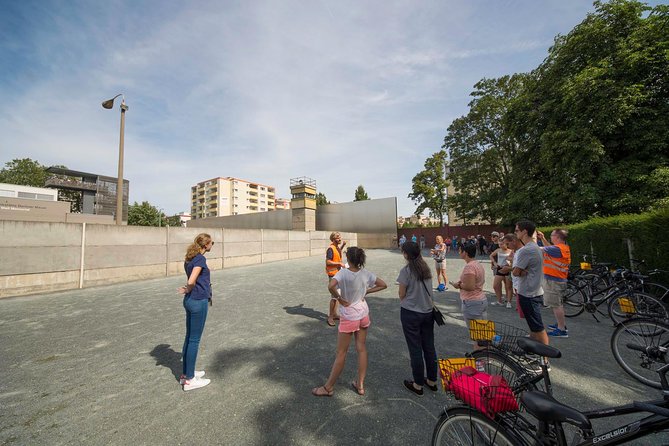
Review · BERLIN BIKE TOURS
Berlin Wall and Cold War Bike Tour in Small Groups
Berlin’s Wall story makes more sense when you move through the city instead of viewing one preserved fragment. This small-group bike tour links famous sights with quieter reminders of division, from Brandenburg Gate to a former watchtower and the Palace of Tears.
I like the easy pace and the way the ride covers ground without turning into a hard workout. I also like the human side of the guiding. Peter, Giovanni, Gilles, George, and other guides have brought dates, escape attempts, daily life, and the Wall’s fall into clear focus for families and first-time visitors. The main drawback is weather: you need to dress for it, and poor conditions can lead to a cancellation.
Key points to know before you book
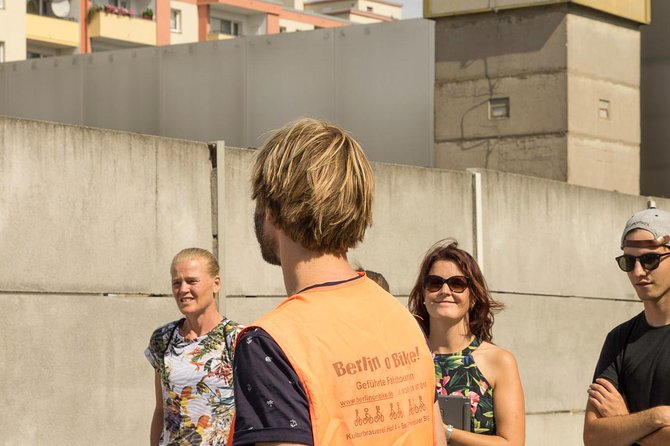
- About 20 kilometers by bike: You see far more of Berlin than you would on foot in three and a half hours.
- A maximum of 15 people: The group is small enough for questions and regular stops, though it is not a private tour.
- Several strong guides: Peter, Giovanni, Gilles, George, and Monti have each been praised for clear history and warm presentation.
- A useful mix of famous and less obvious sites: The route includes Brandenburg Gate and Checkpoint Charlie, plus Mauerpark, Kieler Eck, and the Palace of Tears.
- Bikes and helmets are included: You only need suitable clothing and a way to reach the Kulturbrauerei meeting point.
- Good value at $43.54: The price covers a bike, helmet, and local guide for roughly 3.5 hours, but not food, drinks, or hotel transport.
Why a bike works so well for Berlin’s Wall story
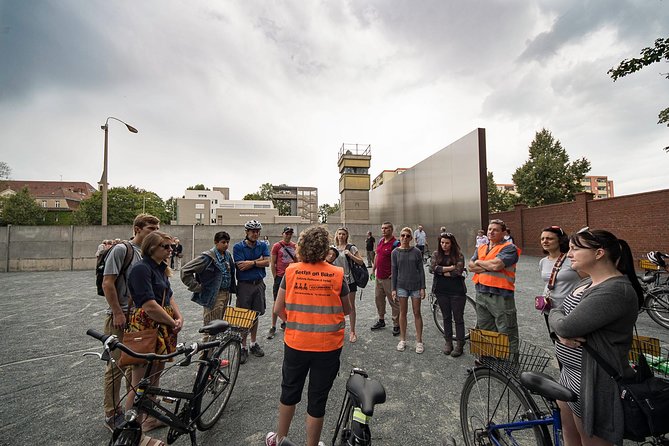
The Berlin Wall did not sit in one tidy museum. It cut across streets, parks, railway lines, neighborhoods, and ordinary homes. A bike lets you follow that broken path.
On foot, you would spend much of the available time getting between sites. By bicycle, you can connect major landmarks with smaller pieces of the story. The route covers about 20 kilometers, but the riding is described as easy, with stops built in for explanation and questions.
That matters because the Wall’s meaning changes from place to place. At Brandenburg Gate, you see a major symbol of a divided capital. At the Wall Memorial, you get a more direct look at the structure and the deaths linked to it. At Mauerpark, the old border becomes part of a modern public park.
The ride also gives you a better sense of scale. Berlin’s Cold War border was not simply a line between two countries. It passed through the middle of a city where people went to work, visited family, rode trains, and lived close to one another while access was tightly controlled.
More bike tours in Berlin:
- Berlin: Sights and Highlights Bike Tour with a Local Guide
★ 4.8 · 2,698 reviews - Berlin Highlights 3-Hour Bike Tour
★ 5.0 · 948 reviews - Berlin City Bike Tour with Beer Garden Stop
★ 5.0 · 917 reviews
Starting at Kulturbrauerei in Prenzlauer Berg
You meet at Berlin on Bike, at Kulturbrauerei on Knaackstraße 97. This is both the bike depot and the start and finish point, so you do not need to arrange a second pickup location at the end.
Kulturbrauerei itself is worth noticing before the ride begins. The complex covers about 25,000 square meters and is made up of preserved industrial buildings from the late 19th century. Its courtyards and brick architecture give the meeting point a strong Berlin setting, rather than the feel of a generic rental shop.
The tour includes use of a bicycle and helmet. Food, drinks, hotel pickup, and hotel drop-off are not included, so plan around those needs before arriving. The meeting point is near public transportation, which helps if you are staying elsewhere in Berlin.
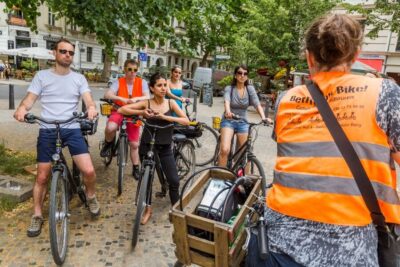
The group can contain up to 15 people. That is a useful middle ground. You get the energy of a shared outing, but the guide is not speaking to a huge crowd. If you want a completely private experience or need a very slow custom pace, this is not that kind of tour.
Brandenburg Gate: beginning with Berlin’s best-known symbol
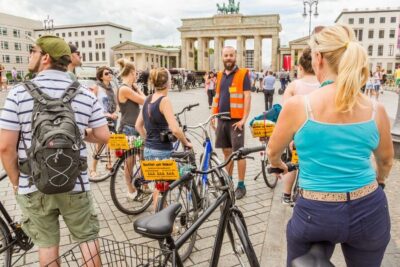
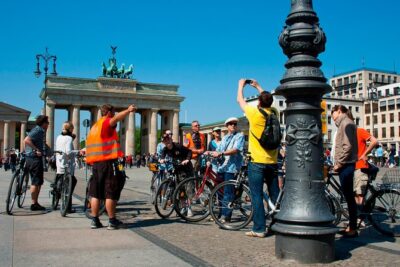
Brandenburg Gate is usually one of Berlin’s first stops, and here it provides a clear opening image. The neoclassical gate sits on Pariser Platz in Mitte and became one of the most recognizable symbols of the city’s division and reunification.
You have about 10 minutes here, with no admission charge. Do not expect a long museum visit or an extended architectural talk. The value is in the setting and the historical frame your guide provides before the ride moves on.
This stop works well because the gate is familiar even to people who know little about Cold War Berlin. Your guide can connect the grand monument with the much more restrictive city that once surrounded it. You begin with a place that now feels open and central, then follow the route toward the physical traces of the barrier.
The Wall Memorial: seeing division beyond a postcard fragment
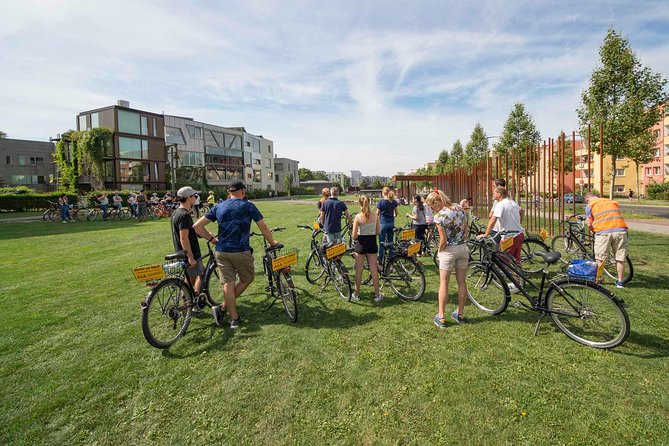
The Berlin Wall Memorial gives the tour its most direct historical focus. It commemorates Berlin’s division and the people who died at the Wall.
The stop lasts about 10 minutes, but the guide’s explanation is what makes the visit useful. You are not simply looking at a remaining piece of concrete. You are learning how the Wall affected streets, families, movement, and the shape of the city.
This is one of the places where a strong guide matters most. Giovanni has been praised for combining dates and facts with stories about the struggles of East and West Berlin. Gilles was especially appreciated for his enthusiasm and personal connection to the Wall’s fall, which happened only days after he expected to witness it. Those details can give a major political event a more human scale.
The short stop also keeps the tour moving. If you want a slow, museum-style study of every section of the memorial, you may need to return later on your own.
Another way to spend a morning on two wheels:
- Berlin Highlights: 3-Hour Bike Tour
★ 4.9 · 809 reviews - Berlin Highlights Sightseeing Bike Tour in Small Groups
★ 5.0 · 652 reviews - Berlin: The Wall and Third Reich Guided Bike Tour
★ 4.8 · 578 reviews - Berlin: Alternative Bike Tour of Kreuzberg & Friedrichshain
★ 4.7 · 548 reviews
Mauerpark and the changing border
Mauerpark occupies a former stretch of the Wall border between Prenzlauer Berg and Wedding, now Gesundbrunnen. Its name means Wall Park, a reminder that the open public space once marked a hard division.
You spend about five minutes here. That is brief, but the stop helps show how Berlin has reused former border zones. The same place can hold memories of barriers and escape routes while functioning today as a normal urban park.
I like this part of the route because it gets you away from the most polished landmarks. You see how the Wall story is spread through ordinary neighborhoods, not confined to a single official memorial. The tradeoff is that five minutes gives you only a taste. You may want extra time here if you are interested in the park itself.
The GDR watchtower at Kieler Eck
The old GDR watchtower at Kieler Eck is another useful stop because it points to the machinery behind the border. The tower is a physical reminder that the Wall was monitored and enforced, not simply built as a symbolic divider.
You have about five minutes here, and admission is included. This is a quick, focused visit rather than a long interior tour. The guide’s explanation helps connect the tower to the wider system of surveillance and control.
Stops like this are why a bike tour can offer more than a standard central Berlin sightseeing route. You are not only checking off major monuments. You are also reaching smaller remains that could be easy to miss without someone who knows the route.
Checkpoint Charlie and the border’s public face
Checkpoint Charlie was one of the best-known crossing points between the American and Soviet sectors. It linked East Berlin’s Mitte with West Berlin’s Kreuzberg along Friedrichstraße, between Zimmerstraße and Kochstraße.
The name carries enormous weight, but the modern site can feel more like a busy city attraction than a preserved Cold War scene. That is precisely why the guide’s context matters. You need an explanation of what happened here, how the crossing functioned, and why it became such a powerful symbol.
Do not book this tour expecting every stop to be a quiet, untouched historic site. Berlin has changed dramatically, and some locations now sit among shops, traffic, and ordinary city life. The benefit is that you see the old border in the middle of the city it once divided.
The Palace of Tears and the human cost of crossing
The Palace of Tears was the informal name for the former departure hall at Friedrichstraße railway station. During the divided years, it served as an exit point from East Berlin, between 1961 and 1989.
The name captures the emotional side of the border. People said goodbye here because visits between East and West could be difficult, uncertain, and tightly controlled. A station departure hall may sound less dramatic than a watchtower or concrete wall, but it speaks directly to families and relationships affected by division.
The provided schedule does not give a specific stop length for the Palace of Tears, so expect the guide to fit it into the wider route rather than treat it as a long standalone visit. If this site is especially important to you, ask the guide how much time is available during the tour.
Stories, dates, and the guides who make the difference
The strongest part of this experience is the guiding. You are not handed a bicycle and sent toward a series of map pins. The tour depends on a guide who can make the political history understandable without turning the ride into a dry lecture.
Several guides have received especially strong praise. Peter has been described as articulate and enjoyable to listen to, including on family tours with a bored teenager. Giovanni has been praised for historical dates, clear explanations, kindness, and an ability to bring the Wall’s human cost into view. Gilles has led a small group of seven and was appreciated for his enthusiasm and command of the subject.
George has also been noted for presenting Berlin’s history like a useful live lesson and for helping with a video. Monti has been singled out as a guide people would gladly ride with again.
Guide assignments can change, so you should not book on the assumption that one particular person will lead your departure. Still, the range of positive guide feedback suggests that the operator puts real weight on personal storytelling and clear presentation.
The tone also appears to work for different ages. Families with a 12-year-old have found the cycling more engaging than walking, and the combination of movement, short stops, and stories can help younger visitors stay focused.
Pace, comfort, and practical limits
The tour lasts about three hours and 30 minutes. That is long enough to cover a broad route, but short enough to fit into a busy Berlin day.
The cycling is generally easy according to the experience details, and one useful advantage is that the group can stop as needed. Still, 20 kilometers is not nothing. You should be comfortable riding a bicycle for several hours, even if the route is not presented as strenuous.
The tour operates in all weather conditions, and you are told to dress appropriately. At the same time, poor weather can lead to cancellation with a choice of another date or a full refund. That means you should check the conditions before setting out and bring clothing that can handle Berlin’s changeable weather.
There is no food or drink included. One stop has been made for refreshments, but the break was described as a fast-food-style option, and more bathroom and refreshment choices would be useful. I would eat beforehand and carry water so the tour does not depend on an unplanned stop.
Is $43.54 a fair price?
At $43.54 per person, this is a solid value if you want history and city coverage in one outing. The fee includes the bicycle, helmet, and local guide, with a maximum group size of 15.
The comparison is not simply with a walking tour. A walk may cost less, but it will cover fewer parts of the former Wall route in the same time. Public transportation can move you across Berlin, but it does not give you a guide explaining why each location matters as you arrive.
The price is less attractive if you mainly want a relaxed bicycle ride or only care about Brandenburg Gate and Checkpoint Charlie. You are paying for the historical interpretation and the route planning. If you already know Berlin well and prefer to explore independently, a bike rental may suit you better.
The tour includes no hotel transport, meals, or drinks. Those costs are easy to manage, but include them in your day’s budget.
Who should book this Berlin bike tour?
I would choose this tour if you want a clear introduction to Berlin’s divided past and prefer to keep moving. It suits first-time visitors, families, history-minded adults, and anyone who finds long museum visits tiring.
It is also a good fit if you want to see places you might not reach on your own. The mix of major landmarks, neighborhood sites, parks, and former border facilities gives you a more complete picture than a quick photo stop at the Wall.
I would think twice if you dislike cycling, need long breaks, or want a private guide. You should also avoid booking it as your only plan on a day when rain or poor conditions may disrupt the ride.
Cancellation is free up to 24 hours before the start time for a full refund. Changes or cancellations inside that window are not refunded, and the operator may also offer a new date or full refund if the minimum group size is not met.
Final verdict: book it for context, not just sightseeing
Book this tour if you want Berlin’s Wall story explained while you move through the city where it happened. The easy riding, included equipment, small group, and roughly 20-kilometer route make it a practical way to cover a lot in half a day.
The best reason to go is the guide. Peter, Giovanni, Gilles, George, and Monti have each brought clarity, compassion, and personality to a serious subject. You will still need to supply your own water, plan for weather, and accept that some stops are short.
At $43.54, it earns its price by joining the pieces together. You see the famous gate and checkpoint, but you also reach watchtowers, parks, railway spaces, and memorial ground that explain how the Wall shaped daily life. For most visitors, that is a better Berlin lesson than collecting isolated photographs.
FAQ
How long does the Berlin Wall bike tour last?
The tour lasts approximately 3 hours and 30 minutes.
How many people can join the tour?
The maximum group size is 15 travelers.
Where does the tour start and finish?
It starts and ends at Berlin on Bike, Kulturbrauerei, Knaackstraße 97, 10435 Berlin, Germany.
Are bicycles and helmets included?
Yes. The use of a bicycle and helmet is included.
What happens if the weather is poor?
The tour requires good weather. If it is canceled because of poor weather, you will be offered another date or a full refund. You should dress appropriately because the tour operates in all weather conditions.
Can I cancel for a full refund?
Yes, if you cancel at least 24 hours before the experience start time. Cancellations or changes made less than 24 hours before the start are not refunded.
Latest bike tours added in Berlin
- Small-Group Historical Bike Tour in Berlin★ 4.5 · 103 reviews
- Alternative Berlin Bike Tour – Off the Beaten Tracks in Small Groups★ 5.0 · 99 reviews
- Potsdam Bike Tour with Rail Transport from Berlin★ 4.5 · 81 reviews
- Berlin: Guided Private Bike Tour to Explore the Highlights★ 5.0 · 12 reviews
- Half-Day Bike Tour of Berlin’s Lesser Known And Historical Sites★ 5.0 · 10 reviews
- 3-Hour Bike Tour of Tiergarten and Berlin’s Hidden Places★ 5.0 · 26 reviews
- Berlin : Guided Private Sightseeing Tours with Funbikes, Teambikes★ 5.0 · 20 reviews
- Berlin : The best bike tour with a Berlin guide and insider tips★ 5.0 · 14 reviews
Berlin Bike Tours, compared.
Sights and Highlights Bike Tour with a Local Guide
Read our review →
Berlin Highlights Sightseeing Bike Tour in Small Groups
Read our review →
Alternative Bike Tour of Kreuzberg & Friedrichshain
Read our review →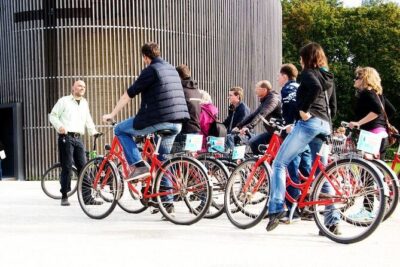
Browse the lists this tour appears in