
Review · HISTORIC & LANDMARK BIKE TOURS
Small-Group Historical Bike Tour in Berlin
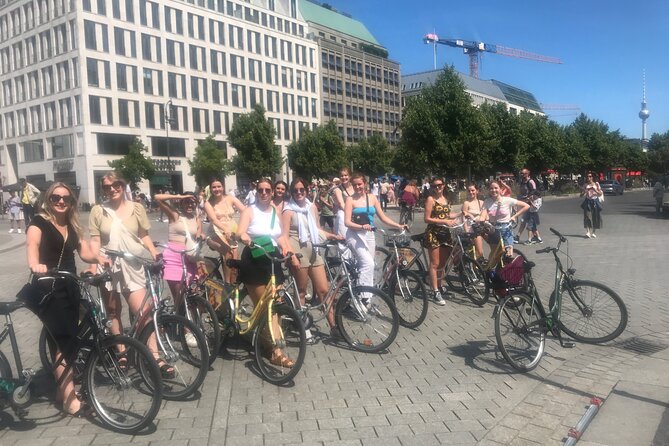
Berlin’s history is spread across a wide city, and this three to four-hour bike tour links its major stories in one steady ride. You move from the medieval heart near St. Nicholas Church to the Nazi-era sites around Bebelplatz and the Topography of Terror, then into the Cold War past at the Berlin Wall and Checkpoint Charlie.
I like the private group format, which lets the guide adjust the pace and answer questions. I also like the relaxed cycling: Berlin is flat, and the route includes frequent stops rather than one long, breathless ride. The main caution is the bikes. Most are in decent working order, but one report describes rear pedal brakes that can take getting used to, and a delayed start has occurred when bike problems needed sorting out.
Key points to know before you book
- A wide history lesson in one ride: The route covers Berlin’s medieval beginnings, Jewish heritage, Nazi rule, the Berlin Wall, and reunification.
- Private attention: Only your own group participates, so the guide can respond to your interests and questions.
- Guides with different styles: Jerry, Pablo, and Demetrios have led this experience, with Jerry especially noted for storytelling and personal attention.
- Mostly easy cycling: Berlin is flat, and the pace is designed around sightseeing rather than speed.
- Simple meeting point: Start at Panoramastraße 1 beside the Berlin TV Tower at 11 a.m., then return there.
- Good value for a first visit: At about $54.42 per person, the tour combines transportation, orientation, and historical explanation without separate admission fees.
Why a Bike Is a Smart Way to See Central Berlin
Berlin is too spread out for a comfortable walking tour of all these sights, yet many of its central landmarks are close enough to connect by bicycle. This route makes good use of that middle ground. You cover more ground than on foot without spending the day underground on public transport.
The ride is described as easy because Berlin is flat, and the pace includes regular stops. You should still be comfortable mounting and steering a bicycle for several hours. The tour is not a race, and the point is to pause at monuments, hear the story, and then continue.
The tour is offered in English and begins at 11 a.m. It is listed as a private activity, meaning only your party joins the guide. That matters if you want to ask about family history, focus on the Cold War, or spend a little longer at a place that catches your attention.
Guides have included Jerry, Pablo, and Demetrios. Jerry is particularly associated with an enthusiastic, personable style and often uses old photographs and visual material to explain how Berlin looked before the war, during division, and after reunification. Pablo has also been praised for humor, clear explanations, and an easy pace. Demetrios has led tours with a strong focus on city history.
More Historic Bike Tours in Germany
- Berlin: Cold War & Berlin Wall History Guided Bike Tour
★ 4.8 · 422 reviews - Berlin Wall History Small Group Cycling Tour
★ 4.9 · 152 reviews - Berlin (E)Bike Tour Historical Highlights in Small groups
★ 4.5 · 24 reviews
Starting at the TV Tower and Medieval Berlin
The meeting point is Panoramastraße 1, near the Berliner Fernsehturm at Alexanderplatz. This is an important practical detail because the TV Tower has more than one side and the meeting area can be confusing if you simply follow a map pin without checking the exact entrance.
The opening stop gives you a view of Alexanderplatz and the famous TV Tower. You spend about ten minutes here, hearing how this huge structure became one of the defining symbols of East Berlin. It is a short introduction, but it sets up the larger theme of the tour: Berlin’s buildings often carry political meaning far beyond their practical purpose.
From Alexanderplatz, the route goes toward St. Nicholas Church. This is where the tour reaches back beyond the 20th century. The church area marks the old center of Berlin and connects the modern capital to the city’s early beginnings more than 800 years ago.
This stop is useful because many first-time visitors think of Berlin mainly through the Wall, the Third Reich, and World War II. St. Nicholas Church reminds you that the city has a much longer story. The stop is not listed with a fixed duration, so the exact time may depend on your guide and the group’s pace.
Oranienburgerstrasse and Berlin’s Jewish Past
Oranienburgerstrasse brings the ride into one of central Berlin’s most important Jewish areas. The New Synagogue is the visual focus, with its distinctive dome and long connection to Jewish life in Berlin.
The guide discusses Jewish history in the city and gives background that helps connect this neighborhood to the later destruction of Jewish communities under the Nazis. You spend about 15 minutes here, which is enough for an explanation and photographs but not a full museum visit.
I consider this one of the stronger stops because it adds context before the tour reaches the Holocaust Memorial and the Topography of Terror. The route does not treat Berlin’s past as a string of unrelated monuments. Instead, you begin to see how the city’s Jewish life, Nazi persecution, war, division, and modern remembrance are connected.
The tour does not include food or drinks, so plan on eating before or after the ride. A short coffee stop has happened during some outings, especially in cold weather, but you should not count on a scheduled café break.
The Berlin Wall Memorial at Bernauer Strasse
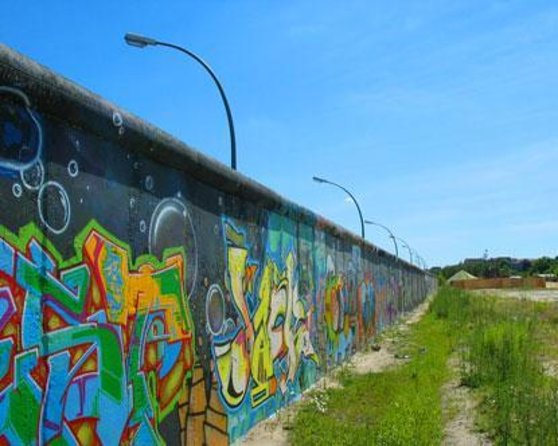
The Berlin Wall Memorial is the most substantial stop on the route, with about 25 minutes set aside. It occupies the historic border area along Bernauer Strasse and stretches for roughly 1.4 kilometers, although this tour only visits part of the larger site.
Here you can see a preserved section of the Wall, the former border strip, and traces of the barriers that separated East and West Berlin. The site helps explain how the border system changed over time, rather than presenting the Wall as a single slab of concrete.
This stop also gives you a better sense of the human scale of division. Bernauer Strasse was a place where buildings, sidewalks, families, and daily routines were caught in the border system. The guide’s explanation is especially useful because the remaining fragments can otherwise seem scattered or abstract.
You will not have time to explore every part of the memorial in depth. If the Wall is a major reason for your visit, return later for a longer look. The bike tour works best as an introduction that shows you where the important sites are and gives you a clear framework for further visits.
More Historic Bike Tours in Berlin:
- Half-Day Bike Tour of Berlin’s Lesser Known And Historical Sites
★ 5.0 · 10 reviews - Historical Singapore Bike Tour on Full-Sized Bicycles
★ 5.0 · 1,421 reviews - Barcelona: 2.5-Hour Bike or E-Bike Historical Tour
★ 4.5 · 1,262 reviews - Asheville Historic Downtown Guided Electric Bike Tour with Scenic Views
★ 5.0 · 1,234 reviews
Reichstag, Brandenburg Gate, and the Symbolism of Berlin
The ride continues to the Reichstag Building, home of the German Parliament. The stop lasts about ten minutes and focuses on the building’s role in German politics, including its use during the Weimar Republic and the 1933 fire that helped the Nazis seize power.
The guide also connects the Reichstag to the larger story of Berlin’s political changes. You are looking at a functioning parliament today, but the building carries reminders of democratic collapse, dictatorship, war, and Germany’s later return to parliamentary government.
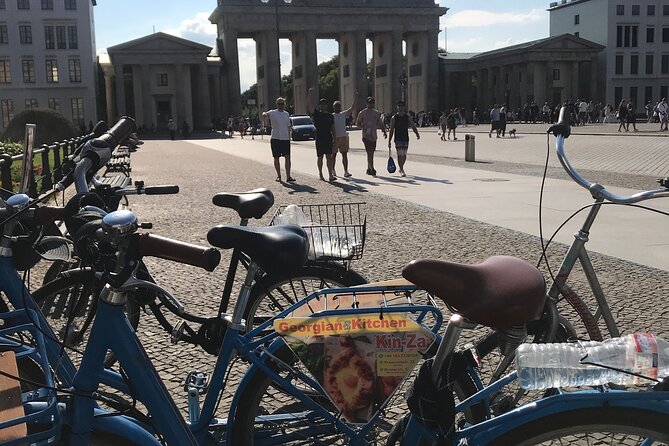
Nearby, you see the Brandenburg Gate. Built during the reign of Friedrich Wilhelm II in the 18th century, it later became a powerful Cold War symbol because it sat near the border between East and West Berlin. After reunification, it became one of the clearest images of a reunited Germany.
The stop is brief, but that is appropriate. The Brandenburg Gate is visually striking and easy to understand once you know its political setting. The tour gives you the story, then keeps moving rather than leaving you standing in one crowded square for too long.
The Holocaust Memorial and the Topography of Terror
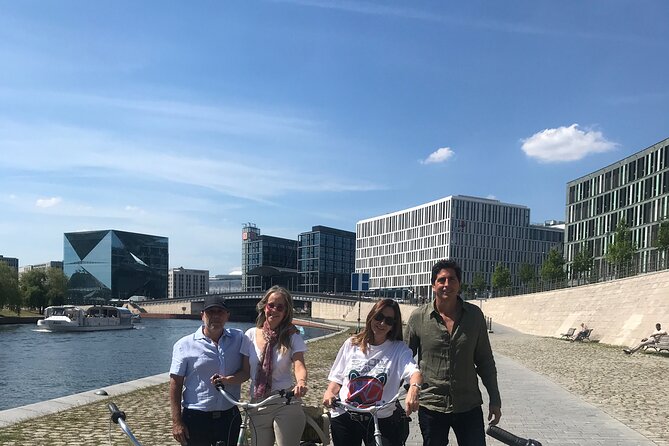
At the Memorial to the Murdered Jews of Europe, you have about 15 minutes to walk among the concrete blocks and take photographs. The guide explains the purpose of the memorial and gives you time to form your own response to the space.
This is not a museum visit. You will not receive the full underground exhibition experience during the bike tour, and the stop is best treated as an introduction. I recommend returning later if you want more time with the memorial’s information center.
The route then makes a short stop at the Topography of Terror. The site occupies the former location of the Gestapo and SS headquarters, making it one of the most direct places in Berlin to discuss Nazi state terror.
You have about ten minutes here, mainly for explanation and photographs. That is enough to understand why the location matters, but not enough for the indoor and outdoor exhibits. Again, the bike tour helps you mark the site on your mental map so you can come back independently.
Checkpoint Charlie and the Cold War Story
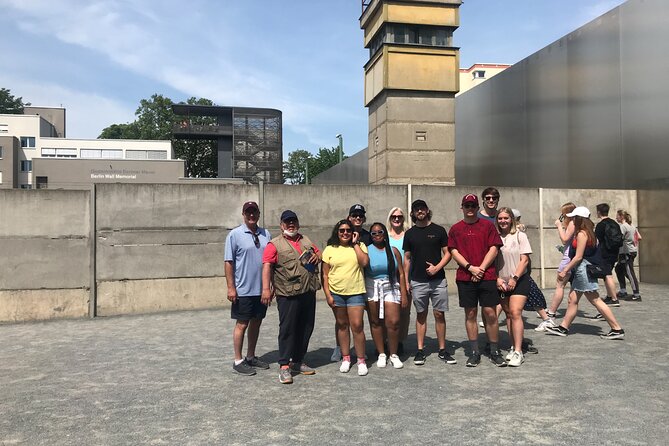
Checkpoint Charlie receives only about five minutes, so keep your expectations modest. You stop, hear the basic story, and take in the location before continuing.
The famous checkpoint was one of the crossing points between East and West Berlin. Its name and guardhouse have become symbols of the Cold War, though the current presentation around the site can feel commercial and crowded compared with the more serious Berlin Wall Memorial.
That contrast is useful. A guide can help you separate the original political importance of the checkpoint from the modern tourism built around it. The short stop prevents it from taking too much time from the more substantial historical sites.
Gendarmenmarkt and the Book Burning Memorial
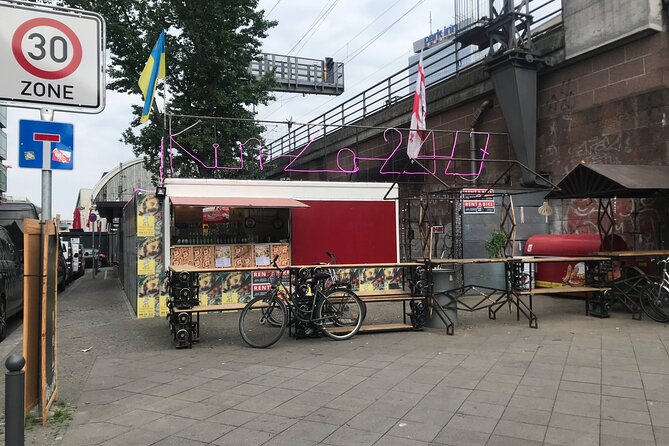
The ride through Gendarmenmarkt gives you a look at one of Berlin’s grandest squares. You stop for photographs and hear about the buildings around it. Since the tour passes through rather than offering an extended architectural visit, the guide’s commentary is what gives the square its meaning.
At Bebelplatz, the Book Burning Memorial recalls the Nazi book burnings of 1933. The memorial is easy to miss if you pass through on your own, which makes it a worthwhile addition to a city ride.
The stop lasts about 15 minutes and includes an explanation of what happened at the square. The site is quiet and understated, which can make it more affecting than a large monument. You should pay close attention here, since the memorial’s design is small and placed below ground level.
Together, Gendarmenmarkt and Bebelplatz add variety to the route. You are not only seeing famous postcard landmarks. You are also stopping at places where a guide can point out a less obvious piece of Berlin’s past.
Museum Island and the Ride Back to Alexanderplatz
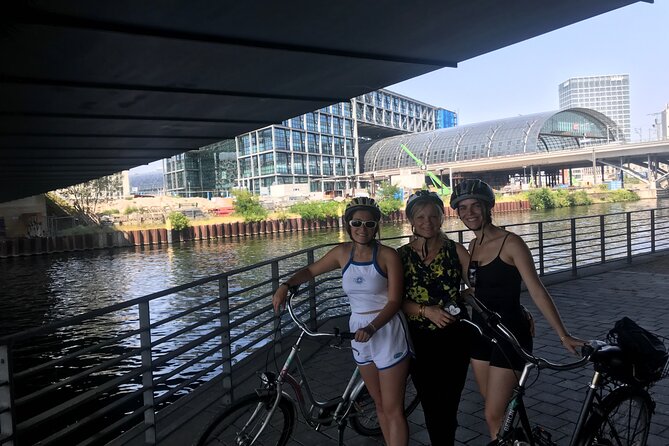
Museum Island is the final major sightseeing area before the return to the meeting point. You ride through the island and see the museums while the guide explains their place in Berlin’s cultural history.
The tour does not include museum admission, and 15 minutes is not enough to visit the collections. Still, this is a practical orientation stop. You can decide which museum deserves your time later, rather than trying to choose blindly from a map.
The route then returns to the TV Tower and Alexanderplatz. The listed ride-back time is about ten minutes, and the activity ends where it began. That makes the tour easy to combine with other central Berlin plans.
Bikes, Pace, and Group Comfort
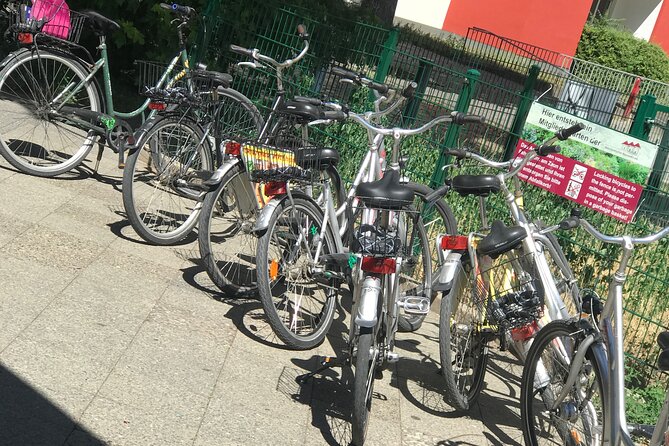
The bicycle is included, but the equipment deserves a realistic note. Several outings have used three-speed bikes with rear pedal brakes. If you normally ride a bicycle with hand brakes, ask for an explanation before setting off and practice in the meeting area.
Most of the feedback about the bikes is positive or neutral, with some riders calling them decent and easy to use. One report described old bikes and a delayed start caused by equipment problems. The operator explained that a mechanic was unavailable that day and that a new guide was still learning which bikes were most reliable.
That is not a reason to reject the tour, but it is a reason to arrive ready to check your bicycle. Make sure the seat feels right, the tires look properly inflated, and you understand the brakes. If a bike feels unsafe, raise the issue before leaving.
The cycling itself is one of the tour’s strongest features. Berlin’s flat streets make the route manageable, and the ride has been comfortable even for people who were nervous about cycling in a large city. Frequent stops keep the pace gentle.
Children must be accompanied by an adult, and the minimum age is listed as two. That does not tell you which child seats or bikes are available, so families with very young children should confirm equipment before booking.
Is $54.42 a Fair Price?
At about $54.42 per person, the value is solid if you want one outing that combines transport, orientation, and history. You are paying for a local guide and a bicycle, while the route covers a long list of central sights that would take more effort to connect on foot.
The tour is especially useful early in your stay. It helps you identify places to revisit, such as the Berlin Wall Memorial, the Holocaust Memorial information center, Topography of Terror, or a museum on Museum Island.
The price is less attractive if you want long, detailed visits inside museums or memorial exhibitions. None of the listed stops includes admission, and many are brief photo and explanation stops. Think of the tour as a moving introduction, not a substitute for several full museum visits.
The 4.5 rating from 103 ratings reflects a strong overall response, but the experience is not flawless. Most positive comments focus on the guides’ warmth, storytelling, patience, and ability to answer questions. The main complaints concern meeting-point confusion, bicycles, delayed starts, and one guide who did not provide enough historical detail.
Who Should Book This Berlin Bike Tour?
I would choose this tour if you are visiting Berlin for the first time and want a clear overview before exploring the city on your own. It also suits anyone who learns better from stories and places than from a guidebook.
You will get the most from it if you enjoy asking questions. The private format gives you more room to discuss a family connection, a particular period of history, or a site you want to understand better. One rider even used the flexible format to search for a memorial plaque connected to a friend’s grandfather.
This is not the best choice if you dislike bicycles, need guaranteed museum entry, or want a slow, detailed examination of every monument. The route covers a lot, and the short stops mean you must be willing to return to the places that interest you most.
The tour allows free cancellation up to 24 hours before the start time. It may also be changed or refunded if the minimum number of participants is not reached. Casual clothing is suitable, service animals are allowed, and the meeting point is near public transportation.
My Take: Book It for the Big Picture
Book this tour if you want Berlin’s major stories connected in one manageable ride. The best parts are the flat route, private attention, frequent stops, and guides such as Jerry, Pablo, and Demetrios, who bring different personalities to the same historical route.
Go in knowing that the bicycles may vary and that some stops are short. Check the brake system before leaving, arrive early at the TV Tower meeting point, and save time later for the sites you want to explore properly.
For a first look at Berlin, the tour offers good value and a useful sense of place. It will not replace a museum day, but it can help you understand where to spend one.
FAQ
Where does the bike tour start?
The tour starts at Panoramastraße 1, 10178 Berlin, Germany, near the Berliner Fernsehturm at Alexanderplatz.
What time does the tour begin?
The listed start time is 11 a.m.
How long does the experience last?
The tour lasts approximately three to four hours, including the cycling and stops.
Is the tour private?
Yes. Only your group participates in the activity.
What is included in the price?
A local professional guide and use of a bicycle are included. Food, drinks, and hotel pickup and drop-off are not included.
Can I cancel for a full refund?
Yes. You can cancel at least 24 hours before the experience start time for a full refund. Changes or cancellations made less than 24 hours before the start time are not accepted for a refund.
More history tours in Berlin
- Historic Athens: Small Group Electric Bike Tour
★ 4.9 · 966 reviews - Bordeaux: Historic Center & Chartrons District Bike Tour
★ 4.8 · 709 reviews - Intramuros, Manila: Historical Bamboo Bike Tour
★ 4.8 · 583 reviews - Historic Bike Tour in Tucson
★ 5.0 · 553 reviews
Latest bike tours added in Berlin
- Alternative Berlin Bike Tour – Off the Beaten Tracks in Small Groups★ 5.0 · 99 reviews
- Berlin Wall and Cold War Bike Tour in Small Groups★ 5.0 · 114 reviews
- Potsdam Bike Tour with Rail Transport from Berlin★ 4.5 · 81 reviews
- Berlin: Guided Private Bike Tour to Explore the Highlights★ 5.0 · 12 reviews
- Half-Day Bike Tour of Berlin’s Lesser Known And Historical Sites★ 5.0 · 10 reviews
- 3-Hour Bike Tour of Tiergarten and Berlin’s Hidden Places★ 5.0 · 26 reviews
- Berlin : Guided Private Sightseeing Tours with Funbikes, Teambikes★ 5.0 · 20 reviews
- Berlin : The best bike tour with a Berlin guide and insider tips★ 5.0 · 14 reviews
Historic & Landmark Bike Tours, compared.
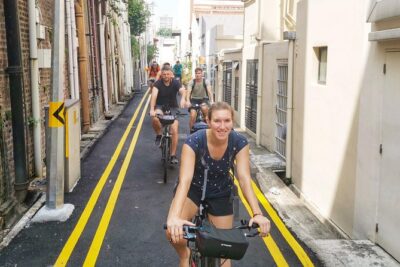
Historical Singapore Bike Tour on Full-Sized Bicycles
Read our review →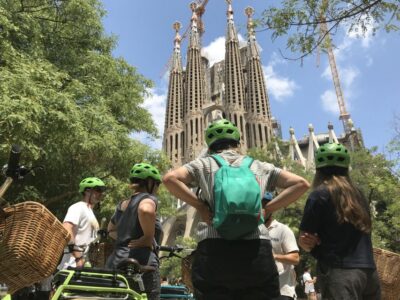
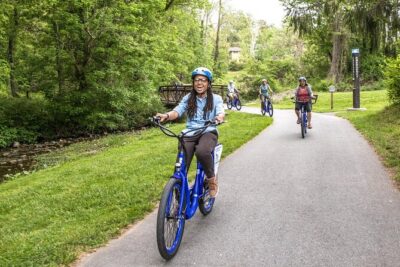
Asheville Historic Downtown Guided Electric Bike Tour with Scenic Views
Read our review →
Krakow: Bike Tour of Old Town, Jewish Quarter and the Ghetto
Read our review →
Historic Athens: Small Group Electric Bike Tour
Read our review →
Barcelona e-Bike Tour: Gaudí & Old Town Small Group
Read our review →
Bordeaux: Historic Center & Chartrons District Bike Tour
Read our review →Browse the lists this tour appears in