
Review · E-BIKE TOURS
Berlin: E-Bike Tour of the Berlin Wall and Mitte Highlights
Berlin’s story makes more sense when you ride through it. This 210-minute e-bike tour links the former Wall line with the grand center of Mitte, so you move from the night the border opened at Bornholmer Strasse to the Brandenburg Gate, Holocaust Memorial, Berlin Cathedral, and Alexanderplatz.
I like two things here: the route crosses old East and West Berlin, and the small group, limited to eight, gives the guide room to explain rather than simply point. I also like that the e-bike keeps the long route manageable. The main consideration is that the tour is conducted in German, runs rain or shine, and does not include food or attraction admissions.
- Bornholmer Strasse begins the story: Start at the former border crossing where the Wall opened on November 9, 1989.
- The route covers more than Wall remains: Mauerpark, Bernauer Strasse, Nordbahnhof, Mitte, the Reichstag, and Alexanderplatz all fit into one ride.
- Ference is one named guide: His clear, lively explanations have been singled out as a strong part of the experience.
- You ride a full city circuit: The tour returns to Bornholmer Strasse after passing through the central sights.
- The group stays small: With no more than eight participants, the ride should feel more personal than a large coach tour.
- The price is reasonable for the time: At $48, you receive the e-bike, lock, guide, and a 210-minute route, but not meals or entry tickets.
Why an e-bike is a smart way to see Berlin
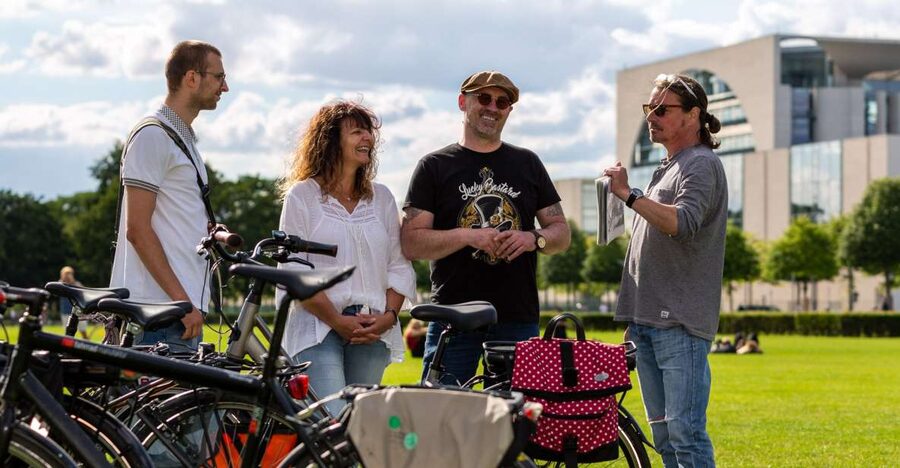
Berlin is spread out. Its major sights do not sit in one compact old town, and the former Wall ran for miles through neighborhoods that now look quite different from one another. An e-bike helps you connect those pieces without spending much of your day underground or on a bus.
You still pedal, so this is an active sightseeing tour, but the electric assistance matters when the route stretches from Bornholmer Strasse into Mitte and back again. You get the feeling of moving through Berlin like a local, without needing to make the full distance under your own power.
The bikes and a lock are included. You should bring drinks and wear clothing suited to the weather. Since the tour operates rain or shine, a wet forecast is a real consideration, not a minor footnote.
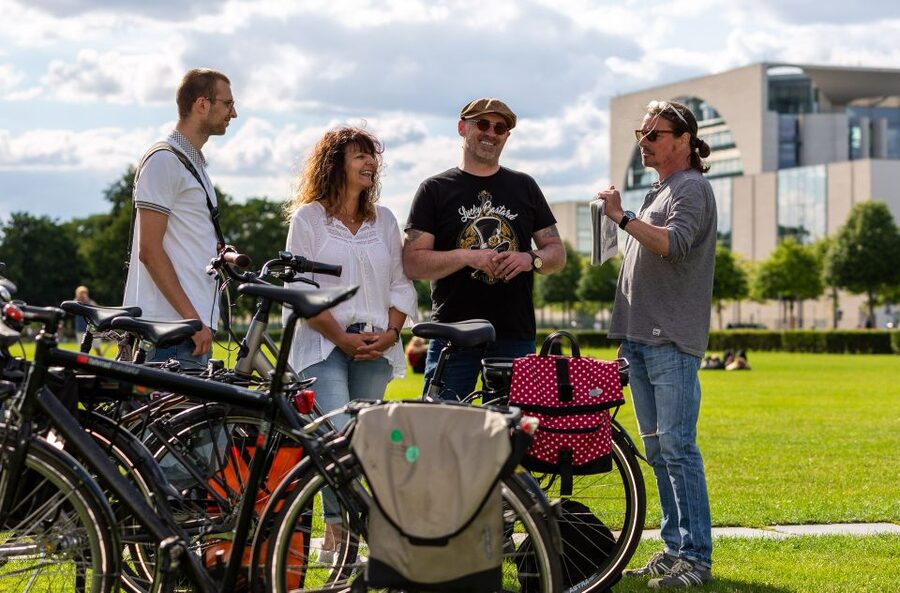
The small group size is another practical advantage. A maximum of eight people makes it easier to hear the guide, keep the group together, and ask a question at a stop. The tour is offered in German, so you should be comfortable following historical explanations in that language.
Bornholmer Strasse and the night the Wall opened
The meeting point is outside Bornholmer Strasse 75. This is not a random starting place. It is tied directly to the night of November 9, 1989, when the border crossing opened and East and West Berliners pushed through the gates in celebration.
Beginning here gives the tour a strong sense of place. You are not starting with a general city introduction and saving the major story for later. Instead, Berlin’s division and reunification are introduced at one of the locations where the change happened.
Your guide explains the site before the group sets off. Ference is one guide associated with this tour, and his approach has been praised for making the Wall story clear, visual, and emotionally direct. That matters because Berlin’s Cold War history can become a blur of dates and political names if it is not tied to physical locations.
You should not expect a museum visit at the starting point. This is an outdoor tour, and the value comes from seeing the places while the guide supplies the context.
More City Bike Tours in Germany
- Berlin: Sights and Highlights Bike Tour with a Local Guide
★ 4.8 · 2,698 reviews - Berlin Highlights 3-Hour Bike Tour
★ 5.0 · 948 reviews - Berlin City Bike Tour with Beer Garden Stop
★ 5.0 · 917 reviews
Mauerpark, Bernauer Strasse, and the Wall Memorial
The ride continues to Mauerpark, a public space that was once split by the Wall. Today it is part of Berlin’s modern city life, but the route uses it to show how a barrier once cut through ordinary neighborhoods and open ground.
From there, the group follows Bernauer Strasse toward the Wall Memorial and the Chapel of Reconciliation. This is one of the strongest sections for understanding how the border affected residents. Bernauer Strasse is connected with escape attempts, divided buildings, and the physical traces of the Wall system.
The Chapel of Reconciliation adds a quieter stop to the route. It is a place to pause rather than simply pedal past another landmark. The contrast works well: Mauerpark shows a former border zone as public urban space, while the chapel and memorial preserve the memory of what the division meant.
You will spend much of the tour moving between stops, so pay attention when the guide begins a longer explanation. This is not a hop-on, hop-off ride where every sight receives the same amount of time. The route is designed to tell a connected story as you travel.
Nordbahnhof and the abandoned railway story
The ride then reaches Nordbahnhof, a former ghost station. During Berlin’s division, some stations in the West Berlin transit system were closed because train lines passed through East Berlin. Trains could pass through, but passengers could not use the stations normally.
That detail helps explain how the Wall was more than a concrete barrier. It affected streets, homes, railways, hospitals, parks, and daily routines. Nordbahnhof gives you another way to picture a divided city, this time through public transport.
The tour does not turn into a formal railway museum visit. You see the location as part of the larger ride, with the guide connecting it to the city’s divided past.
Mitte, Charité, and the government quarter
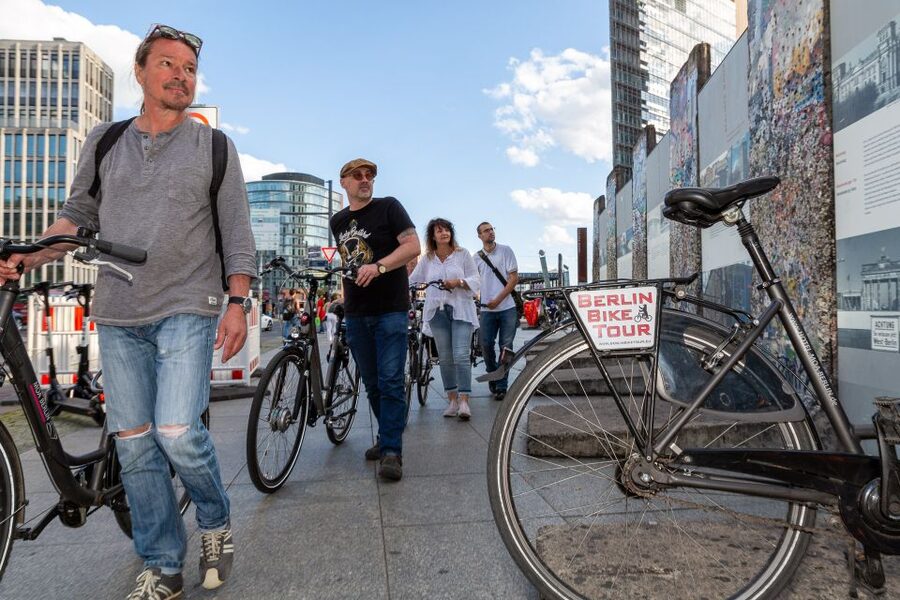
From the Wall route, you move into Mitte, Berlin’s central district. This part changes the tone of the tour. Instead of focusing mainly on border structures and memorial sites, you begin to see the institutions and landmarks that define the capital today.
The route passes Charité, Berlin’s long-established hospital. It is a useful reminder that the city’s story is not only about monuments and political events. Hospitals, universities, transport lines, and working neighborhoods were all shaped by Berlin’s division.
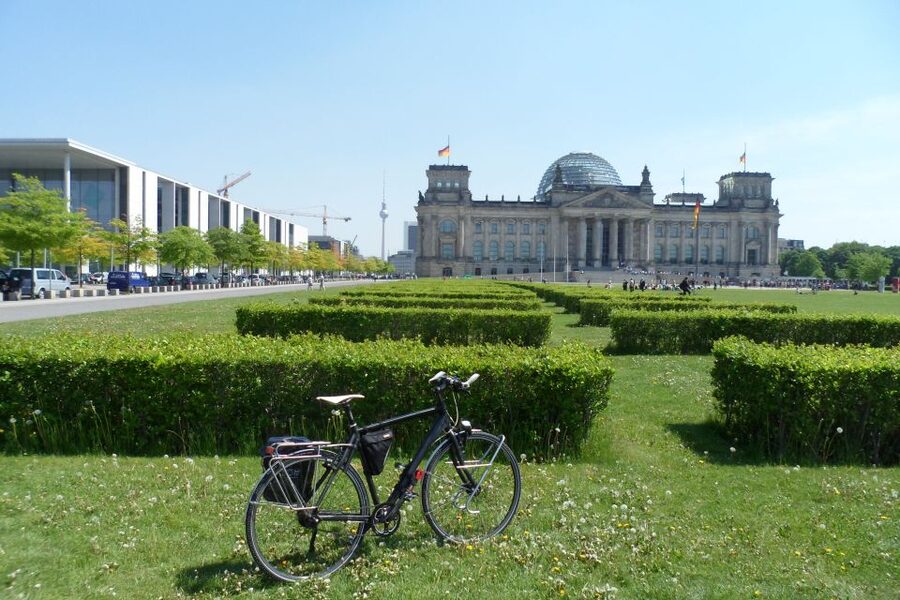
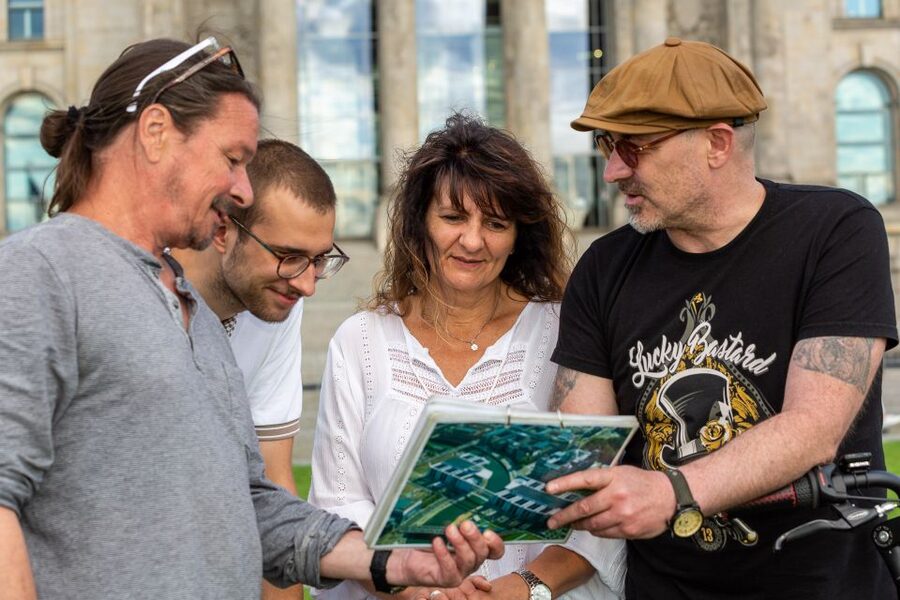
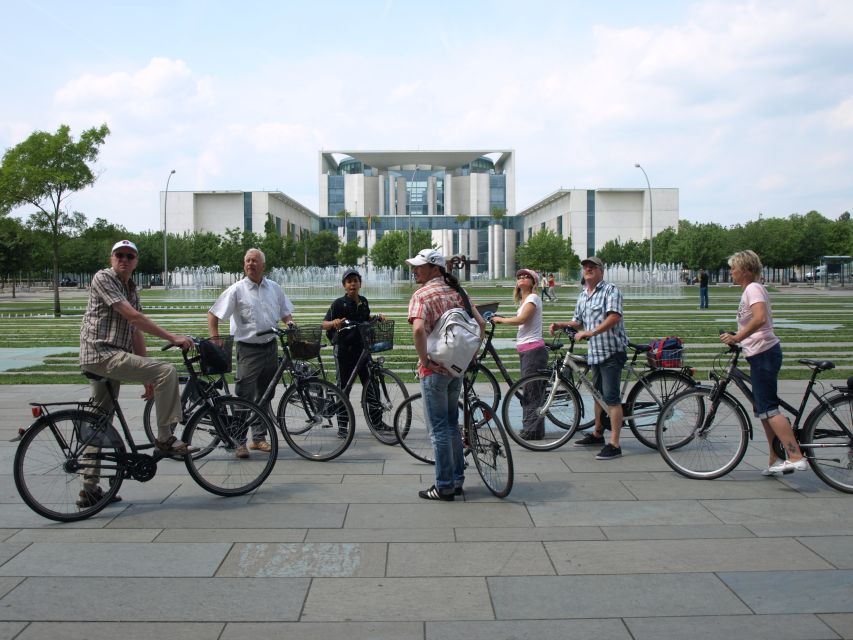
Next comes the government quarter, including the Reichstag. The building’s imposing exterior is one of Berlin’s best-known sights, and seeing it by bike lets you take in its place within the broader civic district. The tour does not include entry tickets, so you should not plan on visiting the Reichstag interior during this experience.
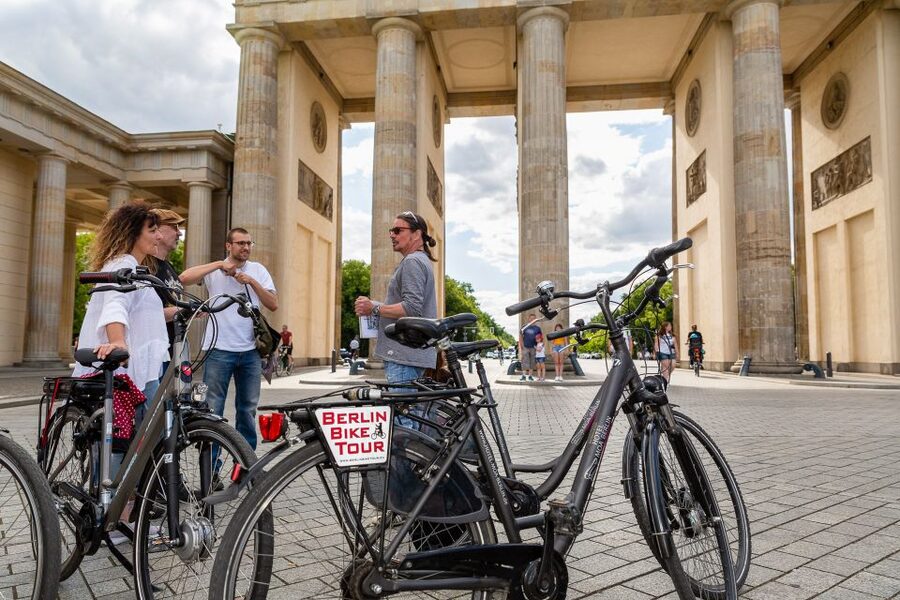
The Brandenburg Gate follows. Once associated with a divided Berlin, it now works as a symbol of the reunited city. Because the tour has already taken you through former border areas, the gate has more meaning than it would as a quick photo stop on its own.
More E-Bike Tours in Germany
- Best of Berlin E-Bike Tour
★ 5.0 · 77 reviews - Best of Berlin E-Bike Tour
★ 5.0 · 37 reviews - Berlin Bike and Electric Bike Rentals
★ 4.5 · 12 reviews - Best of Munich Electric Bike Tour
★ 5.0 · 38 reviews
The Holocaust Memorial and Berlin’s harder history
The route pauses at the Holocaust Memorial, officially dedicated to the murdered Jews of Europe. This is a place for respect, not rushed sightseeing. The field of concrete blocks is intentionally unsettling, and the guide’s historical explanation helps place it within Berlin’s memory culture.
You should allow the stop to feel different from the rest of the ride. Much of the day has a forward rhythm, with bikes carrying you from one location to the next. Here, the point is to pause and remember the victims of the Holocaust.
The tour brings together two difficult chapters in German history: the Holocaust and the division of Berlin after World War II. That combination can make the experience emotionally heavy at times, but it is also one of its central strengths. You are not getting a cheerful landmarks-only circuit.
Gendarmenmarkt, Bebelplatz, and Unter den Linden
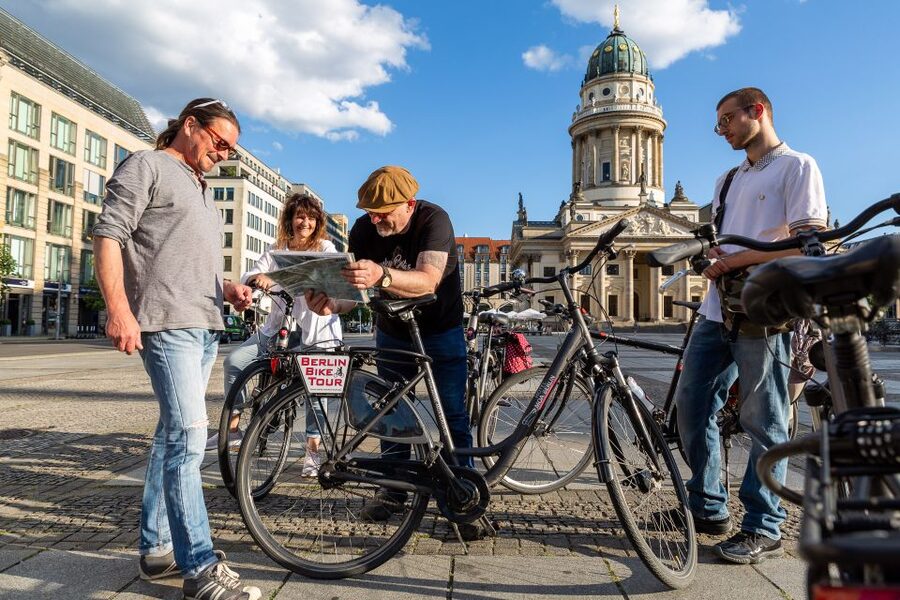
Gendarmenmarkt brings a change in setting. This grand square is one of the most formal parts of central Berlin, with monumental architecture arranged around a broad public space. It is a good place to see how Berlin presents its royal, cultural, and political past.
The next stop, Bebelplatz, carries its own difficult memory. It is linked to the Nazi book burning of 1933. The tour’s route through this area adds another layer to the day’s historical focus, moving from the Wall and reunification back to the years of dictatorship and persecution.
You then cycle along Unter den Linden, the broad avenue running through the historic center. This is one of the most rewarding stretches for seeing Berlin’s major buildings in sequence. The avenue leads toward Berlin Cathedral, the renovated Berlin Palace, and Nikolaiviertel.
The restored palace presents a modern reconstruction of a historic royal building, while Nikolaiviertel recalls the original village that formed Berlin. These stops show how the city has rebuilt, restored, and reinterpreted its past. You will not simply see one architectural period. The route places imperial buildings, socialist-era changes, postwar rebuilding, and present-day Berlin close together.
Berlin Cathedral, Nikolaiviertel, and the city’s older center
Berlin Cathedral is one of the most recognizable buildings along the route. From the bike, you get the exterior view without the time commitment of an interior visit. The itinerary does not include entrance tickets, so anyone wanting to go inside would need to make a separate plan.
Nikolaiviertel is smaller in scale and more intimate than the monumental avenue nearby. Its streets recall the old village at Berlin’s core, although much of the area has been rebuilt. That contrast is useful: Berlin’s center is not a single preserved historic district. It is a mix of old foundations, reconstruction, modern buildings, and deliberate memory sites.
This section is especially good for readers who want more than a Wall tour. The experience begins with the city’s division, but it also explains how Berlin’s central identity developed before and after that period.
Rotes Rathaus, Alexanderplatz, and the modern city
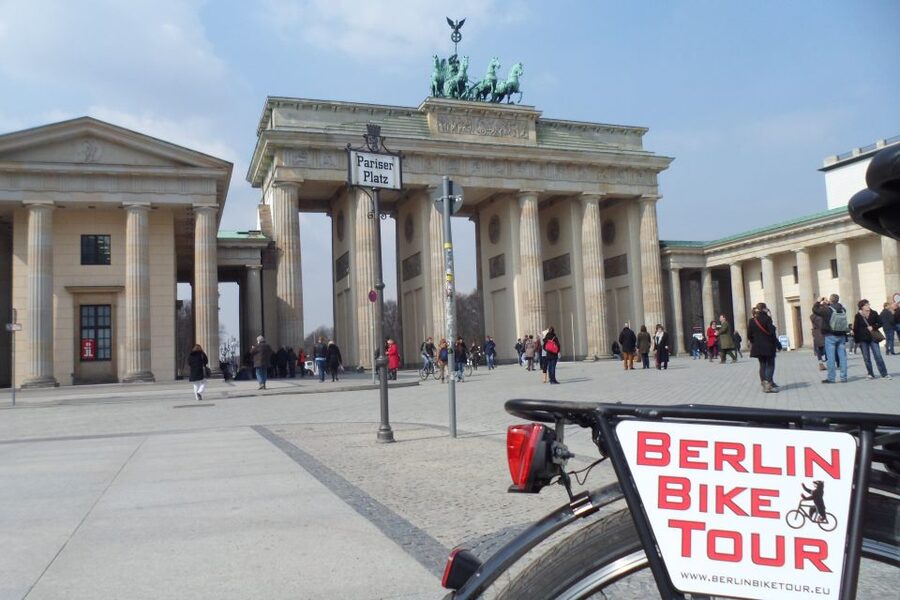
The final section reaches Rotes Rathaus, Alexanderplatz, the TV Tower, Marien Church, and the World Clock. Alexanderplatz gives you the clearest sense of Berlin’s modern East German character, with the TV Tower as its unmistakable landmark.
The World Clock is a practical place to finish the city story. It reflects Berlin’s former socialist-era public design and its outward-looking place in the world today. Marien Church adds an older religious building to an otherwise modern square.
The tour ends back at Bornholmer Strasse 75, where it began. That return is useful because you do not need to arrange transport from a distant final stop. It also gives the ride a circular shape: you begin at the Wall’s opening and finish after seeing the city that grew around its disappearance.
What the $48 price includes
At $48 per person, the tour offers good value if you want a guided overview and would otherwise rent bikes, plan the route, and research the historical stops yourself. The duration is three and a half hours, and the route covers a substantial part of central Berlin.
Included are:
- E-bike
- Bike lock
- German-speaking guide
- Guided e-bike tour
Food and drinks are not included, so bring your own water. Entrance tickets are also excluded. That is not a major problem because the itinerary is mainly an outdoor sightseeing route, but you should not expect museum or monument interiors to be part of the price.
Free cancellation is available up to 24 hours before the start, and you can reserve now and pay later. Those options help if your Berlin plans are still shifting. Check the available start times before booking, since the duration is fixed at 210 minutes but the departure schedule can vary.
Who will get the most from this ride
I would choose this tour if you want Berlin’s major sights tied together by a clear historical route. It suits active visitors who like to keep moving and who would rather see several neighborhoods than spend the afternoon inside one museum.
It is also a good fit if the Berlin Wall is a major reason for your visit. You see Bornholmer Strasse, Mauerpark, Bernauer Strasse, the Wall Memorial, the Chapel of Reconciliation, and Nordbahnhof in one outing. The route then adds the Reichstag, Brandenburg Gate, Holocaust Memorial, Gendarmenmarkt, Bebelplatz, Unter den Linden, and Alexanderplatz.
I would think twice if you want a slow, highly detailed visit to each monument. Three and a half hours is enough for a broad route, not a full interior tour of Berlin’s landmarks. I would also avoid booking if you do not understand German well, since the live guiding is in German.
The tour is limited to eight participants, which should help with questions and group movement. Still, it is a cycling experience, not a private history lecture. You will spend meaningful time on the bike between stops.
Should you book the Berlin Wall and Mitte e-bike tour?
Book it if you want a well-priced historical overview on two wheels, especially if you are comfortable in German and prefer active sightseeing. The strongest parts are the Wall locations, the guide’s storytelling, and the way the route connects Berlin’s divided past with its present-day center.
Ference has been praised for making the Wall story lively and easy to follow, and the wider feedback describes the bikes, routes, and explanations as reliable strengths. Bring water, dress for the forecast, and remember that rain will not automatically cancel the ride.
Skip it if you need English guiding, indoor admissions, or a relaxed pace at every sight. For the right visitor, though, $48 buys a lot of Berlin in one morning or afternoon, with far more context than you would get from simply cycling past the landmarks alone.
FAQ
Where does the Berlin e-bike tour start?
The tour starts outside Bornholmer Strasse 75 in Berlin.
Where does the tour finish?
The ride returns to Bornholmer Strasse 75, the same place where it begins.
How long does the tour last?
The tour lasts 210 minutes, or three and a half hours.
What language is the live tour guide?
The live tour is conducted in German.
How many people can join the tour?
The group is limited to eight participants.
Is the e-bike included in the price?
Yes. The e-bike, a bike lock, and the guide are included.
Does the tour operate in bad weather?
Yes. The tour takes place rain or shine, so bring weather-appropriate clothing and drinks.
More City Bike Tours in Berlin
- Berlin Highlights: 3-Hour Bike Tour
★ 4.9 · 809 reviews - Berlin Highlights Sightseeing Bike Tour in Small Groups
★ 5.0 · 652 reviews - Berlin: Guided Bike Tour to Explore the Highlights
★ 4.8 · 506 reviews - Berlin City Bike Tour with Beer Garden Stop
★ 4.9 · 308 reviews
More E-Bike Tours in Berlin
- 3-Hour Porto Highlights on a Electric Bike Guided Tour
★ 5.0 · 4,392 reviews - Lisbon: Hills, Alfama, and Mouraria Tour by Electric Bike
★ 4.8 · 3,438 reviews - Athens Scenic Electric Bike Tour with optional Acropolis visit
★ 5.0 · 3,350 reviews - Porto: City Highlights 3-Hour Guided Electric Bike Tour
★ 4.8 · 3,092 reviews
Latest bike tours added in Berlin
- Small-Group Historical Bike Tour in Berlin★ 4.5 · 103 reviews
- Alternative Berlin Bike Tour – Off the Beaten Tracks in Small Groups★ 5.0 · 99 reviews
- Berlin Wall and Cold War Bike Tour in Small Groups★ 5.0 · 114 reviews
- Potsdam Bike Tour with Rail Transport from Berlin★ 4.5 · 81 reviews
- Berlin: Guided Private Bike Tour to Explore the Highlights★ 5.0 · 12 reviews
- Half-Day Bike Tour of Berlin’s Lesser Known And Historical Sites★ 5.0 · 10 reviews
- 3-Hour Bike Tour of Tiergarten and Berlin’s Hidden Places★ 5.0 · 26 reviews
- Berlin : Guided Private Sightseeing Tours with Funbikes, Teambikes★ 5.0 · 20 reviews
E-Bike Tours, compared.
3-Hour Porto Highlights on a Electric Bike Guided Tour
Read our review →
Hills, Alfama, and Mouraria Tour by Electric Bike
Read our review →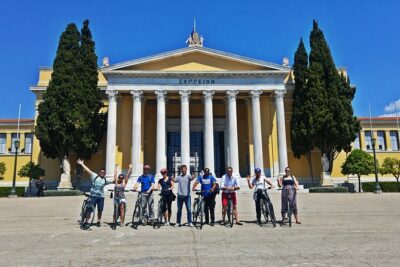
Athens Scenic Electric Bike Tour with optional Acropolis visit
Read our review →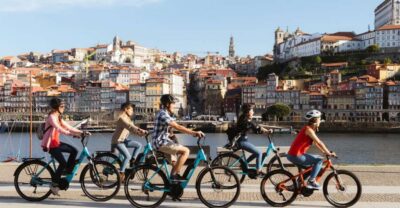
City Highlights 3-Hour Guided Electric Bike Tour
Read our review →
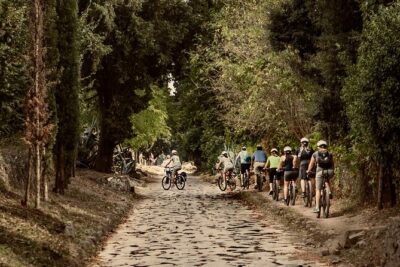
Rome EBike Tour: Appian Way, Catacombs & Roman Aqueducts
Read our review →
Top Highlights & Hidden Gems Tour by Cannondale E-Bike
Read our review →Browse the lists this tour appears in