
Review · BERLIN BIKE TOURS
Berlin: Experience the Alternative Kreuzberg on a Bike Tour
Berlin’s alternative side is best understood from a bicycle seat. This relaxed 17-kilometer ride links former Wall districts, creative projects, canal paths, nightlife streets, and rough-edged corners that are easy to miss from a sightseeing bus. Guides such as Vincent, Carl, Jake, Fiona, and Peter are known for adding personal stories rather than simply reciting dates.
I like the small groups of up to 15 and the way the route uses quiet side streets and bike paths. I also like the frequent stops, usually every five to ten minutes, so you are not pedaling hard for three hours. The main consideration is that this is an active outing: hot weather can make the ride tiring, and the route covers a lot of ground.
Key points to know before you book
- A 17-kilometer route through four alternative districts: You ride through Kreuzberg, Friedrichshain, Neukölln, and Treptow, with a close look at how Berlin changed after the Wall fell.
- Local stories at nearly every stop: The guides shape the route around the group, current events, and their own interests, so no two outings need to follow exactly the same pattern.
- Mostly easy-paced cycling: The tour uses side streets, parks, and scenic paths, with plenty of short stops. You do not spend three straight hours in the saddle.
- A strong mix of famous and unusual sights: The East Side Gallery and Oberbaum Bridge share the route with the Treehouse, RAW-Gelände, houseboats, canal hangouts, and alternative projects.
- Useful equipment is included: You get a rental bike with a basket, and helmets and rain ponchos are available. Large bags can stay at the office during the ride.
- Good value at $41: For three hours of bike rental, guiding, local context, and a small group, the price is fair, especially if you want more than Berlin’s standard postcard sights.
Starting beside the TV Tower in Nikolaiviertel
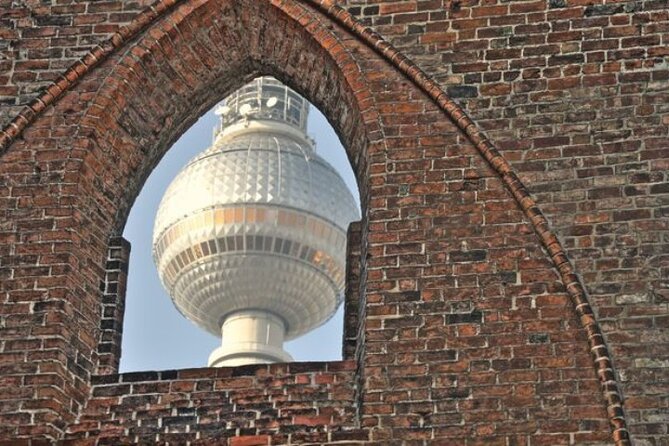
The meeting point is the Free Berlin office at Poststraße 11, in the courtyard entrance of the building. Look for the FREE BERLIN sign. The location is in Nikolaiviertel, about five minutes from the TV Tower, so it is easy to combine with central Berlin sightseeing.
Nikolaiviertel is an interesting place to begin because it looks old, but much of what you see was rebuilt. That makes it a useful opening lesson in Berlin’s habit of remaking itself. From here, the ride heads east and south toward districts shaped by the Wall, postwar neglect, creative occupation, and rapid change.
Your bike comes with a basket, and the rental fleet is regularly serviced by certified mechanics. You can request a helmet, and waterproof ponchos are available if the weather turns wet. Large baggage can be left with the operator, which is handy if you are carrying more than you want on a bicycle.
The group limit of 15 matters. A guide can keep a small group together more easily, pause for questions, and adjust the pace. Several guides have been singled out for doing just that. Vincent is noted for personal stories and humor, Carl for his enthusiastic history talks, Fiona for making the ride interactive, and Jake for his clear passion for Berlin’s culture.
More bike tours in Berlin:
- Berlin: Sights and Highlights Bike Tour with a Local Guide
★ 4.8 · 2,698 reviews - Berlin Highlights 3-Hour Bike Tour
★ 5.0 · 948 reviews - Berlin City Bike Tour with Beer Garden Stop
★ 5.0 · 917 reviews
The Treehouse, Berghain, and Berlin’s creative edge
One early stop is the Treehouse in Berlin, a small but memorable example of the city’s alternative spirit. Its appeal is not grand architecture. It is the idea behind it: an unexpected, improvised project that sits within the ordinary city and challenges your sense of what urban space should be.
The route then reaches the area around Berghain and Panorama Bar. You may not enter the club, but the stop gives your guide a chance to explain Berlin’s club culture and the role nightlife plays in the city’s identity. This is one of the tour’s useful contrasts. Berlin’s alternative reputation is not only about old buildings and political history. It also comes from music, after-hours culture, and places that operate on their own terms.
The stops are generally about five minutes each, but the guide keeps talking and interpreting as the ride moves between them. That rhythm makes the outing feel more like a series of short conversations than a formal lecture.
East Side Gallery and Oberbaum Bridge
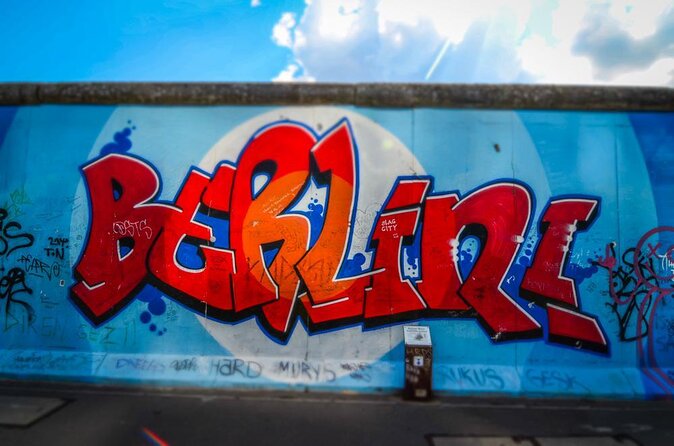
The East Side Gallery is the most recognizable stop on the route. This long section of the former Berlin Wall is covered with murals and remains one of the clearest places to see how Berlin turned a symbol of division into public art.
You get a photo stop here, but the value is in the context. The Wall was not simply removed and forgotten. Parts of it became a record of political change, artistic expression, and the city’s effort to deal with its divided past. Your guide can connect the murals to the broader changes in the surrounding districts.
Oberbaum Bridge follows, with another photo opportunity. Its red brick towers and arches make it one of Berlin’s most striking bridges, but its importance is also tied to the former border between East and West Berlin. From the bridge, the city’s newer development and older industrial edges appear side by side.
The bridge can be busy, so do not expect a quiet pause with an uninterrupted view. Still, stopping here by bike is more practical than trying to fit it into a long walking route. You see the bridge, hear why it matters, and keep moving.
RAW-Gelände and Friedrichshain’s rough edges
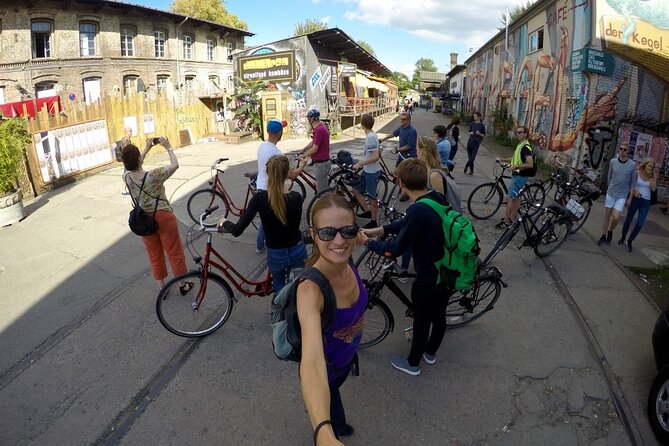
RAW-Gelände offers a sharper look at Berlin’s alternative projects. This former industrial area has been used for art, nightlife, cultural activities, and informal urban life. It is also a good place to discuss the pressure that follows popularity. Spaces that once felt improvised can become increasingly commercial as more people discover them.
That tension is central to the tour. You are not shown a polished version of Berlin and told that it represents the whole city. Instead, you see creative spaces beside renovated buildings, old industrial structures beside new construction, and projects that may be trying to hold on as property values rise.
The stop is especially useful if you want to understand why Berlin’s image attracts people, while the changes created by that popularity can be difficult for long-term residents. Your guide may adjust the route or the amount of time spent here according to the group’s interests and current conditions.
Another way to spend a morning on two wheels:
- Berlin Highlights: 3-Hour Bike Tour
★ 4.9 · 809 reviews - Berlin Highlights Sightseeing Bike Tour in Small Groups
★ 5.0 · 652 reviews - Berlin: The Wall and Third Reich Guided Bike Tour
★ 4.8 · 578 reviews - Berlin: Alternative Bike Tour of Kreuzberg & Friedrichshain
★ 4.7 · 548 reviews
Houseboats, Molecule Man, and the Spree
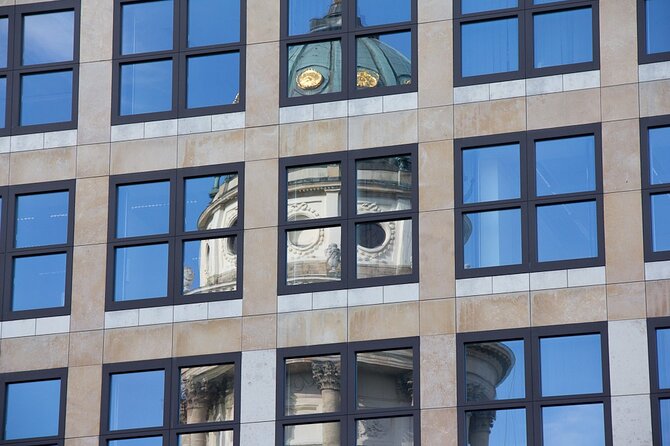
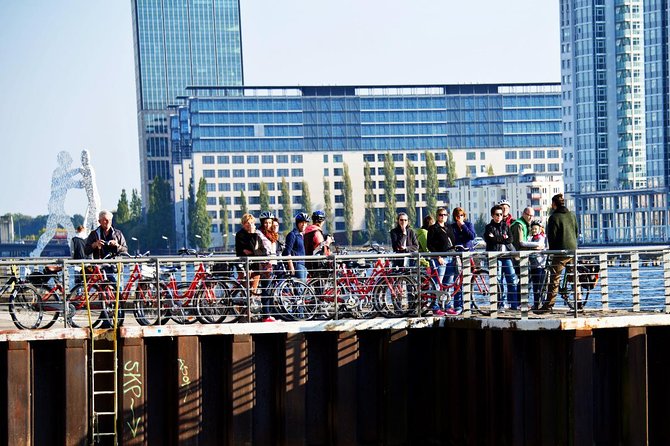
The route continues along the Spree, where the city opens up and the riding becomes more scenic. You pass the Berlin Tag und Nacht houseboat and stop at Molecule Man, the tall metal sculpture standing in the river.
Molecule Man is one of those sights that works well from a bicycle. You can pause, take in the sculpture from the riverbank, and hear how it fits into Berlin’s public art and changing waterfront. The Spree also gives you a break from dense streets. After several urban stops, the water and open views make the ride feel less crowded.
The houseboat stop adds another glimpse of Berlin’s informal culture. It is not a grand monument, but that is the point. This tour pays attention to places where people have created unusual ways to live, work, socialize, or make art.
From here, the route moves toward Club der Visionäre and the neighborhoods around Wrangelkiez. The club stop offers another chance to discuss Berlin’s music scene, while Wrangelkiez brings you into a neighborhood setting with local shops, apartments, street life, and signs of change.
Görlitzer Park and the questions behind gentrification
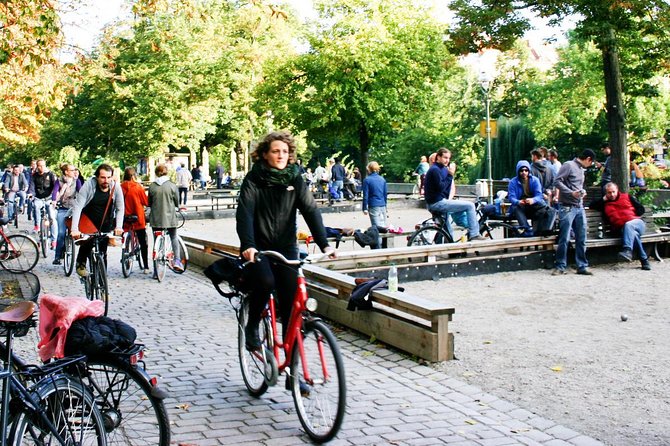
Görlitzer Park is a useful stop because it shows Berlin’s social contrasts without needing a museum display. The park has long been part of Kreuzberg’s public life, and its surroundings reveal both the district’s alternative identity and the pressures created by rising rents, new businesses, and increased attention.
The tour does not reduce Kreuzberg to a simple party district. You see the places associated with nightlife and street culture, but you also hear about social transformation and the uneven results of redevelopment. That balance is one of the strongest parts of the experience.
Near Kottbusser Tor, these contrasts become even clearer. The area is busy and intensely urban, with transport, shops, apartments, and many different communities packed into a small space. It may not be pretty in the conventional sense, but it is important to Berlin’s modern identity.
If you prefer quiet monuments and orderly sightseeing, this section may feel messy. If you want to understand how the city actually works, it is likely to be one of the more useful parts of the route.
CarLoft Modul, Maybachufer, and the canal ride
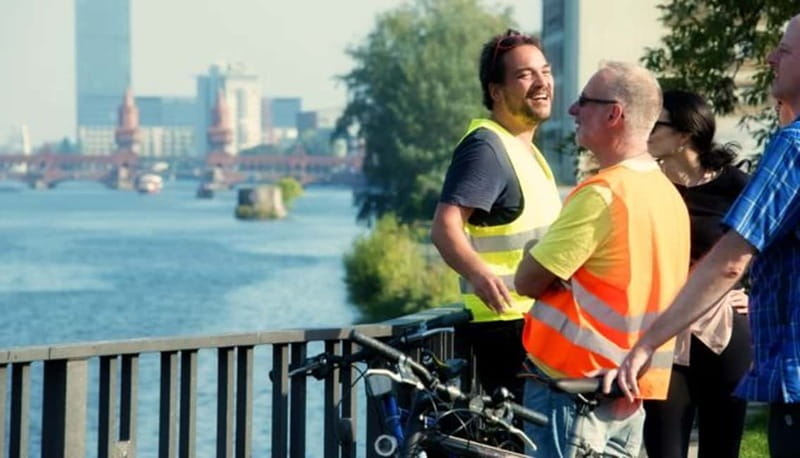
The stop at CarLoft Modul brings architecture into the discussion. Its unusual design reflects Berlin’s willingness to experiment with buildings and urban living. It is a reminder that the city’s creative side does not exist only in clubs, murals, and squats. It also appears in modern construction and new ideas about how people use urban space.
The route then reaches Maybachufer, where the Landwehr Canal offers one of the ride’s calmer stretches. This is a good place to watch Berlin’s contrasts unfold along the water. Newer buildings, older facades, informal gathering spots, and everyday neighborhood life all share the same view.
At Admiralbrücke, you get another photo stop. The bridge and canal are popular places to pause, and the water gives the group room to slow down. Do not expect a long rest break, though. The standard stop is around five minutes, and the tour continues through Kreuzberg toward Rio-Reiser-Platz.
Rio-Reiser-Platz and Künstlerhaus Bethanien
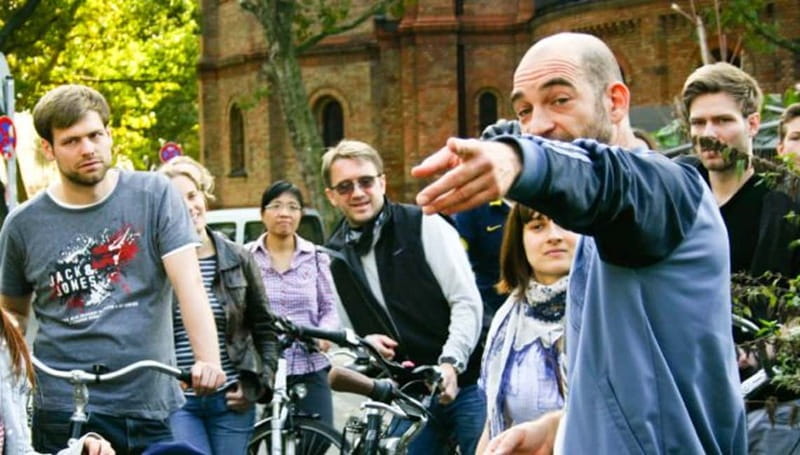
Rio-Reiser-Platz adds a cultural note to the route. Named for the musician and songwriter Rio Reiser, the square points toward Berlin’s connection with music, protest, and alternative culture. It is a compact stop, but it helps connect the city’s political past with its artistic life.
Künstlerhaus Bethanien provides the final major cultural stop before returning to the starting point. The former hospital building became associated with art and creative work, and it fits the tour’s interest in buildings that have taken on new purposes.
By this stage, you have seen a wide range of Berlin in only three hours: rebuilt central streets, former border zones, wall art, clubs, industrial sites, canals, public sculpture, housing experiments, parks, and art centers. The route gives you a useful sense of how close these different worlds are to one another.
The ride then returns to the Free Berlin office in Nikolaiviertel. Because the route is roughly 17 kilometers, the bike makes it possible to cover districts that would be tiring to connect on foot.
What the pace feels like on a three-hour ride
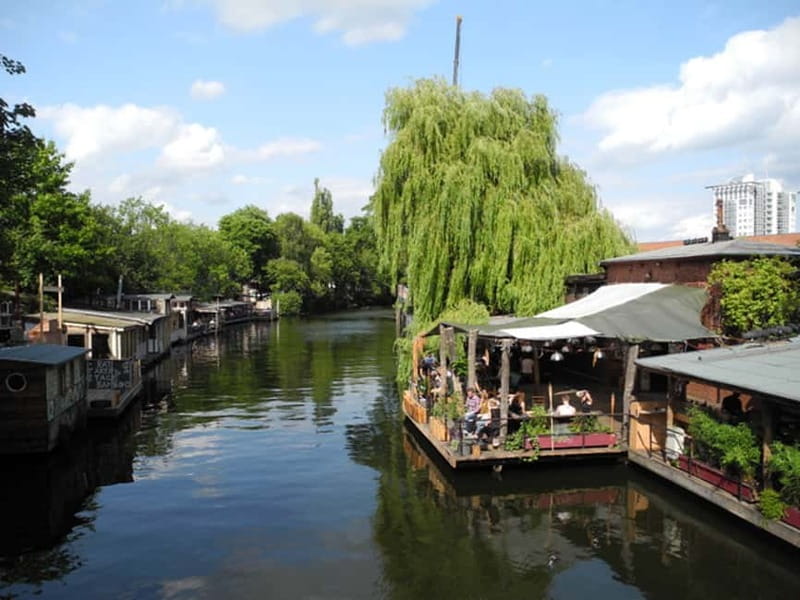
The tour is active, but it is not designed as a cycling workout. You spend much of the time moving between short stops, with commentary every five to ten minutes. One earlier participant described the bikes as sturdy and the ride as safe, noting that the frequent stops meant it was not three hours of continuous cycling.
That said, weather matters. A very hot day can make the route harder, especially through exposed streets and open areas. One guide made a point of checking that everyone was comfortable and adjusting the pace, which is exactly what you want from a group bike tour.
The family-friendly setup is useful. Children are welcome, and infant seats can be provided on request. The supplied information does not specify minimum ages or exact seat arrangements, so families should confirm those details before booking.
The ride is offered in English, German, and French. Private tours are also available if you want to choose the start time, shape the route, or keep the outing just for your own group. The regular small-group version is likely the better value for most people, while a private tour makes sense if you have strong interests in architecture, nightlife, Wall history, or neighborhood change.
What you get for $41
At $41 per person, this is fairly priced for Berlin. The fee covers a three-hour guided outing, the rental bike, a basket, optional helmet, and rain poncho. You are also paying for the guide’s local knowledge and for a route that connects districts that are scattered across the city.
The value is strongest if you want context. A bike rental alone can get you around, but it will not explain why a former industrial site matters, how the Wall shaped the route, or why Kreuzberg can feel both proudly alternative and increasingly commercial.
The tour is less useful if you only want Berlin’s major historic monuments. It does not focus on Museum Island, the Brandenburg Gate, or the Reichstag. You should see those separately, then use this ride to understand the city’s newer and less polished side.
With a rating of 4.8 from 395 ratings, the experience has a strong record. The most consistent praise is for the guides’ enthusiasm, personal stories, clear history, and ability to keep the pace comfortable. Names that come up repeatedly include Vincent, Carl, Jake, Björn, and Peter, though your guide will depend on the date and language.
Who should book this Berlin bike tour
I would choose this tour for a first or second visit when you want more than a checklist of central sights. It is especially suitable if you enjoy street art, creative projects, local history, urban change, nightlife culture, and the stories behind ordinary-looking places.
It also suits people who want to see a lot without spending the whole day on foot. The route is long enough to cover several districts, but the frequent stops make it manageable for a reasonably comfortable cyclist.
You may want another type of tour if you dislike cycling in cities, need a very slow pace, or want an in-depth visit inside each attraction. The short stops give you a broad view rather than long time at any single location. Hot weather can also affect your comfort.
Should you book it?
Book this tour if you want to understand why Berlin feels unfinished, inventive, divided, rebuilt, and constantly in motion. The best parts are the local storytelling, the quiet routes between districts, the mix of famous sights and unusual projects, and the chance to see how the former Wall zone has changed.
Skip it if your main goal is Berlin’s classic monuments or if you would rather avoid a 17-kilometer ride. For most active visitors, though, $41 buys a useful three-hour introduction to the city behind the postcard view. Bring water, dress for the weather, and ask your guide about the places you want to explore later.
FAQ
Where does the bike tour begin?
The tour begins at the Free Berlin Bike Tours and Rental office at Poststraße 11. Use the courtyard entrance and look for the FREE BERLIN sign. The meeting point is in Nikolaiviertel, about five minutes from the TV Tower.
How long is the tour?
The tour lasts three hours and covers roughly 17 kilometers.
Which Berlin neighborhoods does the route visit?
The ride includes parts of Kreuzberg, Friedrichshain, Neukölln, and Treptow. It also passes through areas around the Spree River and Landwehr Canal.
What sights are included?
Stops include Nikolaiviertel, the Treehouse, Berghain Panorama Bar, East Side Gallery, RAW-Gelände, Oberbaum Bridge, the Berlin Tag und Nacht houseboat, Molecule Man, Club der Visionäre, Wrangelkiez, Görlitzer Park, CarLoft Modul, Maybachufer, Admiralbrücke, Kottbusser Tor, Rio-Reiser-Platz, and Künstlerhaus Bethanien.
Is a bicycle included in the price?
Yes. Bike rental is included, and the bikes have baskets. Helmets are available if requested, and waterproof ponchos are provided in case of rain.
Can children join the tour?
Yes. The tour is family-friendly, and infant seats can be provided on request.
What languages are available?
The live tour is available in English, German, and French. Small-group and private tour options are available.
Latest bike tours added in Berlin
- Small-Group Historical Bike Tour in Berlin★ 4.5 · 103 reviews
- Alternative Berlin Bike Tour – Off the Beaten Tracks in Small Groups★ 5.0 · 99 reviews
- Berlin Wall and Cold War Bike Tour in Small Groups★ 5.0 · 114 reviews
- Potsdam Bike Tour with Rail Transport from Berlin★ 4.5 · 81 reviews
- Berlin: Guided Private Bike Tour to Explore the Highlights★ 5.0 · 12 reviews
- Half-Day Bike Tour of Berlin’s Lesser Known And Historical Sites★ 5.0 · 10 reviews
- Berlin : Guided Private Sightseeing Tours with Funbikes, Teambikes★ 5.0 · 20 reviews
- Berlin : The best bike tour with a Berlin guide and insider tips★ 5.0 · 14 reviews
Berlin Bike Tours, compared.
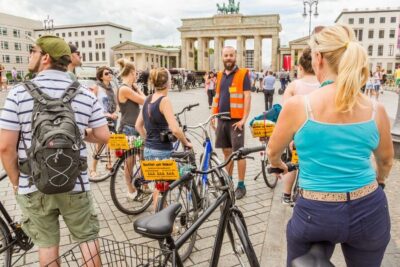
Sights and Highlights Bike Tour with a Local Guide
Read our review →
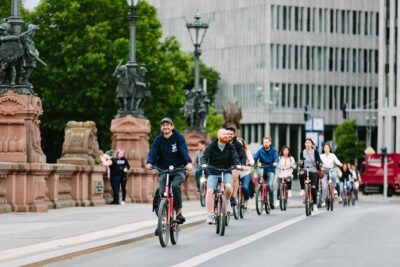
Berlin Highlights Sightseeing Bike Tour in Small Groups
Read our review →
Alternative Bike Tour of Kreuzberg & Friedrichshain
Read our review →
Browse the lists this tour appears in