
Review · HISTORIC & LANDMARK BIKE TOURS
Nara: Bike Tour in Ancient Capital UNESCO World Heritage
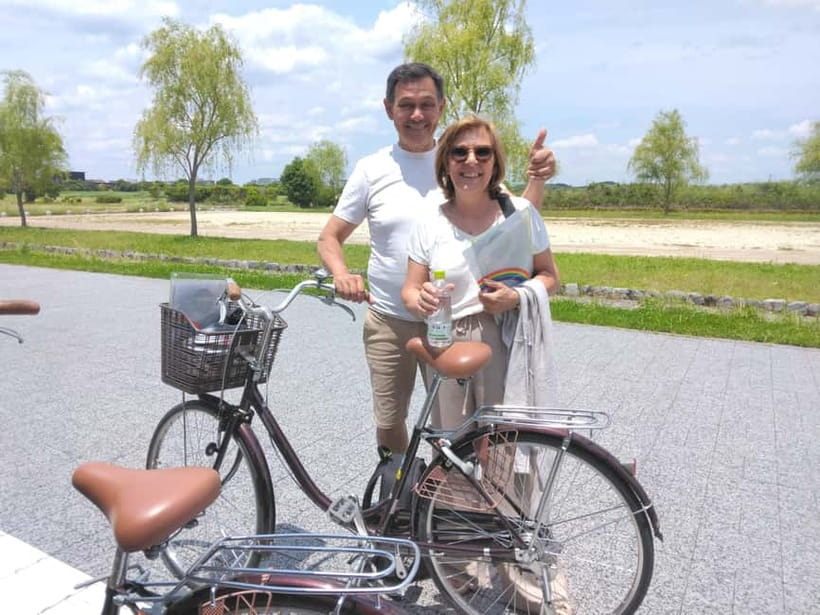
Nara’s grandest story is spread across an open archaeological site, not packed into the deer park. This two-hour bike tour lets you cover the former Heijo Palace grounds with guide Kay, stopping at gates, gardens, museums, tombs, and reconstructed halls. You get a better sense of the ancient capital because you can move between widely spaced sites instead of walking the whole complex.
I like the small groups of up to eight and the calm ride beside Mizukami Pond, where ducks, turtles, and birds replace the crowds around Nara Park. I also like that the price includes the bike, helmet, admissions, and traditional Tenpyo costume experience. The main drawback is that the site can feel understated if you are not interested in archaeology, and summer heat can make cycling hard.
Key points to know before you book
- The route covers Heijo Palace, not Nara Park: This is a history and archaeology outing, with no deer stop.
- Guide Kay adds real value: She leads in English or Japanese and explains Nara’s role as Japan’s ancient capital.
- Bikes make the large site manageable: You can reach the palace gates, pond, tomb, gardens, and museums within two hours.
- The excavation museum is unusual: Unearthed remains are preserved where they were found, giving you a direct look at the archaeological work.
- The Tenpyo costume stop is included: You can dress in Nara-period clothing and take photos.
- Choose your season carefully: August heat can be tiring, while spring and cooler mornings are better for an easy ride.
Why this bike tour shows you a different side of Nara
Many first visits to Nara focus on the famous temple district and the deer. This experience takes you in another direction, to the former capital of Heijo-kyo and the broad grounds of Heijo Palace. The setting is open, quiet, and spacious, with reconstructed buildings and traces of structures that disappeared more than a thousand years ago.
That difference is the point. You are not simply checking off another temple. You are seeing how archaeologists and historians piece together the layout of an ancient capital from gates, foundations, wooden tablets, roof tiles, burial objects, and written records.
The tour costs $22 per person, which is strong value for two hours. A rental bike, helmet, guide, admission fees, and the costume activity are included. You are paying less than many short guided experiences, yet the bike gives you access to a large site that would take more effort on foot.
The group is limited to eight people. That matters here because the route includes several short stops, photo breaks, and explanations. Guide Kay has been especially good with families and young children, adjusting her pace for a six-year-old and allowing time for questions. She has also helped arrange a taxi after the tour, though that is not part of the official service.
More Historic Bike Tours in Japan
- 5-Hour Osaka Bike Tour to the Neighborhood of Osaka Castle
★ 5.0 · 319 reviews - Historical Kyoto E-Bike Tour
★ 5.0 · 181 reviews - Half-day Himeji Castle Town Bike Tour with Lunch
★ 5.0 · 81 reviews
Starting at Suzaku Gate
Meet at the rental bike reception counter inside Miharashi-Kan in Suzaku Gate Square. Arrive 10 minutes before departure so you can check in, receive your bicycle and helmet, and get ready without cutting into the tour.
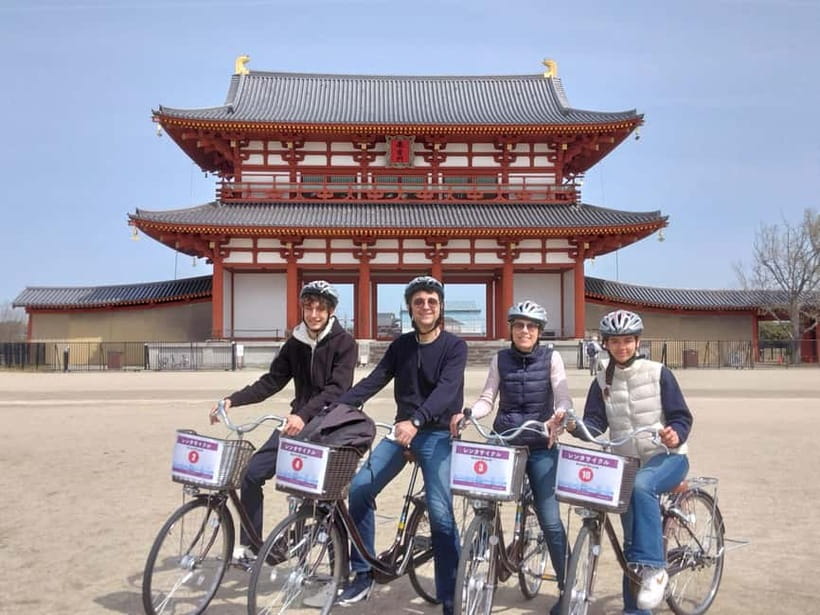
Suzaku Gate is the main entrance to Heijo Palace. It is also the clearest place to begin understanding the scale and formality of the old capital. The gate gives you an immediate photo stop, but the guide’s explanation is more important than the picture. This was not a small local compound. The palace site represented the political center of Nara-period Japan.
The grounds around the gate are open and green. You can take in the broad view, then begin cycling toward the other parts of the palace area. The first stop sets up the rest of the ride: you start with the ceremonial entrance, then move through gardens, excavated remains, burial sites, museums, and the main audience hall.
The tour is not a fast athletic ride. The pace is intended for sightseeing, with short stretches of cycling between stops. Still, you need to be comfortable riding a bicycle and able to manage a two-hour outing outdoors.
Toin Garden and the beginnings of Japanese garden design
The route continues to Toin Garden, also called East Palace Garden. This is one of the most attractive stops because it shows how a formal garden worked within the palace compound.
You will see bridges, buildings, rocks, and water arranged as part of a state guest setting. The garden was not only made for quiet beauty. It also had a public and political role, providing a place for ceremonies and official visitors.
The stop lasts about 10 minutes, so expect an introduction and time for photographs rather than a long garden visit. That short timing works well on a compact bike tour, although garden lovers may wish they had more time to linger.
I find this stop useful because it gives shape to the palace story. The gates and halls can seem like isolated structures, but the garden helps you picture how court life and official events were organized. It is also a peaceful break early in the route.
Excavation remains at the palace site museum
Next comes the Nara Palace Site Museum and the Excavation Site Exhibition Hall. These are two of the most useful stops for understanding what lies beneath the open grounds.
The excavation hall is unusual because archaeological remains are preserved and displayed in the condition in which they were discovered. Instead of seeing only polished objects behind glass, you get a sense of the actual excavation process and the layers of evidence used to reconstruct the old capital.
The nearby palace site museum is the oldest museum at Heijo Palace. Inside, you can see ancient roof tiles, wooden tablets, models, and other material connected with the palace. The objects may look modest at first, but they explain how historians know where buildings stood and how the palace functioned.
This is where a good guide matters. Without context, an old tile or wooden tablet can be easy to overlook. Kay explains the role of each item and connects it to the wider Nara-period story. The visit is brief, about 10 minutes at each museum area, so the tour gives you a clear introduction rather than an exhaustive museum study.
If you are strongly interested in archaeology, you may want to return independently for more time. For most people, though, these stops provide enough background to make the outdoor ruins easier to read.
Another way to spend a morning on two wheels:
- Hidden Kyoto E-Biking tour
★ 5.0 · 1,843 reviews - Tokyo Guided Small-Group Biking Tour
★ 5.0 · 1,250 reviews - Bike Tour Exploring North Kyoto plus Lunch
★ 5.0 · 1,087 reviews - Tokyo Great Cycling Tour
★ 5.0 · 811 reviews
A quiet ride around Mizukami Pond
The ride around Mizukami Pond, also called Minakami Pond, is one of the most relaxing parts of the experience. You can feel the breeze, hear birds, and sometimes see ducks and turtles near the water.
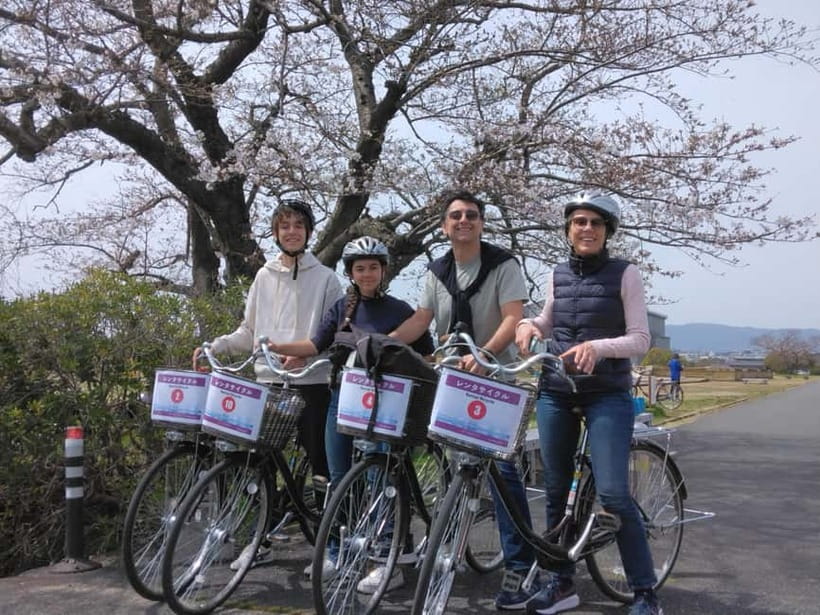
This section gives the tour a welcome change of pace. The palace gates and museums ask you to pay attention to history. The pond lets you simply ride and look around. You may see local people enjoying the grounds, especially during spring hanami, when cherry blossoms bring people outside.
That local setting is part of the appeal. The route feels removed from the busiest parts of Nara, and the open grounds offer room to breathe. Several visitors have described the ride as peaceful, and that fits the character of the route better than calling it an adrenaline-filled cycling trip.
The pond section also shows why a bike is useful. The site is large, and moving between its parts by bicycle allows you to see more without turning the day into a long walk. You still stop often, so you have time to take photographs and listen.
Hishiage Kofun and the evidence of an older Japan
Hishiage Kofun is an ancient burial mound. Here, the guide explains the tomb and its grave goods, connecting the site to the burial customs and social structure of early Japan.
This stop may appeal most to people who enjoy archaeology and ancient history. It is not presented as a grand restored monument. Much of the interest lies in understanding what the mound represents and how grave goods help researchers interpret the past.
That modesty is worth keeping in mind. If you expect every stop to have a dramatic building or a spectacular view, the tomb may feel quiet. If you like seeing the physical traces that historians work with, it adds an important layer to the tour.
The visit takes about 10 minutes. That is enough for an explanation, a look, and photographs, while keeping the ride moving toward the central palace buildings.
The First Daigokuden and the ceremonial center
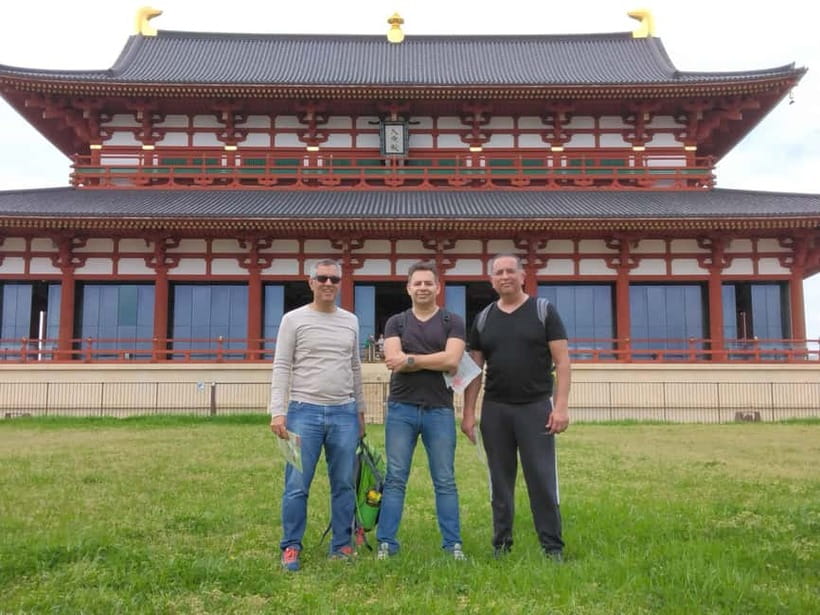
The First Daigokuden, or Imperial Audience Hall, is the tour’s biggest architectural stop. The building is a reconstruction of a major Nara Palace structure used for special ceremonies.
Inside, you can see painted decoration, displays, and ornaments connected with the ceremonial role of the hall. The building also gives you a strong view across the palace site, helping you understand how the various gates, gardens, halls, and open spaces related to one another.
The reconstruction is impressive in scale, but it is important to know what you are seeing. This is not an original eighth-century building. It is a modern reconstruction based on archaeological and historical evidence. For some people, that reduces the emotional impact. For others, the size and form make the old capital much easier to imagine.
The guide helps keep the distinction clear. You can appreciate the architecture while also understanding that much of Heijo Palace survives through foundations, records, models, and careful reconstruction.
The stop lasts about 15 minutes, one of the longer visits on the route. Use the time to look at the interior details and take in the view from the hall area.
Daigokumon and the southern gate
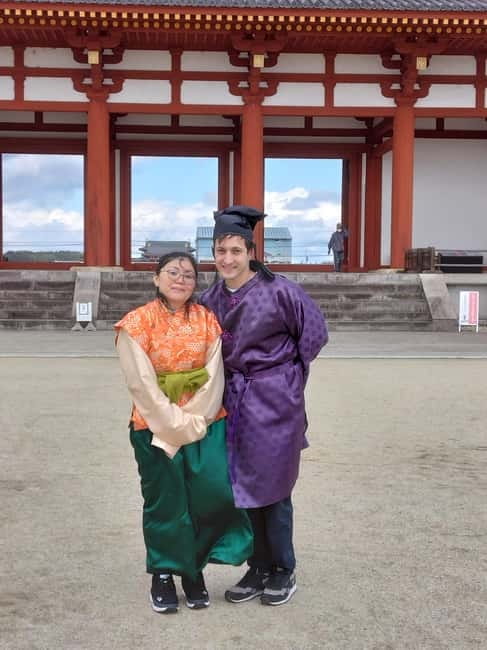
The route then reaches Daiichiji Daigokudenin Daigokumon, also known as the southern gate. This stop takes about five minutes, so it is a quick look and photo opportunity rather than a long visit.
The gate helps complete the ceremonial picture formed by Suzaku Gate and the audience hall. Large entrances were not just practical structures. They announced authority, controlled movement, and created a formal approach to the palace.
This is also a good point for photographs because the scale of the reconstructed architecture reads clearly from outside. The stop is short, but it breaks up the ride and gives you another angle on the palace layout.
The Heijo Palace Site Museum and Tenpyo clothing
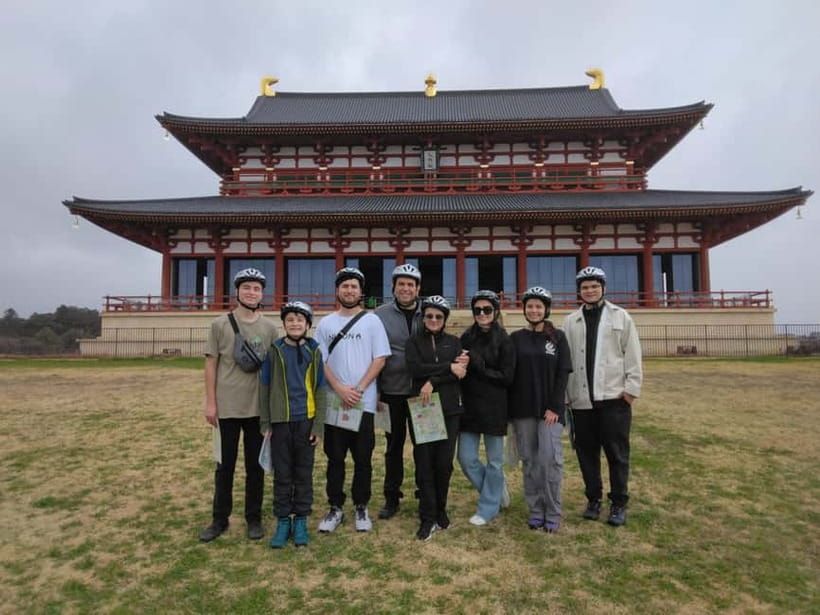
The final museum stop returns you to the material side of the story. The Heijo Palace Site Museum displays ancient tiles, wooden tablets, models, and other objects that help explain daily administration and building work at the old capital.
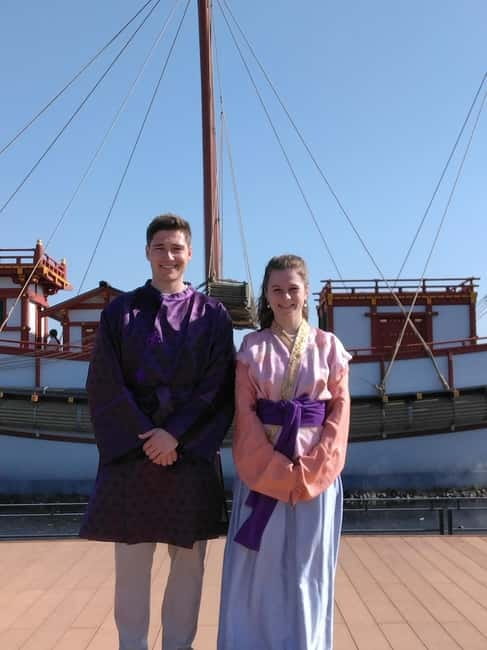
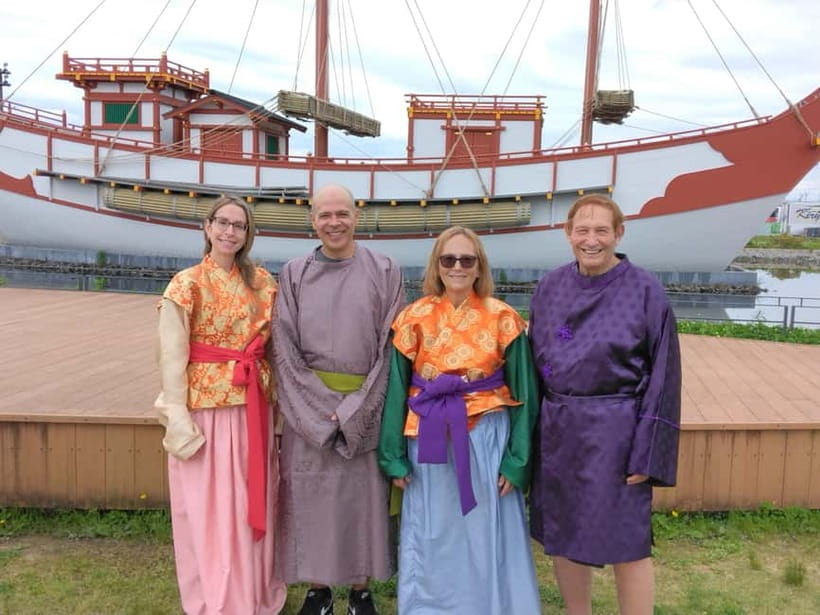
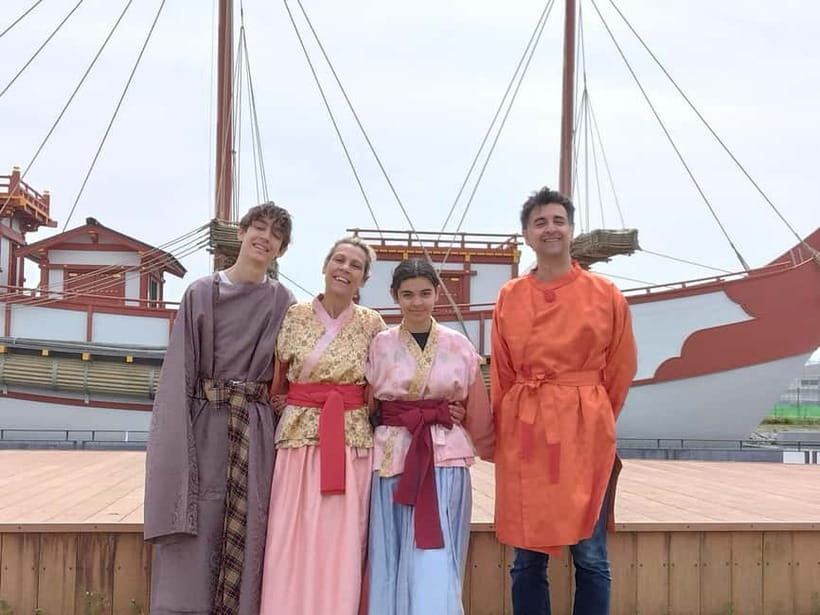
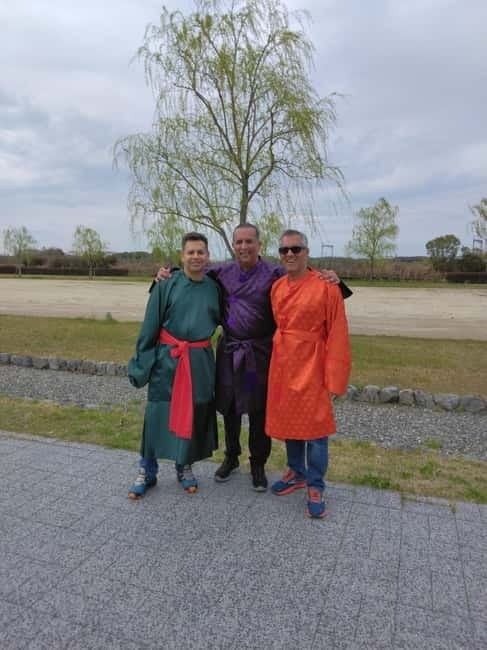
After the historical stops, you have the chance to try traditional Tenpyo clothing. The costume experience is included in the price, and you can take memorable photographs in Nara-period dress.
This is a small but enjoyable touch, especially for families and anyone who wants a visual souvenir beyond standard gate and museum pictures. It also gives the tour a human side. You are not only looking at the court from a distance. For a moment, you get to picture how people connected with the period’s clothing and ceremonial culture.
The exact amount of time available for the costume activity is not stated, so do not plan on an extended dress-up session. Think of it as a short included experience within the two-hour route.
What the pace and weather are really like
The tour lasts two hours and covers a lot of ground, but the cycling is broken into short sections with regular stops. Families have found the timing manageable, including with a six-year-old, and the guide can adjust the pace to the group.
You should still take the weather seriously. One August outing was described as extremely hot, and cycling across open palace grounds offers limited relief from the sun. If you have a choice, a cooler morning or a mild season will make the ride more comfortable.
Spring can be especially pleasant, with local people enjoying hanami around the grounds. Autumn and winter offer cooler air and may make the open site easier to explore. The tour operator can cancel for heavy rain, storms, or other severe weather, with a full refund in that case.
Wear comfortable clothes and shoes suitable for cycling. Food and drinks are not included, so bring what you need for the two-hour activity. Bike insurance is also not included.
Getting to Suzaku Gate Square
The meeting point is outside the main Nara Park area, so allow time to reach it. From Kintetsu Nara Station, the Nara Kotsu bus takes about 16 minutes to Suzakumon-hiroba-mae, followed by a five-minute walk north.
From Kintetsu Yamato-Saidaiji Station, take the bus from the south exit. The ride is about 10 minutes, followed by a five-minute walk north. From JR Nara Station’s west exit, the bus ride is also about 10 minutes, with the same five-minute walk.
You can also walk about 20 minutes from the south exit of Kintetsu Yamato-Saidaiji Station or about 20 minutes from Shin-Omiya Station. Use the coordinates 34.68628944048124, 135.7926401146025 if you want to check the meeting point on a map.
Do not arrive late. Missed tours and no-shows are not refundable, even though cancellations made at least 24 hours ahead receive a full refund.
Who will get the most from this experience
I would choose this tour if you want Nara’s political and archaeological story, rather than another visit centered on temples and deer. It suits people who enjoy historical context, open-air sites, Japanese gardens, and gentle sightseeing by bicycle.
Families can benefit from the compact route, frequent stops, costume photos, and the guide’s patient approach with children. The small group also makes it easier to ask questions or request a slower pace.
It is less suitable if you cannot ride a bike, are pregnant, use a wheelchair, or have a visual impairment. The tour is also not ideal for anyone seeking a dramatic ancient ruin at every stop. Several structures are reconstructed, while other places are foundations, excavations, museums, or low-key burial sites.
Should you book the Heijo-Kyo Bike Tour?
Book it if you have two free hours and want to understand why Nara mattered as Japan’s ancient capital. At $22, the inclusion of bike rental, helmet, admissions, guide service, and costume experience makes the price easy to justify.
I especially recommend it as an early activity in Nara. It gives you a framework for the city’s past before you visit other sights, and it gets you away from the busiest routes. Choose a cool day, arrive early at the rental counter, and expect archaeology and open space rather than deer and temple crowds.
Skip it if you dislike bicycles, struggle in hot weather, or have little interest in reconstructed buildings and excavation remains. For everyone else, guide Kay’s clear explanations, the peaceful pond ride, and the chance to cover a large UNESCO World Heritage site make this a useful and unusually calm introduction to Nara.
FAQ
How long is the Nara bike tour?
The tour lasts two hours, with stops for guided visits, photos, museums, gardens, the ancient tomb, and the costume experience.
Where does the tour meet?
Meet at the rental bike reception counter at Miharashi-Kan in Suzaku Gate Square. The coordinates are 34.68628944048124, 135.7926401146025.
What is included in the price?
The $22 price includes the guided bike tour, rental bicycle, helmet, admission fees, and traditional Tenpyo costume experience.
Is the tour offered in English?
Yes. The live guide service is available in English and Japanese. Guide Kay commonly leads the English-language tour.
How many people can join the group?
The group is limited to eight participants.
Can I cancel for a refund?
You can cancel up to 24 hours before the activity for a full refund. If severe weather causes the operator to cancel, you also receive a full refund. No-shows and missed tours are not refundable.
More history tours in Japan
- Shuri+Naha: Cycling Tour Explore Water Heritage with E-Bike
★ 4.9 · 22 reviews - 4.5-hr Kyoto Historical Highlights Bike Tour with UNESCO
★ 4.7 · 13 reviews - Historical Singapore Bike Tour on Full-Sized Bicycles
★ 5.0 · 1,421 reviews - Barcelona: 2.5-Hour Bike or E-Bike Historical Tour
★ 4.5 · 1,262 reviews
Latest bike tours added in Japan
- Private E-MTB guided cycling around Mt. Aso volcano & grasslands★ 5.0 · 16 reviews
- Tokyo: West-Side Cycling and Food Tour with Guide★ 5.0 · 37 reviews
- Tokyo: Private Cycling Tour with cute E-bike★ 5.0 · 11 reviews
- Tokyo Bay Area: Sunset Night View 3h E-bike Guided Bike Tour★ 5.0 · 11 reviews
- Tokyo: Hidden Gems Guided Bike Tour with Lunch★ 4.5 · 30 reviews
- Tokyo Bike Tour: Shibuya, Harajuku & Hidden Gems★ 5.0 · 20 reviews
- Tokyo: 3h Private E-bike Tours, Starting at Your Hotel★ 5.0 · 36 reviews
- Tokyo: 3-hour Guided E-Bike Tour of the City’s Hidden Gems★ 4.8 · 251 reviews
Historic & Landmark Bike Tours, compared.

Historical Singapore Bike Tour on Full-Sized Bicycles
Read our review →
Asheville Historic Downtown Guided Electric Bike Tour with Scenic Views
Read our review →
Krakow: Bike Tour of Old Town, Jewish Quarter and the Ghetto
Read our review →
Historic Athens: Small Group Electric Bike Tour
Read our review →
Barcelona e-Bike Tour: Gaudí & Old Town Small Group
Read our review →
Bordeaux: Historic Center & Chartrons District Bike Tour
Read our review →Browse the lists this tour appears in