
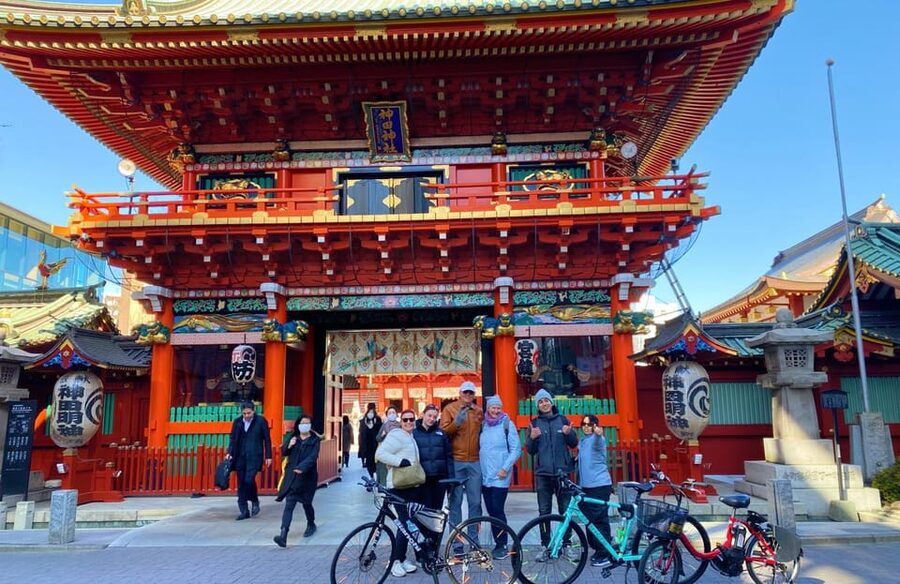
Review · E-BIKE TOURS
Tokyo: 3-Hour Bike or E-Bike Tour of City’s Hidden Gems
Tokyo is much easier to understand from a bicycle seat. This three-hour ride links old temples, imperial landmarks, fashionable neighborhoods, and Shibuya’s famous crossing without making you change trains every few minutes. You start near the statue of Commodore Perry and finish at the Bell of Peace, covering a broad slice of central Tokyo.
I like the quality bikes, including Bianchi and Fuji models, and I like the route’s mix of major sights and smaller streets. Guides such as Casey, Shin, Naoki, Marika, Miguel, and KG have been praised for clear explanations, safe riding, and friendly help. The main caution is simple: this is a real ride, not a sightseeing bus. Some riders found the cycling more extended than expected, and helmets cost an extra ¥1,000 in cash.
Key points at a glance
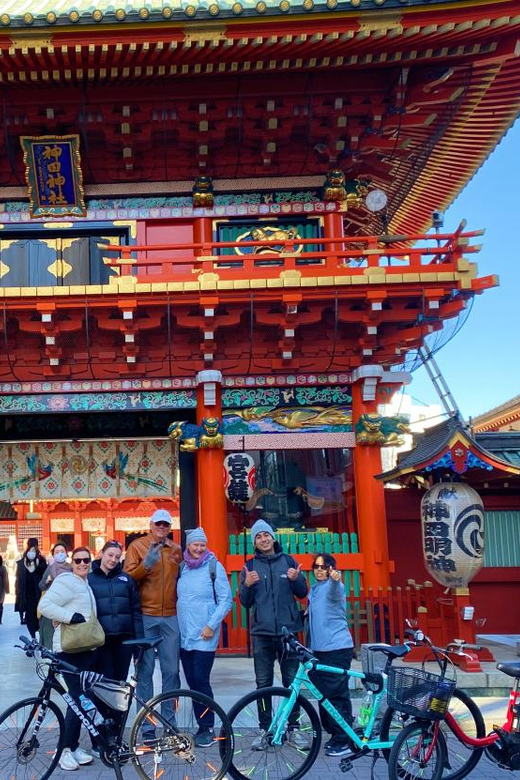
- A wide Tokyo route: Ride from Shiba and the Imperial Palace area toward Akasaka, Aoyama, Harajuku, and Shibuya.
- Good bike choices: Select a Bianchi or Fuji bike, with an e-bike available for riders who lack stamina or rarely cycle.
- Strong guiding: English and Japanese-speaking guides explain temples, shrines, history, and modern Japanese life.
- Small-group feel: Private and small-group options make it easier to move through city streets and adjust the ride to your interests.
- Three hours well used: You see far more ground than on foot, while still stopping for photos and short walks.
- Plan for extras: Helmets are not included and cost ¥1,000 each, payable in cash. Child seats cost ¥3,000.
Starting near Commodore Perry’s statue
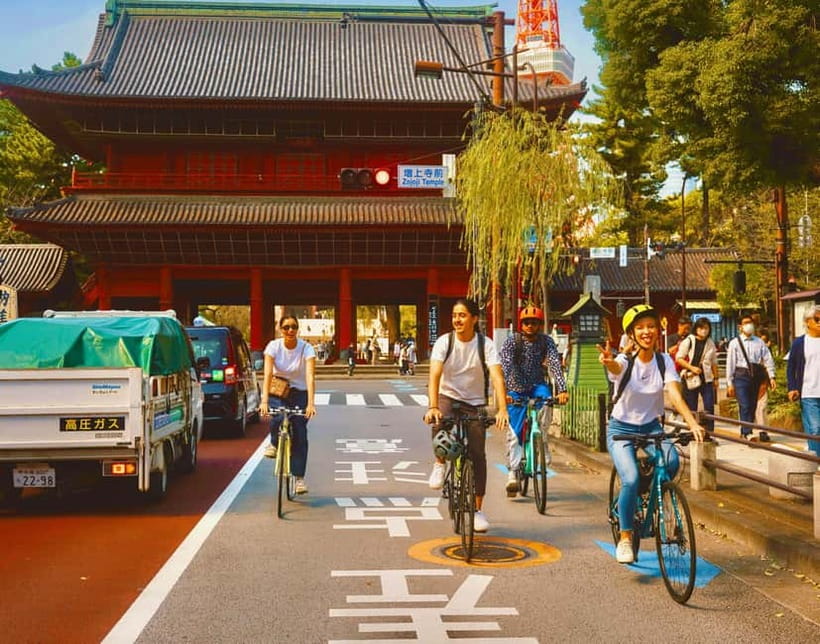
The meeting point is around the Statue of Commodore Perry, about a three-minute walk from Daimon Station’s A6 exit. Give yourself a little extra time here. One rider found the meeting point hard to locate, so it is worth checking the station exit and surrounding area before the appointed time.
The start puts you close to Tokyo Tower and Zojo-ji Temple. That gives the first part of the ride a useful sense of place. You are not beginning in a generic rental-bike area. You are starting in a part of Tokyo where Japan’s modern opening to the West, Buddhist tradition, and present-day city life sit close together.
The tour provides a small pouch attached to the bike for your phone, wallet, and keys. That is a minor detail, but it matters when you are riding. You do not want loose items in a jacket pocket or a backpack shifting around at every stop.
More E-Bike Tours in Japan
- Tokyo Top Highlights 3h Guided E-bike Tour
★ 5.0 · 714 reviews - 3h Tokyo E-Bike Tour: Hidden Gems, and Local Life with guide
★ 5.0 · 670 reviews - Tokyo: 3-Hour Bike or E-Bike City Highlights Tour
★ 4.8 · 435 reviews
Zojo-ji Temple and the Shiba district
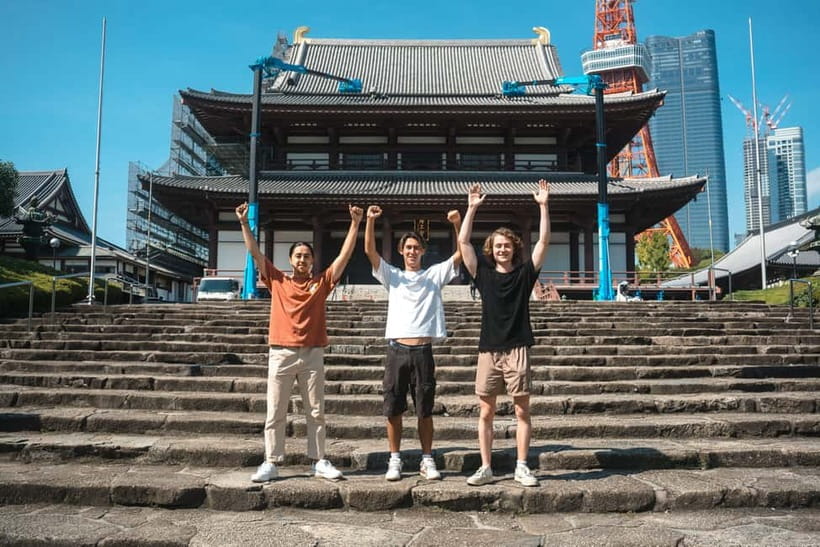
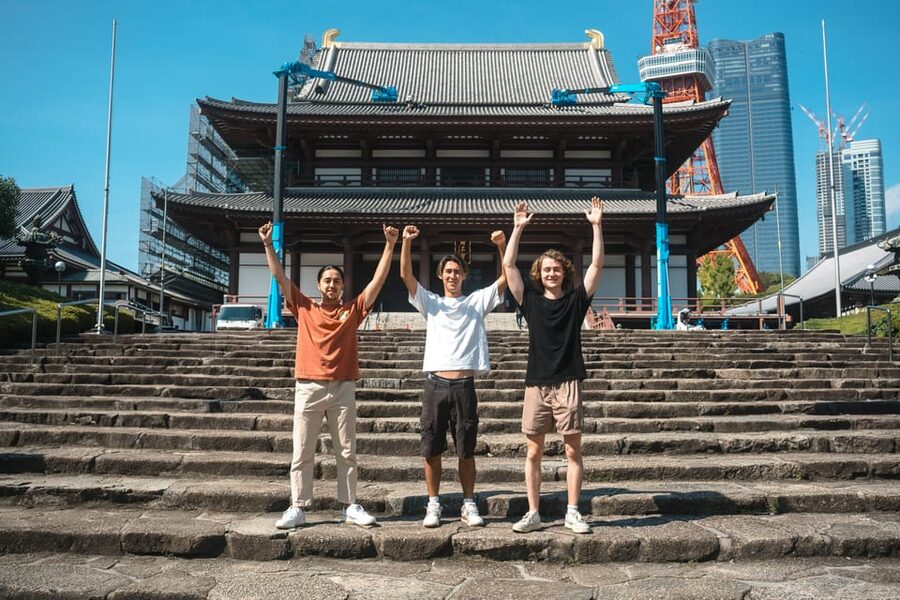
Zojo-ji is the first substantial stop, with about 15 minutes for a guided visit and photos. The temple is one of Tokyo’s most important Buddhist sites, and its setting near Tokyo Tower gives you a striking old-and-new view. The traditional temple buildings and the tower make an especially useful introduction to the city’s contrasts.
This is also where the guide’s role matters. You are not simply pulling over for a quick picture. The guide explains the site and gives context about Japanese religious traditions. One especially useful point raised on similar rides is the difference between temples and shrines, something that can be confusing when you first arrive in Japan.
The stop is short, so do not expect a full temple visit. You will have time to look, listen, and take pictures, but not to inspect every corner of the grounds. That is the pattern for the day: several focused stops instead of one long visit.
The Imperial Palace and Ōte-mon Gate
From Shiba, the route continues toward the Imperial Palace. There is a roughly 10-minute stop for photos and a guided explanation, followed by a shorter five-minute stop at Ōte-mon Gate.
The palace grounds give you a different view of Tokyo. Zojo-ji introduces religious tradition, while the palace area reflects the imperial center of modern Japan. Ōte-mon Gate adds a clear visual reminder of the former castle town, with imposing stonework and formal entrances.
You should keep your expectations in check. This tour does not provide an extended palace interior visit, and the itinerary calls for photo stops rather than a long walk through the grounds. That is not a flaw if you want a broad introduction to Tokyo. It is a limitation if your main goal is detailed palace sightseeing.
The bicycle makes this section especially useful. The palace area is too spread out to cover comfortably on foot during a three-hour city tour, yet it is not a place you want to see only through a train window. Cycling gives you a closer look at the streets and lets you stop without spending half the morning underground.
Akasaka Palace and the Olympic stadium
Next comes the State Guest House Akasaka Palace, where the scheduled stop is about 10 minutes for photographs. The grand Western-style building feels very different from Zojo-ji and Ōte-mon Gate. It adds another layer to the route, showing how Tokyo’s architecture reflects both Japanese tradition and international influence.
The ride then heads to the New National Stadium for another photo stop of about 10 minutes. This is a good point for visitors interested in modern Tokyo and the city’s Olympic story. The stadium area also breaks up the older cultural sights with a large, contemporary public landmark.
The sequence works well because you are not seeing one type of Tokyo over and over. In a short time, you move from temple roofs to palace gates, a formal state building, and a major sports venue. I would not book this ride expecting long interior tours at each place. I would book it for the connections between them and for the chance to see how different parts of the city fit together.
More E-Bike Tours in Tokyo:
- Tokyo: 3-hour Guided E-Bike Tour of the City’s Hidden Gems
★ 4.8 · 251 reviews - 3-Hour Tokyo Private E-Bike Tour Starting from Your Hotel
★ 5.0 · 117 reviews - Tokyo: 3h Private E-bike Tours, Starting at Your Hotel
★ 5.0 · 36 reviews - Tokyo: Private Cycling Tour with cute E-bike
★ 5.0 · 11 reviews
Smaller streets and Aoyama
After the larger landmarks, the route includes a stop described as a local hidden spot, followed by a short visit in the 3 Chome Minamiaoyama area. The exact smaller stop can vary, especially with private or small-group arrangements, so you should think of this part as a chance to see a less obvious side of central Tokyo rather than a single must-see monument.
Minamiaoyama is a useful change of pace. The area is known for design, shops, cafes, and polished city streets, though the tour itself does not promise shopping time or a cafe stop at a particular address. The value lies in riding through a neighborhood that most first-time visitors might skip while moving between headline sights.
Several guides have been praised for adapting the route to the group. Shin, in particular, was described as flexible and able to adjust the ride to suit different interests. That can matter if you already know Tokyo’s major sights and want more local context, or if you want explanations about everyday Japanese life rather than only formal history.
Cat Street, Miyashita Park, and Shibuya
Cat Street is the next brief stop, with about five minutes to look around. It is a lively pedestrian-oriented area connecting the Harajuku and Shibuya districts, known for youth fashion, independent shops, and a more relaxed street feel than the main avenues.
Five minutes is not enough for serious shopping. If you want to browse stores, add another visit on your own after the tour. During the ride, Cat Street works better as a quick neighborhood sample and a link between the Aoyama and Shibuya sections.
The route then pauses at Miyashita Park for about three minutes. This is a very short stop, but it gives you a glimpse of one of Shibuya’s newer public spaces. You may appreciate the contrast between the park’s designed urban setting and the older temple and palace areas earlier in the morning.
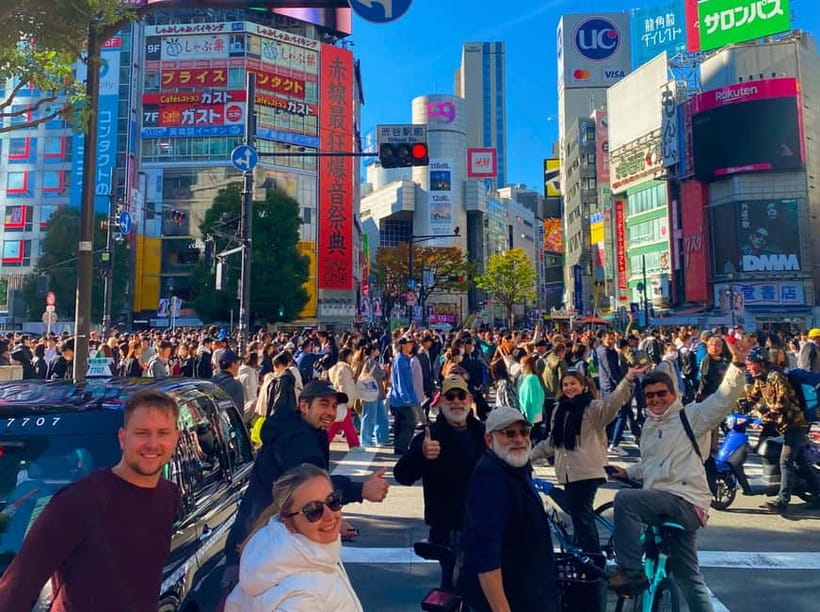
The final major stop is Shibuya Crossing, with roughly five minutes for photos and a short visit. You will not have an hour to watch the crossing from several viewpoints, but a bike tour gets you directly into the district without requiring a separate train ride. The tour finishes at the Bell of Peace, giving the group a clear endpoint in the Shibuya area.
What the ride feels like on the road
The route crosses busy parts of Tokyo, so you should be comfortable riding in an urban setting. The guides are expected to keep the group together and watch out for riders, and several people specifically praised guides for safe handling of busy streets. Still, you remain responsible for following instructions and riding within your ability.
The distance is not stated, but the route covers Shiba, the palace district, Akasaka, Aoyama, Harajuku, and Shibuya in three hours. One rider described the cycling as extended for this kind of tour, while another said it was an excellent way to cover neighborhoods that were too far apart to walk. That is the right way to judge the ride: it is not an effortless roll between two nearby sights.
Comfortable clothing, water, and shoes are important. Tokyo summers can be very hot, and one rider completed the tour during record-breaking summer heat with stops for refreshments. You should still bring your own water and avoid treating that experience as a guarantee of frequent drink stops.
Choosing between a standard bike and an e-bike
The operator offers Bianchi and Fuji bikes, described as high-quality road or cross bikes, plus an e-bike option. The standard bikes suit riders who cycle with some regularity and want a more active outing. The e-bike is the sensible choice if you rarely ride, do not have much stamina, or feel unsure about covering a long urban route.
The booking details matter here. One person found it unclear at booking time whether the reservation was for an e-bike or a standard bike. Select the bike type carefully and confirm it before paying, especially if the e-bike is important to your comfort.
The bicycles received repeated praise, with riders noting that the bikes were easy and enjoyable to use around the city. That can make a real difference over three hours. A poor rental bike turns every stoplight into a chore. A well-maintained bike lets you pay attention to the city.
Helmets are available on site for ¥1,000 per unit in cash, but they are not included. I would budget for one rather than arrive assuming it comes with the bike. Child seats cost ¥3,000, though children under 12 are not suitable for this activity according to the stated restrictions, so check the child-seat arrangement carefully before booking.
The guides and the small-group advantage
The guide is one of the strongest parts of this experience. English and Japanese are available, and guides including Casey, Shin, Naoki, Marika, Nouchi, Georgie, Miguel, and KG have been praised for warmth, clear explanations, photography help, and attention to safety.
A guide can turn a simple photo stop into a useful lesson. At the temples, you can ask about religious customs. Near the palace, you can ask about Japan’s imperial system and Tokyo’s development. In Aoyama and Shibuya, the conversation can shift toward modern life, neighborhoods, and the way Tokyo mixes old customs with new habits.
Private and small-group formats are available. A smaller group is useful on city streets because it is easier to stay together, pull over, and hear the guide. It may also make route adjustments more realistic. Do not assume every departure will follow a completely custom itinerary, but the format gives you a better chance to ask for a pace or emphasis that suits your group.
Is $60 a fair price?
At $60 per person, this is good value if you want to cover several central Tokyo districts in one morning or afternoon. You are paying for the bicycle, guide, insurance, local explanations, and route planning, not just for a basic rental.
The value is strongest for a first or second day in Tokyo. You can get your bearings across a wide area, note places you want to revisit, and save your limited train rides for neighborhoods farther away. The bike also lets you connect sights that feel awkward to combine on foot.
The price is less compelling if you want long visits inside temples, palaces, museums, or shops. This is a moving city tour with short stops. You are buying range and context rather than extended time at one attraction.
Free cancellation up to 24 hours before the start and reserve-now, pay-later booking add useful flexibility. The three-hour duration also fits well beside other plans. Just allow enough time before the start to find the meeting point and remember the cash helmet fee.
Who should book this Tokyo bike tour?
I would recommend it to adults and confident younger riders who want a broad look at central Tokyo without spending the day on trains. It is especially useful if you enjoy local stories, want photographs at major landmarks, and like the idea of seeing ordinary streets between the famous stops.
Choose the e-bike if you do not cycle often. Pick the standard bike if you want the ride itself to be part of the activity. You should be able to ride a bicycle, wear comfortable clothes, and handle a route through city streets.
This is not suitable for children under 12, pregnant women, people with back problems, or anyone who cannot ride a bike. If you dislike traffic, exercise, or short sightseeing stops, a walking tour or private car tour may suit you better.
Should you book it?
Book this tour if you want a fast, active introduction to Tokyo and value a guide who can explain what you are seeing. The route is unusually broad for three hours, and the mix of Zojo-ji, the palace district, Akasaka, Aoyama, Cat Street, and Shibuya gives you a useful first picture of the city.
Skip it if your priority is slow temple visits, shopping, or indoor sightseeing. For everyone else, the combination of good bikes, strong guides, small-group options, and a $60 price makes this a sensible way to get around Tokyo while still feeling connected to the streets.
FAQ
How long is the Tokyo bike tour?
The tour lasts three hours. Starting times vary, so you should check availability for your chosen date.
Where does the tour begin?
The meeting point is around the Statue of Commodore Perry, about a three-minute walk from Daimon Station’s A6 exit.
Where does the tour finish?
The tour finishes at the Bell of Peace in the Shibuya area.
What sights are included?
The route includes Zojo-ji Temple, the Imperial Palace, Ōte-mon Gate, the State Guest House Akasaka Palace, the New National Stadium, a local smaller stop, Minamiaoyama, Cat Street, Miyashita Park, and Shibuya Crossing.
Is an e-bike available?
Yes. An e-bike option is available, and it is recommended for people who do not cycle often, feel uncomfortable riding long distances, or lack stamina.
Are helmets included?
No. Helmets are available on site for ¥1,000 per unit, payable in cash.
What should I bring?
Bring comfortable shoes, water, and comfortable clothes. The bike includes a small pouch for items such as your phone, wallet, and keys.
Who cannot take this tour?
The activity is not suitable for children under 12, pregnant women, people with back problems, or people who cannot ride a bicycle.
Can I cancel the booking?
You can cancel up to 24 hours in advance for a full refund. Reserve-now, pay-later booking is also available.
More three-hour rides in Tokyo
- Tokyo Bay Area: Sunset Night View 3h E-bike Guided Bike Tour
★ 5.0 · 11 reviews - 3-Hour Porto Highlights on a Electric Bike Guided Tour
★ 5.0 · 4,392 reviews - 3-hour Complete Prague Bike Tour
★ 5.0 · 3,674 reviews - Porto: City Highlights 3-Hour Guided Electric Bike Tour
★ 4.8 · 3,092 reviews
Latest bike tours added in Tokyo
- Tokyo: West-Side Cycling and Food Tour with Guide★ 5.0 · 37 reviews
- Tokyo: Private Cycling Tour with cute E-bike★ 5.0 · 11 reviews
- Tokyo Bay Area: Sunset Night View 3h E-bike Guided Bike Tour★ 5.0 · 11 reviews
- Tokyo: Hidden Gems Guided Bike Tour with Lunch★ 4.5 · 30 reviews
- Tokyo Bike Tour: Shibuya, Harajuku & Hidden Gems★ 5.0 · 20 reviews
- Tokyo: 3h Private E-bike Tours, Starting at Your Hotel★ 5.0 · 36 reviews
- Tokyo: 3-hour Guided E-Bike Tour of the City’s Hidden Gems★ 4.8 · 251 reviews
- Tokyo: 2-Hour Night Bike Tour of the City’s Hidden Gems★ 4.9 · 25 reviews
E-Bike Tours, compared.
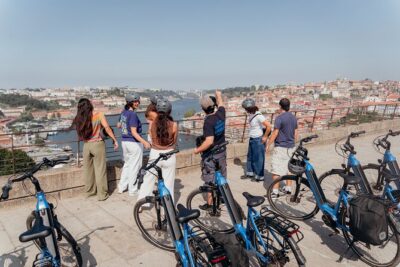
3-Hour Porto Highlights on a Electric Bike Guided Tour
Read our review →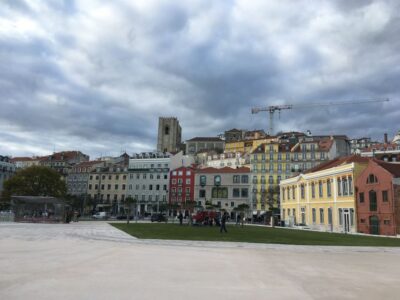
Hills, Alfama, and Mouraria Tour by Electric Bike
Read our review →
Athens Scenic Electric Bike Tour with optional Acropolis visit
Read our review →
City Highlights 3-Hour Guided Electric Bike Tour
Read our review →
Rome EBike Tour: Appian Way, Catacombs & Roman Aqueducts
Read our review →
Top Highlights & Hidden Gems Tour by Cannondale E-Bike
Read our review →Browse the lists this tour appears in