
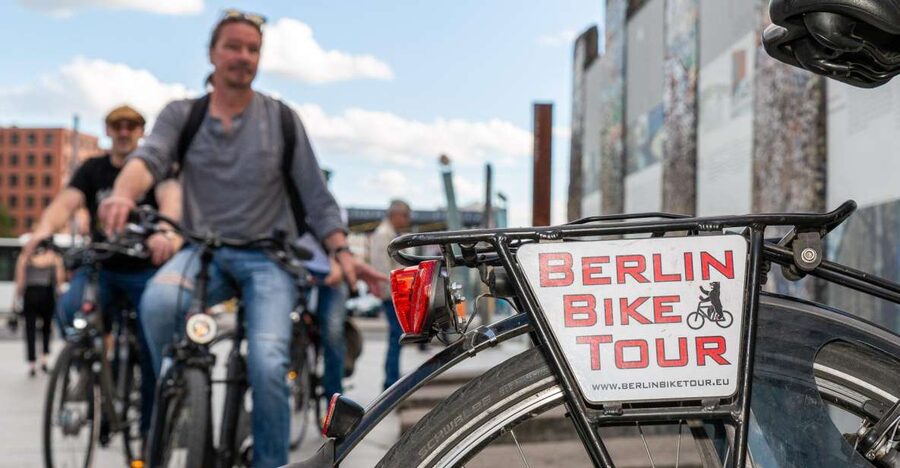
Review · HISTORIC & LANDMARK BIKE TOURS
Berlin Wall History Small Group Cycling Tour
The most powerful part of this four-hour ride is that it begins where the Wall first cracked open: Bornholmer Straße, the border crossing where East German citizens crossed on November 9, 1989. From there, you follow the former Wall route through places where the barrier is gone but its story is still easy to trace.
I like the small group size, limited to eight, and I like the route’s mix of major sights and less obvious stops, including Invaliden Cemetery and the Memorial to Günter Litfin. The bikes are included, and the $40 price gives you a useful half-day of guided sightseeing rather than a quick ride past famous landmarks.
The main consideration is language: this is a German-speaking tour, so it may not suit you if you need English explanations. It also runs in all weather, and the route requires you to stay comfortable on a bicycle for four hours.
Key points to know before booking
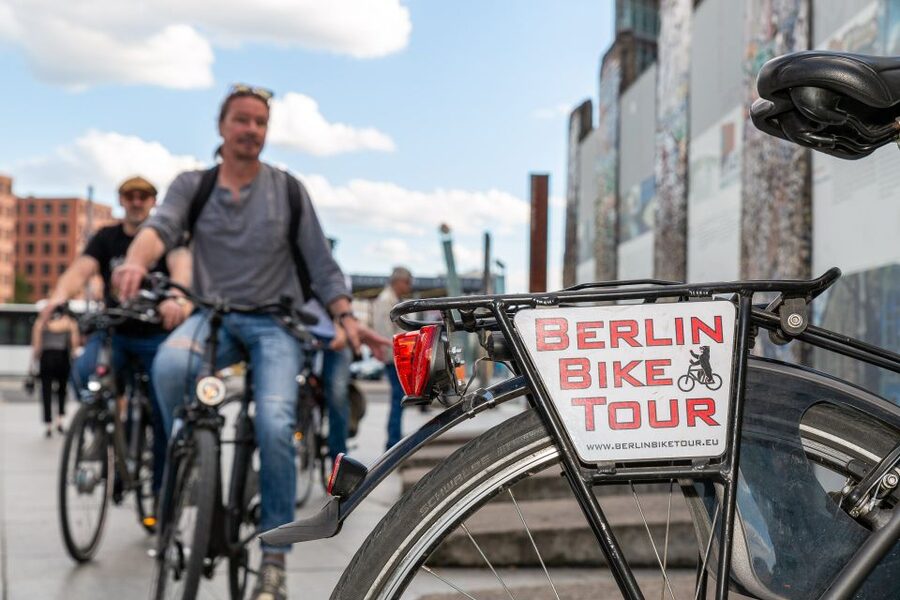
- Start where the Wall opened: Begin at the former Bornholmer Straße crossing, the first border point opened on November 9, 1989.
- See more than famous landmarks: The route includes watchtowers, sections of the former Death Strip, memorials, a cemetery, and former escape sites.
- Small group, personal guide: Groups range from three to eight people, with room for direct questions and a more personal presentation.
- A full four-hour ride: You cover a long stretch of central Berlin by bicycle, from northern Wall sites to Checkpoint Charlie.
- German only: The listed live guide language is German. Guide Ferenz has added personal insight about the years around reunification.
- Practical in uncertain weather: Bicycles and fees are included, and a rain poncho is supplied if needed.
Starting at Bornholmer Straße, where the border broke
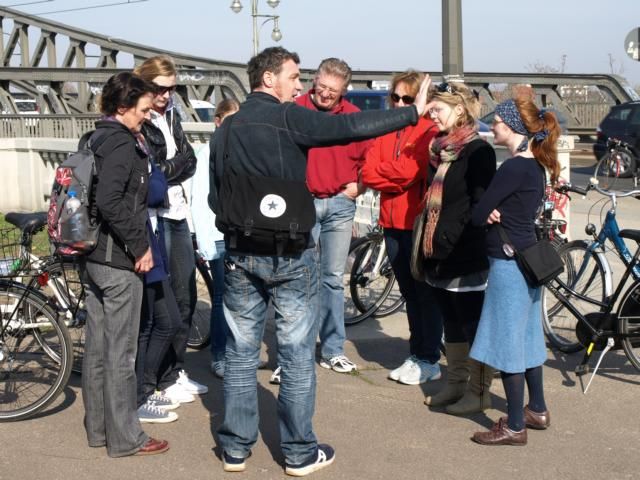
Meet at Berlin Bike Tour, 75 Bornholmer Straße, in the city’s north. The location is easy to reach: Björnsonstraße tram stop is about a minute away, Bornholmer Straße S-Bahn station is about two minutes on foot, and Schönhauser Allee is roughly ten minutes away.
This is a fitting starting point. The tour opens on the Square of November 9, 1989, beside the former border crossing where the first East German citizens passed through after confused announcements led guards to open the gates. You do not begin with a general city overview. You begin at the precise place where the Wall’s political power started to fail.
That gives the rest of the ride a clear purpose. You are not simply cycling beside a former barrier. You are tracing how the border worked, where people tried to cross it, and how Berlin has marked the places connected to escape, separation, and reunification.
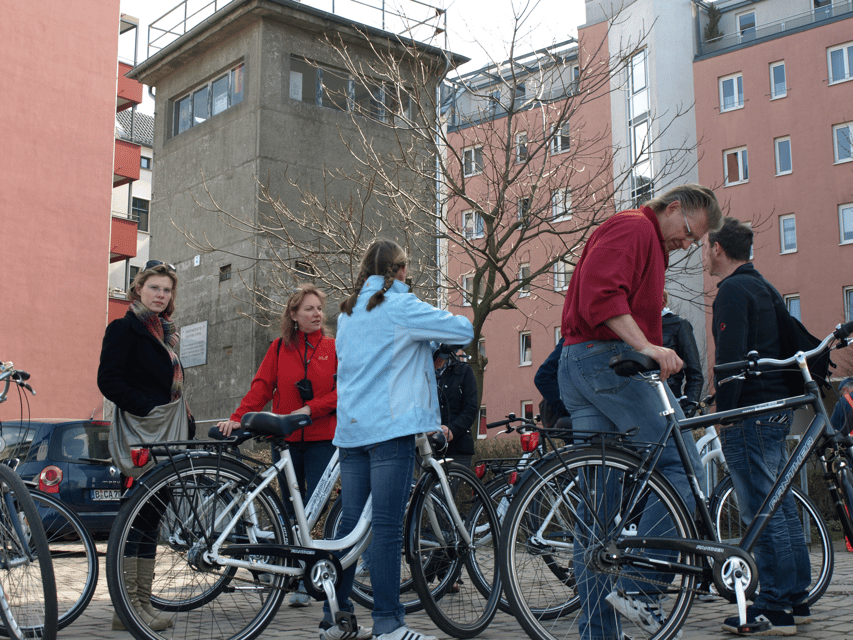
The Bornholmer Straße section also includes the original watchtower and a view of the former Death Strip. The Wall itself is mostly gone, so these remaining structures matter. They help you picture the layered border zone, rather than reducing the story to a single concrete slab.
You will also hear why cherry trees were planted along Bornholmer Straße. This small detail gives the site a human touch without hiding the grim reality of the border. The contrast is typical of modern Berlin, where ordinary streets and pleasant public spaces often sit on ground shaped by fear and political violence.
More Historic Bike Tours in Germany
- Berlin: Cold War & Berlin Wall History Guided Bike Tour
★ 4.8 · 422 reviews - Small-Group Historical Bike Tour in Berlin
★ 4.5 · 103 reviews - Berlin (E)Bike Tour Historical Highlights in Small groups
★ 4.5 · 24 reviews
Mauerpark and the first stretch of the former Wall
From Bornholmer Straße, you ride through Mauerpark. The name means Wall Park, and its open space occupies part of the former border strip. Today it is one of the most recognizable public areas connected to the old Wall route, but the tour uses it as a historical location rather than simply a park stop.
This is a useful early part of the ride because you can see how Berlin has reused former border land. The setting is open and modern, while the route markings and guide’s explanation point back to the controlled strip that once divided neighborhoods.
The cycling format works well here. You can cover the ground between sites without spending the whole morning walking along busy city streets. You also get a sense of distance, something that is easy to miss when you view Wall memorials one at a time.
Bernauer Straße and the Chapel of Reconciliation
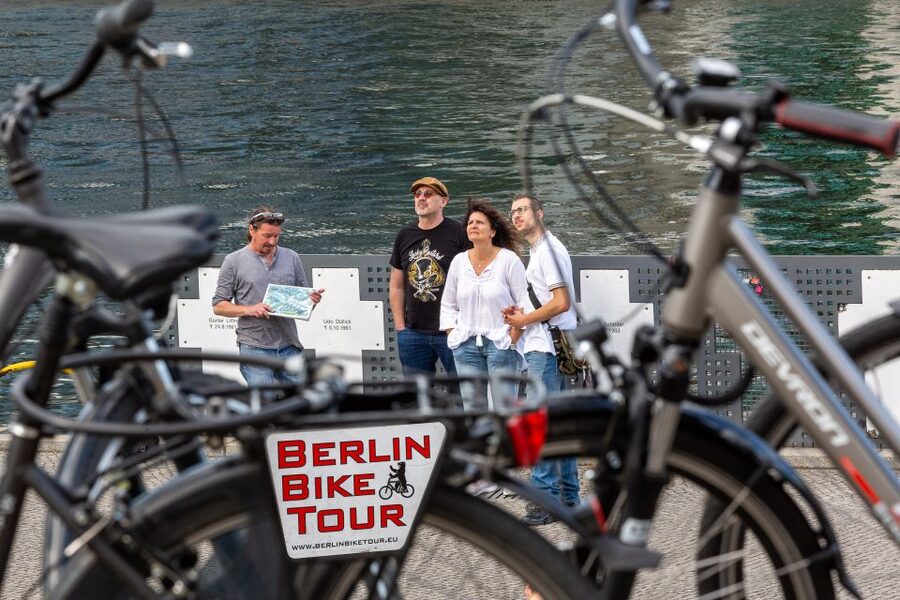
The Bernauer Straße Wall Memorial is one of the most important stops on the route. The area preserves a section of the former border and explains how the Wall cut through the street, separating buildings, families, and daily routines.
The Chapel of Reconciliation is part of this memorial area. Its presence helps shift the focus away from military hardware and toward the people affected by the border. Here, the tour can give more meaning to the escape stories and the physical remains you have already seen.
You will also encounter the familiar rabbit images painted or placed along parts of the former route. They are a reminder of the open strip that existed between the barriers. Follow them toward Brandenburg Gate, and you get one of the tour’s more memorable visual threads.
Bernauer Straße can be moving, but it is also information-heavy. Four hours is enough to visit several sites, not to study each display at length. If you want every museum panel and exhibition room, plan a separate visit on another day.
Chausseestraße, Invaliden Cemetery, and Günter Litfin
The route continues toward the former Chausseestraße border crossing. This stop adds another view of how the Wall operated at an official crossing point. The tour does not focus only on the dramatic night of November 9. It also shows the controlled passages and restrictions that shaped daily life for decades.
Nearby Invaliden Cemetery gives the ride a quieter turn. Cemeteries can make historical events feel less abstract, and this stop connects the Wall’s route with the city’s older layers. The former Invalidenstraße border crossing was part of this same divided urban space.
The Memorial to Günter Litfin is another key stop. Litfin was killed while trying to cross the border, and the memorial preserves the memory of an individual rather than presenting only statistics. This is one reason a guided visit helps. A person with no prior knowledge of the Wall may otherwise pass through this area without knowing why it matters.
The tour’s emotional weight builds gradually. You start with the border opening, then see the former border strip, memorial sites, a chapel, a cemetery, and a memorial to a man who died attempting escape. The route gives you time to connect those places instead of treating them as unrelated photo stops.
More Historic Bike Tours in Berlin:
- Half-Day Bike Tour of Berlin’s Lesser Known And Historical Sites
★ 5.0 · 10 reviews - Historical Singapore Bike Tour on Full-Sized Bicycles
★ 5.0 · 1,421 reviews - Barcelona: 2.5-Hour Bike or E-Bike Historical Tour
★ 4.5 · 1,262 reviews - Asheville Historic Downtown Guided Electric Bike Tour with Scenic Views
★ 5.0 · 1,234 reviews
Along the Government Bank to the Parliament of the Trees
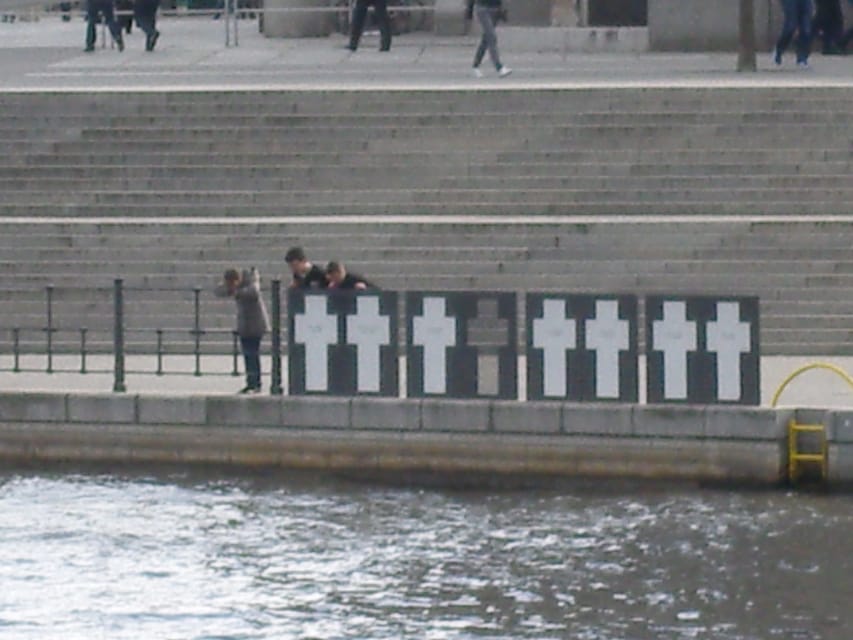
As you ride toward central Berlin, the route follows the Government Bank and reaches the Parliament of the Trees. This installation uses trees, plaques, and art to remember people who died at the Wall. It is a different kind of memorial from Bernauer Straße or a watchtower.
I find this variation valuable because Berlin’s Wall memory is not confined to one official style. Some places preserve concrete and guard structures. Others use names, trees, images, and open public space. The Parliament of the Trees gives you a pause from the more technical border story and returns attention to individual lives.
It also shows how the former Wall route passes through the political center of present-day Berlin. You are moving from northern residential districts toward the institutions and landmarks that make up the capital’s central core.
Brandenburg Gate and the rabbit trail
Brandenburg Gate is one of Berlin’s essential sights, but its meaning changes when you reach it by following the former Wall. The gate once sat in a restricted border zone. Today, it is one of the city’s most open and recognizable public spaces.
The route takes you through the gate, continuing along the rabbit pictures on the ground. This is a small but effective detail. The rabbits make the route easy to follow and point to the strange contrast between the Wall’s former danger and the relaxed city streets that now cover much of its path.
You will not simply stop for a standard Brandenburg Gate photograph. The guide places the monument within the story of division and reunification. That extra context is the main reason to visit it as part of this tour rather than as an isolated sightseeing stop.
Potsdamer Platz and the modern city over the border
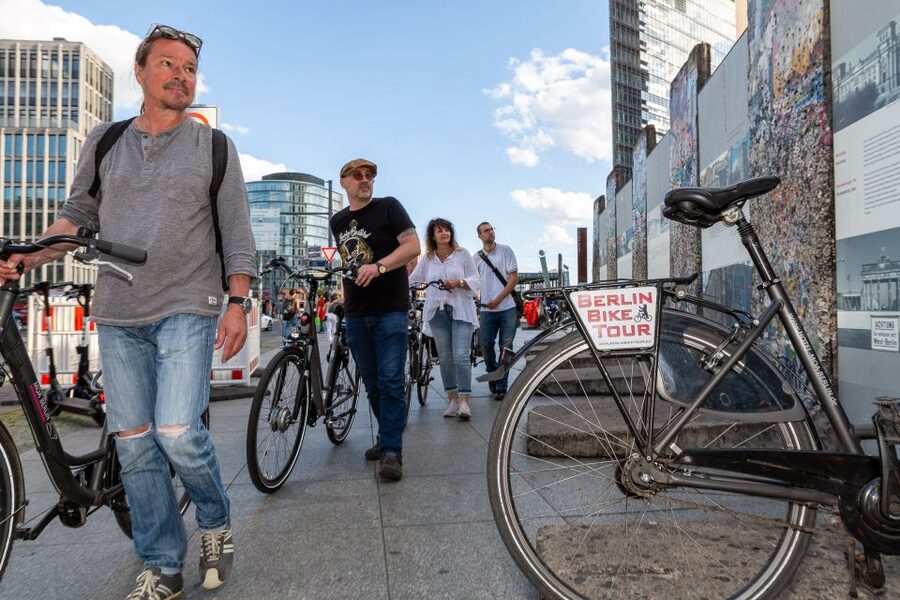
Potsdamer Platz shows perhaps the sharpest change in Berlin’s appearance. It is now a major central district, yet it was once cut by the Wall and shaped by the empty border zone around it.
Cycling helps you connect the old route with the rebuilt city. The movement from memorials to modern architecture is quick, which makes the contrast clear. You see how little of the physical Wall remains and how much the city has changed around the former dividing line.
This stop is best understood as part of the larger route, not as a long architectural visit. The tour’s focus remains the Wall, so you should not expect a detailed examination of every modern building at Potsdamer Platz.
Checkpoint Charlie and the final central stops
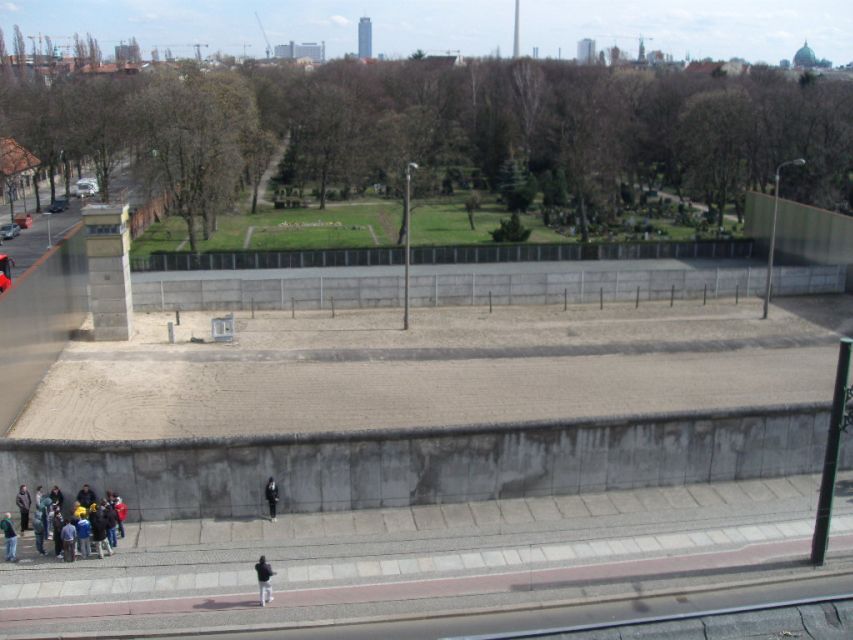
Checkpoint Charlie is Berlin’s best-known former crossing point. It is also one of the city’s most commercialized historic sites, so the guide’s explanation is especially useful. A quick photograph can make the location seem like a stage set. Learning how the crossing functioned restores some of its seriousness.
The ride then reaches the Tränenpalast on Friedrichstraße, known as the Palace of Tears. This former border facility handled departures between East and West Berlin. Its name comes from the painful farewells that took place there, and it gives the tour a final human focus after the larger political story.
Along the way, you pass the Friedrichstadt Palace, Museum Island, the New Synagogue, and the Old Berlin Post Office. These sights are not all full stops on the itinerary, but they add a useful city layer to the ride. You are seeing how the Wall’s route passed through an established capital, not an empty historical zone.
The tour returns to the starting point at Berlin Bike Tour. The route is long enough to give you a broad view of the former Wall while still fitting into a half-day schedule.
What the four-hour format feels like
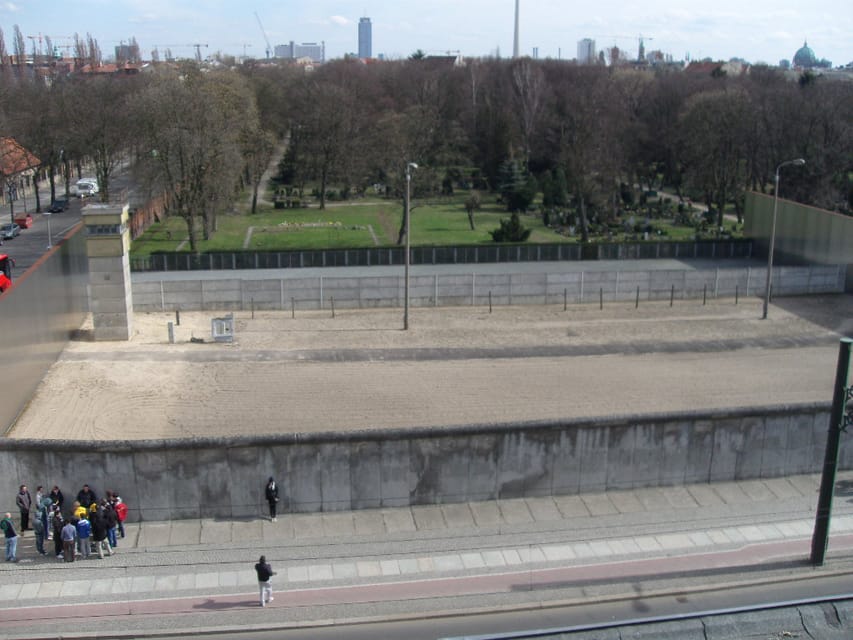
Four hours is a substantial amount of time on a bicycle. You should expect a sightseeing ride with frequent stops, not a short recreational spin. The exact balance between cycling and explanations may vary with the group, but the listed route includes many locations from Bornholmer Straße to Checkpoint Charlie and back to the shop.
The small group limit of eight is a real advantage. A guide can keep the group together more easily, answer questions, and explain personal details without speaking to a crowd. One guide named Ferenz has shared his own experience of the period around reunification, adding a personal layer to the historical material.
The minimum group size is three people. That means the tour may not operate as a private outing for one or two people unless the required number is reached. If you want a quiet, personal experience, the eight-person maximum is reassuring, but you should still be comfortable riding with a small mixed group.
The listed language is German. This is not a minor detail. You need enough German to follow explanations about border crossings, escape attempts, and political events. If you do, the tour offers a more direct local setting than a large multilingual group. If you do not, choose an experience with a confirmed language you understand.
Bicycles, weather, and what to bring
A bicycle, guide, and required fees are included. A rain poncho is supplied when necessary, and the tour runs in all weather. That makes a weather check worthwhile, even though rain alone does not cancel the ride.
Bring a passport or identity card, sunglasses, a sun hat, and a camera. Do not bring luggage or large bags. The advice is practical: a four-hour bicycle route is easier when you carry only what you need.
Food and drinks are not included. Plan around the four-hour duration, especially if you need regular refreshments. The supplied details do not specify food stops, so do not count on a planned meal during the ride.
Is $40 a fair price?
At $40 per person, the value is strong if you want a structured introduction to Berlin’s Wall history. You receive a bicycle, a four-hour guided route, a small group capped at eight, and access to a sequence of sites that would take more planning to connect on your own.
The real value is not the bicycle alone. It is the route design. Bornholmer Straße, Mauerpark, Bernauer Straße, Chausseestraße, Invaliden Cemetery, the Parliament of the Trees, Brandenburg Gate, Potsdamer Platz, Checkpoint Charlie, and the Palace of Tears form a coherent historical line. You spend less time navigating and more time listening and looking.
The price is less attractive if you want a slow museum visit or a private guide. The tour covers many places, so each stop has limited time. You are paying for range, transport between sites, and live explanation rather than a deep examination of one memorial.
Free cancellation up to 24 hours before departure and reserve-now, pay-later booking also make it easier to fit into a changing Berlin schedule. Starting times depend on availability.
Who should book this cycling tour?
I would choose this tour if you want to understand Berlin’s division through real locations and you are comfortable riding for four hours. It suits adults, older children, and teenagers who can follow a German-language explanation and manage a city cycling route.
It is especially useful early in a Berlin visit. The tour gives you a map of the former Wall and introduces several places you might not find efficiently on your own. You can then return to Bernauer Straße, the Palace of Tears, or another memorial for a slower visit.
It is less suitable if you need an English-speaking guide, dislike cycling in uncertain weather, carry substantial luggage, or prefer a single museum with plenty of reading time. The route is also not a simple sightseeing loop. Its subject includes deaths, escape attempts, separation, and political pressure, so expect serious material.
Should you book it?
Book this tour if the German language works for you and you want a broad, personal look at Berlin’s Wall history in half a day. The combination of a small group, included bicycle, strong route, and stops such as Günter Litfin’s memorial and the Parliament of the Trees gives you more than the usual Checkpoint Charlie photo stop.
Before booking, confirm that you can manage four hours by bicycle and that you are bringing only a small personal bag. If those conditions fit, $40 is a sensible price for the amount of ground and history covered. If you need English commentary, choose another option, since the listed guide language is German only.
FAQ
Where does the Berlin Wall cycling tour start?
The tour starts at Berlin Bike Tour, 75 Bornholmer Straße, Berlin 10439.
How long does the tour last?
The tour lasts four hours and returns to Berlin Bike Tour at the end.
How large is the group?
The group has a minimum of three participants and a maximum of eight.
What language is the tour conducted in?
The listed live guide language is German.
Is a bicycle included?
Yes. The bicycle, tour fees, and city guide are included. A rain poncho is provided if necessary.
What happens if it rains?
The tour operates in all weather. On rainy days, you are given a rain poncho.
More history tours in Berlin
- Historic Athens: Small Group Electric Bike Tour
★ 4.9 · 966 reviews - Bordeaux: Historic Center & Chartrons District Bike Tour
★ 4.8 · 709 reviews - Intramuros, Manila: Historical Bamboo Bike Tour
★ 4.8 · 583 reviews - Historic Bike Tour in Tucson
★ 5.0 · 553 reviews
Latest bike tours added in Berlin
- Small-Group Historical Bike Tour in Berlin★ 4.5 · 103 reviews
- Alternative Berlin Bike Tour – Off the Beaten Tracks in Small Groups★ 5.0 · 99 reviews
- Berlin Wall and Cold War Bike Tour in Small Groups★ 5.0 · 114 reviews
- Potsdam Bike Tour with Rail Transport from Berlin★ 4.5 · 81 reviews
- Berlin: Guided Private Bike Tour to Explore the Highlights★ 5.0 · 12 reviews
- Half-Day Bike Tour of Berlin’s Lesser Known And Historical Sites★ 5.0 · 10 reviews
- 3-Hour Bike Tour of Tiergarten and Berlin’s Hidden Places★ 5.0 · 26 reviews
- Berlin : Guided Private Sightseeing Tours with Funbikes, Teambikes★ 5.0 · 20 reviews
Historic & Landmark Bike Tours, compared.
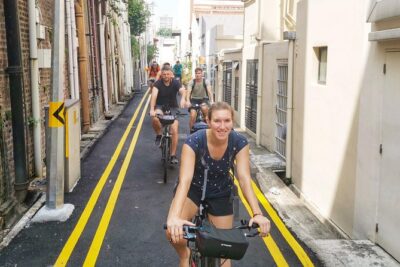
Historical Singapore Bike Tour on Full-Sized Bicycles
Read our review →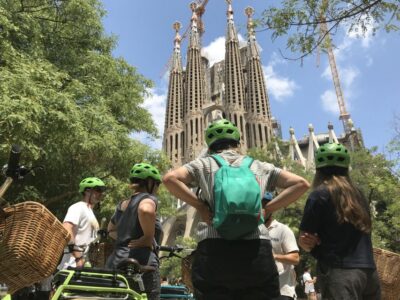
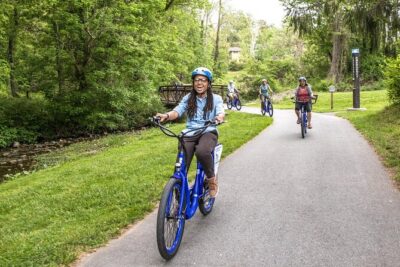
Asheville Historic Downtown Guided Electric Bike Tour with Scenic Views
Read our review →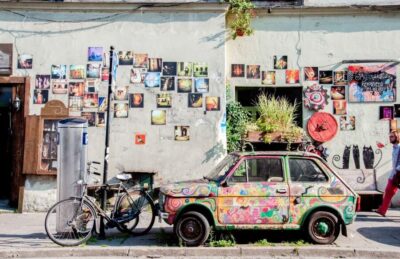
Krakow: Bike Tour of Old Town, Jewish Quarter and the Ghetto
Read our review →
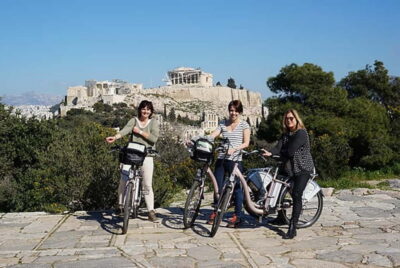
Historic Athens: Small Group Electric Bike Tour
Read our review →
Barcelona e-Bike Tour: Gaudí & Old Town Small Group
Read our review →
Bordeaux: Historic Center & Chartrons District Bike Tour
Read our review →Browse the lists this tour appears in