
Review · PARK & NATURE BIKE TOURS
Siem Reap: Angkor Wat Sunrise Bike Tour & Jungle Breakfast
Angkor Wat at sunrise is only the opening act here. After the lotus towers appear in the dawn light, you trade the standard temple circuit for quiet forest tracks, village lanes, and sandy paths leading to Bayon and Ta Prohm. It is a better way to feel the scale of Angkor than sitting in a tuk-tuk all day.
I like two things especially: the small group, capped at 10, and the support van that follows with water and a place to rest. I also like the private jungle breakfast, where a chef prepares food after the sunrise visit. The main drawback is simple: this is a real bike ride, often around 22 to 25 kilometers, with sand, dirt, a few hills, and some walking at the temples.
Key points at a glance
- Sunrise begins at Angkor Wat: Arrive before dawn for the temple silhouette and soft morning light.
- Forest routes avoid the main roads: You ride shaded paths past local homes, villages, and park scenery.
- A support van stays close: Use it for water, relief from the heat, or a break if the ride catches up with you.
- Breakfast is more than a quick snack: A chef-prepared picnic in a quiet wooded setting includes freshly cooked eggs and other food.
- The day combines cycling and temple walks: You will need both basic bike skills and enough stamina for long temple visits.
- Budget for the Angkor pass: The tour costs $75, but the required one-day temple pass adds $37 per person.
Why this bike tour changes the Angkor experience
Most visitors see Angkor from a vehicle, moving from one grand gate to the next. That is practical, but it can make the park feel like a string of stops. On a bicycle, the spaces between the temples become part of the day.
You pass beneath trees, follow narrow tracks, and sometimes ride near village homes. Several routes use sandy or slippery dirt, so this is not a polished cycle path. That rougher surface is also what takes you away from the traffic and lets you see a quieter side of the park.
The route is designed for a relaxed pace rather than a race. Still, relaxed does not mean effortless. The total distance has been described as about 22 kilometers, with some rides reaching roughly 25 kilometers. You may encounter gentle hills, loose sand, and sections where walking is the sensible choice.
Your guide handles the route, timing, and temple stops. Guides have included Chen, Muen, Bun Bath, Roem, Som, Sambo, Soda, and Vichea, though the person leading your trip will vary. The best guides do more than point at carvings. They explain the architecture, symbolism, local stories, and the people who once used these sites.
More Nature Bike Tours in Siem Reap:
- Siem Reap: Angkor Wat Sunrise Bike Tour & Jungle Breakfast
★ 4.9 · 141 reviews - NYC: Central Park Bike Rentals
★ 4.2 · 2,528 reviews - NYC: Central Park Bike Rental
★ 4.1 · 1,651 reviews
The 4:30 am start and Angkor Wat sunrise
The day begins with hotel pickup in Siem Reap at about 4:30 am. An air-conditioned minivan takes you toward Angkor Wat, which matters at this hour. You avoid the hassle of arranging an early ride, and the van gives you a cool, quiet start before the physical part of the day begins.
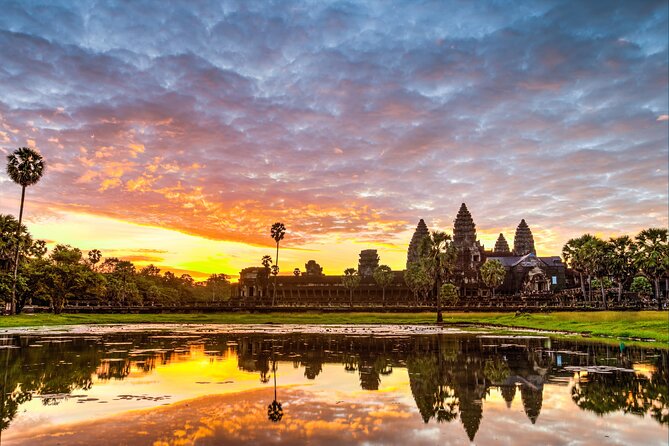
Sunrise is the emotional high point for many people. As the sky brightens, Angkor Wat’s lotus-shaped towers come into view across the water. The scene can be stunning, but you should keep expectations realistic. The sunrise area can be crowded, and cloudy weather may soften or hide the colors.
Your guide helps you arrive early and find a good position. That early arrival is worthwhile because the viewing area fills as dawn approaches. Bring patience, and do not treat the sunrise as guaranteed theater. The temple itself remains impressive even when the sky is gray.
After sunrise, you spend about an hour at Angkor Wat. This is not just a photo stop. You walk through galleries and courtyards while your guide explains the 12th-century temple complex. Expect a mix of outdoor walking, stone surfaces, and time on your feet.
Temple dress still matters. Wear clothing that covers your shoulders and knees, but choose practical fabrics and shoes. Long, heavy trousers can feel awkward once you begin cycling, so lightweight pants or suitable longer shorts are more useful, provided they meet temple rules.
A jungle breakfast with freshly cooked food
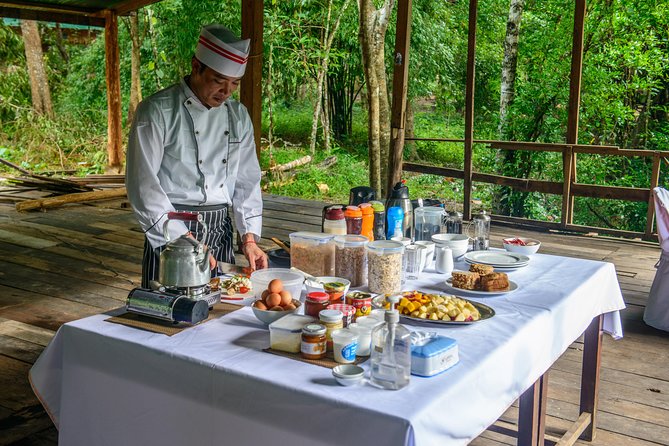
After Angkor Wat, the tour moves to a quiet area inside the park for its most unusual meal. Breakfast is set up privately for the group in a wooded setting, sometimes described as a shelter in the forest or a local village area. A chef prepares the meal, including cooked eggs, rather than handing you a packaged breakfast.
This pause gives you time to eat, refill, and reset before the longer ride. Food has been one of the strongest parts of the experience, with plentiful breakfast and good meals noted alongside fruit, snacks, and regular water refills.
The setting is part of the appeal. You are not rushing through a hotel buffet or eating beside a busy road. Instead, you get a quiet meal within the Angkor park before setting off by bike.
Tell the operator about dietary needs when booking. The supplied information confirms that specific dietary requirements can be requested, but you should not wait until breakfast to raise them.
One detail needs attention when comparing prices: lunch is included with the private option, while the standard inclusions specifically list breakfast, snacks, fruit, and bottled water. Confirm the exact lunch arrangement for the option you choose. Do not assume the $75 price automatically includes every meal.
Bayon by bike, with forest paths between the temples
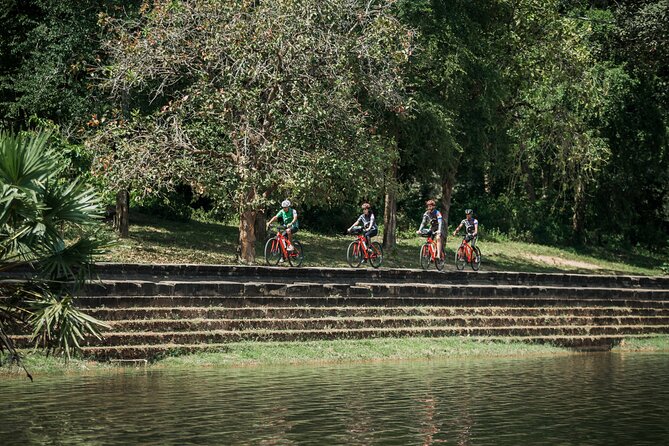
After breakfast, you begin the main cycling section. The route links the major temples by park roads, shaded tracks, and back paths. This is where the tour earns its place beside the more conventional Angkor circuits.
The roads and trails can feel cooler under the trees than open walking routes. You also see parts of the park that are easy to miss from a car or tuk-tuk. Local homes, villagers, water buffalo, monkeys, and, on some rides, elephants have all been part of the wider experience described by past participants.
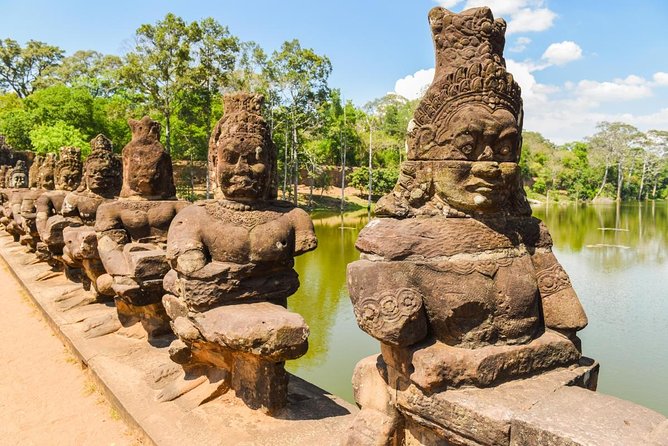
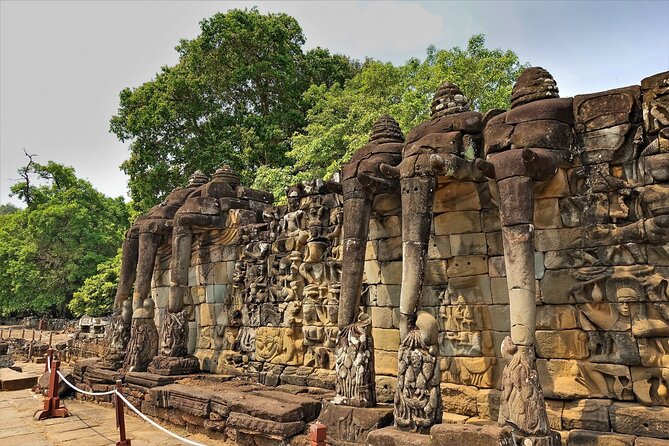
Bayon is a strong first cycling destination. Its famous stone faces create a very different mood from Angkor Wat’s long galleries and balanced towers. Your guide leads you around the temple and explains the details, while the small group allows more room for questions than a large coach tour.
The bike also gives you flexibility. You can cover the distance between temples without spending the whole day in a vehicle, and the moving air can make the heat easier to manage. That benefit disappears if you are not comfortable controlling a bike on loose ground, however.
This is a mountain-bike-style outing, not a city bike ride. You need reasonable bike skills, including the ability to steer, brake, and manage gears on uneven surfaces. If you have not ridden for decades, be honest with yourself before booking. One participant had trouble with gears and balance and used the support van instead, meeting the group at the temples.
That backup is useful, but it does not turn the tour into a sightseeing trip by van. The bike remains the central activity.
More Sunset Bike Tours in Siem Reap:
- Angkor Sunrise Bike Tour / E-Bike or Tuk Tuk
★ 5.0 · 615 reviews - From Siem Reap: Angkor Wat Sunrise and Temples E-Bike Tour
★ 5.0 · 52 reviews - Angkor Wat: Guided Sunrise Bike Tour w/ Breakfast and Lunch
★ 4.8 · 48 reviews - Siem Reap: Angkor Sunset Bike & Boat Tour /E-Bike Available
★ 4.9 · 23 reviews
Ta Prohm and the appeal of the rougher route
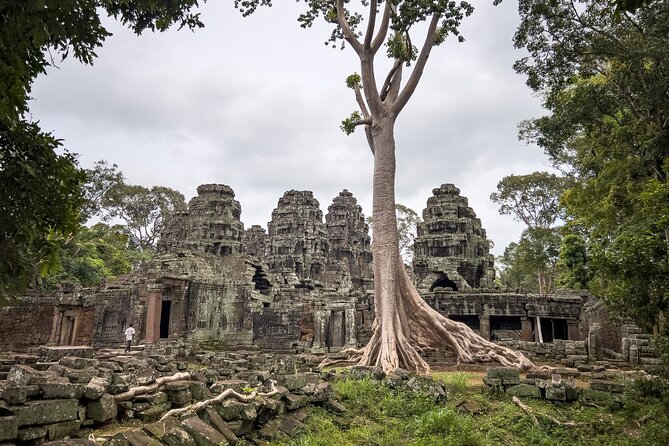
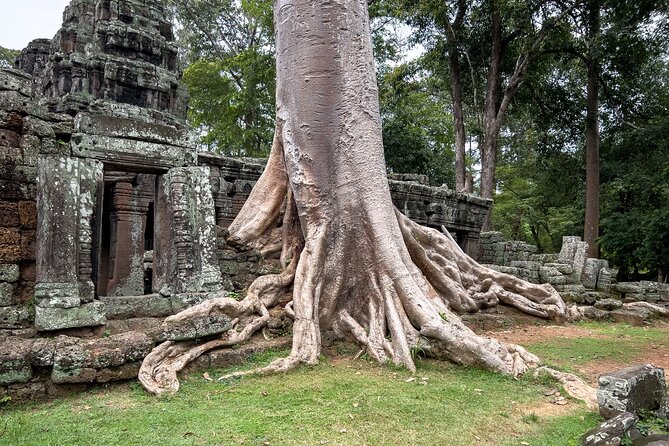
Ta Prohm is the day’s other major temple stop. Trees grow through the stonework, with roots twisting around walls and doorways. The combination of carved ruins and large silk-cotton and strangler-fig trees gives the site a more unruly feel than Angkor Wat.
It is also a popular stop, so the quieter route matters. Arriving by forest track helps break up the usual procession, even though Ta Prohm itself can still be busy. Your guide can help with timing and photo spots, but no itinerary can promise an empty temple.
The temple visit involves walking over uneven ground and standing for explanations. By this point, you may have already cycled a substantial distance, so good footwear matters. Comfortable shoes with a firm sole are more useful than fashionable sandals.
The best guides add context here. Som, for example, has been praised for explaining the temples and finding good photo angles, while other guides have been singled out for combining history with local legends. Guide quality can vary from person to person, but the consistent aim is clear: connect the stones with the culture and people behind them.
How hard is 22 to 25 kilometers of cycling?
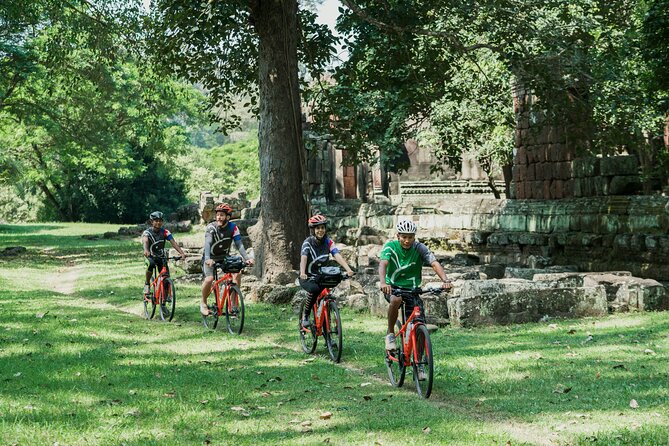
The tour has a relatively low difficulty rating, but that label can mislead you if you picture smooth, flat roads. The route includes dirt tracks, sand, some slippery sections, and a few hills. You also stop to walk through temples, so the physical effort is spread across a long day rather than limited to the saddle.
If you regularly cycle, you will likely find the pace manageable. If you are only an occasional rider, you may still enjoy it, but you should expect tired legs and possible soreness. One fit participant described being tired and sore after about 22 kilometers, while another person with little recent cycling experience managed the ride with help from the crew.
The guide does not race the group. The support minivan travels alongside the riders and carries water. It can provide relief when you need to rest, and it gives the crew a way to handle problems such as a flat tire. Bikes have generally been described as being in good condition, with helmets supplied.
Wear comfortable clothing that allows movement. Bring a poncho or rain layer if conditions look unsettled, since a shower can make dirt paths more slippery. The operator supplies bottled water, and water top-ups are part of the day, but a small personal bottle and sunscreen remain sensible.
Small groups, van support, and the value of $75
The tour costs $75 per person and accepts a maximum of 10 people. That price covers hotel pickup and drop-off, the guide, bike, helmet, air-conditioned transport, the private breakfast picnic, snacks, fruit, and bottled water.
The required Angkor pass costs another $37 per person. That brings the basic total to $112 before any optional extras, so include the pass when comparing this with a standard temple tour.
The value depends on what you want from Angkor. If you only need transport between the main temples, a cheaper arrangement may suit you. If you want a guide, early pickup, food, equipment, support transport, and a route beyond the main roads, the price is easier to justify.
A small group also changes the feel of the day. With no more than 10 people, it is easier to hear temple explanations and easier for the guide to adjust the pace. A very small group, sometimes only three people, can feel almost private.
The van support is one of the most practical inclusions. It is not merely a backup for emergencies. It gives you a way to cool down, refill water, or skip a stretch of cycling if you are struggling. That makes the tour more forgiving than a self-guided ride, though you still need to arrive ready to pedal.
Who should book this Angkor tour?
I would choose this for active visitors who want to see the famous temples while also getting off the main circuit. It suits couples, families with older children, solo visitors, and friends who like a full day with a mix of activity and culture.
It can work for teenagers and adult children, especially if they enjoy outdoor outings. A child seat is available on request for a child weighing up to 14 kilograms, but the overall length and bike demands still need careful thought.
You should think twice if you dislike early mornings, cannot ride confidently, or want a slow temple day with minimal exertion. The 4:30 am pickup is very early, and the day lasts about 10 hours. Even with support from the van, there is plenty of cycling and walking.
The tour is also not the best choice if your only priority is a guaranteed dramatic sunrise. Clouds and crowds are possible. Choose it for the whole combination: sunrise, temple guiding, forest routes, food, and the feeling of moving through Angkor under your own power.
Practical ways to enjoy the day
- Sleep early the night before: The pickup is around 4:30 am, and the day is long.
- Wear breathable clothing: You need temple-appropriate coverage without clothing that restricts pedaling.
- Use comfortable closed shoes: Dirt paths, sand, temple stones, and walking all favor practical footwear.
- Tell the operator about food needs: Dietary requests should be supplied at booking.
- Expect sand and loose ground: Ride slowly, use the brakes with care, and walk when that feels safer.
- Bring rain protection: A poncho is useful if showers are possible.
- Plan for the temple pass: The $37 Angkor admission fee is separate from the tour price.
- Ask about lunch: Lunch is listed with the private option, so confirm what your selected booking includes.
Should you book the Angkor sunrise bike tour?
Book it if you want the temples to be part of a bigger outdoor day. The strongest features are the quiet forest routes, excellent guide support, good food, regular water, and the chance to see local life between Angkor’s major monuments.
Skip it if you want a vehicle-based tour, dislike cycling on sand, or are not comfortable with a 4:30 am start. The tour is forgiving because of the support van, but it is still a serious day on a bike.
For an active visitor with reasonable riding skills, this is one of the more rewarding ways to connect Angkor Wat, Bayon, and Ta Prohm. Just budget for the pass, dress for both temples and cycling, and treat the sunrise as a bonus rather than a promise.
FAQ
What time does the tour start?
Hotel pickup begins at about 4:30 am.
Is the Angkor temple pass included?
No. The required Angkor pass costs $37 per person and is separate from the tour price.
How long does the tour last?
The experience lasts approximately 10 hours.
How far will I cycle?
The route has been described as about 22 kilometers, with some rides reaching roughly 25 kilometers.
Is a support vehicle available?
Yes. An air-conditioned minivan travels with the group, carries water, and provides relief if you need a break from cycling.
Is lunch included?
Lunch is included with the private option. The standard inclusions list the breakfast picnic, snacks, fruit, and bottled water, so confirm the meal details for your selected option.
Can children join the tour?
Most people can participate, and a child seat is available on request for a child weighing up to 14 kilograms. The tour also requires a reasonable amount of bike skill and includes dirt paths.
More early starts in Siem Reap
- 3-Hour Morning Bike Tour of Jaipur
★ 5.0 · 1,253 reviews - Haleakala Sunrise Best Self-Guided Bike Tour
★ 4.5 · 745 reviews - Hiroshima in a Nutshell: Morning Bike Adventure
★ 5.0 · 524 reviews - Day Trip to Nami Island with Rail bike and The Garden of Morning Calm
★ 4.5 · 459 reviews
Latest bike tours added in Siem Reap
- Siem Reap: Countryside Sunset Bike Tour / E-Bike or Tuk Tuk★ 4.7 · 13 reviews
- Kampong Phluk: Floating Village Sunset Bike Tour or E-Bike★ 5.0 · 11 reviews
- Siem Reap: Angkor Sunset Bike & Boat Tour /E-Bike Available★ 4.9 · 23 reviews
- Siem Reap: Bike the Angkor Temples – Full-Day 30km Tour★ 4.9 · 159 reviews
- Siem Reap: Bike Rental★ 4.7 · 12 reviews
- Siem Reap: Countryside Cycle and Local Village Life Tour★ 4.7 · 32 reviews
- Cycle Angkor Backroad Bike Tour / E-Bike or Tuk Tuk★ 4.9 · 16 reviews
- From Siem Reap: Angkor Wat Sunrise and Temples E-Bike Tour★ 5.0 · 52 reviews
Park & Nature Bike Tours, compared.


The Stanley Park Bicycle Tour by Cycle City Tours
Read our review →
Appian Way, Catacombs and Aqueducts Park Tour with Top E-Bike
Read our review →
Arashiyama Bamboo Forest & Hidden Gems Bike Tour (Early Bird)
Read our review →
Ketchikan Electric Bike and Rain Forest Hike Ecotour
Read our review →Browse the lists this tour appears in