
Review · E-BIKE TOURS
Rome: E-Bike Tour of Appia Antica, Aqueducts, and Caffarella
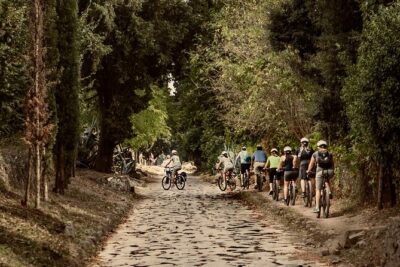
The best thing about this tour is how quickly Rome changes from ancient city to open countryside. You start near Circus Maximus, then pedal past Roman walls, tombs, catacombs, and the old Appian Way before reaching the giant aqueducts and farm fields of Caffarella Valley. It is a rare chance to see Rome’s outskirts without spending half a day on a bus.
I like the excellent, fully charged e-bikes, which matter on the rough Appian stones and gentle hills. I also like the small groups, capped at eight, and guides such as Monica, Adriana, and Frederik, who bring serious knowledge of Roman history without turning the ride into a lecture. The main drawback is the riding itself: you need to handle a bicycle confidently, and the old road can be bumpy, dirty, and tiring in bad weather.
Key points to know before you book
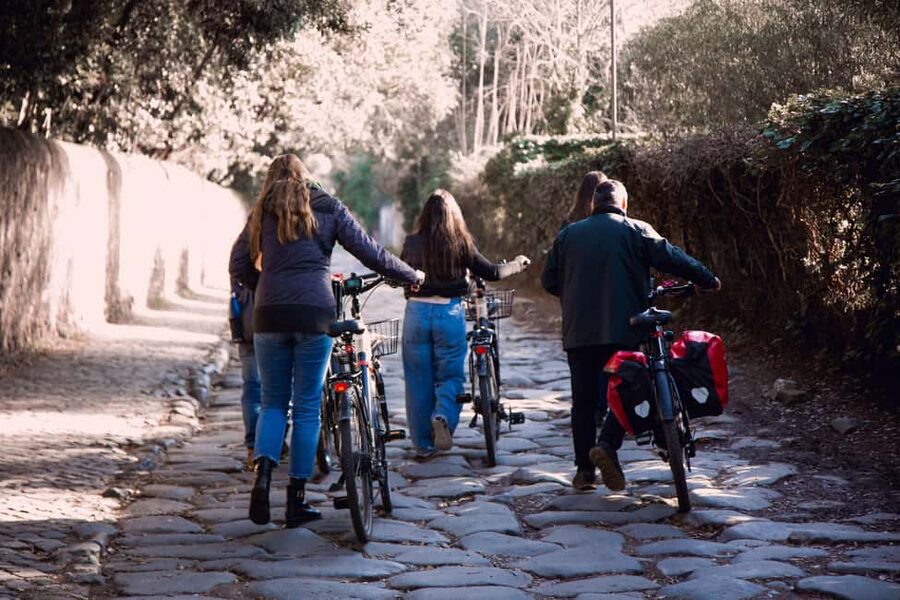
- The Appian Way is the star: Ride along one of Rome’s oldest roads, begun in 312 BC and once linking Rome with Brindisi.
- You get countryside close to the center: Caffarella Valley has horses, sheep, goats, and pigs within sight of the city.
- The e-bike earns its keep: It helps with rough paving, hills, and a four-hour route that would be a long walk.
- The group stays small: With no more than eight people, your guide can keep an eye on road crossings and answer questions.
- The route mixes pavement and dirt: Closed-toe shoes and clothes that can get dirty are sensible choices.
- This is not a sightseeing bus ride: You must know how to ride a bicycle and feel comfortable on uneven ground.
Why this route shows you a different Rome
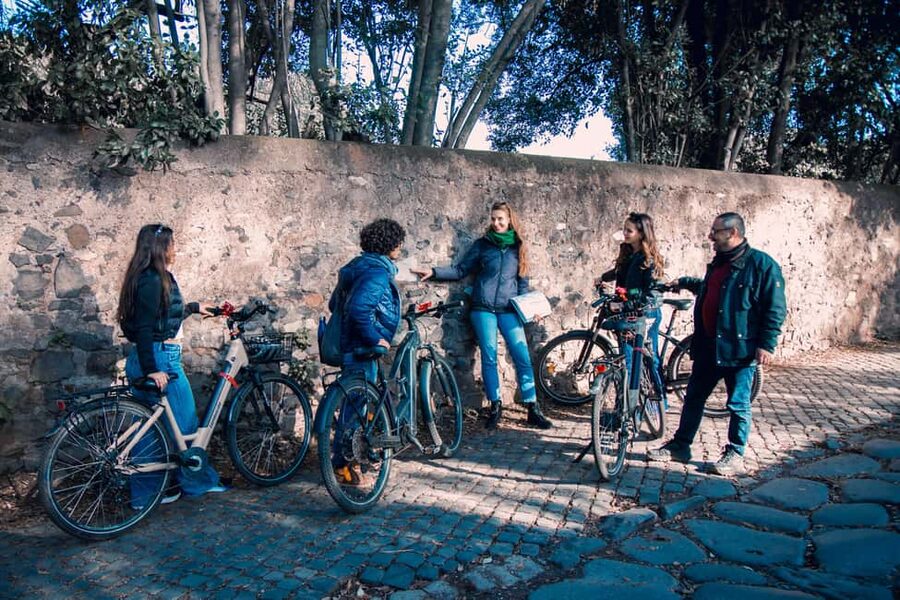
Rome’s famous center is crowded with grand monuments, tour buses, and long lines. This ride takes you into a quieter side of the city, where ancient ruins share space with grass, trees, farm animals, and working roads.
The route follows the Appian Way, known to the Romans as the Regina Viarum, or Queen of Roads. Construction began in 312 BC under the Roman censor Appius Claudius Caecus. The road once carried soldiers, traders, officials, and travelers south from Rome. Today, its surviving stretches let you see Roman engineering at ground level, not just behind museum glass.
The survival of this area was not guaranteed. During Italy’s postwar building boom, housing construction pushed outward from the center and threatened the countryside around Rome. Archaeologist, urban planner, journalist, and politician Antonio Cederna fought to protect the Appian Way and the surrounding archaeological land. That history gives the ride a useful modern lesson: ancient Rome remains visible partly because someone fought to keep the roads, fields, and ruins from being covered by new buildings.
You begin at the Rome in a Day Tours venue near Circus Maximus. Arrive 15 minutes early to meet the staff, complete the paperwork, and adjust to the bike. This short introduction matters. You want to know how the electric assistance works before reaching the rougher sections of the route.
More E-Bike Tours in Italy
- Rome EBike Tour: Appian Way, Catacombs & Roman Aqueducts
★ 5.0 · 1,766 reviews - Rome: Top Highlights & Hidden Gems Tour by Cannondale E-Bike
★ 4.9 · 1,760 reviews - Rome: Appian Way & Aqueducts E-Bike Tour (Catacombs & Food)
★ 4.9 · 1,498 reviews
From Circus Maximus to the Baths of Caracalla
The starting point near Circus Maximus gives you an immediate Roman opening. The huge stadium once held as many as 300,000 spectators for chariot races. Today, you’ll pause for photographs rather than enter a surviving arena, but the scale of the site helps you picture the spectacle that once filled this broad valley.
From there, the route heads toward the Baths of Caracalla. You stop for about 20 minutes, enough to admire the towering brick remains and hear how Roman public bathing depended on a vast system of furnaces, pipes, reservoirs, and aqueducts.
This is a smart early stop because it prepares you for the water theme later in the tour. The aqueducts are not isolated ruins. They were part of the system that supplied baths, fountains, homes, and public buildings. A guide such as Adriana or Monica can connect the grand bath complex to the engineering you’ll see outside the city.
You may also pass modern landmarks such as the Garden of Oranges and the Knights of Malta Square on the way out. These stops help link ancient Rome with the later city, though the real focus begins once you approach the Aurelian Walls.
Porta San Sebastiano and the road beyond Rome
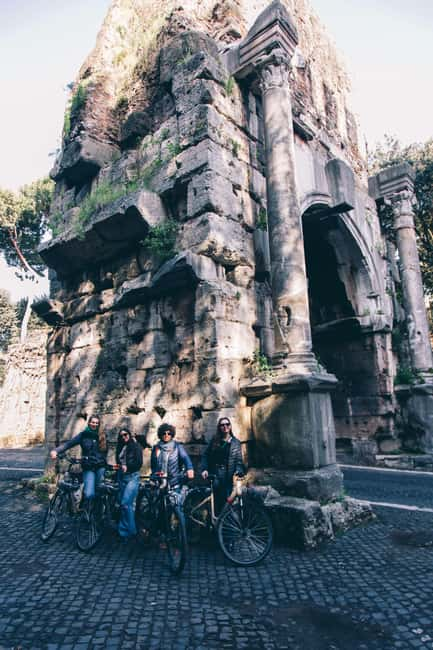
At Porta San Sebastiano, you pause for around 20 minutes. This gate is part of the Aurelian Walls, the defensive circuit built around Rome in the third century AD. The stop gives you a clear sense of how the city once defined its edge.
After leaving the walls, the traffic and buildings begin to thin. You’ll still ride on roads at points, so this is not a traffic-free cycling path from start to finish. Guides have taken care to use quieter stretches where possible, and the small group makes it easier to cross busy sections together.
Safety depends partly on your own cycling habits. You need to follow instructions, keep a steady line, and be comfortable stopping. One family chose this route partly because the starting area felt less intimidating than some busier cycling departures. That is useful advice if you are traveling with competent young cyclists who are not used to heavy traffic.
The Church of Domine Quo Vadis and the catacombs
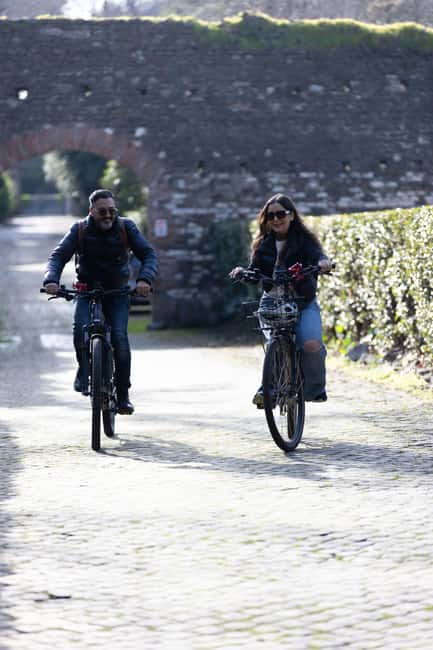
The Church of Domine Quo Vadis is a 20-minute visit and one of the route’s more atmospheric stops. It is tied to the Christian tradition that Saint Peter met Christ here while fleeing Rome. The church provides a compact religious and historical pause before the road opens into the archaeological park.
You then pass the Catacombs of Rome, including the Catacombs of Saint Callistus. The itinerary allows about 20 minutes in this area, but the tour passes by rather than offering a full catacomb visit. That distinction matters. If you want to explore underground burial tunnels, you’ll need a separate ticket and visit.
The benefit of this stop is context. The Appian Way was not just a transport route. It was lined with burial sites, memorials, villas, and religious landmarks. Riding among them helps you see how Roman roads connected daily life, politics, trade, religion, and death.
More E-Bike Tours in Rome
- Rome: Appian Way, Catacombs, & Roman Aqueducts E-bike Tour
★ 4.9 · 1,421 reviews - Rome City Small Group Bike Tour with quality Cannondale EBike
★ 5.0 · 1,380 reviews - Rome by Night – Ebike Small Group Tour – Food and Wine (Option)
★ 5.0 · 1,275 reviews - Rome by Night: E-bike Small Group Tour -Food & Wine (Option)
★ 4.9 · 1,233 reviews
Villa of Maxentius and Cecilia Metella
The Villa of Maxentius is another photo stop, with about 20 minutes to take in the remains. Emperor Maxentius built the complex in the early fourth century, and the site includes the remains of a palace, circus, and mausoleum. You won’t need to walk through every ruin to understand its scale. The broad setting makes it clear that this was a major imperial property.
The Tomb of Cecilia Metella follows, with another 20-minute pause. Its round form and elevated position make it one of the most recognizable monuments along the Appian Way. The tomb belonged to Cecilia Metella, a member of a powerful Roman family, and later fortifications were added around it.
The guide’s commentary is important here because the stones alone can be hard to read. Frederick, Monica, Adriana, Alannah, Martin, and other guides have been praised for explaining the monuments clearly and answering questions. Ask about how the road, tombs, villas, and walls fit together. That is where this experience offers more than simply riding past ruins.
You may also see the Tumulus of the Curiazi and Villa dei Quintili along the route. These sites are part of the dense archaeological zone around the first miles of the Appian Way. Not every stop is a long visit, so think of this as a moving archaeological tour with frequent pauses, not a series of full museum admissions.
A coffee stop before the aqueducts
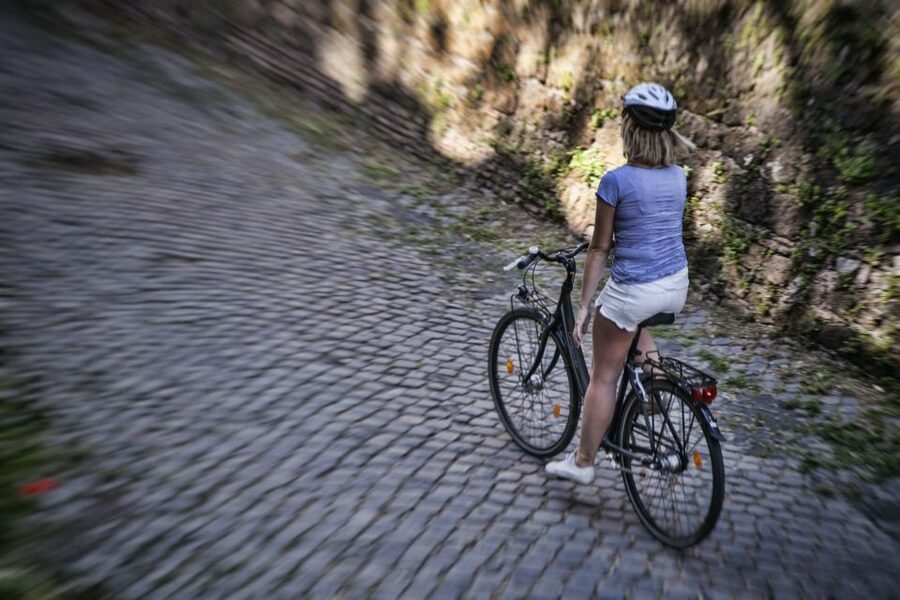
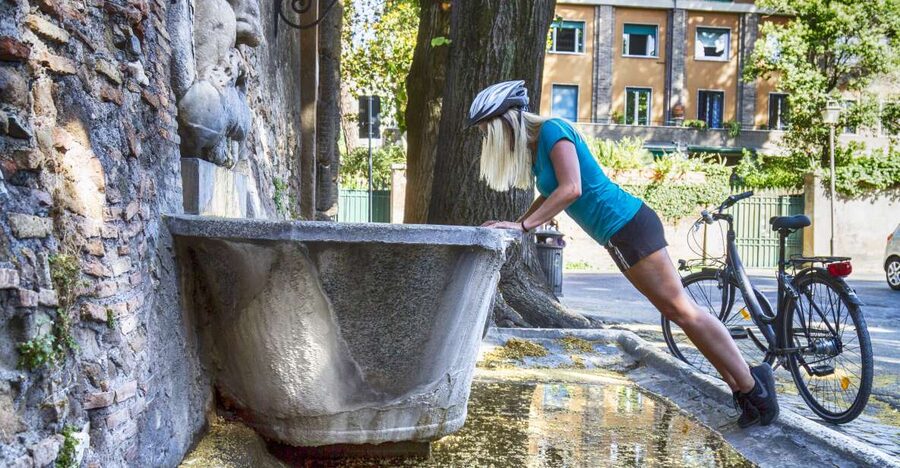
A local bar break lasts about 20 minutes. It is a small feature, but it improves the rhythm of the morning or afternoon. Four hours of cycling, even with electric assistance, calls for water and a rest.
The stop also gives you time to ask your guide about the sites you have just seen. One guide used the break to help a rider with iPhone camera settings, a nice example of how a small group can feel more personal than a large scheduled tour.
Food and drinks are not listed as included, so carry some money for the café. A snack is sensible, especially in warm weather. Several guides have adjusted the number of pauses to suit the heat, but you should still arrive prepared.
The Roman Aqueducts Park
The Aqueducts Park is the visual high point for many people. Here, long lines of arches cross open ground, and the ruins feel much larger than they do in photographs. You’ll spend about 30 minutes in the park, with time to stop, take pictures, and hear how the water system worked.
Rome’s aqueducts carried water from distant springs into the city by using carefully calculated gradients. The surviving arches are only part of the story. They supported channels that fed public baths, fountains, houses, and gardens. After seeing the Baths of Caracalla earlier, you now see the infrastructure that made such Roman luxury possible.
The park is also where the e-bike feels most useful. The route is not only smooth city pavement. Some sections are rough, and the electric assistance helps you keep moving without turning the ride into an endurance test. Still, an e-bike does not erase every bump. Hold the handlebars firmly, watch the surface, and slow down when the stones become uneven.
The open setting changes the mood completely. Instead of looking up between buildings, you can see the aqueducts stretching across the field. Bring a camera, but do not spend every minute behind it. The scale is easier to appreciate from the saddle as you move beside the arches.
Caffarella Valley and the Nymphaeum of Egeria
From the aqueducts, the ride follows the Almone River into Caffarella Valley. This section gives the tour its strongest countryside feeling. You may see horses, sheep, goats, and pigs surprisingly close to central Rome.
Caffarella is valuable because it preserves open land beside a major European capital. The valley has none of the polished feel of a standard city attraction. You’ll ride through a mix of paths, fields, and archaeological remains, with the possibility of mud or loose surfaces depending on the weather.
The Nymphaeum of Egeria is a graceful final highlight. It is thought to have belonged to the villa of Herodes Atticus, a wealthy Greek-born Roman senator and patron. The site is associated with the spring nymph Egeria in Roman tradition. Your guide can help separate the ancient setting from the later stories attached to it.
This section rewards riders who like variety. You are not only checking off monuments. You are watching Rome shift from imperial center to rural edge, then back again as the ride returns to the starting point.
What the four hours feel like on an e-bike
The tour lasts four hours and includes stops at the main sites, a café break, and the ride back to the shop. The pace is active but not built around racing. You’ll spend much of the time riding, with regular pauses for explanation and photos.
The electric bikes are described as modern, well maintained, and fully charged. That matters more here than it would on a flat cycle path. The Appian Way can be rough, and there are hills and uneven sections. Riders repeatedly found the assistance helpful, especially on the old stones and in summer heat.
You still need basic cycling ability. This tour is not suitable for anyone who cannot ride a bike, and you should not book it if you are uneasy handling a bicycle around occasional traffic. It is also not suitable for children under 12, pregnant women, or people with mobility impairments.
Wear closed-toe shoes and clothes that can get dirty. The tour runs rain or shine, so check the forecast and dress for the conditions. In hot months, carry water and use sun protection. In wet weather, the dirt and stone sections may feel less forgiving.
Guide quality and group size
A group limit of eight is one of the tour’s strongest practical features. The guide can keep the group together more easily, give instructions before road crossings, and tailor explanations to the people on the ride.
Guides named in the experience include Monica, Adriana, Frederik, Frederick, Alannah, and Martin. Monica has a strong background in Roman history and has been especially good at adjusting breaks during hot weather. Adriana has helped families feel safe on roads and has extended the route when a group finished ahead of schedule. Frederik has been praised for making history easy to follow and for taking extra time with questions.
The guide you receive will depend on the date and availability, so do not assume a particular person unless the operator confirms it. English and Dutch are offered. If you care strongly about language or guide assignment, ask before booking.
Is $88 a fair price?
At $88 per person, this is not the cheapest way to see the Appian Way. You are paying for four hours, a quality e-bike, a guide, a small group, and a route that would be difficult to cover efficiently on foot or by public transport.
I think the price is fair if you value active sightseeing and personal guidance. The bike saves time and effort, while the guide supplies the historical links that turn scattered ruins into a coherent route. You also reach the aqueducts and Caffarella Valley without arranging several separate trips.
The value is weaker if you only want short photo stops or dislike cycling on rough ground. You could choose a bus or walking tour for a less physical day, but you would lose the quiet paths, the countryside views, and the freedom to stop beside the road.
Free cancellation up to 24 hours before departure and the option to reserve now and pay later make the booking less risky. You still need to arrive 15 minutes early for bike familiarization and paperwork.
Who should book this Rome bike tour?
Book it if you have already seen some of central Rome and want a change of pace. It works especially well for adults, active older children over 12, couples, families with confident cyclists, and anyone interested in Roman engineering and archaeology.
It is also a smart choice if queues and crowded streets have begun to wear you down. The ride gives you open air, movement, and a close look at places that are easy to miss from a car.
Skip it if you cannot ride a bicycle, have mobility limitations, are pregnant, or want a polished road surface throughout. The tour goes out in all weather, and the old Appian paving can be rough. You should also think carefully if traffic makes you nervous, even though guides work to use quieter roads and manage crossings.
Should you book it?
I would book this tour for a first or second visit to Rome when I wanted something beyond the Colosseum and Vatican. The combination of the Appian Way, aqueducts, and Caffarella Valley gives you archaeology, nature, and exercise in one well-planned half-day.
The deciding question is simple: are you comfortable riding a bicycle for four hours on mixed surfaces? If yes, the $88 price buys much more than transport. It gives you access to a side of Rome that is difficult to reach on foot and hard to understand without a guide. If you want an effortless sightseeing day, choose another format. If you want Rome’s ancient roads under your own wheels, book it.
FAQ
How long does the e-bike tour last?
The tour lasts four hours, including the cycling route, site stops, explanations, a café break, and the return to the starting point.
Where does the tour begin?
It begins at Rome in a Day Tours, Electric Bike and Vespa Excursions, near Circus Maximus.
How early should I arrive?
Arrive 15 minutes before departure so you can become familiar with the bike and complete the required paperwork.
Which languages are available?
The live guide service is offered in English and Dutch.
How many people are in the group?
The group is limited to eight participants.
Is the e-bike included?
Yes. An e-bike and an experienced tour guide are included.
Do I need to know how to ride a bicycle?
Yes. You need to know how to ride a bicycle to join the tour.
What should I wear?
Wear comfortable clothes, clothes that can get dirty, and closed-toe shoes.
Does the tour run in bad weather?
Yes. The tour takes place rain or shine.
Latest bike tours added in Rome
- Rome: Guided eBike Evening Tour with italian Aperitif★ 5.0 · 16 reviews
- Rome: Villa Borghese E-Bike Tour (Small Group or Private)★ 4.9 · 92 reviews
- Rome: Appian Way, Aqueducts, & Catacombs E-Bike Guided Tour★ 4.9 · 54 reviews
- Rome: Top 10 Highlights Guided Tour by Bike or E-Bike★ 4.4 · 15 reviews
- Rome: Villa Borghese, Villa Ada, and Coppedè E-Bike Tour★ 4.8 · 78 reviews
- Rome: Piazza Venezia E-Bike Rental★ 4.4 · 10 reviews
- Sunrise in Rome: Small Group E-Bike Tour & Italian breakfast★ 4.9 · 177 reviews
- Rome: Taste of Rome by quality Cannondale E-Bike★ 5.0 · 12 reviews
E-Bike Tours, compared.
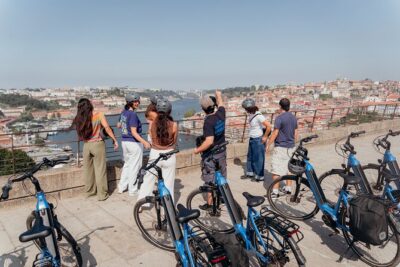
3-Hour Porto Highlights on a Electric Bike Guided Tour
Read our review →
Hills, Alfama, and Mouraria Tour by Electric Bike
Read our review →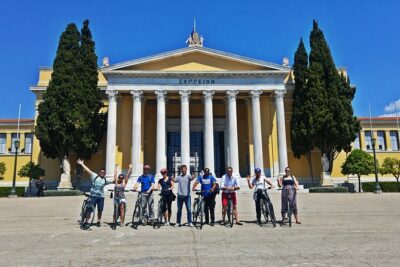
Athens Scenic Electric Bike Tour with optional Acropolis visit
Read our review →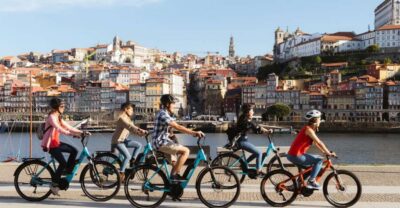
City Highlights 3-Hour Guided Electric Bike Tour
Read our review →
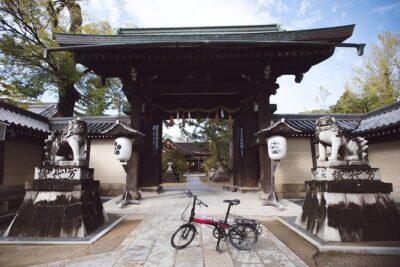
Rome EBike Tour: Appian Way, Catacombs & Roman Aqueducts
Read our review →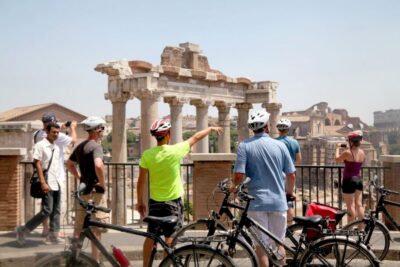
Top Highlights & Hidden Gems Tour by Cannondale E-Bike
Read our review →Browse the lists this tour appears in