

Review · E-BIKE TOURS
Rome: Appian Way, Catacombs, & Roman Aqueducts E-bike Tour
Rome’s best bike ride may be the one that gets you away from the city center. This route follows the 2,300-year-old Appian Way, passes Roman tombs and villas, then reaches the huge aqueducts rising across open parkland. I like the mix of ruins and countryside, and I like that the Cannondale e-bikes make a 27-kilometer route realistic for ordinary riders.
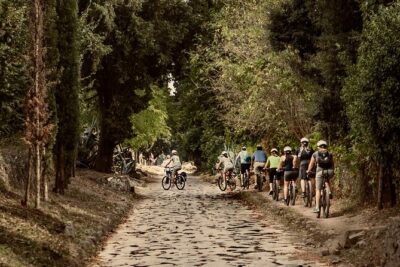
The catch is that this is not a gentle sightseeing spin. Sixty percent of the route is off-road, with gravel, bumps, and uneven ground, while about 40 percent runs through city streets. You need to be comfortable handling a bicycle, especially near traffic, even though the electric assistance takes much of the strain out of hills and distance.
Key things to know before booking
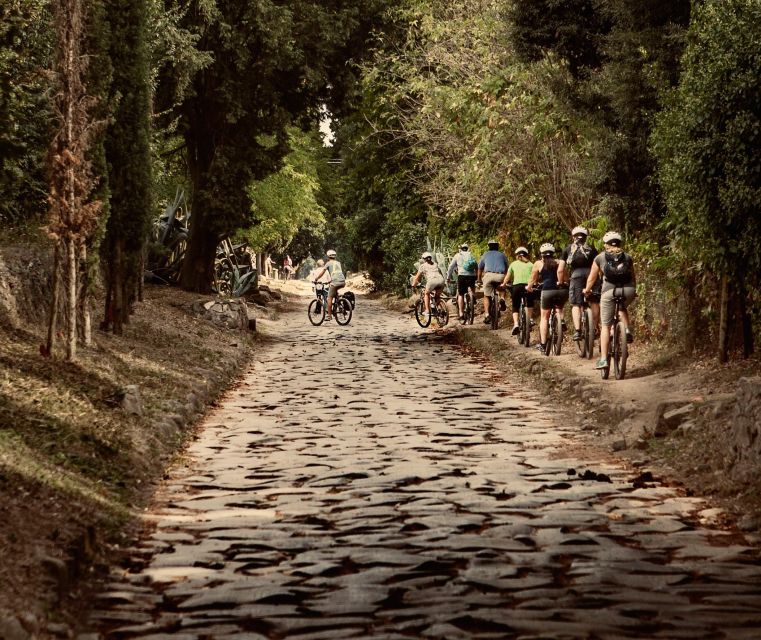
- The 6-hour tour includes the catacombs: You get a guided underground visit at St. Callixtus or St. Sebastian, subject to the day’s arrangements.
- The 4-hour tour keeps the catacombs above ground: Your guide explains their history at the entrance, but you do not go inside.
- The route covers 27 kilometers: Most of it is in parks and on historic roads, but city riding connects the Appian Way with the Aqueducts Park.
- The e-bikes are serious equipment: Cannondale e-mountain bikes have anti-puncture tires, and helmets are required.
- Small groups help with Rome’s traffic: The group limit is 10 people, giving the guide room to manage crossings and keep riders together.
- Bring more than enthusiasm: Comfortable shoes, basic bike confidence, and water are useful. Food and drinks are not included.
Why the Appian Way is worth a half-day

Rome’s center gives you temples, fountains, and famous piazzas. The Appian Way gives you something different: space. Once you pass through the Aurelian Walls, the city begins to thin out, and the old road runs through a quieter Roman countryside marked by stone ruins and umbrella pines.
The Via Appia Antica was one of Rome’s most important roads. Built more than two thousand years ago, it carried armies, officials, merchants, and messages south from Rome. On this ride, you do not just look at a preserved road in a museum. You travel along a route that helped Rome expand and govern its empire.
I like the way the bike makes the route feel connected. A walking visit to one tomb or villa can feel isolated. By bicycle, you see how the monuments sit together along the old road, then continue naturally toward the aqueducts and the Caffarella Valley.
The setting also gives you a break from Rome’s crowded core. You still get a taste of traffic while leaving and returning, but the main portion takes place in parks and open areas. On a clear day, the contrast between busy streets and quiet Roman countryside is one of the tour’s main rewards.
More E-Bike Tours in Italy
- Rome EBike Tour: Appian Way, Catacombs & Roman Aqueducts
★ 5.0 · 1,766 reviews - Rome: Top Highlights & Hidden Gems Tour by Cannondale E-Bike
★ 4.9 · 1,760 reviews - Rome: Appian Way & Aqueducts E-Bike Tour (Catacombs & Food)
★ 4.9 · 1,498 reviews
Starting at Via Labicana and the Aurelian Walls
The meeting point is Via Labicana 49, within easy walking distance of either the Colosseum or Manzoni Metro station. From the Colosseum, allow about 10 to 15 minutes. From Manzoni, allow about 10 minutes. You will first receive your bike and safety instructions, then get used to the electric assistance before setting out.
The route heads toward the Aurelian Walls and enters the Appian Way through St. Sebastian’s Gate. This is a fitting beginning. The walls show how Rome defended its growing urban center, while the ancient road immediately shifts your attention toward the city’s outer districts.
Your guide leads the group through the streets and handles the tricky parts of the route. Guides named Arina, Anna, Oscar, Bita, Pablo, and Agnese have been especially praised for clear explanations, careful riding, and keeping different ability levels together. The small group limit matters here. A guide can stop, check the riders, and signal the group through busier crossings more effectively than on a large coach excursion.
Still, you should not mistake guided riding for traffic-free riding. Some city streets are unavoidable. If you rarely cycle, practice on an e-bike before booking, ideally somewhere with room to steer, brake, and adjust the electric assistance.
The catacombs: choose the 6-hour version for the full visit
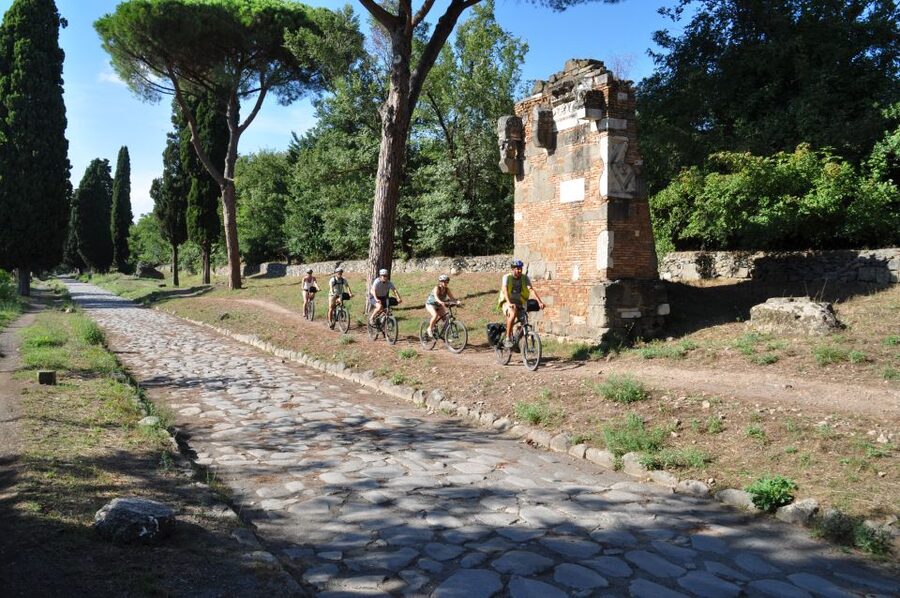
The catacomb stop is the main difference between the two tour lengths. On the 6-hour option, you make a guided visit inside the Catacombs of St. Callixtus or St. Sebastian. You go below ground into crypts and corridors connected with early Christian burial practices.
This adds a different layer to the day. The Appian Way shows Rome’s public power, roads, monuments, and wealthy families. The catacombs turn your attention toward private belief, burial, and the early Christian community. The combination gives you a broader picture of Roman life than a tour focused only on emperors and monumental ruins.
On the 4-hour option, you stop at the catacomb entrance for a short explanation instead. That is a sensible choice if you want the road, aqueducts, and parks without committing to a longer day. It also suits anyone who would rather keep the experience outdoors.
I would choose the 6-hour version if the catacombs are high on your Rome wish list. The underground visit is not a minor add-on, and the extra time gives the day a stronger historical arc. Choose the shorter route if you have limited energy, several other plans, or little interest in underground sites.
Ancient tombs, villas, and the Circus of Maxentius
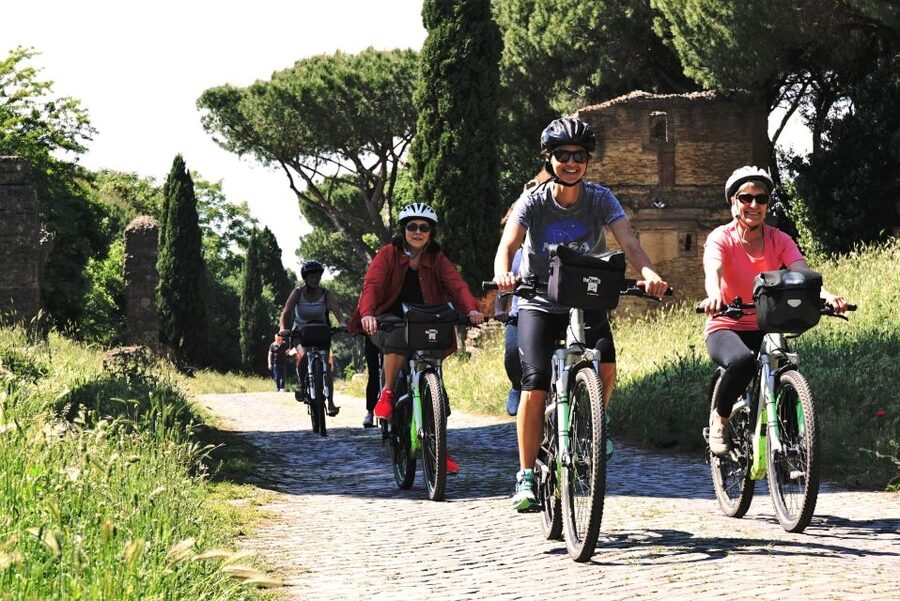
Beyond the catacombs, the Appian Way becomes the main event. You pass tombs, mausoleums, and remnants of large villas that once belonged to Rome’s wealthy families. These ruins are not arranged like a tidy collection in a gallery. They appear along the road, partly integrated into the surrounding grass and trees.
That setting is part of the appeal, but it also means the guide’s explanations are important. Without context, a weathered tomb can look like another pile of ancient stone. A good guide helps you understand who built these monuments, why they were placed beside the road, and what the route tells us about Roman society.
The Circus of Maxentius offers one of the larger stops along the way. It was part of a complex built under Emperor Maxentius, and its scale helps you picture the ambition of Roman construction beyond the familiar Colosseum. The stop also breaks up the ride, giving you time to listen, take photographs, and rest your legs.
The Tomb of Cecilia Metella is another memorable landmark. Its round, fortress-like form is one of the Appian Way’s best-known sights. The route also includes the area around Villa dei Quintili, a vast suburban residence linked with Roman aristocratic life. These stops make the ride feel like a sequence of outdoor archaeological sites rather than one long stretch of cycling.
You should expect short stops rather than long museum visits at each point. The tour’s strength is the whole route, not detailed interior access to every monument.
More E-Bike Tours in Rome
- Rome City Small Group Bike Tour with quality Cannondale EBike
★ 5.0 · 1,380 reviews - Rome by Night – Ebike Small Group Tour – Food and Wine (Option)
★ 5.0 · 1,275 reviews - Rome by Night: E-bike Small Group Tour -Food & Wine (Option)
★ 4.9 · 1,233 reviews - Rome: Standard or E-Bike Highlights Guided Tour
★ 4.7 · 777 reviews
What the 27-kilometer ride feels like
The distance looks intimidating on paper, especially if you are not a regular cyclist. The e-bike changes the calculation. Electric assistance helps with the length, inclines, and accumulated effort, and several riders with little e-bike experience have found the bikes easy to learn.
You still pedal. The bike does not remove the need for balance, steering, braking, or attention. It simply reduces the physical cost of covering the route. That is why the tour can suit a range of fitness levels but not every level of cycling confidence.
The off-road portion includes gravel and uneven surfaces. One rider found the ride manageable without much off-road experience but noted that some sections were bumpy. Another appreciated the sturdy bikes but wished for rear suspension. That is useful advice: the bikes are mountain-bike style, but they are not a cushioned sightseeing vehicle.
The Cannondale bikes come with anti-puncture tires, and the equipment is described as well maintained. A flat can still happen, as with any bicycle, but the guides are prepared to deal with ordinary mechanical problems. Helmets are mandatory, and a 5-liter handlebar bag is supplied for small personal items.
The route is generally paced as a group. Guides such as Arina, Anna, and Bita have been praised for riding carefully through traffic and returning to help when someone had trouble with an e-bike. That kind of attention is more valuable than speed. You are there to see Rome, not win a race.
The Aqueducts Park delivers the big visual reward
After the Appian Way, the route reaches the Park of the Aqueducts. Here, enormous arches cross open ground in long, dramatic lines. The aqueducts carried water toward Rome from distant sources, using carefully calculated gradients rather than modern pumps.
This is one of the most satisfying parts of the tour because the ruins are both immense and easy to understand visually. You can see the scale of Roman engineering without needing to decode a floor plan or peer through a glass case. The arches also create a strong sense of place, especially in the warm afternoon light.
The ride follows the aqueducts back toward modern Rome. You move alongside the surviving structures, then gradually leave the open parkland. The route makes the old infrastructure feel connected to the city it once supplied.
If you have already seen the Colosseum, Roman Forum, and Pantheon, this section offers a useful change of scale. Instead of focusing on individual buildings, you see the systems that allowed Rome to function: roads, water supply, defense, burial grounds, and suburban estates.
Caffarella Valley and the return route
The ride continues through the green Caffarella Valley before heading back toward the starting point. This section helps keep the tour from becoming a simple ruins checklist. You get trees, open fields, and a quieter setting before returning to streets and the urban edge.
The transition back to Rome is practical rather than scenic throughout. Some traffic is unavoidable, and you will need to stay alert. The guide chooses specific streets and manages the group, but no escorted city ride can remove the normal demands of urban cycling.
The final sights include the Baths of Caracalla. Even if you have seen the baths from another angle, arriving by bicycle after crossing the countryside gives them a different setting. The huge brick walls remind you that Rome’s leisure facilities could be as grand as its temples and roads.
You then return to Via Labicana 49. Depending on the day, the pace, stops, and catacomb arrangements, the tour lasts four to six hours. Wednesdays can add about 30 minutes.
Is $85 a fair price?
At $85 per person, this is not the cheapest way to see Roman ruins. It is a fair value if you want transport, equipment, route planning, and a guide bundled into one long outing.
You are covering 27 kilometers, using a quality e-mountain bike, visiting several widely scattered sites, and potentially adding a guided catacomb visit. Doing the same route independently would require more planning, bike rental, navigation, and confidence on Rome’s roads. You would also miss much of the historical connection between the sites unless you prepared carefully.
The price makes less sense if you only want a short ride or a quick look at the aqueducts. The tour takes much of a day, and food and drinks are not included. Some groups stop at a pizzeria along the way, but you should not rely on a meal being part of the package. Carry water and plan around the possibility of buying food during the ride.
The group limit of 10 is another reason the price feels reasonable. A small group allows more personal attention and makes it easier to hear the guide at roadside stops. The price is strongest for people who want an active, guided day rather than a simple bicycle rental.
Who should book this ride?
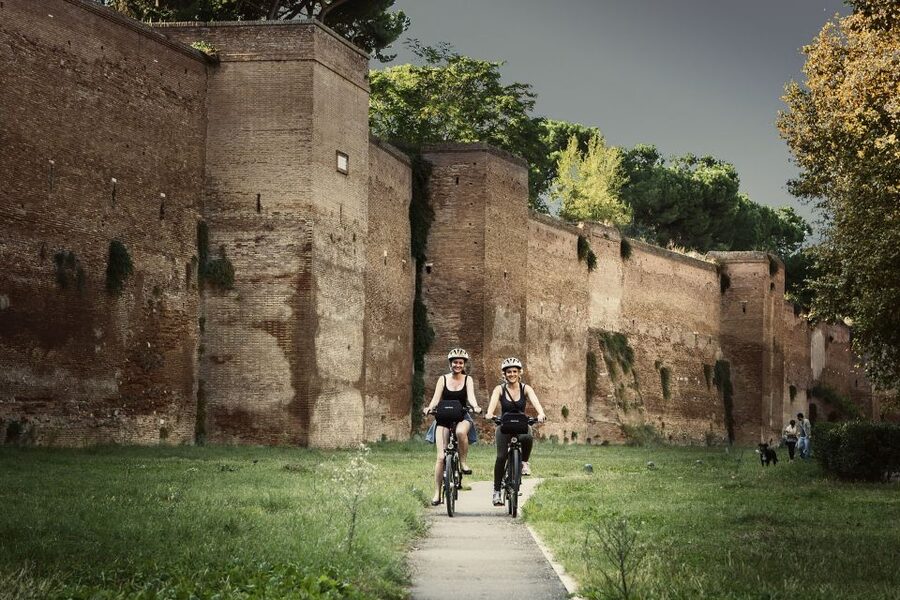
I would recommend it to confident bicycle riders who want to see a quieter side of Rome. It is especially good for visitors who have already explored the main center, families with older children, and anyone who enjoys combining history with time outdoors.
Children aged 9 and above can ride an e-bike independently. Children aged 5 to 8 can use a child extension, while children aged 1 to 4 can ride in a child seat up to 22 kilograms, or 49 pounds. The activity is not suitable for babies under 1 year, and the stated equipment weight limit is 136 kilograms, or 300 pounds.
Families should be honest about bike ability. One family found the electric bikes easy enough for children, while other riders stressed that comfort on a bicycle is important. A child who can pedal on a quiet path may still find traffic and rough ground difficult.
The route also suits adults who do not want a hard workout but still want an active day. You can choose how much effort to put into the pedals, while the motor helps on hills and longer stretches. Hot weather calls for extra care. Guides have made frequent water stops, but you should still bring suitable clothing and use the supplied bottle.
Should you book the 4-hour or 6-hour tour?
Choose the 6-hour tour if you want the fullest historical experience. The catacombs add early Christian history, and the extra time creates a more complete day of Roman roads, tombs, villas, aqueducts, and countryside.
Choose the 4-hour tour if your priority is cycling outdoors. You still see the Appian Way, Circus of Maxentius, Tomb of Cecilia Metella, Villa dei Quintili, Aqueducts Park, Caffarella Park, and Baths of Caracalla, but the catacomb stop is limited to an explanation at the entrance.
I would book the 6-hour option for a first visit focused on ancient Rome, provided you are happy with a full day and underground visit. I would choose four hours for a tighter schedule or if the open-air route is the part you care about most.
FAQ
How long is the Appian Way e-bike tour?
The tour is offered in 4-hour and 6-hour versions. On Wednesdays, it can last about 30 minutes longer.
How far do you cycle?
The route covers 27 kilometers, or about 17 miles. Around 60 percent is off-road, while about 40 percent takes place in the city.
Is the catacomb visit included?
A guided catacomb visit is included only with the 6-hour tour. The 4-hour tour stops at the entrance for a short explanation of the catacombs and their importance.
What kind of bike is provided?
You ride a Cannondale e-mountain bike with anti-puncture tires. A helmet, 5-liter handlebar bag, and biodegradable bottle of water are included.
Are food and drinks included?
No. Food and drinks are not included, although you can buy them along the route.
Where does the tour meet?
The meeting point is Via Labicana 49. It is about a 10 to 15-minute walk from Metro Colosseum and about a 10-minute walk from Metro Manzoni.
Should you book this tour?
Book it if you want Rome’s ancient story told across roads, ruins, waterworks, and countryside rather than inside one museum. The guides, quality bikes, small groups, and careful handling of city traffic make the outing appealing, but you must be ready for uneven ground and some urban cycling. For most confident riders, the aqueducts and Appian Way make this one of Rome’s best active history days.
Latest bike tours added in Rome
- Rome: Guided eBike Evening Tour with italian Aperitif★ 5.0 · 16 reviews
- Rome: Villa Borghese E-Bike Tour (Small Group or Private)★ 4.9 · 92 reviews
- Rome: Appian Way, Aqueducts, & Catacombs E-Bike Guided Tour★ 4.9 · 54 reviews
- Rome: Top 10 Highlights Guided Tour by Bike or E-Bike★ 4.4 · 15 reviews
- Rome: Villa Borghese, Villa Ada, and Coppedè E-Bike Tour★ 4.8 · 78 reviews
- Rome: Piazza Venezia E-Bike Rental★ 4.4 · 10 reviews
- Sunrise in Rome: Small Group E-Bike Tour & Italian breakfast★ 4.9 · 177 reviews
- Rome: Taste of Rome by quality Cannondale E-Bike★ 5.0 · 12 reviews
E-Bike Tours, compared.
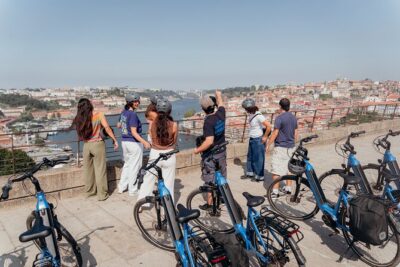
3-Hour Porto Highlights on a Electric Bike Guided Tour
Read our review →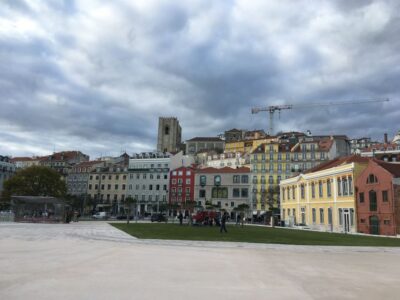
Hills, Alfama, and Mouraria Tour by Electric Bike
Read our review →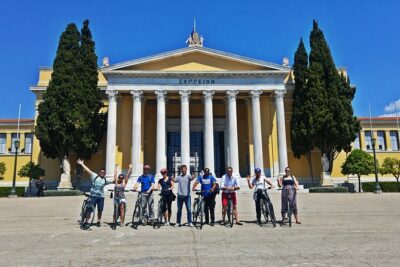
Athens Scenic Electric Bike Tour with optional Acropolis visit
Read our review →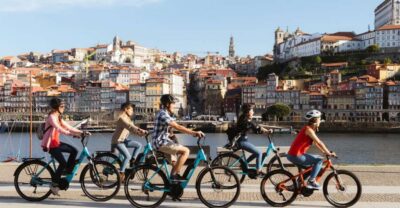
City Highlights 3-Hour Guided Electric Bike Tour
Read our review →
Rome EBike Tour: Appian Way, Catacombs & Roman Aqueducts
Read our review →
Top Highlights & Hidden Gems Tour by Cannondale E-Bike
Read our review →Browse the lists this tour appears in