
Review · ITALY BIKE TOURS
Siracusa tour on high tech bike
Syracuse is far easier to grasp from a bike than from a long walk under the Sicilian sun. This two-hour route links Ortigia’s major sights with smaller lanes, courtyards, churches, and old Jewish baths, giving you a quick look at both the famous postcard views and the less obvious corners.
I especially like the private format, which lets your guide adjust the pace and answer your questions, and the electric bikes, which make the route less tiring. Joseph has earned especially warm praise for his enthusiasm and lunch advice. The main caution is reliability: one account describes a same-morning cancellation, so I would avoid booking this as your only plan on a tightly scheduled day.
Key things to know before you book
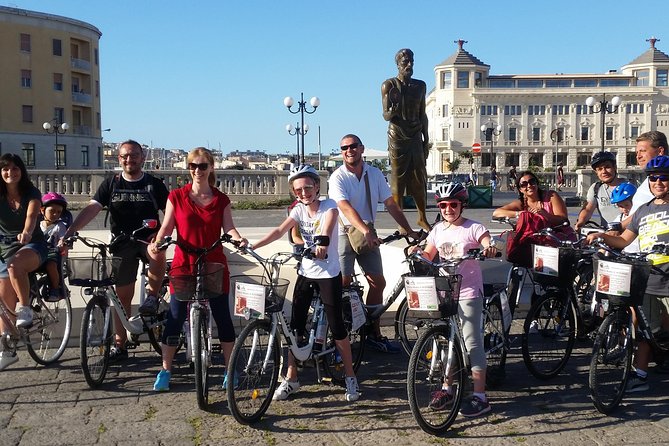
- Temple of Apollo to Fonte Aretusa: The route connects many of Ortigia’s key sights in a compact two-hour ride.
- Private guide, not a group outing: Only your party takes part, with more room for questions and a flexible pace.
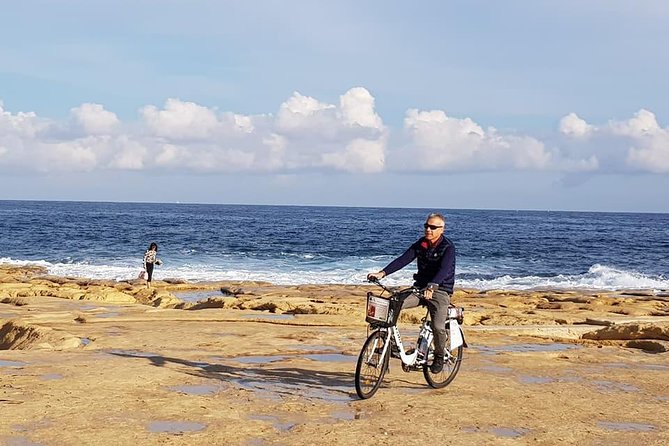
- Electric bikes included: The high-tech bicycles make covering the old town easier than walking every street.
- Meeting point at Via della Dogana 15: You start and finish at the bicycle rental point at 9:00 am.
- Languages: The guide may speak English, Italian, German, or French.
- Price and timing: At $114.14 per person for about two hours, the value depends most on your group size and how much you value a personal guide.
A quick ride through Syracuse and Ortigia
The experience begins at Via della Dogana 15, near the edge of Ortigia. You meet the guide, collect the bicycle, and set off at 9:00 am. Since the tour returns to this same point, you do not need to arrange a second meeting place or find your way back across town.
The route is designed to save time. Syracuse and Ortigia reward wandering, but the old town can also feel like a maze if you have only a short visit. A bike lets you move between the main sights without spending the whole morning on foot, while the guide supplies the historical thread that links them.
You are not simply pedaling from one attraction to another. The route includes broad streets such as Corso Matteotti, the lanes around the cathedral, the waterfront, Baroque side streets, and courtyards tucked behind old houses. That mix is useful because it gives you both the headline sights and a sense of how Ortigia is built.
The tour lasts about two hours. That is long enough for a solid orientation, but not long enough for extended visits inside every church or monument. Think of it as a guided introduction and sightseeing circuit, not a substitute for a full day exploring Syracuse.
More bike tours in Italy:
- Rome EBike Tour: Appian Way, Catacombs & Roman Aqueducts
★ 5.0 · 1,766 reviews - Rome: Top Highlights & Hidden Gems Tour by Cannondale E-Bike
★ 4.9 · 1,760 reviews - Rome: Appian Way & Aqueducts E-Bike Tour (Catacombs & Food)
★ 4.9 · 1,498 reviews
The Temple of Apollo gives you an ancient starting point
The first major landmark is the Temple of Apollo, one of the ancient remains included on the route. Its weathered stones offer an immediate reminder that Syracuse is not only a Baroque town or a seaside destination. The city has layers reaching back through the ancient Greek period and later eras.
Seeing the temple by bike also helps with orientation. Rather than approaching it as an isolated stop, you pass through the surrounding urban fabric and continue into the streets of Ortigia. Your guide can put the remains into the wider story of the city, although the tour does not include a separate admission to an archaeological site.
This is one of the places where a guide adds real value. Without context, ancient ruins can become a quick photo stop. With an explanation of what you are seeing and where it fits in Syracuse’s past, the stones have more meaning.
Corso Matteotti and Via Rome keep the route moving
From the temple, the ride continues along Corso Matteotti and Via Rome. These streets connect the older sights with the center of Ortigia and provide a practical change of pace after the ancient ruins.
You get a feel for the town as a living place rather than a string of museum stops. The route passes through streets used for everyday movement, then turns toward the monumental heart of the island. That contrast is one of the tour’s strengths.
A bike also makes this part efficient. You can cover ground quickly, then slow down when the guide points out a church, civil building, or architectural detail. You will not have to choose between seeing the main square and reaching the waterfront within the two-hour limit.
Still, keep your expectations sensible. Old-town cycling is not the same as riding on an open country road. The route includes streets and narrow lanes, so you should be comfortable handling a bicycle in an historic urban setting. The supplied information says most participants can take part, but it does not provide a detailed account of bike sizes, child seats, or specific accessibility arrangements.
Cathedral Square is the visual center of the ride
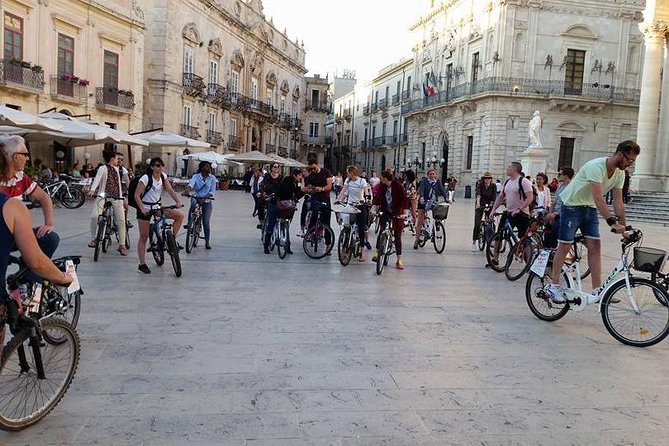
Cathedral Square is one of the most important stops. The space brings together Syracuse’s religious and civic character, with grand stone buildings and the broad open setting of the piazza.
The square is especially useful as a pause in the route. After riding through streets and lanes, you have a chance to stop, look around, and hear the guide explain the architecture. The tour includes churches and civil monuments in the old town, so this is not just a passing glimpse from the saddle.
The cathedral itself is not listed as an included admission. The itinerary notes an admission ticket is not included, and the tour price covers the bicycle, bottled water, and private guiding rather than entry fees. If you want to go inside any monument, ask the guide how much time you have and expect to pay separately where required.
That arrangement suits visitors who want a broad first look. If your main aim is a long interior visit at the cathedral, you may prefer to return later on foot with more time.
Another way to spend a morning on two wheels:
- Rome: Appian Way, Catacombs, & Roman Aqueducts E-bike Tour
★ 4.9 · 1,421 reviews - Rome City Small Group Bike Tour with quality Cannondale EBike
★ 5.0 · 1,380 reviews - Milan: Hidden Gems Guided Bike Tour
★ 4.8 · 1,334 reviews - Tuscany Bike Tours Through the Chianti Hills with Wine Tasting
★ 5.0 · 1,300 reviews
Fonte Aretusa brings the water into the story
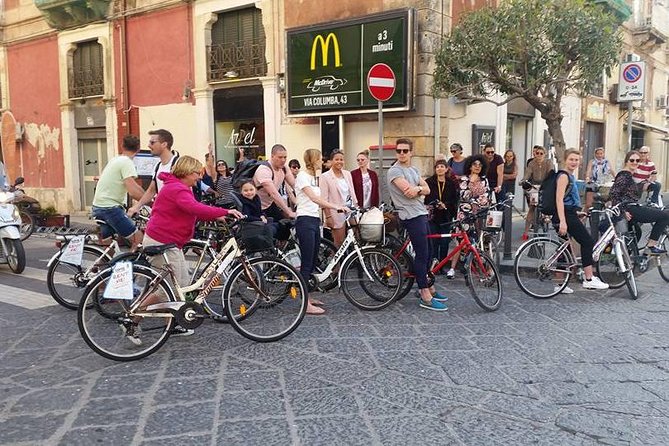
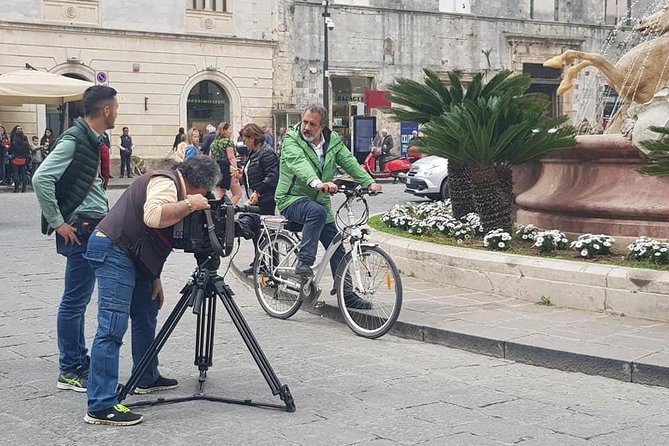
The route continues to Fonte Aretusa, one of Ortigia’s best-known places. The fountain adds a watery pause to a ride otherwise focused on ruins, churches, streets, and stone architecture.
This part helps explain Ortigia’s relationship with the sea and fresh water. You move from the formal setting of Cathedral Square toward a site with a different mood, then continue toward the marina. The change keeps the tour from feeling like a single run of monuments.
I like this kind of stop on a short tour because it breaks up the information. You can listen, take in the setting, and then move on rather than standing inside one crowded site for too long. The guide’s role matters here, since the experience includes seeing the place and learning why it matters.
Baroque lanes reveal the town behind the grand squares
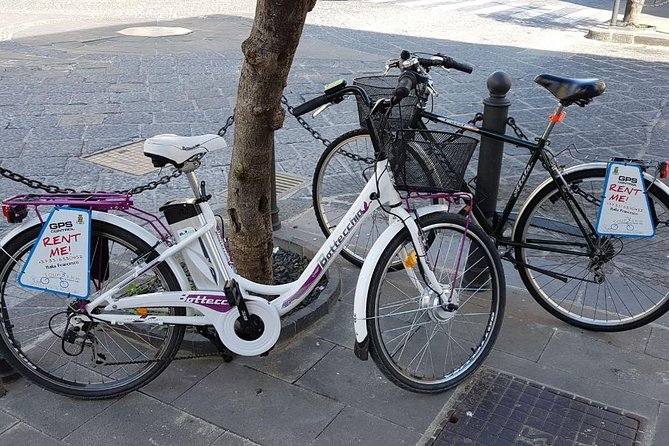
The route turns into the streets of the Baroque old town, including alleys and courtyards among the old houses. This is where the tour moves beyond the standard checklist.
The grand squares show Syracuse at its most formal. The smaller lanes show how the town is arranged behind those façades. You may find decorative stonework, quiet corners, and the close-packed shape of the historic center, with the guide pointing out details that are easy to miss when you are walking without local context.
These lanes are also where the electric bike earns its keep. You can cover several parts of the old town without tiring as quickly as you might on foot, though you should still expect to ride at a careful pace.
Do not expect every alley to be a long riding stretch. Some parts are better treated as slow passages or brief stops, especially in a compact historic center. The point is not speed. It is reaching more places in a limited time.
Jewish baths, churches, and civic monuments add depth
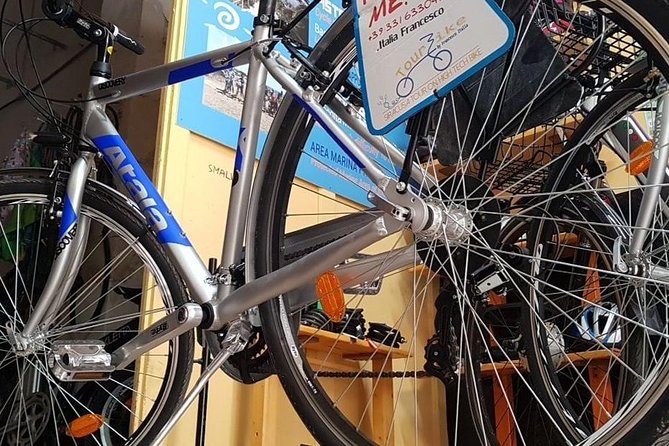
The itinerary includes Jewish baths, civil monuments, and churches in the old town. These details give the tour a wider frame than a simple ride between the Temple of Apollo and the cathedral.
The Jewish baths are particularly useful for understanding the different communities and periods that shaped Ortigia. They also add variety to the route, since you are not looking only at public squares and major façades.
The civil buildings and churches help fill in the gaps between famous landmarks. A private guide can explain what you are seeing as you pass, then decide where a short stop makes sense. The experience is strongest for people who want a readable story of the town rather than a long technical lecture about one monument.
The information provided does not promise entry into the baths or churches. Treat these as places you will see and discuss from the route unless your guide confirms that an interior visit is possible. With only two hours, time inside several buildings would not be realistic.
The marina closes the circuit
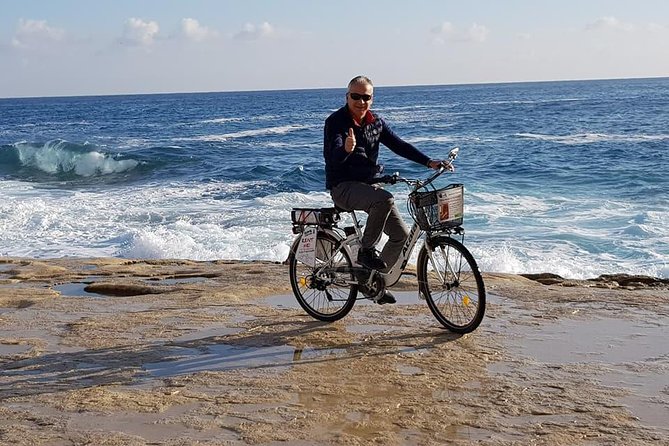
The marina provides another change of scene before you return to Via della Dogana. The waterfront gives the ride a sense of completion, linking the inland lanes and historic monuments with the island’s position in the Mediterranean.
You will also pass through smaller passages and old-house courtyards before the tour ends. This final stretch is valuable because it keeps the focus on Ortigia as a whole. You see the island not just as a collection of famous stops, but as a compact historic district surrounded by water.
The return to the starting point is convenient. You can collect your belongings, ask the guide for a restaurant suggestion, or continue exploring on foot. Joseph has been praised for offering a good lunch recommendation, so this is a sensible time to ask about where to eat next.
What the private format is really worth
The advertised cost is $114.14 per person. That is not a bargain-priced city orientation, but the number needs context. You are paying for a private tour, a bicycle, bottled water, and a guide for roughly two hours.
For a couple or a small party, the per-person cost may feel high compared with a self-guided walk. A self-guided visit also gives you more time at the cathedral, Fonte Aretusa, or the Temple of Apollo. You could cover many of the same streets without paying for a guide.
The private format becomes more useful if you have limited time, want to ask plenty of questions, or prefer not to plan the route yourself. It also matters if your group includes people who do not want a long walking tour. The electric bicycles let you see more of the island while saving your legs for the rest of the day.
The price includes no food or drinks beyond bottled water, and admission tickets are not included. Budget for any interior visits separately. If you are comparing this with a larger group tour, the deciding question is simple: do you value personal attention and route efficiency enough to pay more?
The guide can make or break the morning
The guide is central to this experience. The tour can operate in English, Italian, German, or French, and it may be led by a multilingual guide. If language is important to you, confirm the requested language when booking rather than assuming every departure will be identical.
Joseph is the named guide connected with the strongest praise. He has been described as warm, enthusiastic, and deeply familiar with his city, and his recommendation for lunch was singled out as useful. Those are the traits I would want on a short tour, since the guide must make quick stops feel meaningful without slowing the route too much.
There is also a practical warning. One reported booking ended in a same-day cancellation because the guide became ill, leaving no time to make another plan. The provider issued a 200 percent refund in that case, but money back does not replace a missed morning in Syracuse. I would book this early in your stay if possible, leaving later time to revisit anything you miss.
Who will get the most from this bike tour
This tour suits you if you have only a short window in Syracuse and want an orientation before exploring on your own. It is also a good match if you prefer a private guide, enjoy moving through a city rather than sitting in one place, and like seeing both major monuments and side streets.
It works well for adults and for most people who can comfortably ride a bicycle. The electric assistance should make the route less demanding than a conventional bike, but the experience still requires you to pedal and manage the bike in an old-town setting.
You may want something else if your main interest is archaeology, cathedral interiors, or extended museum visits. The two-hour route gives you an overview, not a slow study of each site. It also may not suit you if you dislike cycling in narrow urban lanes.
The meeting time is 9:00 am, which is helpful for getting an early start before the day grows hotter. You return to the same point, and the activity is private, so your group does not have to match the pace of strangers.
Should you book the Siracusa high-tech bike tour?
I would book it for a first morning in Syracuse, especially if you have two hours to spare and want a quick, guided map of Ortigia. The mix of the Temple of Apollo, Cathedral Square, Fonte Aretusa, Baroque lanes, Jewish baths, churches, and marina gives you a useful overview without requiring a full day.
The strongest reasons to book are the private format, the electric bicycle, and the chance to ride with a guide such as Joseph, whose local advice may help shape the rest of your day. The main reasons to hesitate are the price, the lack of included admissions, and the reported risk of a last-minute cancellation.
Book it if personal attention and efficient sightseeing matter more to you than keeping costs low. Skip it if you prefer wandering independently or plan to spend your time inside monuments. For many visitors, the best use is as an opening circuit, followed by a return on foot to the places that deserve a closer look.
FAQ
Where does the tour start and finish?
It starts at Via della Dogana 15, 96100 Siracusa SR, Italy, at 9:00 am. The tour ends back at the same meeting point.
How long does the bike tour last?
The experience lasts approximately two hours.
Is this a private tour?
Yes. Only your group takes part in the activity.
Which languages can the guide speak?
The guide may speak English, Italian, German, or French. The tour may be operated by a multilingual guide.
Are bicycles and water included?
Yes. Use of the bicycle and bottled water are included. Food and other drinks are not included.
Can I cancel for a full refund?
You can cancel up to 24 hours before the local start time for a full refund. Cancellations or changes made less than 24 hours before the start time are not accepted for a refund.
Latest bike tours added in Italy
- Private Bike Tour with Olive Oil Tasting★ 4.5 · 15 reviews
- E-Bike tour and Wine tasting from Desenzano Inland★ 5.0 · 24 reviews
- Desenzano e-bike tour★ 5.0 · 17 reviews
- E-bike tour in Ostuni. Oil mill, Dolmen and huge olive trees★ 5.0 · 13 reviews
- Guided E-bike Tour in Bologna with aperitif★ 5.0 · 97 reviews
- Bologna Panoramic Bike Tour★ 4.0 · 14 reviews
- E-bike tour Bergamo★ 5.0 · 85 reviews
- e-bike tour of Bergamo and its surroundings★ 5.0 · 27 reviews
Italy Bike Tours, compared.
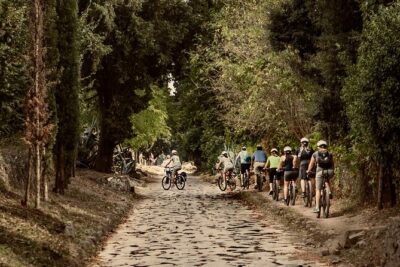
Rome EBike Tour: Appian Way, Catacombs & Roman Aqueducts
Read our review →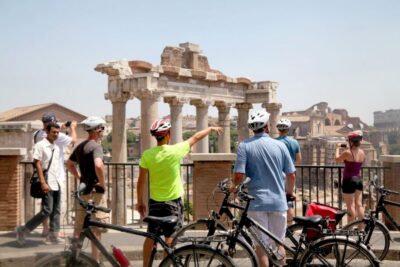
Top Highlights & Hidden Gems Tour by Cannondale E-Bike
Read our review →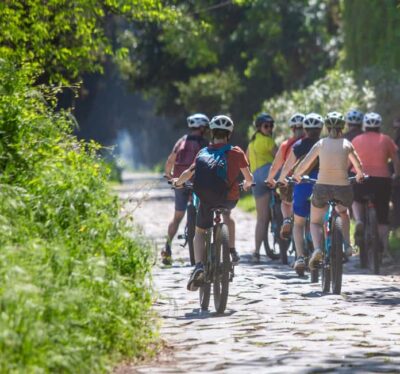
Appian Way & Aqueducts E-Bike Tour (Catacombs & Food)
Read our review →
Appian Way, Catacombs, & Roman Aqueducts E-bike Tour
Read our review →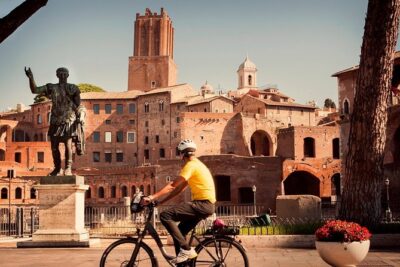
Rome City Small Group Bike Tour with quality Cannondale EBike
Read our review →
Tuscany Bike Tours Through the Chianti Hills with Wine Tasting
Read our review →
Rome by Night – Ebike Small Group Tour – Food and Wine (Option)
Read our review →Browse the lists this tour appears in