
Review · CITY HIGHLIGHTS BIKE TOURS
Nara: City Highlights Shared Group or Private Bike Tour
Nara’s best sights are spread across a walkable but roomy area, and this three-hour bike tour links them with far less backtracking than a walking day. You ride past deer in Nara Park, enter Todai-ji to see its enormous Buddha, visit Kasuga Taisha, and finish with Japanese knife culture at Kikuichi.
I like the mix of famous sights and quieter roads, and I like that the guide adds useful context about Buddhism, Shinto, Japanese history, and cutlery. The main drawback is the meeting point near the Toichi Shougakko bus stop, which sits outside the easiest tourist routes and may require a bus or taxi from central Nara.
Key points at a glance
- The Great Buddha at Todai-ji: Spend about 45 minutes around one of Nara’s essential sights, with entry included.
- Deer and park scenery: Cycle through Nara Park at a relaxed pace, with time to see the free-roaming deer.
- A practical introduction to Nara: Cover major temples, a Shinto shrine, park paths, and a knife shop in 210 minutes.
- A quieter side of town: The route uses some less crowded streets and areas that are easy to miss on a standard sightseeing walk.
- Small-group flexibility: Book a shared small group or a private outing, with English, French, and Japanese guides available.
- A real transport consideration: The start and finish are by the Japan Tour Adventure bike base, not right beside JR Nara Station or Kintetsu Nara Station.
Why a bike works well in spread-out Nara
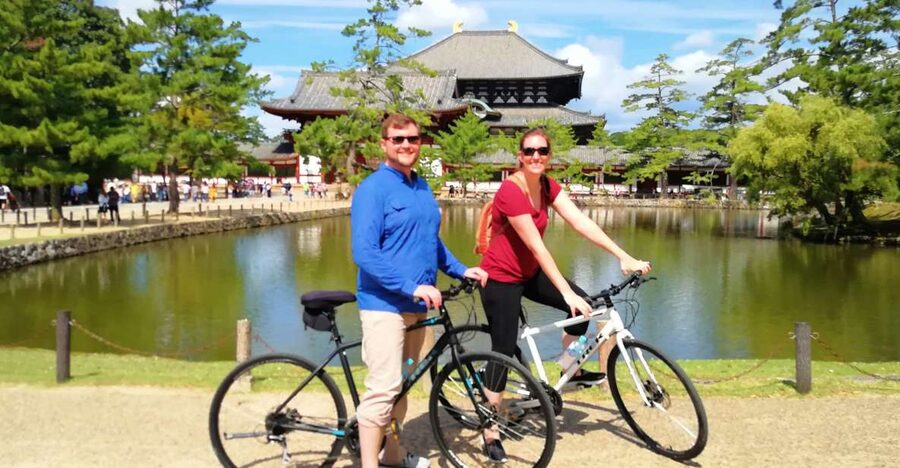
Nara’s main sights are not difficult to reach, but they are separated by enough distance to make a full walking circuit tiring. A bicycle gives you a useful middle ground: you cover more ground than on foot without turning the day into a bus tour.
The pace is described as relaxed, but this is still an active outing. One participant called it a working tour and felt tired by the end, while another noted a few climbs. You do not need to be a serious cyclist, but comfortable clothes, proper shoes, and a reasonable level of fitness will make the ride much more pleasant.
The route lasts about 210 minutes, including riding, temple visits, photo stops, and time at the knife shop. That makes it a good first look at Nara if your schedule is tight. It is not designed for slow, museum-style exploration of every stop. You will see a lot, then decide where you want to return on your own.
The bikes and helmets are included, along with a bottle of water and entrance fees. Food and other drinks are not included, so bring a snack if you tend to get hungry during an active morning or afternoon.
More City Bike Tours in Japan
- Tokyo Top Highlights 3h Guided E-bike Tour
★ 5.0 · 714 reviews - 5 Top Highlights of Kyoto Full Day Bike Tour (E-bike option)
★ 5.0 · 511 reviews - Tokyo: 3-Hour Bike or E-Bike City Highlights Tour
★ 4.8 · 435 reviews
Meeting the guide and getting on the road
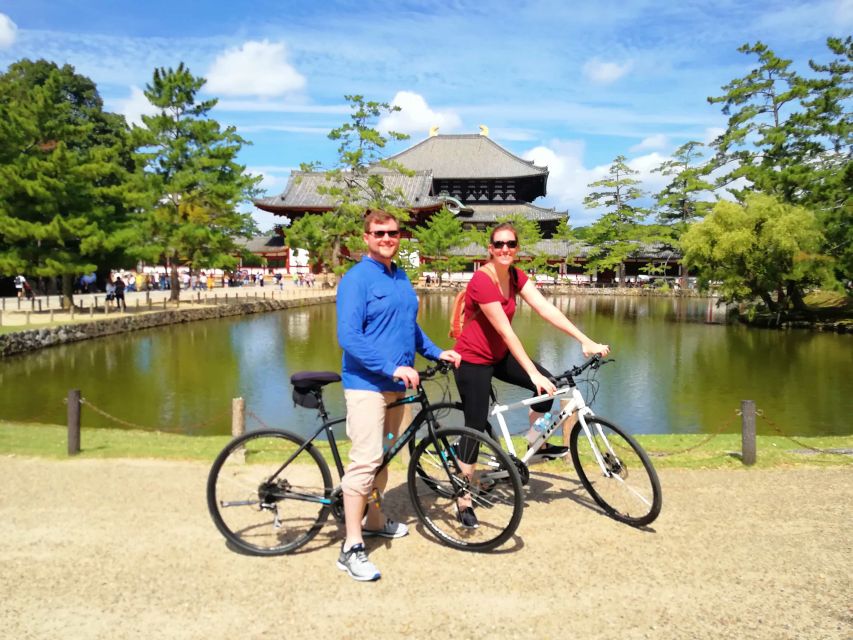
You meet near the bike base by the Toichi Shougakko bus stop, written in Japanese as 東市小学校. Search for Japan Tour Adventure in Nara on Google Maps rather than relying only on a generic Nara station map.
This location is the least convenient part of the experience. The ride does not begin directly at JR Nara Station or Kintetsu Nara Station, so you need to allow time for a bus or taxi. A video with bus directions is provided for both stations, which should help, but I would still check the route before the day of the tour.
After a short introduction and safety briefing, you receive your bike and helmet. This is the moment to tell the guide if the seat or handlebars need adjusting. The tour is available in English, French, or Japanese, and private or small-group arrangements give you more flexibility than a large coach excursion.
Robert is one of the named guides associated with this experience. A good guide matters here because the ride is not just transport between sights. The historical explanations connect Nara’s Buddhist temples, Shinto shrines, deer park, and knife-making traditions into one outing.
Ukimido and the first look at Nara Park
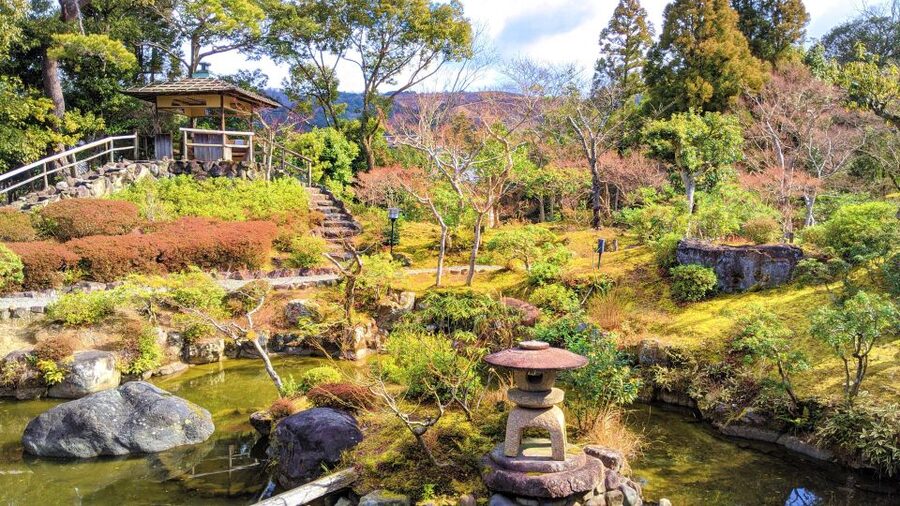
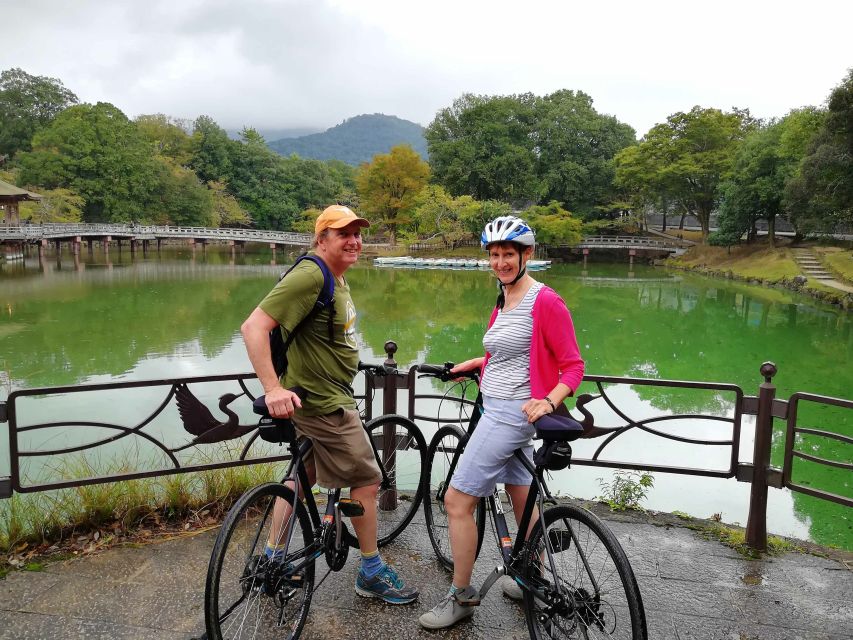
The first riding section lasts about 30 minutes and includes Ukimido. This lakeside pavilion is a pleasant early stop because it sets a calmer tone before the larger temple complex.
You will have time to look around and take photographs, while the guide begins explaining the area. The exact balance between riding and stopping can vary with the group, but the opening section gives you time to settle onto the bike rather than rushing straight to the biggest attraction.
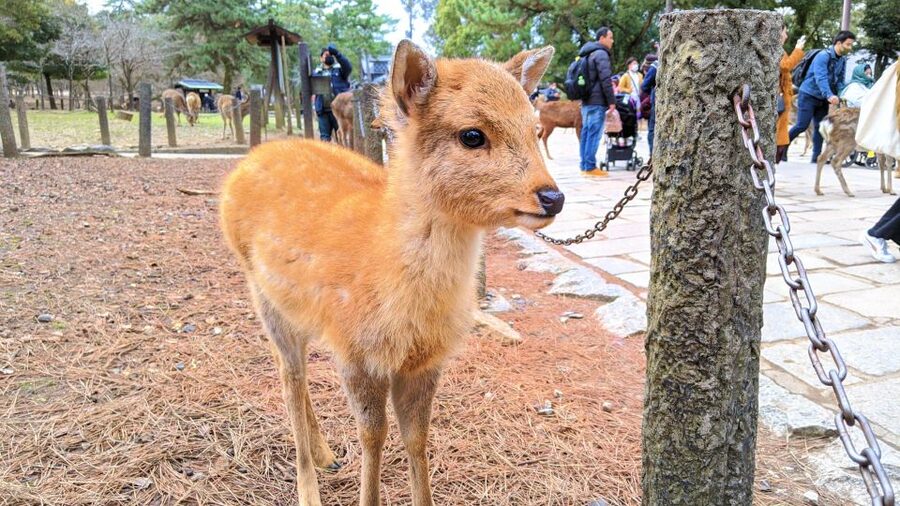
From there, the route moves into Nara Park for about 30 minutes. The park is one of the pleasures of visiting Nara because deer wander freely through its maintained grounds. You should keep your attention on both the animals and the road, especially when stopping for photographs.
The bicycle lets you pass through more of the park than you would cover during a short walk from Todai-ji. You get changing views of trees, open spaces, and temple approaches, with the guide pointing out details along the way. This section is scenic rather than packed with formal sightseeing, which helps break up the heavier temple visits.
Nandaimon Gate and the scale of Todai-ji
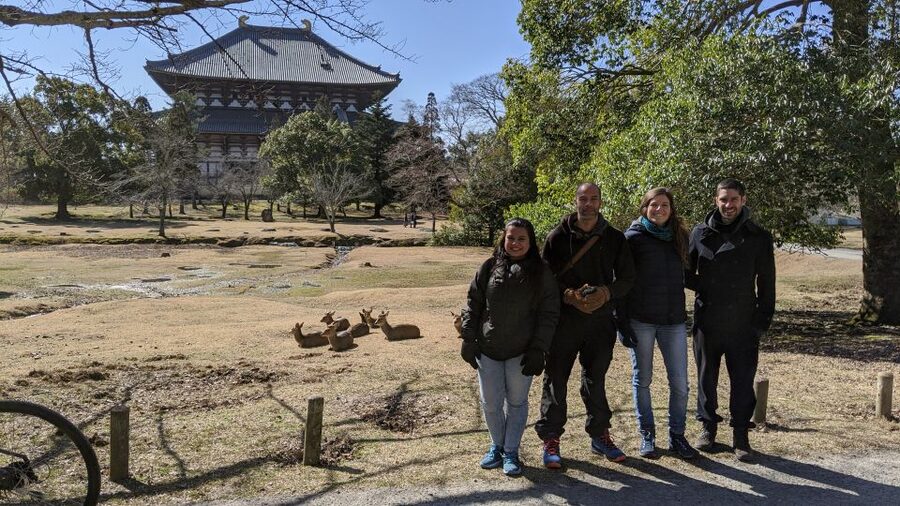
The first major temple stop is Nandaimon Gate, where you have roughly 20 minutes for a visit, a walk, and photographs. The gate is an impressive introduction to Todai-ji, with a scale that prepares you for the main hall.
I recommend taking a moment here before moving on. Many people hurry toward the Great Buddha, but Nandaimon helps you understand the size and ambition of the temple complex. Your guide can also provide background on Buddhism and the role of Todai-ji in Nara.
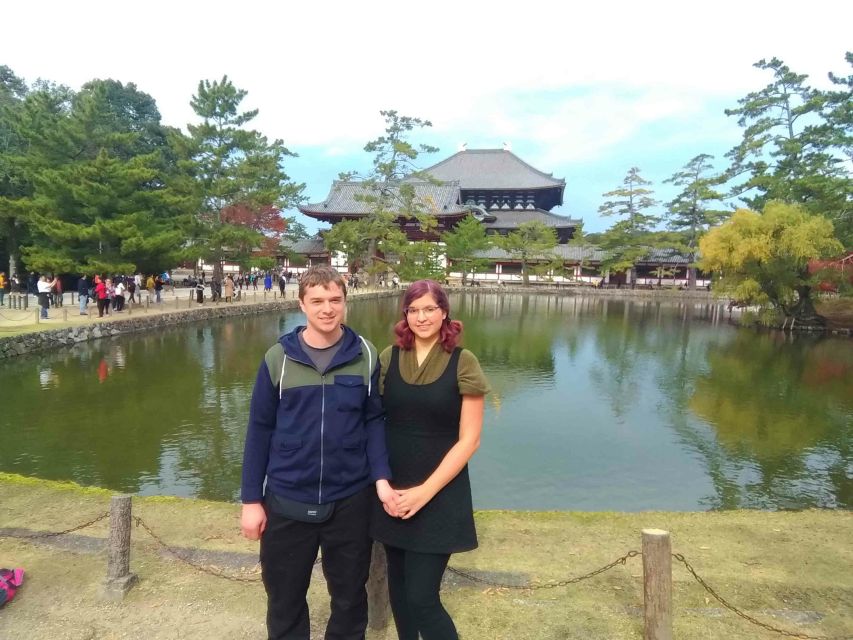
The route then gives Todai-ji about 45 minutes, the longest single stop. The main attraction is the giant Buddha, described here as 15 meters tall. It is an imposing sight even if you have visited large Buddhist statues elsewhere in Japan.
The included entrance fee is important at this stop. You do not need to handle separate admission while the group moves through the schedule, and the guide can explain what you are seeing as you walk through the grounds.
Forty-five minutes is enough for a proper first visit, but not enough for every corner of the wider temple precinct. I see that as a fair trade on a three-hour tour. You gain a guided introduction, then can return later if Todai-ji becomes your favorite stop.
More Private Bike Tours in Japan
- 1-Day Private Rural E-Bike Tour in Hida
★ 5.0 · 188 reviews - 3-Hour Tokyo Private E-Bike Tour Starting from Your Hotel
★ 5.0 · 117 reviews - Private Afternoon Cycling Tour in Hida-Furukawa
★ 5.0 · 109 reviews - Private-group Morning Cycling Tour in Hida-Furukawa
★ 5.0 · 105 reviews
A closer look at Buddhism and Shinto
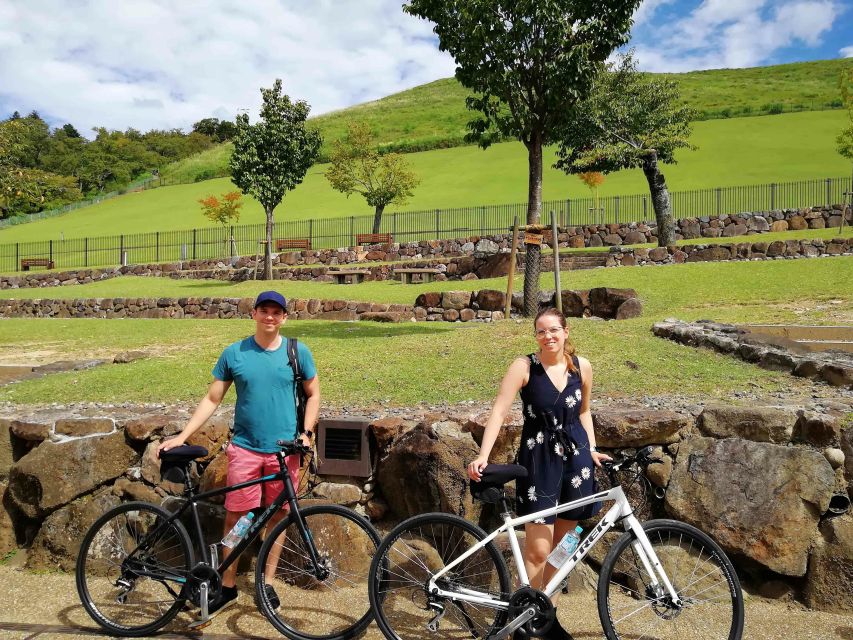
One useful feature of the route is the contrast between Todai-ji and Kasuga Taisha. Todai-ji is a Buddhist temple, while Kasuga Taisha is a Shinto shrine. Seeing both in one morning or afternoon gives you a clearer sense of how these traditions appear in Japan’s historic religious centers.
The guide explains Buddhism and Shinto during the visits rather than leaving you to read signs on your own. That helps if you are new to Japanese religious architecture. You can ask questions as they arise, which is one benefit of choosing a small group or private booking.
The experience does not promise a formal religious lesson, and the schedule is too short for that. Still, the combination of riding, walking, and explanation gives the major buildings more meaning than a quick photograph from the road.
Kikuichi and the craft of Japanese kitchen knives
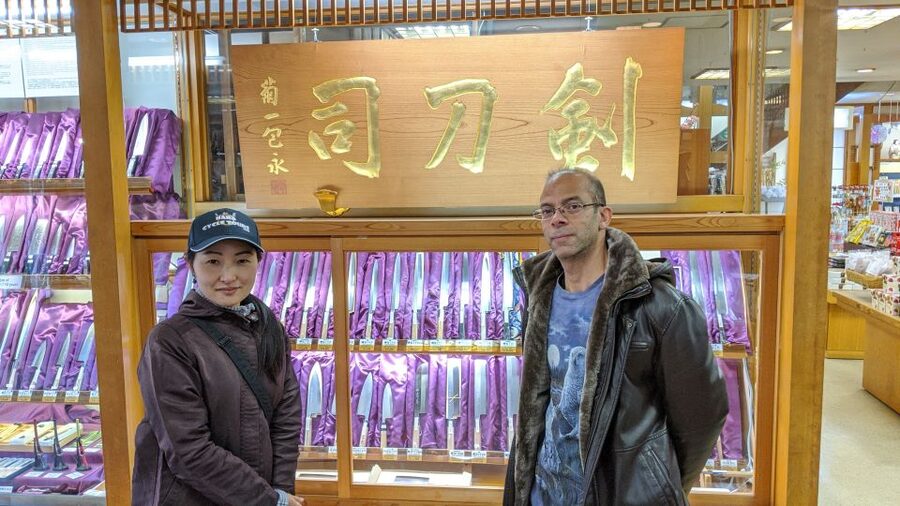
After Todai-ji, the route continues to Kikuichimonjushirokanenaga honten, usually referred to as Kikuichi. You have about 30 minutes there for shopping and an arts and crafts visit.
This stop adds something different to the tour. Instead of another shrine or temple, you see a high-end Japanese cooking knife retailer and learn about cutlery. For cooks and anyone interested in Japanese craftsmanship, it is a useful change of pace.
You should think of this as a shopping stop, not simply a display. If you are considering buying a knife, the guide may help explain the cultural and practical side of the products, but the supplied information does not promise shipping, sharpening services, or a particular range of prices. Bring your passport, which is listed among the recommended items, especially if you may need it for a purchase or related shopping procedure.
The stop may be less interesting if you have no interest in kitchen tools. Even then, it gives your legs a break after the temple visit and shows a part of Nara that a standard sightseeing route may skip.
Kasuga Taisha and its thousand lanterns
The next major visit is Kasuga Taisha, with about 30 minutes for sightseeing, free time, photographs, and scenic views along the way. The shrine is known for its many stone and bronze lanterns, and the route specifically highlights its thousand lanterns.
The atmosphere differs from Todai-ji. Here, the emphasis is on Shinto worship, forested approaches, lanterns, and the relationship between the shrine and its setting. The bike gets you close enough to make the visit efficient, while the walking portion lets you slow down around the shrine grounds.
Thirty minutes is enough for an introduction and photographs, but it is not a long private visit. If you want to study every lantern or explore all surrounding paths, plan to come back independently. The guided tour gives you the essential experience without using the entire day.
I especially like this pairing of Kasuga Taisha with Todai-ji. You see two major religious sites, but the stops do not feel identical. The contrast makes the cultural explanations more useful and keeps the itinerary from becoming a string of similar temple courtyards.
The return through Nara Park
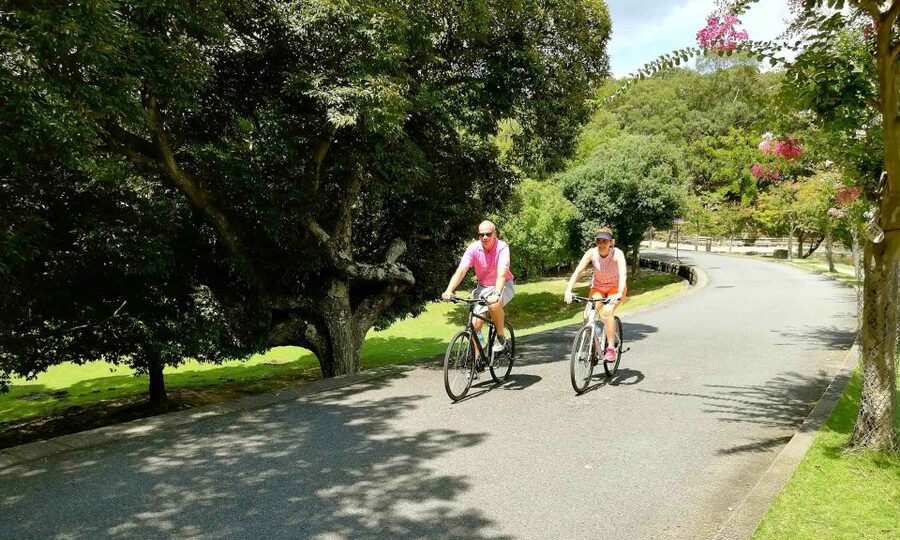
The final 20-minute cycle returns through Nara Park and back to the bike base. This is a practical way to finish because you get another look at the park without adding a separate transfer.
By this point, you will have spent time riding, walking, photographing deer, and visiting two major religious sites. The final stretch is not a new attraction, but it gives you a last scenic passage and a chance to ask follow-up questions before returning the bike and helmet.
The route is active without being presented as strenuous, though the few climbs noted by one participant are worth keeping in mind. If you dislike cycling, have difficulty walking, or use a wheelchair, this is not the right activity. Comfortable clothing and shoes are more useful than dressing for a formal temple visit.
What the 70 dollar price really covers
At 70 dollars per person, this tour is not the cheapest way to see Nara’s sights. You can visit parts of Nara Park independently at little or no cost, and public transport can take you near the major sites.
The price becomes easier to justify if you value the guide and the bicycle logistics. You get a bike, helmet, guide, entrance fees, and water, plus a planned route linking several attractions. You also avoid spending time figuring out how to move between Ukimido, Nara Park, Todai-ji, Kikuichi, and Kasuga Taisha.
The strongest value is time. In three and a half hours, you cover a wide area and receive explanations about several subjects, including Japanese history, Buddhism, Shinto, and cutlery. A private booking may be worth the extra cost for families or groups that want a more personal pace, while a shared small group should suit people who want the guided structure without paying for a fully private experience.
Food, drinks beyond the supplied water, hotel pickup, and hotel drop-off are not included. Factor in the cost of reaching the bike base, since the meeting point is the one part that is not especially convenient from the central stations.
Weather, booking rules, and practical planning
The tour may be canceled if the Japan Meteorological Agency forecast gives a greater than 60 percent chance of rain. Notice is sent the evening before, so check your email before going to bed. This is a sensible policy for a cycling route, but it means you should avoid scheduling it as your only possible Nara activity.
You can cancel up to 24 hours in advance for a full refund, and a reserve-now, pay-later option is available. Single visitors can book, but the tour needs at least two people to operate. If only one person is booked, the session may be canceled, with rescheduling or a full refund offered.
Bring your passport, comfortable shoes, a camera, food, water, and comfortable clothes. A helmet and bike are supplied. Since the activity includes cycling and walking, it is not suitable for people with mobility impairments or wheelchair users.
I would schedule this tour early in your Nara stay if possible. That gives you a useful overview and lets you return to Todai-ji, Kasuga Taisha, or the park later at your own pace. It also gives you a backup day if rain cancels the ride.
Who should book this Nara bike tour
I recommend it most to people who want to see several major sights in limited time and do not mind doing some physical work. It suits first-time visitors who want help understanding the difference between a Buddhist temple and a Shinto shrine, as well as returning visitors who want quieter roads and a new route through the city.
It is also a good match for anyone curious about Japanese kitchen knives. The Kikuichi visit gives the tour a subject beyond the usual deer and temples, though shoppers should remember that food and drinks are not included and that the shop is only one 30-minute stop.
You may prefer an independent day if you want long visits at Todai-ji, extensive time at Kasuga Taisha, or a completely flexible schedule. The meeting point also adds a bit of work before the tour begins. But if you value a friendly guide, efficient transport, and a strong mix of Nara’s major sights, the 4.9 rating from 34 reviews reflects what this experience does well: it covers a lot without feeling like a rushed bus circuit.
Should you book it?
Book this tour if you want a practical introduction to Nara, enjoy cycling, and like having a guide explain the city while you move between its main sights. The combination of deer, the Great Buddha, lanterns, religious context, and Japanese knives gives you more range than a basic park visit.
Skip it if reaching the out-of-the-way start point is difficult, if rain would disrupt your plans, or if you need a wheelchair-accessible activity. For most visitors with three hours to spare and a reasonable level of fitness, 70 dollars is a fair price for the bike, admissions, guide, and efficient route.
FAQ
How long does the Nara bike tour last?
The tour lasts 3 hours, or 210 minutes.
What places does the tour visit?
The route includes Ukimido, Nara Park, Nandaimon Gate of Todai-ji, Todai-ji, Kikuichi knife shop, and Kasuga Taisha before returning to the bike base.
Are bicycles and helmets included?
Yes. The bike tour, bicycle, helmet, guide, entrance fees, and a bottle of water are included.
What languages are available?
Guides are available in English, French, and Japanese.
Where does the tour start?
Meet the guide by the bike base near the Toichi Shougakko bus stop, written as 東市小学校. Search for Japan Tour Adventure in Nara on Google Maps.
Is hotel pickup included?
No. Hotel pickup and drop-off are not included, and food and drinks are also excluded.
What happens if it rains?
The tour may be canceled if the Japan Meteorological Agency forecast gives more than a 60 percent chance of rain. Notification is sent by email the evening before.
Latest bike tours added in Japan
- Private E-MTB guided cycling around Mt. Aso volcano & grasslands★ 5.0 · 16 reviews
- Tokyo: West-Side Cycling and Food Tour with Guide★ 5.0 · 37 reviews
- Tokyo: Private Cycling Tour with cute E-bike★ 5.0 · 11 reviews
- Tokyo Bay Area: Sunset Night View 3h E-bike Guided Bike Tour★ 5.0 · 11 reviews
- Tokyo: Hidden Gems Guided Bike Tour with Lunch★ 4.5 · 30 reviews
- Tokyo Bike Tour: Shibuya, Harajuku & Hidden Gems★ 5.0 · 20 reviews
- Tokyo: 3h Private E-bike Tours, Starting at Your Hotel★ 5.0 · 36 reviews
- Tokyo: 3-hour Guided E-Bike Tour of the City’s Hidden Gems★ 4.8 · 251 reviews
City Highlights Bike Tours, compared.

3-Hour Porto Highlights on a Electric Bike Guided Tour
Read our review →
City Highlights 3-Hour Guided Electric Bike Tour
Read our review →
Highlights & Hidden Spots of Barcelona Bike Tour w/ Local Guide
Read our review →
Sights and Highlights Bike Tour with a Local Guide
Read our review →

Highlights 3 Hour Bike Tour with a Local Guide
Read our review →
Browse the lists this tour appears in