
Review · MUNICH BIKE TOURS
Munich Essentials Bike Tour
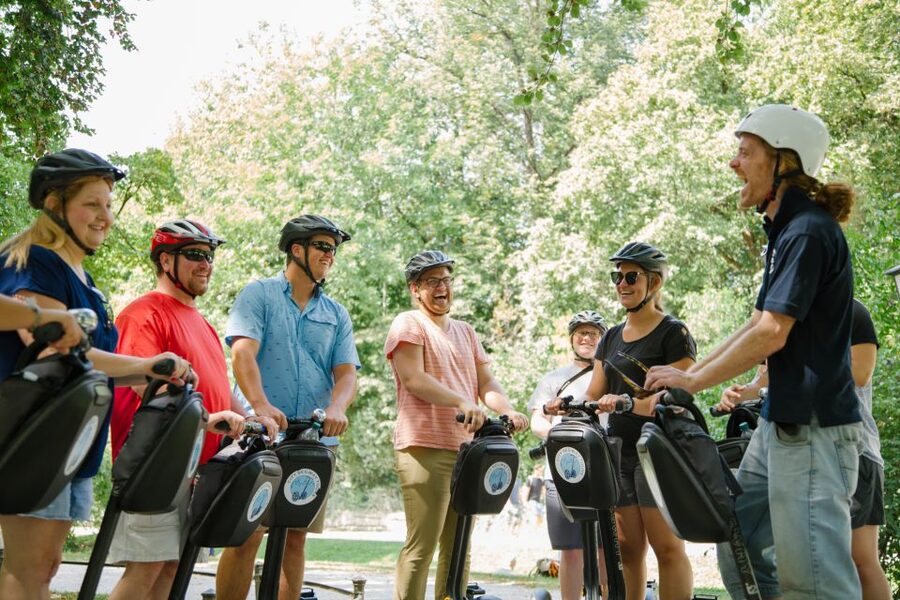
Munich’s best sights are spread across a wide sweep of the city, and this 150-minute bike tour links them without asking you to spend a full day on foot. You’ll ride from Karlsplatz through grand squares, royal buildings, Nazi-era sites, and the English Garden, with time to pause at the Eisbach Wave and watch surfers take on the river.
I like two things right away: the route gives you a fast sense of Munich’s layout, and the guide puts the city’s difficult 20th-century past beside its palaces, theaters, and parks. Guides named in past bookings include Rob, Dan, Achim, Thorsten, Michelle, and Jose, though your guide will depend on the date. The main consideration is the pace. You cover a lot in two and a half hours, so this is an overview rather than a slow, detailed look at every stop.
Key points to know before you book
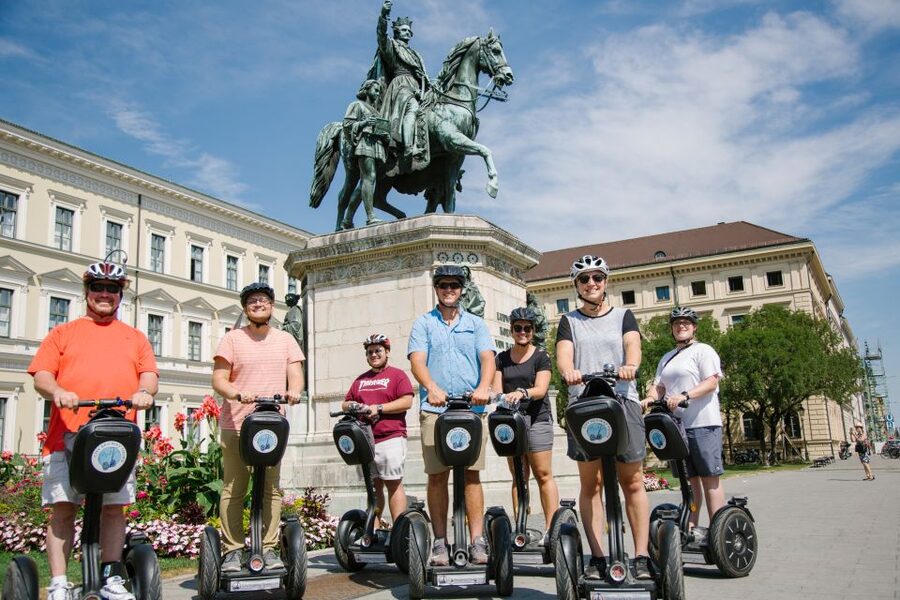
- Königsplatz puts Munich’s cultural and political past in one grand setting. You’ll see imposing architecture and hear how the square fits into the city’s story.
- The route handles difficult history directly. The Führerbau and Munich’s role in the rise of Adolf Hitler and National Socialism are part of the tour.
- The English Garden provides a welcome change of pace. After city streets and formal buildings, you’ll ride through one of Munich’s best-known green spaces.
- The Eisbach Wave is a memorable stop. You may have time to watch local river surfers, one of the city’s most unusual sights.
- The tour is designed for busy schedules. At $37 per person, it offers a broad city introduction without taking up an entire day.
- You need to be comfortable on a bicycle. Helmets are available but not required, and open-toed shoes are not allowed.
Why a bike is a smart way to see Munich
Munich is easy to explore on foot in small sections, but its major sights do not all sit close together. Karlsplatz, Königsplatz, Odeonsplatz, the Residenz, the English Garden, and the Bavarian National Theatre form a longer route. A bicycle lets you connect them in one outing.
The benefit is not only speed. From a bike, you get a better sense of how the city fits together. You move from a lively central square to formal museum architecture, then into royal Munich and finally toward the open paths of the English Garden. That change in mood is part of the experience.
The tour is also useful at the start of a Munich stay. You’ll pass through several central areas and can return later to the places that deserve more time. If you have only a short visit, this helps you identify what matters most to you.
The trade-off is detail. You will stop for explanations, but you will not have the same amount of time at each site as you would on a walking tour devoted to one neighborhood. I would treat this as a strong first look, not a replacement for visiting the Residenz interiors or spending a full afternoon in the English Garden.
More bike tours in Munich:
- Munich 3-Hour Guided Bike Tour
★ 4.5 · 1,731 reviews - Classic Mike’s Bike Tour daily @ 11.30 incl Beer Garden & Surfers
★ 5.0 · 1,246 reviews - Neuschwanstein Castle by Bus Incl. Bike Ride or Hohenschwangau
★ 5.0 · 607 reviews
Starting at Karlsplatz and Stachus
The meeting point is Karlsplatz, also called Stachus, between Munich Central Station and Marienplatz. It is a practical place to begin because it sits near a major transport link, Karlsplatz station, and is easy to reach from other central areas.
You meet by the fountain with your back to Karlstor and the pedestrian zone. Turn right onto Sonnenstraße, walk about 50 meters, and the shop at Karlsplatz 4 is on the right. That detail matters because Karlsplatz is a large, busy square, and a clear landmark saves time when you are trying to find a group.
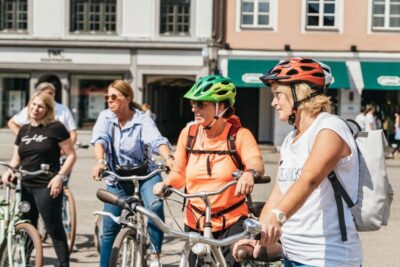
Your bicycle and helmet are included. The helmet is optional, but I would use it, especially in a city setting where you may be riding near other cyclists, pedestrians, and traffic. eBike upgrades are available if you prefer extra assistance or are unsure about maintaining the pace.
The tour takes place in rain unless conditions become extremely severe. Dress for changing weather, and wear closed-toe shoes. Open-toed shoes are not allowed. Minors under 18 must be accompanied by an adult, and unaccompanied minors cannot join.
Königsplatz and Munich’s public face
Königsplatz is one of the most important stops because it shows how Munich used monumental architecture to shape public life. The square is tied to the city’s cultural identity, and the tour uses it as a gateway into Munich’s architecture and political past.
You should expect an explanation of both the older cultural role of the area and its connection to the Nazi period. That combination is important. Munich is often presented through beer halls, royal buildings, and art museums, but its modern history also includes a central role in the rise of National Socialism.
The guide’s job here is not simply to point out impressive buildings. You’ll get context for why the square looks the way it does and how public spaces can be used to project power. Since you are moving through the area by bike, you get a broad view of the buildings and their relationship to the surrounding streets.
This is one place where the tour’s speed can be both useful and limiting. You’ll receive an overview and can later return if you want more time with the architecture. If political history matters to you, listen closely and consider making a separate visit to a museum or memorial after the tour.
The Führerbau and Munich’s difficult past
The stop at Hitler’s Führerbau gives the tour a serious edge. Munich was not simply a backdrop to German history. It played an important part in the rise of Hitler and National Socialism, and the guide provides an introduction to that story while showing you the related building.
This part of the tour is valuable because it avoids separating beautiful Munich from uncomfortable Munich. The grand squares and royal buildings are not the whole story. You’ll hear how the city became tied to a movement that changed Germany and Europe with devastating results.
Expect a primer rather than an exhaustive history lesson. Two and a half hours must cover a large route, and the tour also includes royal, cultural, and natural sights. Still, this stop adds substance and helps you understand why some central Munich locations carry more weight than their appearance suggests.
I appreciate that this topic is included in a general city tour. You do not need to book a specialist history walk to hear the basic outline, though anyone seeking detailed political history should plan extra time elsewhere.
Another way to spend a morning on two wheels:
- Munich: Guided City Tour by Bike with Beer Garden Stop
★ 4.7 · 604 reviews - Munich Small-Group Bike Tour
★ 4.5 · 510 reviews - Munich by Bike: Half-Day Tour with Local Guide
★ 4.7 · 417 reviews - Munich: Bike Tour with Beer Garden Break
★ 4.9 · 391 reviews
Odeonsplatz and the Bavarian Residenz
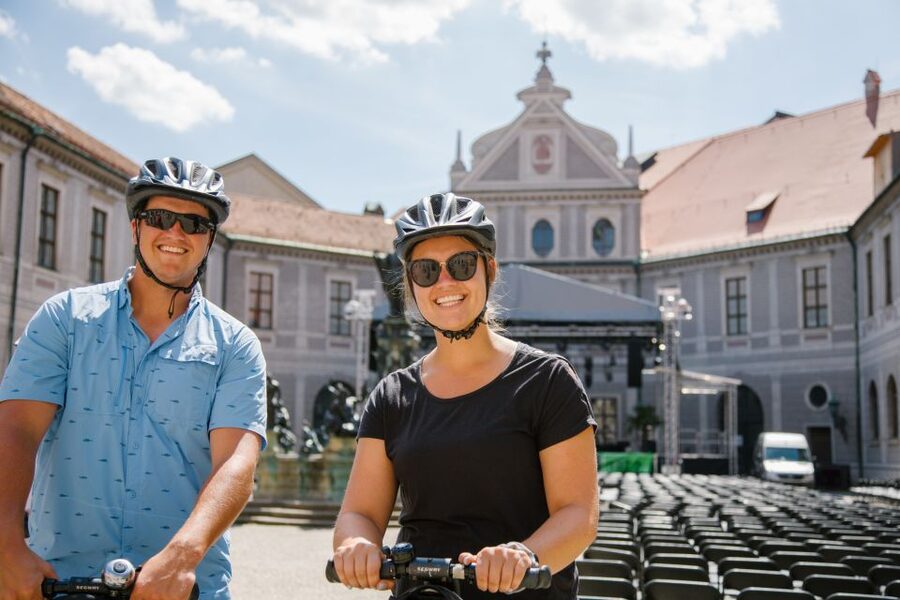
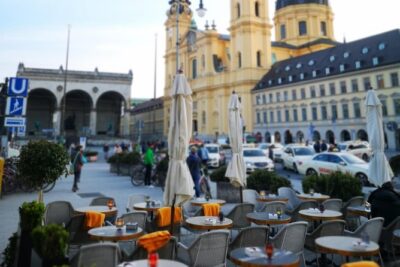
Odeonsplatz brings you into one of Munich’s most elegant parts. The square connects with the Munich Royal Residence, the former palace of the Bavarian royal family, and gives you a look at the city’s royal heritage.
The contrast with the Führerbau is sharp. Within a short stretch of the route, you move from the political history of the 20th century to the older world of Bavarian rulers, formal architecture, and court life. That contrast helps explain Munich as more than one type of city.
You may have the chance to wave to the local royal family near the Münchner Residenz, though you should take that as a light moment rather than a scheduled royal encounter. The important part is seeing the setting and learning why the Residenz matters.
The tour takes you past the palace, not through its full interior program. If you want grand rooms, collections, and a closer look at the former royal home, you’ll need a separate entrance visit. The bike tour is better for orientation and outside views.
The Bavarian National Theatre and Munich’s cultural side
The Bavarian National Theatre adds another layer to the city’s public identity. It is part of the area around the Residenz and shows how Munich’s royal and civic life have long been connected to music, drama, and the arts.
This stop works well in the flow of the tour because it keeps the focus on buildings you can understand from the street. You do not need to attend a performance to appreciate the role of the theater in Munich’s cultural life, though the tour cannot offer a full backstage or interior visit.
For me, this is the kind of stop that benefits from a guide. A grand facade can blur into the next grand facade when you are exploring alone. A short explanation gives it purpose, especially when the route is covering several centuries of city life in one morning or afternoon.
Riding into the English Garden
The English Garden changes the feel of the tour. After central squares and formal buildings, you’ll ride through a large park with a more relaxed atmosphere. This is where the bicycle feels especially useful, since the route can cover more of the park than a short walk from the center.
The park offers a break from architecture and political history. You’ll have a chance to enjoy Munich as a place where people spend time outdoors, not only as a city of monuments and museums.
Do not expect a long, unstructured park visit. The tour has several major stops, so your time in the English Garden forms one part of a larger route. Still, it provides a welcome change and helps you see why the park is central to the city experience.
The English Garden is also a good reason to book this tour early in your stay. Once you know how it connects with the center, you can return on your own for a longer walk or ride.
The Eisbach Wave and local Munich in action
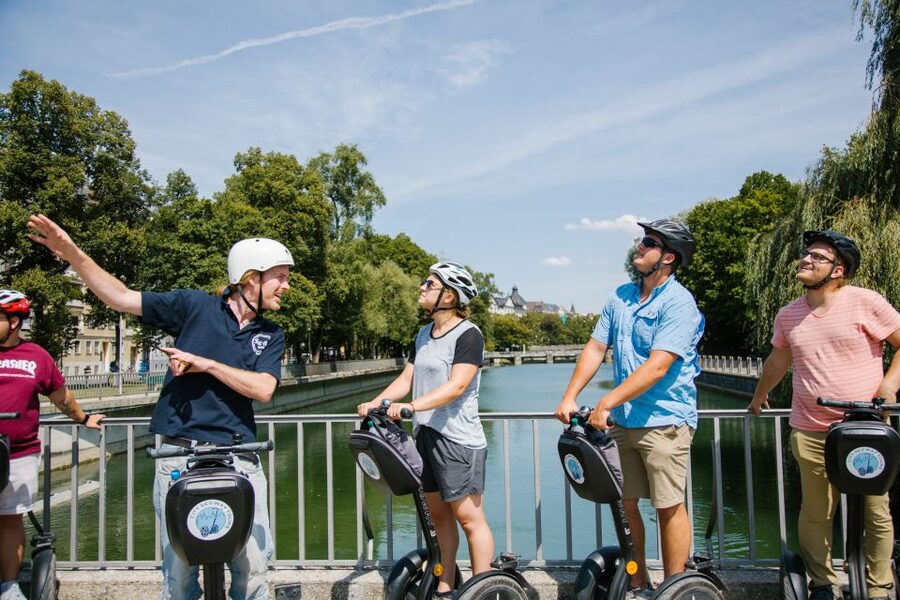
The Eisbach Wave is one of the tour’s most distinctive moments. At this artificial river wave, surfers ride in a fast-moving section of the Eisbach as people watch from the bank.
You may have time to see the surfers during the tour. The exact amount of viewing time will depend on the pace and the group, so do not treat it as a guaranteed long stop. Even a short look is memorable because it is such an unexpected sight in the middle of a landlocked city.
This stop also gives the tour a bit of local character. Palaces and theaters tell you about Munich’s official identity. The river surfers show a more playful, modern side of the city.
Bring your attention, not a food stop. Food is not included, and the experience does not include a planned meal break. If you need food before or after the tour, plan it separately around the meeting point and schedule.
Guide quality and the pace of the ride
The guide can make a major difference on a city overview tour. The most praised guides in the supplied bookings were Rob and Dan, with past comments also naming Achim, Thorsten, Michelle, and Jose. Rob was repeatedly singled out for clear history and an engaging manner, while Dan was praised for patience and a strong grasp of Munich’s story.
One past booking describes a guide taking extra time to help a group that had initially become lost. Another highlights a guide adapting to different ability levels within the group. Those details matter more than polished speeches. On a bike tour, you want calm instructions, a clear safety briefing, and someone who can keep a mixed group together.
The tour includes a safety introduction, according to the booking details, but you should still be honest about your cycling comfort. The route is designed for a broad city overview, not for riders seeking a fast or technical outing.
Some older comments refer to Segway tours with the same provider and guides, while this experience is listed as a bicycle tour with eBike upgrades. That distinction is worth checking when you book so you know exactly which vehicle is scheduled for your date.
Is $37 a fair price?
At $37 per person, the tour is reasonably priced for a 150-minute guided city experience that includes the bicycle, a helmet, and an English-speaking local guide. You are paying for route planning, equipment, orientation, and historical explanation, not admission to the Residenz or food.
The value is strongest if you are visiting Munich for the first time, have limited time, or want to cover more ground than you can manage on foot. It also makes sense for families with older children and adults who enjoy active sightseeing.
The value is weaker if you already know central Munich well or want long stops inside museums and historic buildings. In that case, a walking tour focused on one area may offer more detail.
Free cancellation up to 24 hours before the start and the option to reserve now and pay later make it easier to fit into a changing itinerary. Check the available start times before booking, since the duration is fixed at 150 minutes but the schedule varies.
Who should book the Munich Essentials Bike Tour?
I would book this if you want a fast but meaningful orientation to Munich. It gives you architecture, royal history, Nazi-era context, a major park, and the Eisbach Wave in one outing. That is a lot of ground for two and a half hours.
It suits active adults, families with accompanied minors, and busy visitors who want to use their time well. An eBike upgrade may help if you want assistance, though the supplied information does not specify the extra cost or how the upgrade works.
I would hesitate if you dislike cycling in city conditions, need long periods at each landmark, or want a full historical treatment of Munich’s Nazi past. The tour introduces those subjects but cannot cover them in depth.
For most first visits, the route works best on the first or second day. You’ll finish with a mental map of central Munich and a short list of places to revisit at your own pace.
FAQ
How long is the Munich Essentials Bike Tour?
The tour lasts 150 minutes, or two and a half hours.
What language is the tour conducted in?
The live tour guide speaks English.
What is included in the price?
A professional local guide, a bicycle, and a helmet are included. eBike upgrades are available.
Is the helmet required?
No. A helmet is provided, but wearing it is not mandatory.
Where does the tour meet?
The meeting point is the shop at Karlsplatz 4, near the fountain at Karlsplatz, also called Stachus. The nearest metro station is Karlsplatz.
What sights does the tour visit?
The route includes Königsplatz, Hitler’s Führerbau, Odeonsplatz, the Munich Royal Residence, the English Garden, the Eisbach Wave, and the Bavarian National Theatre.
Is food included?
No. The tour does not include a food stop.
Can children join the tour?
Minors under 18 must be accompanied by an adult. Unaccompanied minors are not allowed.
What happens if it rains?
The tour runs in rain unless the weather becomes extremely severe. You should dress accordingly.
Can I cancel my booking?
You can cancel up to 24 hours in advance for a full refund. You can also reserve now and pay later.
Latest bike tours added in Munich
- Munich: Street Art Bike Tour★ 4.6 · 66 reviews
- Munich: Mini Classic Bike Tour with Beer Garden Stop at 4 PM★ 4.8 · 28 reviews
- Best of Munich Electric Bike Tour★ 4.7 · 23 reviews
- Munich: Neuschwanstein Castle by Bus with Alpine Bike Ride★ 4.9 · 217 reviews
- Best of Munich Electric Bike Tour★ 5.0 · 38 reviews
- Munich City Bike Tour + Beer Garden Lunch Stop★ 5.0 · 283 reviews
- Munich: Bike Tour with Beer Garden Break★ 4.9 · 391 reviews
- Munich by Bike: Half-Day Tour with Local Guide★ 4.7 · 417 reviews
Munich Bike Tours, compared.
Classic Mike’s Bike Tour daily @ 11.30 incl Beer Garden & Surfers
Read our review →
Neuschwanstein Castle by Bus Incl. Bike Ride or Hohenschwangau
Read our review →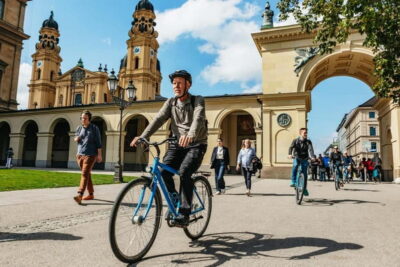
Browse the lists this tour appears in