
Review · E-BIKE TOURS
Medellín: E-bike and Foodie Tour
Medellín’s story makes more sense when you ride through ordinary neighborhoods instead of viewing the city only from its famous tourist districts. This three-hour e-bike tour links Belén, Laureles, Conquistadores, and the Medellín River Parks with stops for traditional snacks and conversations about how the city has changed.
I like the way the tour combines local food and city history, rather than treating them as separate subjects. I also like the small-group limit of eight, plus guides such as Dany, Daniela, Toto, and Esteban, who are praised for making the ride feel personal and easy to follow.
The main consideration is that this is still a bike tour, not a relaxed food crawl. You need to ride confidently, wear closed-toe shoes, and be comfortable moving through city streets. The food is generous, but beverages at the first three stops and food at the final stop are not included.
Key points to know before booking
- You cover a lot of Medellín in three hours: The electric motor helps you reach several districts without exhausting yourself.
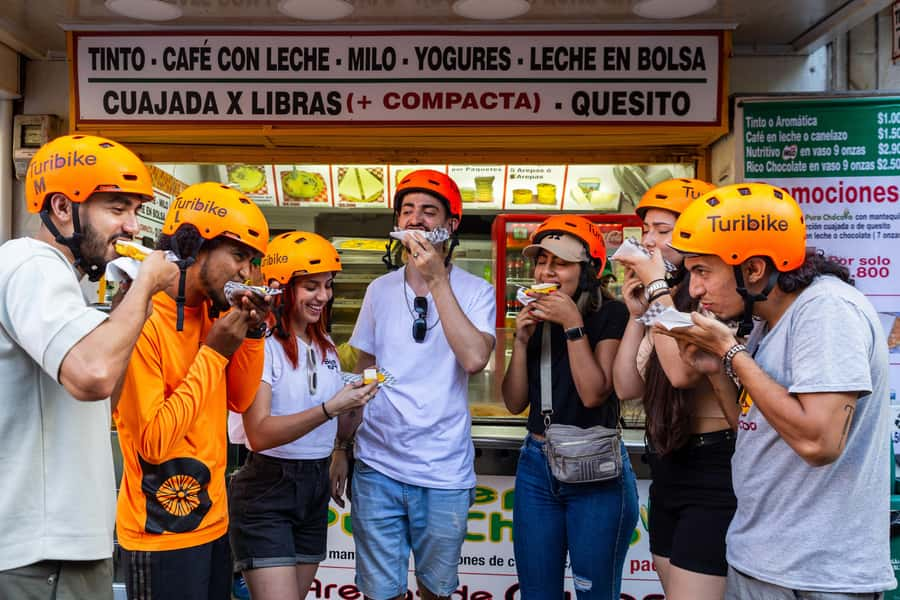
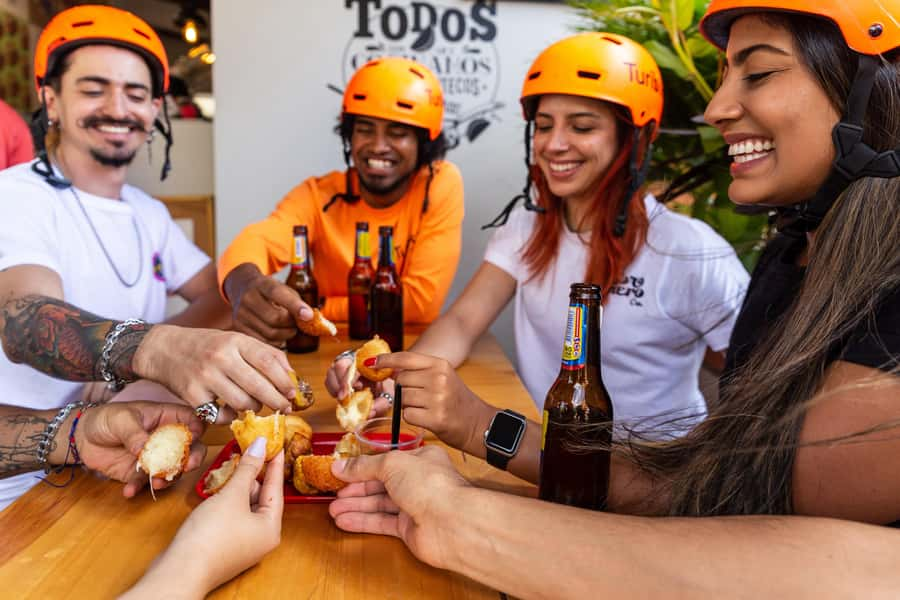
- The food has a story: Expect Colombian favorites such as arepas, buñuelos, pandebono, empanadas, coffee, fruit salad, and guarapo, depending on the day’s route.
- The route favors everyday neighborhoods: Belén, Laureles, Conquistadores, and the river parks show a side of Medellín beyond the usual visitor circuit.
- The group stays small: A maximum of eight people gives the guide room to answer questions and adjust the pace.
- The bikes make city riding easier: The motor handles much of the effort, while bike paths and careful guidance help you feel more secure.
- Come ready to eat: One participant found there was so much food that a drink stop might have been preferable to one tasting.
Why an e-bike is the right way to see Medellín
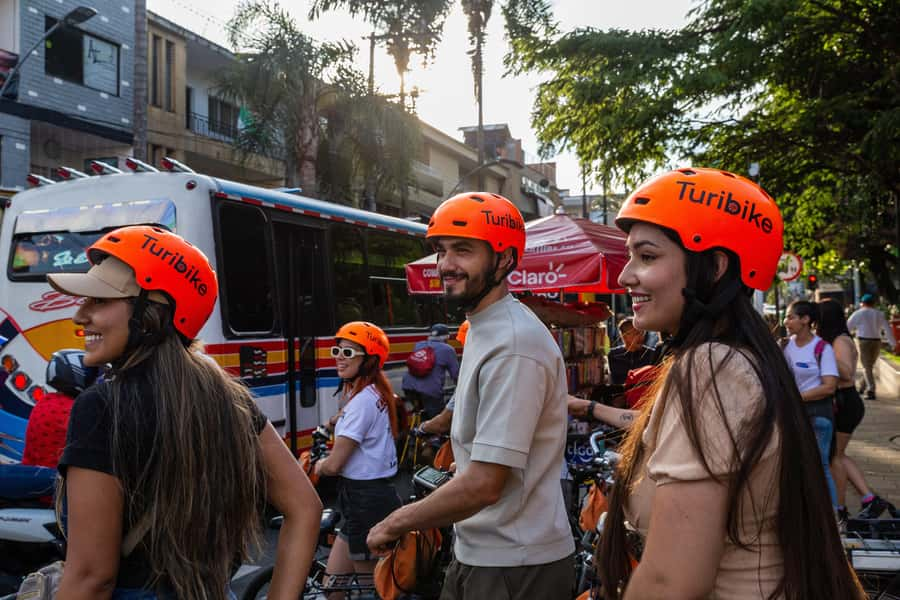
An electric bike gives you a useful middle ground. You move faster and farther than you would on foot, but you remain close enough to notice bakeries, parks, churches, street life, and the shape of each neighborhood.
The motor matters because Medellín is not perfectly flat. You still pedal, but the bike takes care of much of the hard work. People who have never used an e-bike before have found the controls easy to manage, and the well-maintained bikes have helped make the ride feel steady rather than strenuous.
The route also benefits from Medellín’s bike infrastructure. One participant was surprised by the quality of the bike lanes, while another appreciated how carefully the guide handled safety. That does not mean you can switch off completely. You should still watch traffic, follow the guide, and keep your hands ready on the brakes.
This is a good first-day activity if you want to understand the city quickly. Three hours gives you a broad introduction without using up an entire morning or afternoon. You will not see every major sight, but you will get a working sense of how the districts connect.
More E-Bike Tours in the world:
- 3-Hour Porto Highlights on a Electric Bike Guided Tour
★ 5.0 · 4,392 reviews - Lisbon: Hills, Alfama, and Mouraria Tour by Electric Bike
★ 4.8 · 3,438 reviews - Athens Scenic Electric Bike Tour with optional Acropolis visit
★ 5.0 · 3,350 reviews
Starting at Turibike in an industrial part of town
The meeting point is Turibike, located inside a coworking space on an industrial street. This is not a polished tourist storefront, so allow yourself a moment to find it.
Look for a brick building with a large black metal door. If the door is closed, knock. A guard should let you in. This detail is worth knowing because the setting may feel less obvious than a meeting point in a main plaza.
After check-in, you receive an electric bike and meet your English- or Spanish-speaking guide. The small group can include up to eight people, although private-feeling departures are possible when few people book a particular time.
The company provides medical insurance, the bike, food and drinks, and the guide. Hotel pickup and drop-off are not included, so you need to arrange your own way to Turibike and back.
Belén begins with food and everyday life
The first riding section takes you toward Unidad Deportiva de Belén, where the food side of the tour begins. This area gives you a chance to settle into the bike before the route gathers speed.
Belén is useful as an opening because it feels like a working part of the city rather than a sightseeing stage. You may pass sports facilities, local streets, small businesses, and people going about their day. The guide uses the area to explain how the neighborhood fits into Medellín’s wider development.
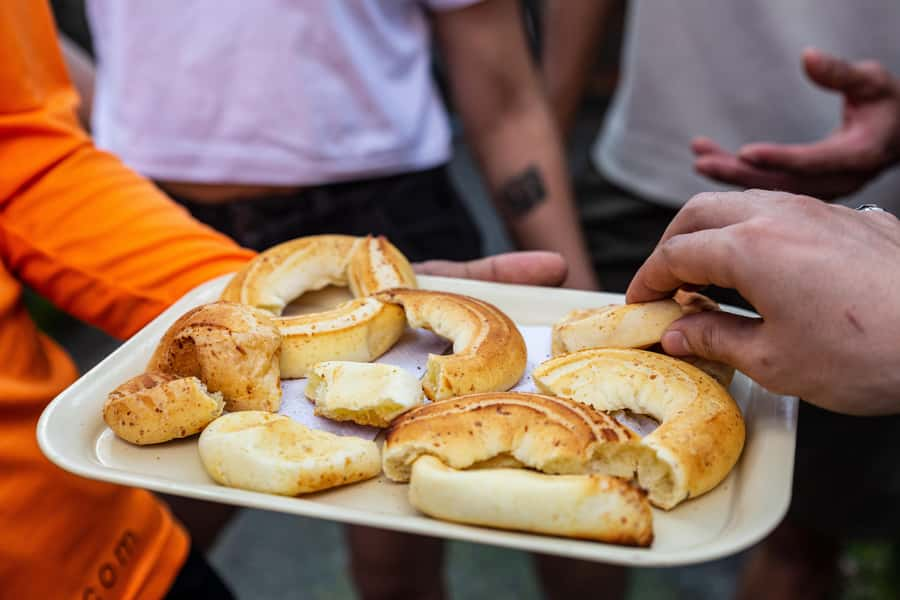
Food stops can include coffee, fruit preparations, baked goods, or other local snacks. Past tastings have included salpicón de frutas, a refreshing fruit mixture, and pandebono, a soft cheese bread popular across Colombia. The exact selection can vary, so treat the food list as a guide rather than a fixed menu.
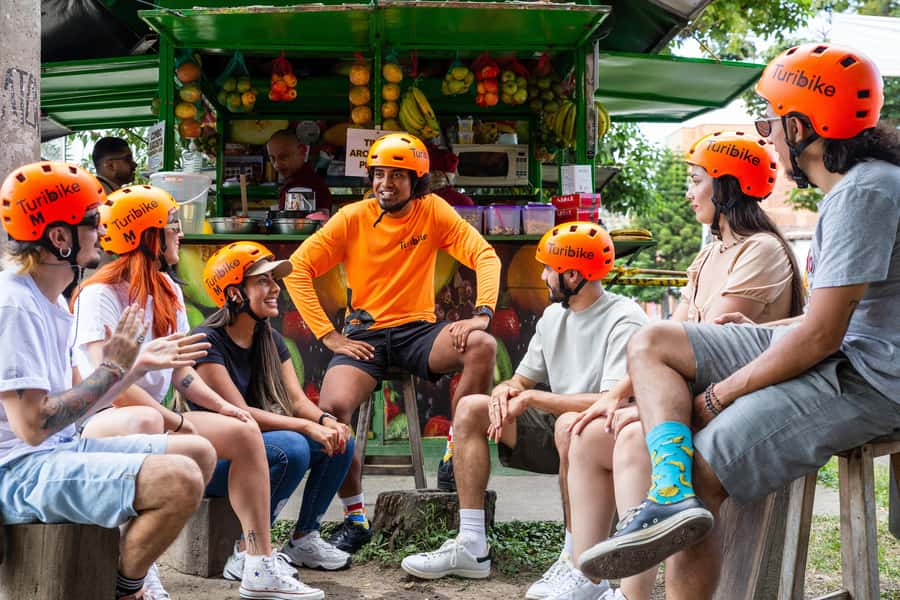
At Parque Belén, the pace becomes more social. A public plaza is not just a photo stop here. It gives you a chance to watch local routines, hear about the neighborhood, and understand how public spaces function in Medellín.
I like this part because it creates a natural contrast with the city’s best-known visitor areas. Instead of rushing from landmark to landmark, you spend time where residents meet, talk, sit, and eat.
Laureles brings regional food and leafy streets
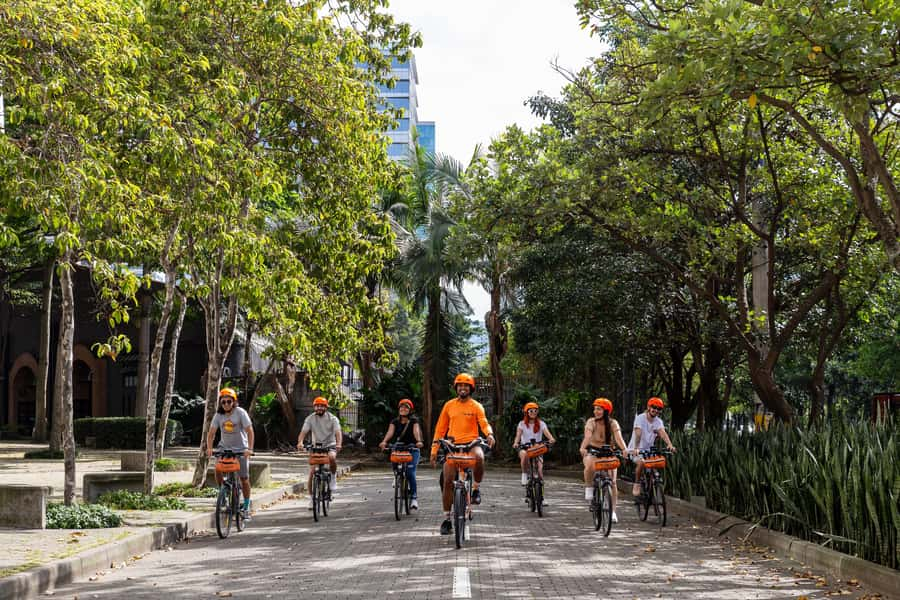
From Belén, the ride continues toward Laureles. This district is known for tree-lined streets and a calmer residential feel, making it one of the more pleasant sections for cycling.
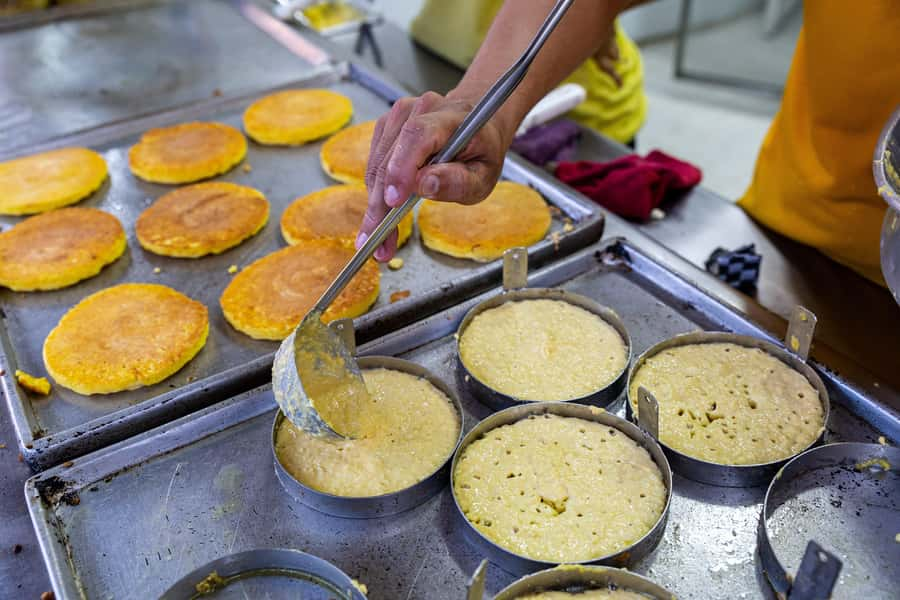
Laureles also provides a good setting for regional food. You may stop for an arepa or another Colombian specialty, with the guide explaining where the dish comes from and how it fits into daily life. The point is not simply to collect small bites. It is to understand why certain foods appear at breakfast, in bakeries, at neighborhood stands, or during social gatherings.
Arepas are especially useful for this kind of explanation because they are familiar across Colombia but vary from region to region. The route may include an arepa made from a long-standing local recipe, and the guide can explain how preparation and ingredients differ.
You should not expect a formal restaurant meal. These are food tastings woven into a bike ride. That keeps the experience moving, but it also means seating and service may be simple. If you prefer a long lunch with a menu and a table reserved for your group, this will not feel like that.
More Food Bike Tours in the world:
- Versailles Palace Bike Tour with Market & Marie-Antoinette hamlet
★ 5.0 · 2,680 reviews - Madrid: 3 h. Guided Highlights Bike Tour with Optional Tapas
★ 4.9 · 1,623 reviews - Rome: Appian Way & Aqueducts E-Bike Tour (Catacombs & Food)
★ 4.9 · 1,498 reviews - Tuscany Bike Tours Through the Chianti Hills with Wine Tasting
★ 5.0 · 1,300 reviews
Conquistadores adds snacks and a wider view of the city
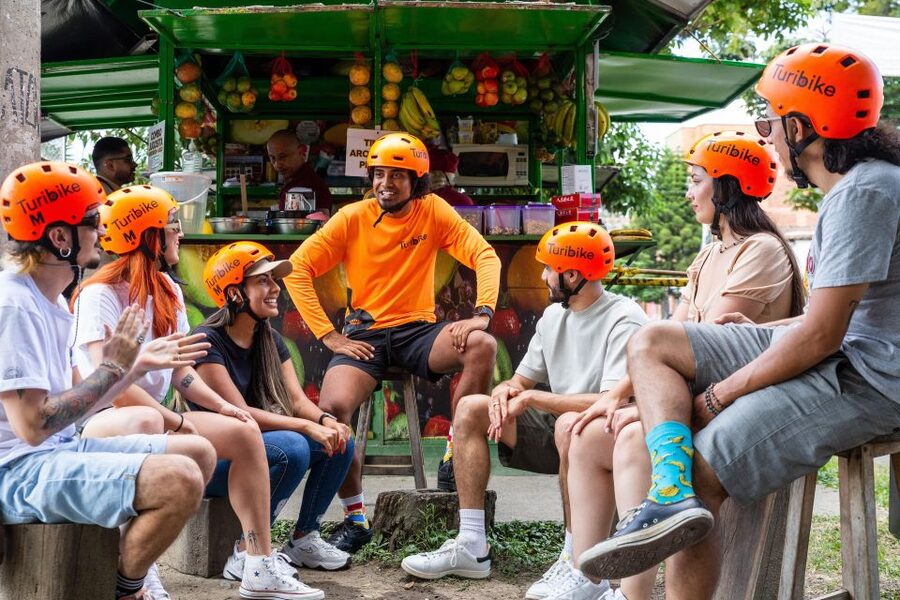
The next section reaches Conquistadores, where the tour continues its mix of cycling and local snacks. This district helps connect the quieter neighborhood streets with Medellín’s larger urban pattern.
Past food selections have included crispy empanadas, pandebono, arepas de huevo, and guarapo. An arepa de huevo is a fried corn preparation containing egg, while guarapo is a traditional sugarcane drink. Coffee and fresh fruit may also appear along the way.
The guide’s explanation makes these stops more useful than a simple tasting menu. Dany, Daniela, Toto, Esteban, Diana, and other guides have been praised for connecting food with Colombian culture, local history, and family habits. The guide may also point out places or small details you would likely pass without noticing.
This is where the tour’s social quality matters. If you ask questions, the guide can usually add context about ingredients, neighborhoods, and Medellín’s changes. The best departures feel like riding around with a well-informed local friend, though the experience naturally depends on the guide assigned to your date.
Medellín River Parks slow the ride before the return
The Medellín River Parks provide a change of scenery and a chance to pause. The river corridor is part of the city’s effort to improve public space and connect different areas through walking and cycling routes.
You may see people using the parks, bike paths, and open areas as part of ordinary city life. The stop also gives the guide a place to talk about Medellín’s physical growth and its efforts to improve movement through the city.
The route has included interesting urban details along the river, such as work being done with wires and transport infrastructure. You may also see churches or other local landmarks along the way, depending on the exact route and timing.
The final food stop comes before the return to Turibike. Food at this last stop is not included, so keep a little cash or another payment method available if you want to eat there. Drinks at the first three stops are also excluded, which is easy to miss when comparing the price with a standard food tour.
What the food tells you about Medellín
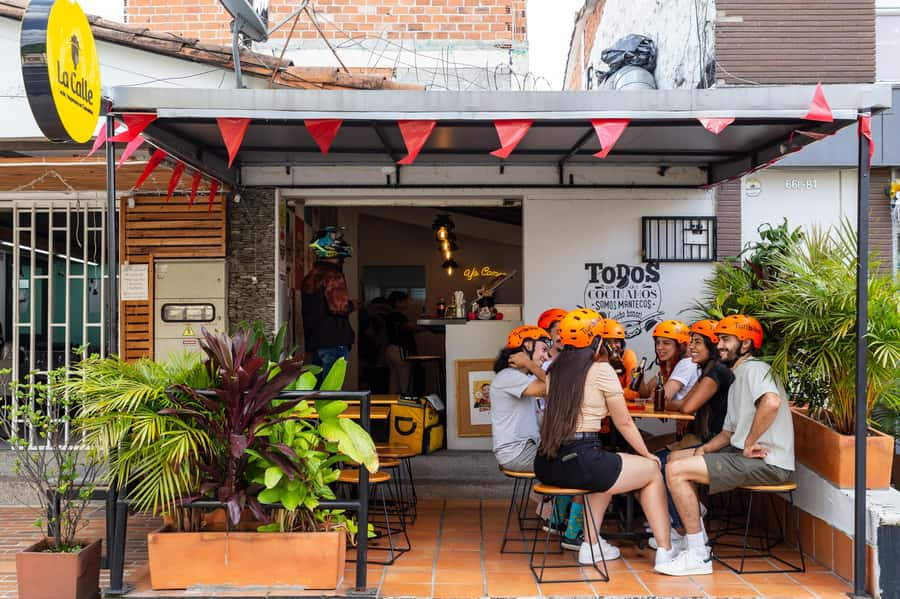
The strongest part of this experience is the link between food and place. A buñuelo is not just a fried snack to tick off a list. A pandebono gives you a taste of Colombia’s bakery culture. An empanada or arepa can open a conversation about regional habits, ingredients, and how people eat during an ordinary day.
The selection is substantial. One participant found there was so much food that a drink stop would have been a better trade for one of the tastings. I would take that as practical advice: eat lightly before you arrive, but do not assume you need to skip breakfast entirely.
Because the food is served at several locations, you get variety rather than one large dish. This suits anyone who likes to sample. It may be less appealing if you need strict control over ingredients or want a carefully paced culinary lesson.
You should also expect everyday presentation rather than polished fine dining. That is part of the point. The tour takes you to local-style stops and links each taste to the city around you.
Medellín’s transformation is easier to grasp on two wheels
A guide can tell you that Medellín has changed, but the message carries more weight when you ride through different districts and see how public spaces, bike routes, parks, and neighborhoods fit together.
The tour does not present the city as a simple success story. Instead, it gives you a moving introduction to Medellín’s past and present through streets where daily life continues. Guides have discussed Colombian history, neighborhood development, culture, and the city’s evolution.
This is also why I would book the tour early in a Medellín visit. After three hours, you will recognize several districts and may feel more comfortable deciding where to return for a meal, a walk, or another activity. One person who took the tour early found it useful for learning which foods and shops to seek out later.
Safety, comfort, and who should book
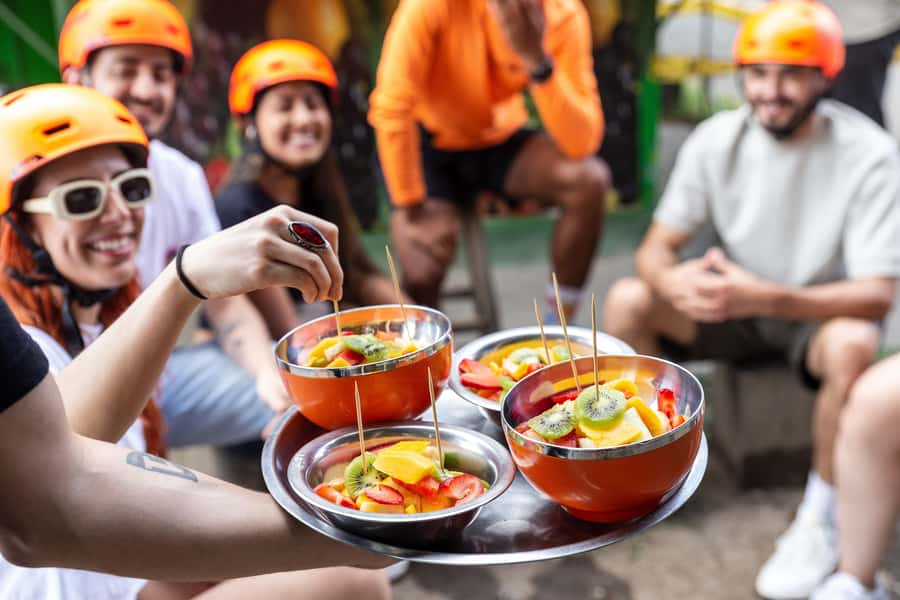
You need comfortable closed-toe shoes. Sandals and flip-flops are not allowed, and you should avoid bringing alcohol or drugs. The activity is not suitable for pregnant women, people with mobility impairments, people who cannot ride a bicycle, or anyone under 140 centimeters, about 4 feet 6 inches.
The electric bike reduces effort but does not remove the need for balance and road awareness. If you are nervous on a bicycle, you may find the pace manageable, but you should not book this expecting a vehicle-based city tour.
The experience suits couples, solo visitors, active families with eligible older children, and small groups who want a broad introduction to Medellín. It also works well for people who care more about local food and conversation than major monuments.
It is less suitable for anyone wanting a slow, highly structured tasting menu, hotel-to-hotel convenience, or a completely traffic-free ride.
Is $48 a fair price?
At $48 per person, the value is good if you use the full mix of what is provided. You are paying for an e-bike, a three-hour guided route, medical insurance, several food and drink stops, and a small group capped at eight.
A comparable self-guided ride would require renting a bike, planning the route, finding local food stops, and handling navigation and safety yourself. The guide adds the most value by explaining the neighborhoods and making the food meaningful.
The price is less all-inclusive than it first appears. You need to pay for transport to Turibike, beverages at the first three stops, and food at the final stop. Those costs should not be large, but you should budget for them.
Free cancellation up to 24 hours before the activity and the option to reserve now and pay later add useful flexibility. Check the available start times when booking because the tour lasts three hours and the schedule can affect how it fits with other plans.
Should you book this Medellín e-bike food tour?
Book it if you want to see several parts of Medellín quickly, taste everyday Colombian food, and hear how the city has changed from a guide who knows the neighborhoods. The strongest features are the small groups, the well-maintained e-bikes, the range of snacks, and the personal style associated with guides such as Dany, Daniela, Toto, and Esteban.
Skip it if you cannot ride a bike, dislike eating several small portions, or want hotel pickup and a formal restaurant experience. For everyone else, this is a practical first look at Medellín that gives you both a sense of place and a list of foods to try again on your own.
FAQ
How long does the Medellín E-Bike and Foodie Tour last?
The tour lasts three hours.
How much does the tour cost?
The listed price is $48 per person.
Where does the tour start?
It starts at Turibike, inside a coworking space on an industrial street.
How do I find the Turibike meeting point?
Look for the brick building with the large black metal door. If the door is closed, knock and the guard will let you in.
Which neighborhoods does the tour visit?
The route includes Unidad Deportiva de Belén, Parque Belén, Laureles, Conquistadores, and the Medellín River Parks before returning to Turibike.
What food might be included?
Possible tastings include arepas, buñuelos, pandebono, empanadas, coffee, salpicón de frutas, and guarapo. The exact food selection can vary.
Are drinks included?
Food and drinks are included, but beverages at the first three stops are not included. Food at the final stop is also not included.
Is hotel pickup included?
No. Hotel pickup and drop-off are not included.
What languages are available?
The live guides speak Spanish and English.
How many people can join the tour?
The activity is limited to eight participants.
What should I wear?
Wear comfortable closed-toe shoes. Sandals and flip-flops are not allowed.
Who should not take this tour?
It is not suitable for pregnant women, people with mobility impairments, people who cannot ride a bike, or anyone under 140 centimeters, about 4 feet 6 inches.
Can I cancel for a full refund?
Yes. You can cancel up to 24 hours in advance for a full refund.
Can I reserve without paying today?
Yes. The reserve-now, pay-later option lets you book without paying immediately.
Latest bike tours added in the world
- Brooklyn Neighborhoods Small-Group Bike Tour★ 5.0 · 137 reviews
- The Best of Bristol Bike Tour★ 5.0 · 39 reviews
- A Day in Brooklyn Bike Tour★ 5.0 · 59 reviews
- Hudson Valley Craft Brewery Bike Tour★ 5.0 · 23 reviews
- Brisbane Kayak, Bike★ 4.5 · 23 reviews
- Brisbane Electric Mountain Bike Experience Tour★ 5.0 · 48 reviews
- 2 Hour Private Brisbane Mountain Bike Coaching Session and Ride★ 5.0 · 24 reviews
- Private Bike Tour with Olive Oil Tasting★ 4.5 · 15 reviews
E-Bike Tours, compared.
3-Hour Porto Highlights on a Electric Bike Guided Tour
Read our review →
Hills, Alfama, and Mouraria Tour by Electric Bike
Read our review →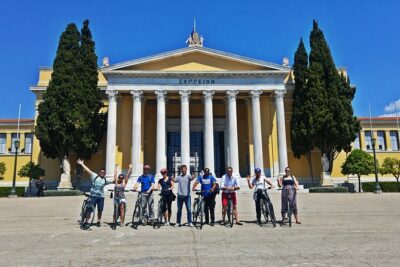
Athens Scenic Electric Bike Tour with optional Acropolis visit
Read our review →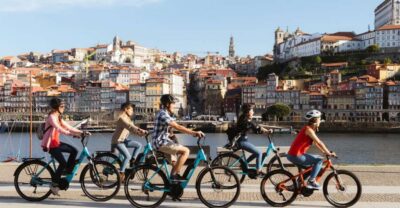
City Highlights 3-Hour Guided Electric Bike Tour
Read our review →
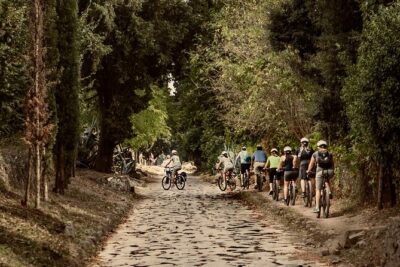
Rome EBike Tour: Appian Way, Catacombs & Roman Aqueducts
Read our review →
Top Highlights & Hidden Gems Tour by Cannondale E-Bike
Read our review →Browse the lists this tour appears in