
Review · STREET ART BIKE TOURS
Barcelona | StreetArt Bike Tour Moco Museum
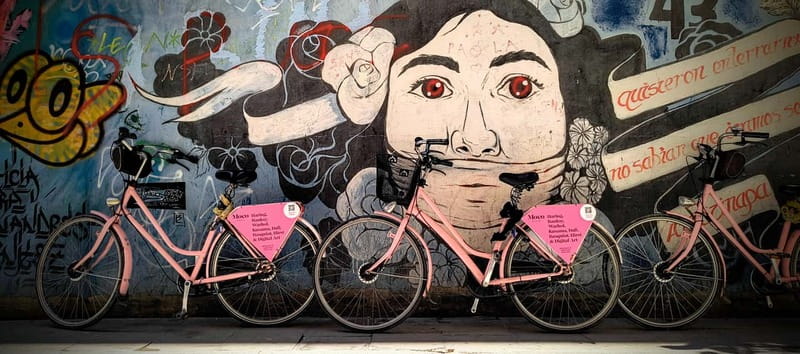
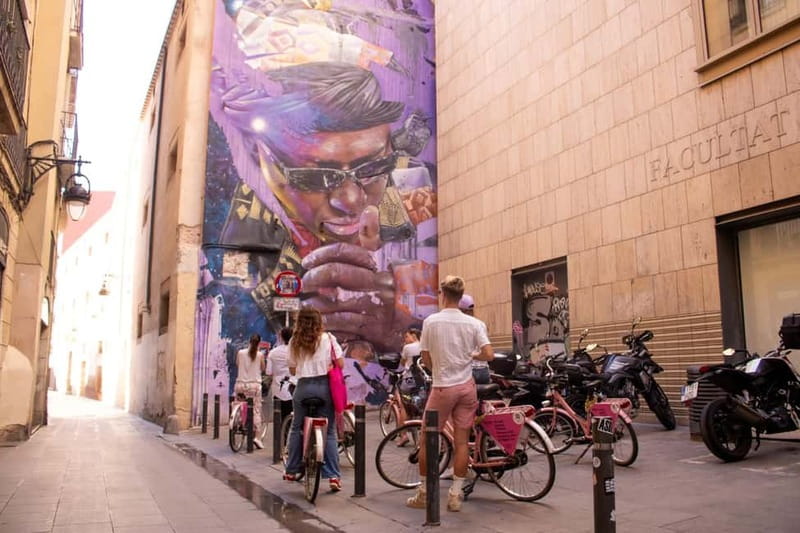
Barcelona’s street art is not confined to one gallery. It appears beside old factories, across neighborhood walls, under apartment balconies, and near major sights. This 2.5-hour electric bike tour links those scattered works, from the Keith Haring mural near MACBA to El Beso by Barcelona Cathedral.
I like two things right away: the route gives you art that is easy to miss on a normal sightseeing walk, and the guide adds the stories and local context that make each wall more than a photo stop. I also like that the route changes as the city’s art changes. The main drawback is that you need to be comfortable riding a bike, and the long route includes many pass-by stops rather than extended time at every artwork.
Key points to know before booking
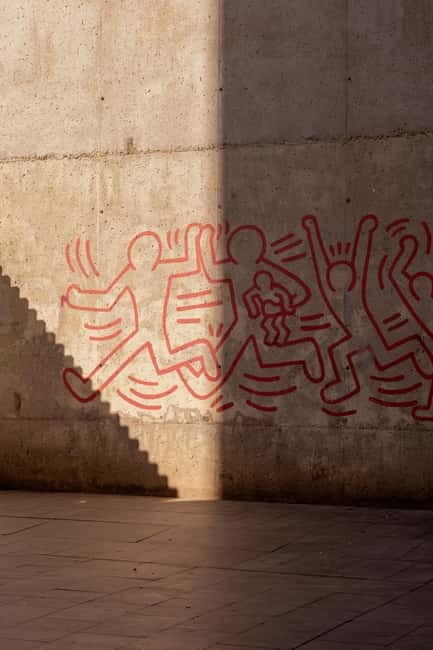
- Keith Haring’s Mural del Sida: One of the most important stops, near the Barcelona Museum of Contemporary Art.
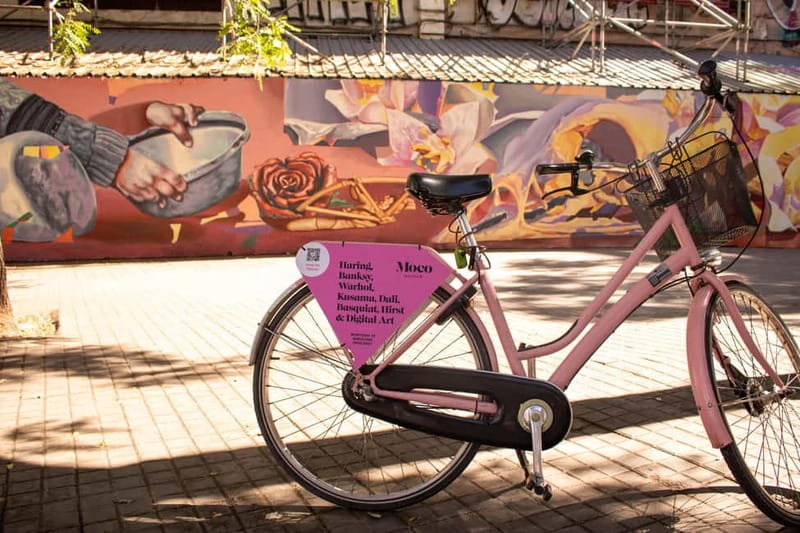
- Electric bike route: You cover a broad part of central Barcelona without spending the whole tour on foot.
- Art and city history together: Old industrial sites, major monuments, and modern murals share the same route.
- A guide-led experience: English-speaking guides explain artists, symbols, and the changing street scene.
- Useful inclusions: Bike, water, handlebar bag, picture stops, and a free rain poncho are provided.
- Best for confident cyclists: The tour is not suitable for people who cannot ride a bike or wheelchair users.
Why this street art route is different
Barcelona has famous architecture, grand public squares, and museums that can easily fill a first visit. Street art adds another layer. It shows how artists respond to politics, identity, memory, humor, and the city itself.
This tour is built around that contrast. You may move from a contemporary mural to an old theater, then from a sculpture to a medieval cathedral. The route does not treat street art as a separate attraction. It places it beside the streets and buildings that give it meaning.
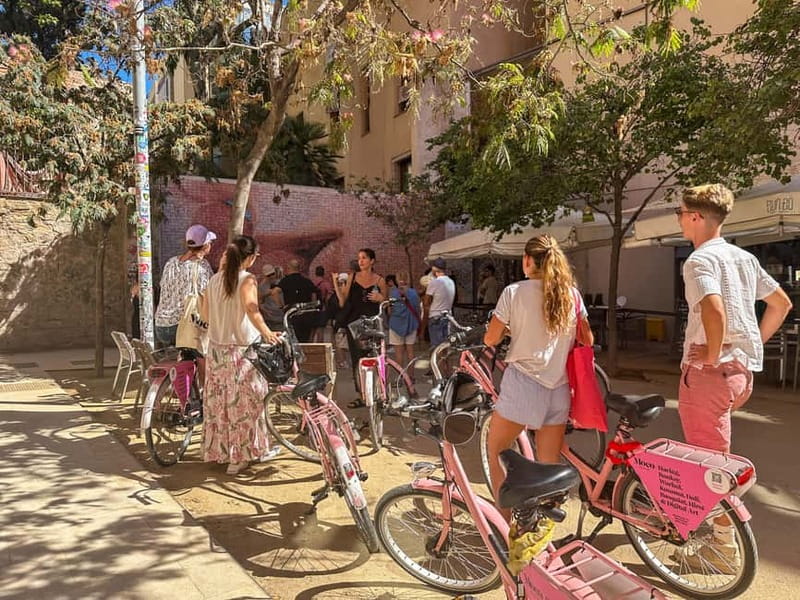
That is the real value of using a bike. On foot, this route would take much longer and feel scattered. By electric bike, you can connect the Raval, Paral·lel, waterfront, Gothic Quarter, Passeig de Gràcia, and other central areas in one outing. You still stop for photos and explanations, but you also get a sense of how the districts relate to each other.
The tour is offered in English, and guides such as Eirini bring energy and humor to the subject. You can also ask for practical Barcelona advice at the end. One guide was especially helpful with food suggestions, which is a small but useful bonus when you are still deciding where to eat.
More Street Art Bike Tours in Barcelona:
- Barcelona: 3.5-Hour Street Art Tour by Bamboo Bike
★ 5.0 · 56 reviews - London Bike Tour: Landmarks, Secret Gems, Pub Stop & Street Art
★ 5.0 · 943 reviews - London: Landmarks & Secrets Bike Tour with Pub & Street Art
★ 4.9 · 314 reviews
Starting at Carrer dels Tallers 45
The meeting point is at Carrer dels Tallers 45, at the palm tree. Enter the passage where the Barcelona Ciclo Tour team will meet you. Arrive about 10 minutes early so you have time to find the passage, receive your bike, and settle in before the group moves off.
The listed start is 11 a.m., though starting times can vary, so check availability when you book. The activity returns to the same address, which makes it easy to plan lunch or another central Barcelona visit afterward.
A free bottle of water and a handlebar bag are included. The bag is useful for small essentials, but you should still keep your belongings light. Bring sunglasses, sun protection, a hat, comfortable clothing, and a charged smartphone. Headphones are not allowed, which makes sense on a guided city ride.
From El Gat de Botero to the CCCB
After a short five-minute safety briefing, the route begins around El Gat de Botero, the large cat sculpture associated with Colombian artist Fernando Botero. Its rounded shape and playful scale make it a relaxed opening stop before the tour shifts toward more political and urban art.
The Centre de Cultura Contemporània de Barcelona, or CCCB, is the first major art setting. Here, the guide points out the Sant Jordi Sculpture and the skyline around it. You get a photo stop, a short explanation, and a first look at how Barcelona mixes public art with dense city views.
This is a good early introduction to the tour’s method. The guide is not simply taking you to a list of murals. You are also learning to notice the setting around them: a building edge, an open view, an old street, or a public square.
MACBA and the Keith Haring mural
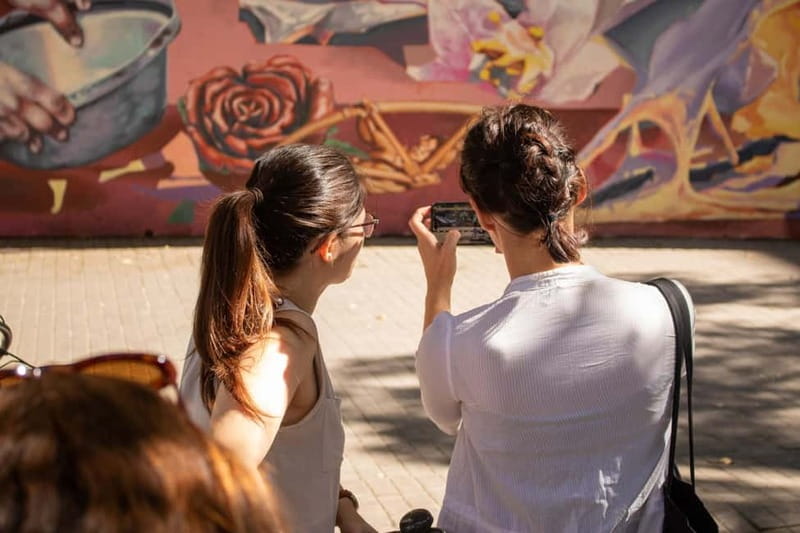
The Barcelona Museum of Contemporary Art, usually called MACBA, brings the ride into one of the city’s best-known modern art districts. The museum itself is a major landmark, but the key stop here is the Keith Haring mural.
The Mural del Sida carries the direct, urgent style associated with Haring’s work. The subject is AIDS awareness, so this is not just a colorful backdrop for a quick photograph. It reflects the way public art can communicate a message to people who may never enter a museum.
You also see Colp One Dog in this area. The pieces give the guide room to compare different approaches to urban art, from a globally known artist to local or less internationally familiar work.
The listed stop at MACBA is short, around five minutes, so keep your expectations realistic. You will get an explanation and a chance to take photos, but this is not a museum visit. If you want extended time inside MACBA, plan a separate visit.
More street art walks in Barcelona:
- Mexico City; ART NACO : Murals & Street Art Bike Tour
★ 5.0 · 284 reviews - Mexico City: Art Naco, murals & street art bike tour
★ 4.7 · 166 reviews - Cologne: Ehrenfeld Street Art Bike Tour
★ 4.9 · 105 reviews - Munich: Street Art Bike Tour
★ 4.6 · 66 reviews
Joaquin Costa, Ferlandina, and Xupet Negre
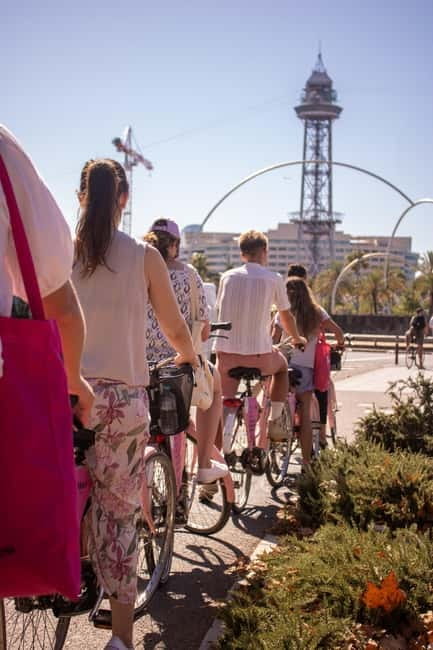
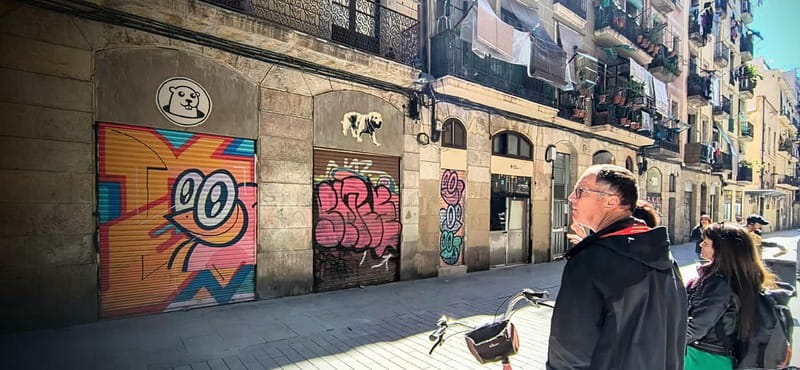
From MACBA, the route continues through streets such as Carrer de Joaquin Costa and Carrer de Ferlandina. This is where the ride begins to feel less like a standard city tour and more like a search through Barcelona’s working urban fabric.
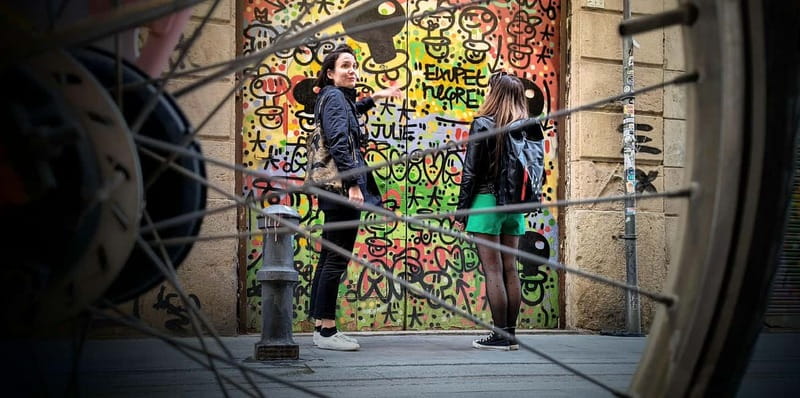
Birdie Al Awan is one of the works discussed along the way. You also see El Xupet Negre, linked with Negrelab and described as one of the city’s earliest graffiti works. That detail matters because it places the work within Barcelona’s graffiti story rather than treating it as a random wall decoration.
The appeal here is the variety. Some works are large and easy to spot. Others sit in streets where you might otherwise be focused on traffic, shopfronts, or your next destination. The guide helps you slow down mentally, even when the bike keeps the physical pace moving.
These streets can feel tighter and more active than broad tourist avenues. Stay attentive, follow the guide, and keep your camera ready rather than stopping suddenly whenever you spot something interesting.
Raval murals and the Ágora Benítez works
The route then reaches Rambla del Raval, where the subject shifts toward public messages about strength and diversity. The Feminist wall, Space Invader, and work associated with Ana Eliza are among the pieces highlighted here.
Space Invader’s work is especially fun because it rewards careful looking. The small tiled images can be easy to miss if you are focused only on large murals. The Feminist wall offers a different experience, with a message that is more direct and public.
At Carrer de la Lluna, Carrer de la Riereta, and nearby streets, you continue seeing art in a neighborhood setting rather than inside a formal exhibition. Àgora Juan Andrés Benítez is another significant stop. The Ágora Benítez works bring attention to artist Ágora Benítez and add another voice to the route.
Several of these stops are scheduled for only five to ten minutes. That is enough for a short explanation and photographs, but the pace favors breadth. You will see many examples across several districts instead of spending half an hour examining one wall.
Jardins de les Tres Xemeneies and old industry
The Jardins de les Tres Xemeneies, or Garden of the Three Chimneys, is one of the more distinctive locations on the route. The park preserves traces of an industrial past, with large chimney structures rising above the public space.
This stop shows why context matters. Street art here is not floating in a vacuum. It sits among former industrial remnants and a city that has repurposed old infrastructure for modern public life.
You get scenic views and a guided stop of about 10 minutes. The site also offers a change of pace after the narrower Raval streets. It is a useful place to look up from the walls and see how Barcelona has changed around its old industrial framework.
Paral·lel, the Arnau theater, and public art in motion
The route continues along Avinguda del Paral·lel, passing the Galería Arnau and the Theatre Arnau. This area brings together performance, architecture, and street-level art.
The Arnau theater is an interesting stop even if your main interest is graffiti. Its presence reminds you that Barcelona’s public culture has long extended beyond museums. Theater, sculpture, murals, and temporary street pieces all occupy the same city.
The route also passes through Carrer de Sant Pau and around the Raval before heading toward the waterfront. If you are expecting a quiet art walk, be aware that this is a moving city tour. There are roads, traffic, and short stops. The advantage is that you cover far more ground than a walking route could manage in the same time.
Columbus Monument and the waterfront sculptures
At the Columbus Monument, the tour reaches the edge of the waterfront area. You may pass by rather than stop for a long explanation, so think of this as part of the city panorama rather than a separate monument tour.
Near the waterfront, you see El Cap de Barcelona, also known as Barcelona’s Head, associated here with Leinceshtain. You also stop at La Gamba, the large shrimp sculpture by Mariscal. These works show how Barcelona’s public art can be playful, oversized, and instantly recognizable.
La Gamba is especially different from the murals in the Raval. It is a formal public sculpture, yet it belongs to the same conversation about how art changes the way you read a street or waterfront. I like this part of the tour because it prevents the experience from becoming a narrow survey of painted walls.
Returning through the Cathedral, El Beso, and the city center
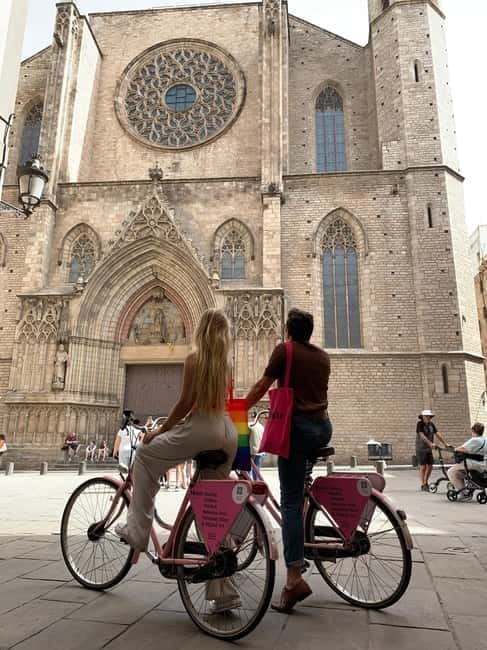
The route heads back through central Barcelona, passing Barcelona Cathedral and reaching El mural del petó, commonly known as El Beso. The photomosaic is made from many individual images, creating a large image of people kissing.
This is one of the tour’s most recognizable photo stops. It also connects personal memories with public art, since the mosaic presents a collective image rather than a single artist’s isolated statement.
The final central-city sights include the Palace of Catalan Music, Passeig de Gràcia, and Casa Batlló. These are not all street art stops, but they give you a useful visual comparison. Barcelona’s official architecture and its informal wall art can look very different, yet both rely on strong color, design, symbolism, and public attention.
Casa Batlló receives a photo and guided stop of about 10 minutes. You do not enter the building, so book this tour for exterior views, not for an interior visit. The route then returns to Carrer dels Tallers 45.
What the $34 price gets you
At $34 per person, the price is reasonable if you want a guided overview of Barcelona’s public art and prefer covering ground by bike. Your fee includes one bike, an English-speaking guide, bottled water, a handlebar bag, and picture stops.
The strongest value comes from the route itself. Many of the works are scattered across central neighborhoods, so seeing them in a single 2.5-hour outing saves time and reduces the need to plan your own art walk.
It is less valuable if you want long, quiet time at each mural or plan to visit museums along the way. The tour passes MACBA and other major sights but does not replace an admission ticket or a dedicated museum visit.
The changing route is another advantage. Street art disappears, gets painted over, or changes as new artists add work. The tour adapts to that moving scene, so the exact selection can develop over time. You should see the published route as a guide to the themes and districts, not a guarantee that every wall will look exactly the same on your date.
Riding comfort, weather, and who should book
You need to be able to ride a bike comfortably. The tour is not suitable for people who cannot ride or for wheelchair users. Since it uses electric bikes, the route is designed to help you cover distance, but it is still a bike tour in city streets.
Helmets are mandatory for children up to age 16, and children’s helmets are supplied free. Adults can request a helmet ahead of time for an additional cost. If you want one, arrange it before the tour rather than waiting until arrival.
The tour runs in rain or shine. A free poncho is provided if the weather turns wet, but you should still wear clothing suited to the forecast. On a sunny day, sunglasses, a hat, sunscreen, and water matter. A charged phone is useful for photos and for keeping your booking details handy.
Free cancellation up to 24 hours before the start gives you some protection if your plans change. You can also reserve and pay later, which helps if you are organizing a longer Barcelona itinerary.
Is the Moco Street Art Bike Tour worth booking?
Book it if you want a lively introduction to Barcelona’s public art, enjoy short guided stops, and can ride confidently in a city setting. It is especially useful early in your visit because it connects several neighborhoods and gives you ideas for places to revisit on foot.
The tour suits families who are comfortable cycling, and the light, entertaining guide style can keep children interested. It also suits first-time visitors who want more than the standard Gaudí circuit.
Skip it if you need step-free access, dislike cycling, or want a slow art lecture with long viewing time. For most other visitors, $34 buys a well-planned route, practical city orientation, and a look at works such as Keith Haring’s Mural del Sida, Xupet Negre, La Gamba, and El Beso that you might not connect on your own.
FAQ
Where does the Barcelona Street Art Bike Tour start?
It starts at Carrer dels Tallers 45 in Barcelona. Meet by the palm tree and enter the passage where the tour team will be waiting.
Where does the tour finish?
The tour returns to Carrer dels Tallers 45, the same place where it begins.
How long does the tour last?
The tour lasts 2.5 hours. The listed start is 11 a.m., but you should check availability for the starting time on your chosen date.
Is the tour conducted in English?
Yes. The tour includes a live English-speaking guide.
Are bikes included in the price?
Yes. One bike per person is included, along with a free bottle of water and a handlebar bag for belongings.
Are helmets provided?
Helmets are provided free for children up to age 16, who are required to wear them. Adults can request a helmet in advance for an additional cost.
What happens if it rains?
The tour runs rain or shine, and a poncho raincoat is provided free of charge.
Can wheelchair users or people who cannot ride a bike join?
No. The activity is not suitable for wheelchair users or people who cannot ride a bike.
More museum visits in Barcelona
- Frida Kahlo VIP [Museum Tickets Included] Bike, Markets & Churros
★ 5.0 · 1,072 reviews - Paris: Street Art Open-Air Museum Bike Tour
★ 4.8 · 51 reviews - Biking Vidova – Skrip & museum of olive oil – Splitska – Postira
★ 5.0 · 20 reviews - Geneva Countryside And Art Museum At A Castle Wine By E-Bike
★ 3.8 · 16 reviews
Latest bike tours added in Barcelona
- Barcelona: Bike or eBike Tour, Top Sights & Local Insights★ 5.0 · 47 reviews
- E-Bike tour in Barcelona with English Guide★ 5.0 · 128 reviews
- Sights of Barcelona E-Bike Tour Led by a Local Guide★ 4.5 · 39 reviews
- Private Ultimate Gaudi Legacy ebike Tour with Park Güell★ 5.0 · 26 reviews
- Private electric bike tour – Discovery of Barcelona★ 5.0 · 34 reviews
- Sightseeing by Bike & Photo Shooting★ 5.0 · 31 reviews
- Private Electric Bike Guided Tour in Barcelona★ 4.5 · 18 reviews
- Private Boat rental – Pedal Cruises Barcelona – Cycle Boat★ 5.0 · 29 reviews
Street Art Bike Tours, compared.
London Bike Tour: Landmarks, Secret Gems, Pub Stop & Street Art
Read our review →
Landmarks & Secrets Bike Tour with Pub & Street Art
Read our review →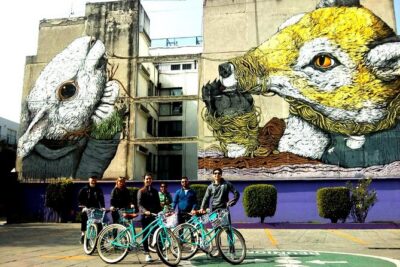
Mexico City; ART NACO : Murals & Street Art Bike Tour
Read our review →
Urban Adventures Amsterdam Bike Tour, Graffiti and Magnet Fishing
Read our review →
Guided Asheville E-bike Tour of River Arts, Mountains and Murals
Read our review →
Browse the lists this tour appears in