
Review · MOUNTAIN BIKE TOURS
Bali Downhill Cultural Cycling Tour
Bali’s best cultural moments often happen away from its temples and beach clubs. This mostly downhill cycling route from Kintamani to Ubud takes you through village roads, farms, rice fields, and family compounds, with an English-speaking guide explaining what you are seeing as you go. I like the school charity visit, where part of your fee helps buy school supplies, and I like the chance to sit with a local priest and his family over coffee rather than simply photograph a house from the road.
I also like the strong value at $45 per person, since the price covers hotel transfers, equipment, breakfast, lunch, a guide, water, and insurance. The main caution is that the ride is not entirely downhill or entirely on quiet farm tracks. You may cycle about 27 kilometers, face a few uphill sections, and share some roads with traffic. Average fitness and confidence on a bicycle will make the day much easier.
Key points to know before booking
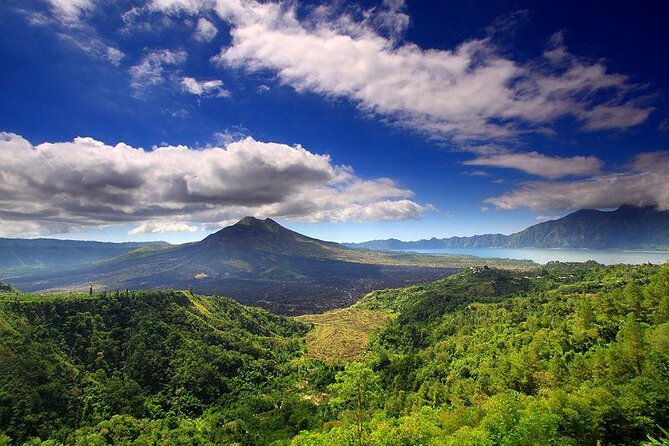
- The ride begins near Kintamani: You start in Bali’s high volcanic country, with a planned breakfast stop overlooking Mount Batur and Lake Batur.
- The cycling takes about 3.5 hours: Most of the route runs downhill, but there are a few climbs. One rider simply walked the bicycle up a steep section.
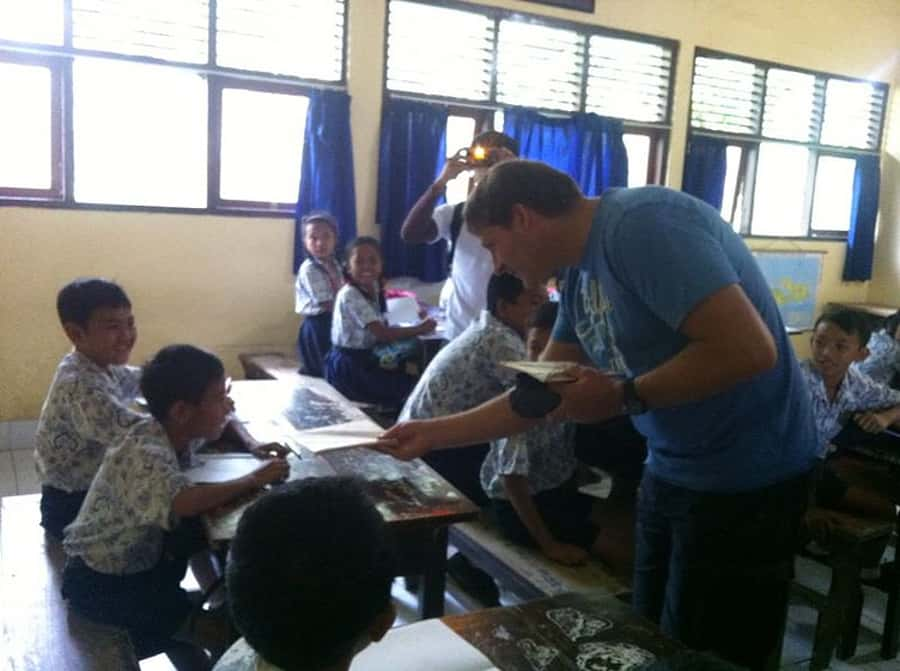
- The school visit has a practical purpose: The operator donates part of the tour cost for essential supplies, and you can bring extra pencils or drawing books.
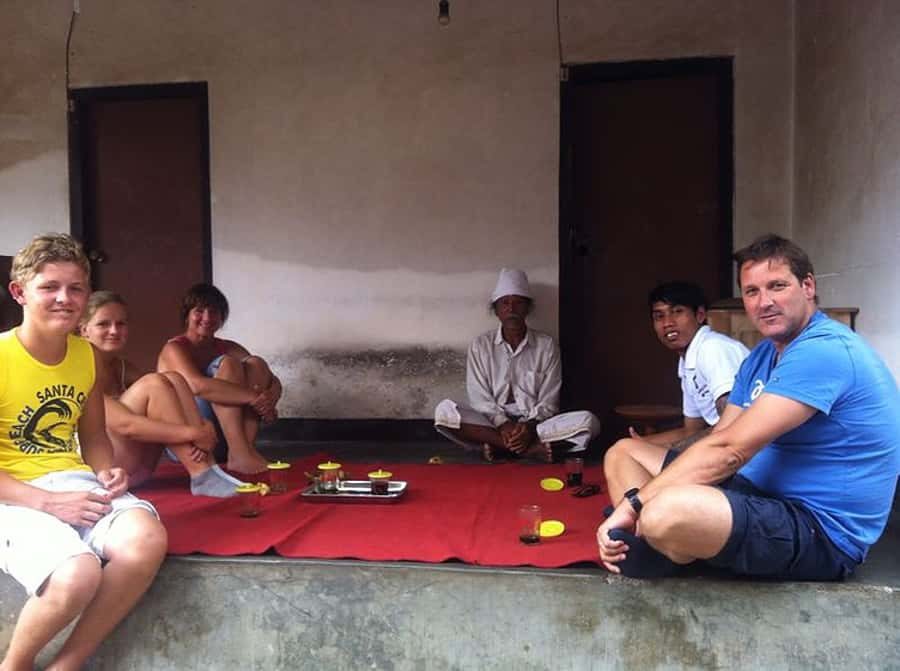
- The cultural stops feel personal: A local priest compound gives you time for conversation about family and rural life, with the guide translating when needed.
- Coffee is part of the route: An organic plantation offers several coffee and tea tastings, including luwak coffee.
- The finish is a Balinese meal: Lunch is served at Padi Organic restaurant in Laplapan, surrounded by rice paddies.
From your hotel to Bali’s volcanic highlands
The day begins with hotel pickup, usually around 30 minutes before the advised departure time. Return transfers are included, which matters in Bali because the cycling route finishes well away from your starting point. You do not need to arrange a taxi from the village at the end of the ride.
The drive heads toward the Kintamani volcano area. This is a useful change of scene from southern Bali, where traffic, shops, and resort development can dominate the view. Up here, the air is cooler and the setting is more rural, though weather and visibility can affect the volcano views.
The planned morning includes a light breakfast overlooking Mount Batur and Lake Batur. This is one detail I would confirm when booking or with your guide at pickup, because one past participant found that the advertised breakfast view did not take place. The breakfast itself is included, but the exact location and view may depend on timing, weather, and the day’s route.
Bring a light layer for this first part of the morning. Kintamani sits higher than Ubud, and the advice to wear layered clothing is sensible. Once you begin descending, Bali’s heat will matter more than the cool mountain air.
More Mountain Bike Tours in Indonesia
- From Ubud: Downhill Bike Tour with Rice Terraces and Meal
★ 4.9 · 664 reviews - Ubud: Downhill Cycling with Volcano, Rice Terraces and Meal
★ 5.0 · 536 reviews - Ubud: Downhill Bike Tour with Rice Fields, Volcano and Meal
★ 5.0 · 267 reviews
A village school visit with a useful purpose
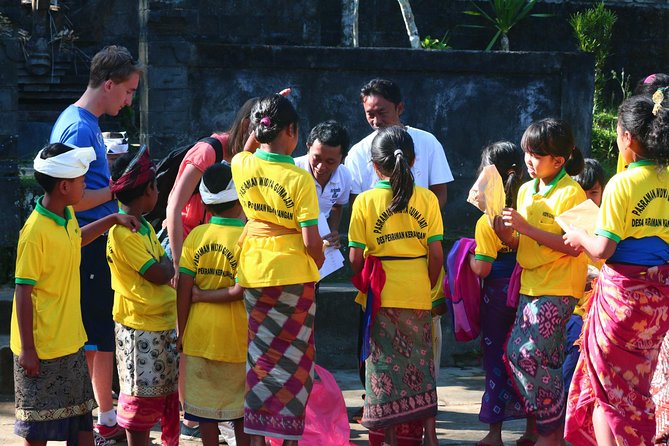
Before cycling, you stop at a local village school. This is not presented as a formal sightseeing attraction. The point is to see a typical rural school and learn a little about everyday education in Bali.
Part of the tour cost is used to purchase essential school supplies. Those items are distributed to the children during the visit. You can also bring additional items if you wish. One practical suggestion is to bring equal quantities of pencils and drawing books, possibly around 20 of each, so the school can share them fairly among classes. That is more useful than arriving with random gifts that are difficult for teachers to distribute.
You should approach this stop with a little respect and modesty. It is a working school, not a stage set. The value comes from listening to the guide, seeing the setting, and understanding one small part of local life. The visit is brief compared with the cycling, but it gives the day a purpose beyond recreation.
Coffee, tea, and the organic plantation stop
The route includes a stop at a local organic plantation, where you can taste several coffees and teas. The samples may include luwak coffee, and one account describes seeing the small animals associated with the coffee process.
This stop can be enjoyable if you like coffee or want to compare different flavors. It also gives your guide a chance to explain how local farms fit into Bali’s rural economy. The tasting is free, but the plantation usually has products for sale, including coffee, tea, and chocolate. You should feel no pressure to buy, and you should remember that personal purchases are not part of the tour price.
The plantation is also a reminder that cycling days in Bali often mix culture, farming, and commerce. You are not riding through untouched countryside. You are seeing places where people grow crops, host visitors, sell food, and earn a living. That makes the stop more useful if you view it as part of the local economy rather than as a quick tasting session.
The 27-kilometer ride toward Ubud
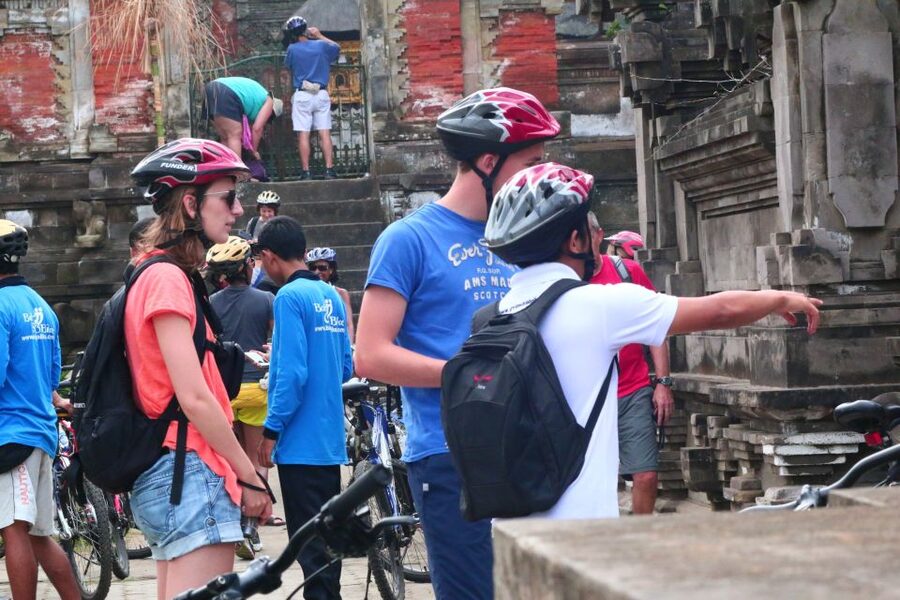
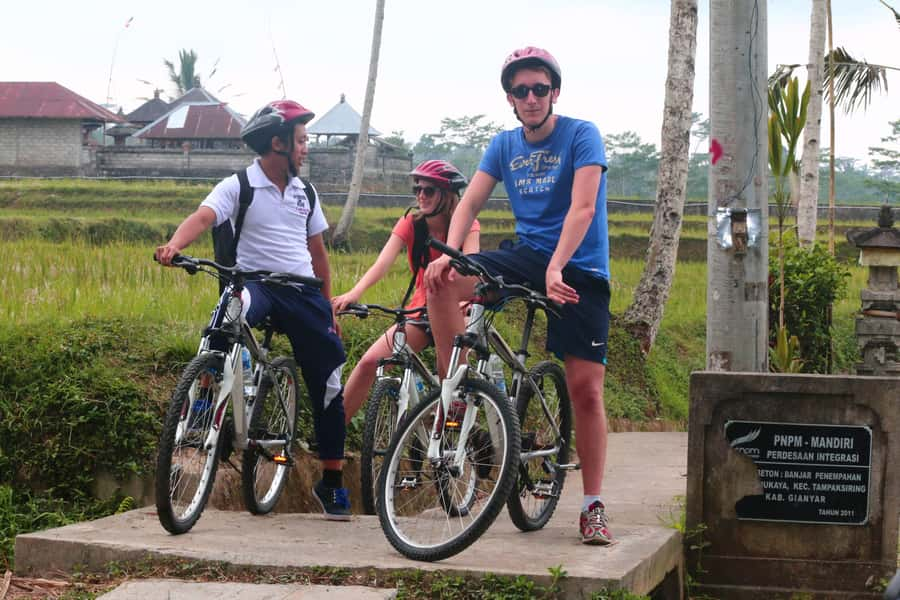
The main ride lasts about three and a half hours and covers roughly 27 kilometers according to one detailed account. The route runs from Kintamani toward Ubud through villages, farms, rice-growing areas, and local roads.
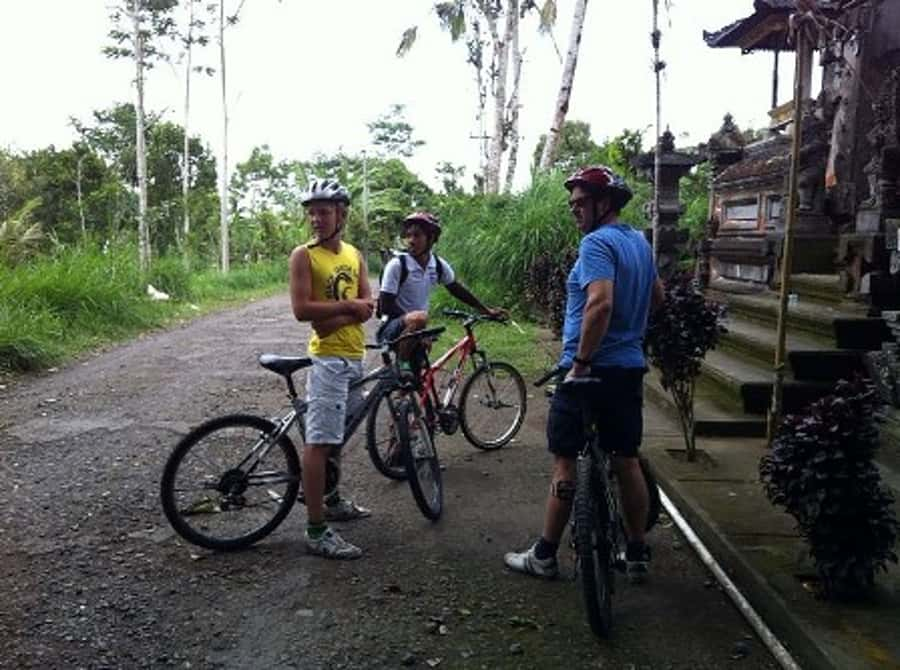
Most of the route is downhill, which is why the activity is described as easy. Still, easy does not mean effortless. You must remain alert while steering, braking, and riding near other vehicles. One past participant described the traffic as challenging but felt the guide provided safe passage. Another rider walked the bicycle up one steep hill, which is a perfectly sensible choice.
The roads are described as fairly quiet in places, but the ride is not limited to tiny paths between rice paddies. One person expected more time directly inside the fields and found that the route included more road riding than anticipated. If you are picturing a continuous bicycle trail through paddies, adjust that picture. You will see plenty of countryside, but you will also use ordinary village roads.
Your guide controls the pace and explains local customs during stops. Guides named Agus, Ari, Dika, and Nyomah have led past departures, and English ability has been praised repeatedly. The guide’s role is important here. Without explanations, a ride past a compound or irrigation channel can become a pleasant view and little else. With a good guide, you learn why houses are arranged as they are, how village life works, and how rice farming fits into Balinese culture.
Wear sports clothing and closed-toe shoes that are comfortable for both cycling and walking. Sunscreen is not included, so bring your own. Mineral water and cycling equipment are provided.
Another way to spend a morning on two wheels:
- Electric Cycling Tour of Ubud with Free Hotel Transfer and Lunch
★ 5.0 · 1,397 reviews - Menoreh Village Cycling
★ 5.0 · 611 reviews - Ubud: Rice Terraces & Villages Half-Day Fat Tire E-Bike Tour
★ 4.9 · 602 reviews - Ubud eBikes Tour to Tegallalang Rice Terrace
★ 5.0 · 507 reviews
Rice fields and the rhythm of farming
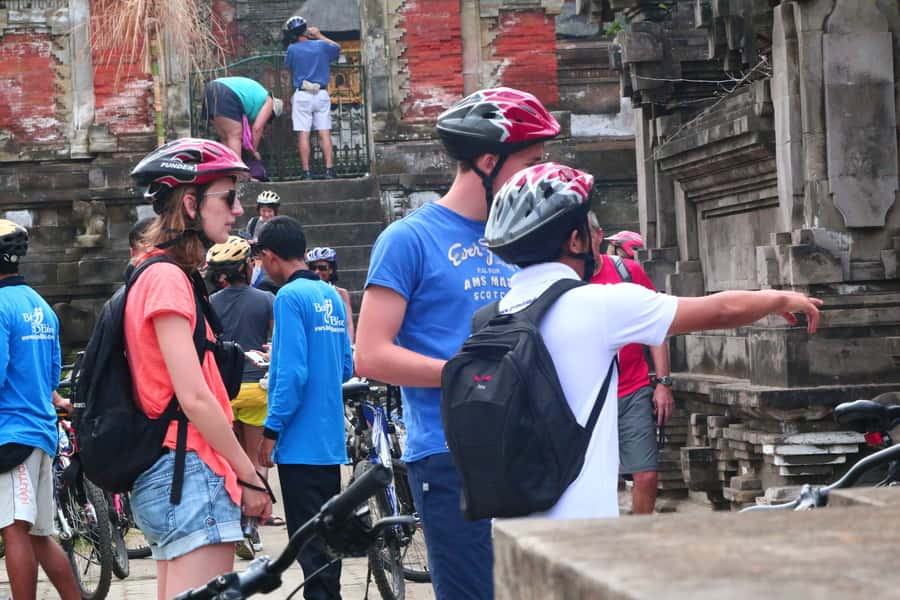
At some point on the route, you leave the bicycle for a short walk through rice fields. The guide explains Balinese rice planting culture and the work behind the scenery.
This is one of the more valuable parts of the day because rice fields are easy to admire without understanding. The walk connects the view to the people who plant, tend, and harvest the crop. You may see farm activity, village paths, and irrigation features, though the exact details can change with the season.
The stop is not a long hike. It is a short walk inserted into the cycling day, so comfortable shoes are enough. Still, wet ground or uneven paths are possible in a farming area, which is another reason not to wear sandals or delicate footwear.
Coffee with a priest and his family
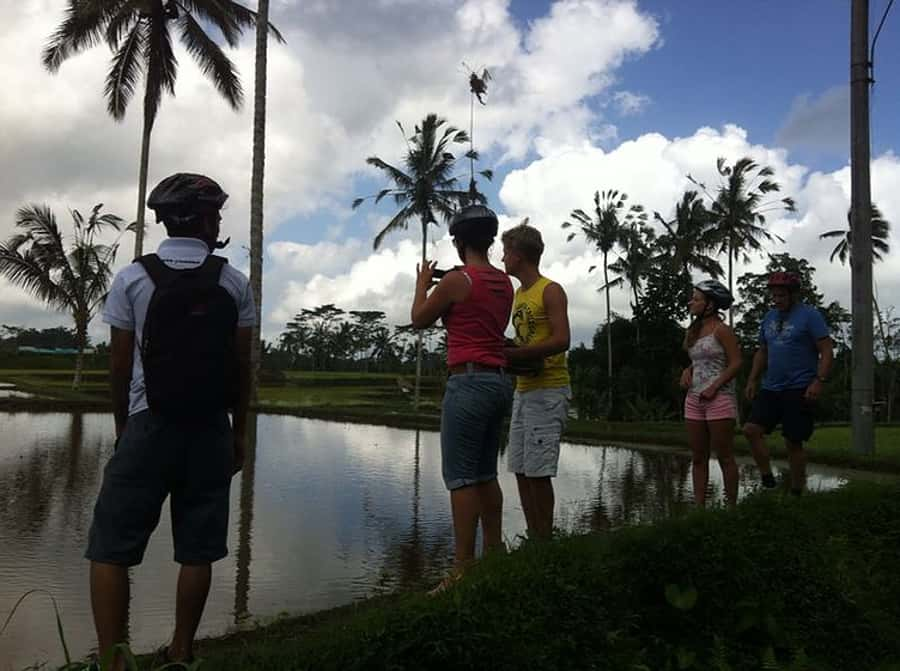
The visit to a local family compound is the most personal stop on the route. You are welcomed into a traditional home setting and meet a local priest, who shares coffee while your guide translates the conversation.
The subject is not just religion. The visit offers a window into family structure, household space, and rural Balinese life. One account describes meeting an elderly spiritual figure in his private compound, while another refers to the host as a local priest. The exact person you meet may vary, but the purpose is the same: a genuine conversation in a family setting.
I like this stop because it slows the day down. You are not rushing from one viewpoint to another. You sit, drink coffee, ask questions, and allow the guide to explain what a visitor might otherwise misunderstand.
Keep your expectations realistic. This is a short cultural exchange, not a private seminar or a full religious ceremony. You should also follow the guide’s advice about clothing and behavior inside the compound. Modest, comfortable clothing is the safe choice for a visit involving a priest and family home.
Lunch among the paddies in Laplapan
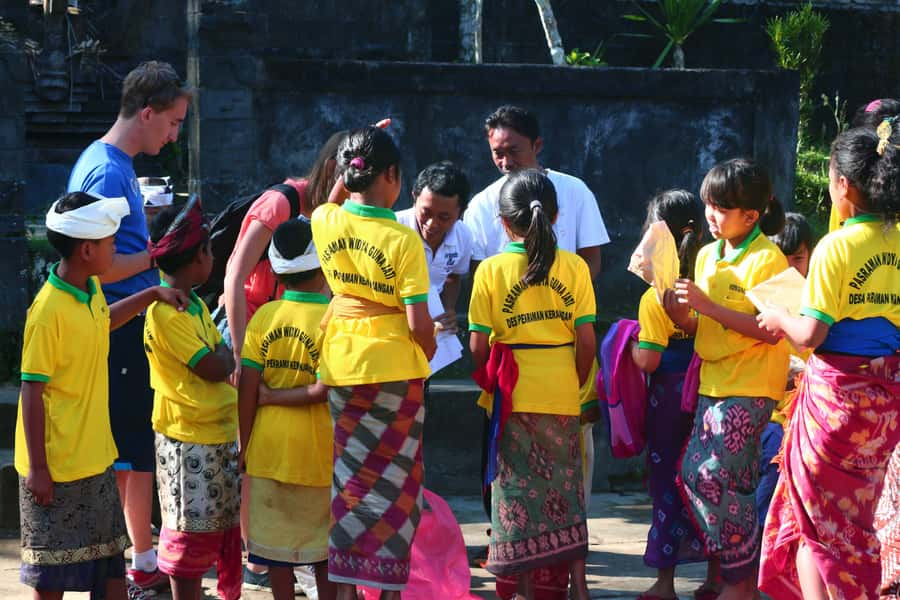
The ride finishes near Laplapan, where lunch is served at Padi Organic restaurant. The restaurant is surrounded by rice paddies, giving you a calm setting after several hours on the bicycle.
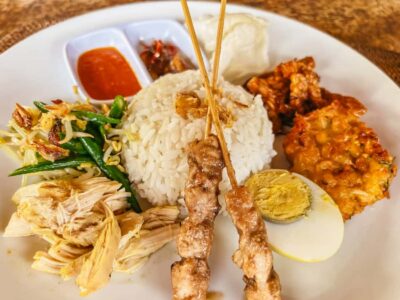
Balinese lunch is included, and past meals have included dishes such as chicken satay. Breakfast and lunch are important parts of the value here. At $45, you are not only paying for the bicycle route. You are also getting transport from your hotel and back, two meals, a guide, water, equipment, the school donation, and personal insurance coverage up to $75,000.
Food quality can vary by menu and day, but the meal is a proper finish rather than an afterthought. You can sit down, cool off, and take in the rural setting before the return transfer. Alcohol is not included, and personal spending, souvenirs, and sunscreen are also your responsibility.
What the price tells you about value
At $45, this is strong value for an eight-hour day if you want a guided cultural outing rather than a simple bike rental. The included hotel transfers alone can save time and negotiation, especially when the finish point is in a rural village.
The guide is the key value. You receive explanations about farming, family life, school conditions, and Balinese customs while moving through places that are difficult to understand on your own. The school contribution adds a practical social element, though you should not book the activity solely as a charity visit.
The tradeoff is that this is a set group experience with a full schedule. You may have less freedom to stop wherever you want, and the route includes roads rather than only scenic paths. If you want a private, technical cycling trip, this is probably not the right product. If you want an easy ride with culture built into the day, the price works well.
Fitness, traffic, and who should book
You do not need to be a serious cyclist. The route is mostly downhill, and one family found it manageable with a guide adjusting the pace. People in their mid-60s have completed the 27-kilometer ride without trouble, while less confident riders have taken the occasional uphill section on foot.
You should still be comfortable riding a bicycle for several hours. The route includes some climbs, road traffic, and repeated braking on descents. Pregnant people and wheelchair users should not book this activity. The tour is also a poor match for anyone who dislikes cycling near vehicles or expects a completely flat, protected track.
This tour suits you best if you want:
- A full-day activity away from the busiest tourist areas
- A mostly gentle ride with cultural stops
- A chance to ask questions through an English-speaking guide
- A practical school donation included in the day
- Rural scenery, rice farming, coffee, and village life in one outing
You should look elsewhere if you want a short ride, a private luxury experience, or uninterrupted time inside the rice fields. The route is scenic, but it is also a working countryside route with roads, homes, farms, and traffic.
Small details that make the day easier
Hotel pickup begins approximately 30 minutes before the advised pickup time, so be ready early. Wear layered clothing for Kintamani, then use breathable sportswear as the day warms.
Closed-toe walking shoes are important because you will cycle, walk through rural areas, and enter a family compound. Bring cash for personal expenses, sunscreen, and any coffee or tea you may want to buy. Gratuity is not included and is left to your discretion.
The tour includes personal insurance up to $75,000, but you should still check that the coverage suits your own needs. Free cancellation is available up to 24 hours before the activity, and reserve-now-pay-later booking can help if your Bali schedule is still changing.
Should you book the Bali Downhill Cultural Cycling Tour?
Book it if you want to see a quieter side of Bali and are happy to trade a little road riding for access to villages, farms, school life, coffee production, and family conversation. The repeated praise for guides such as Agus, Ari, Dika, and Nyomah points to the importance of the human side of the experience, and the guide can make the difference between scenery and understanding.
I would book this as a cultural day with cycling, not as a pure cycling adventure. Confirm the breakfast viewpoint, expect a few uphill sections, and bring the right clothing. If those details suit you, the mix of school charity, priest compound, coffee tasting, rice fields, lunch, and return transport makes this one of the better-value ways to spend a full day outside central Ubud.
FAQ
How long does the Bali Downhill Cultural Cycling Tour last?
The activity lasts about eight hours, including hotel transfers, cultural visits, cycling, meals, and the return journey.
How far do you cycle?
The cycling section is approximately 27 kilometers according to the tour information, with about three and a half hours spent riding.
Is the route entirely downhill?
No. The route is mostly downhill, but there are a few uphill sections. One rider chose to walk the bicycle up a steep hill.
Is hotel pickup and return transfer included?
Yes. Pickup from your hotel and the return transfer are included. Pickup begins approximately 30 minutes before the advised pickup time.
What meals are included?
A light breakfast and Balinese lunch are included. Breakfast is planned near views of Mount Batur and Lake Batur, though the exact viewpoint may depend on the day and conditions.
What languages do the guides speak?
Guides lead the activity in English and Indonesian. The guide translates during the conversation with the local priest and explains Balinese culture, farming, traditions, and family life.
Latest bike tours added in Indonesia
- Scenic Cycling Tours Through Bali’s Sidemen Countryside★ 5.0 · 12 reviews
- Mount Batur: Black Lava Cycling Tour w/ Natural Hot Spring★ 3.8 · 63 reviews
- Kuta: Kintamani Culture and Nature Guided Cycling Tour★ 5.0 · 14 reviews
- Bali: Jatiluwih Rice Terraces 1 Hour Electric Bike Tour★ 4.7 · 41 reviews
- Jatiluwih (UNESCO Site) 2-Hour E-Bike Cycling Tour★ 4.3 · 49 reviews
- E-Bike: Ubud Rice Terraces & Traditional Villages Cycling★ 4.6 · 37 reviews
- Jogja Hidden Gems – Cycling Tour★ 5.0 · 12 reviews
- Bali: Kintamani Downhill Bike Tour, Jungle and Waterfalls★ 4.9 · 20 reviews
Mountain Bike Tours, compared.
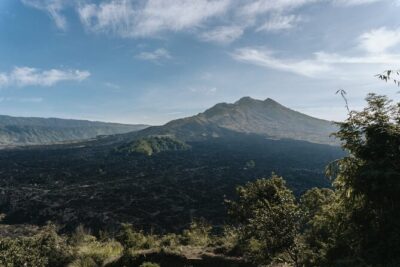
Downhill Cycling with Volcano, Rice Terraces and Meal
Read our review →
Best Haleakala Downhill Self-Guided Bike Tour with Maui Sunriders
Read our review →
La Paz: Mountain Bike Down the World’s Most Dangerous Road
Read our review →
Downhill Bike Tour with Rice Fields, Volcano and Meal
Read our review →
Maui Haleakala Sunrise Downhill Bike Tour with Mountain Riders Rated #1
Read our review →
Browse the lists this tour appears in