

Review · E-BIKE TOURS
Ancient Athens E-Bike Tour
The clever part of this Athens tour is the standing electric Trikke. You steer, but you do not pedal, so you can cover the hills and broad streets around the Acropolis without spending your first day in Greece soaked in sweat. In about two hours, you’ll reach major ancient sites and several of Athens’ most useful viewpoints.
I like the small group of no more than 12 people, which gives guides such as Dimitris and Kevin room to adjust the route and explain what you are seeing. I also like the mix of famous places and less obvious stops, especially Pnyx and the National Observatory. The main catch is that archaeological admission fees are generally extra, and two hours means seeing many sites from outside rather than touring each one at length.
Key points to know before booking
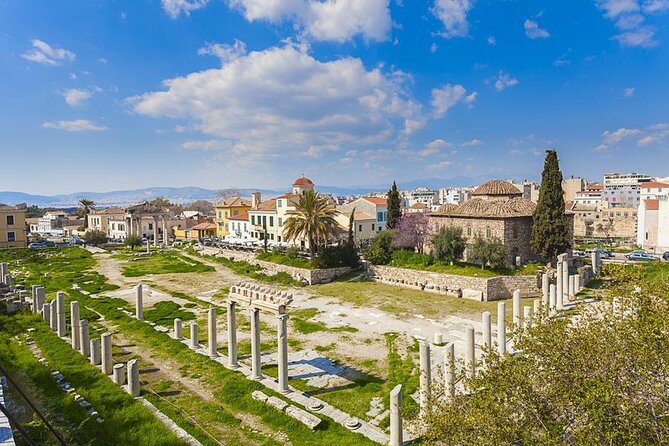
- Standing Trikke, no pedaling: You steer the electric three-wheeler while its motor does the work.
- A fast Acropolis-area orientation: The route links the Acropolis, Ancient Agora, Roman Agora, Plaka, Monastiraki, and more.
- Pnyx adds real historical depth: This hill is tied to the beginnings of democracy and offers a useful view toward the Acropolis.
- Small groups matter: The maximum group size is 12, and guides may adjust the route around what you have already seen.
- Good for hot days: You can reach hills and spread-out sights without the physical effort of a walking tour.
- Plan for extra site fees: The tour price is $72.09 per person, but archaeological tickets are not generally included.
Why the Trikke works so well in Athens

Athens is compact on a map, but the historic center is not always easy to cover on foot. The Acropolis sits above the surrounding neighborhoods, the Pnyx and Hill of the Nymphs add more slopes, and the ancient sites spread across a large area. A standard walking tour can leave you choosing between fewer sights and tired legs.
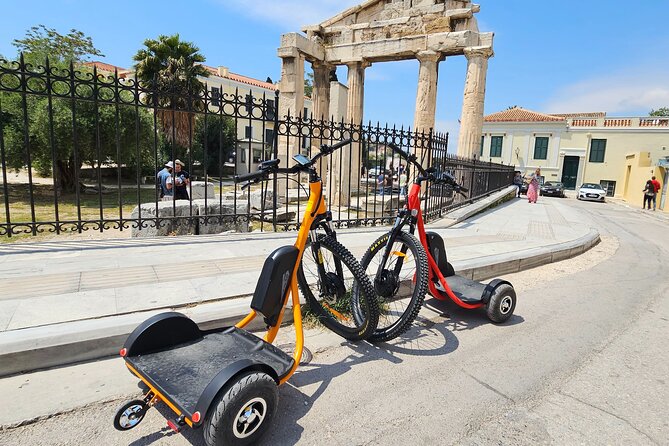
The Trikke changes that calculation. This is a standing electric tricycle rather than a conventional bicycle. You do not pedal. You operate the vehicle while the motor carries you between stops, making it useful for people who want to see a lot without committing to a long, uphill walk.
You should still expect to steer and pay attention. The equipment is easy enough for many people to learn, but this is not a passive sightseeing bus. You are moving through Athens at street level, so comfort with following instructions matters.
The experience lasts about two hours and starts and ends at Leoforos Andrea Siggrou 22, near the Acropolis area and public transportation. The listed operating hours are Monday through Saturday, 10:00 a.m. to 4:00 p.m. Since the tour depends on good weather, check the forecast before you schedule it, especially in winter or during a very hot spell.
More E-Bike Tours in Greece
- Athens Scenic Electric Bike Tour with optional Acropolis visit
★ 5.0 · 3,350 reviews - Athens: City Electric Bike Tour with Acropolis Visit Option
★ 4.9 · 1,017 reviews - Athens Small Group E-Bike Tour
★ 5.0 · 1,013 reviews
The Acropolis theaters come first
The route includes the Theatre of Dionysus, described as the first theater of the ancient world and the place where Greek theater began. Even if you have no time to enter the Acropolis itself, this stop gives you a quick sense of how closely performance, religion, and civic life were linked in ancient Athens.
The nearby Odeon of Herodes Atticus is still used for performances. Built in the second century AD as a memorial for the wife of Herodes Atticus, it has a more Roman character than the Theatre of Dionysus. Its curved stone seating and dramatic setting below the Acropolis make it one of the most striking sights on the route.
The stop is brief, about 10 minutes. That is enough to look closely, take photographs, and hear the basic story, but not enough for a slow examination of the architecture. Admission to the Acropolis Hill is listed at €20 and is not part of the tour price. The same ticket covers the Theatre of Dionysus and Odeon of Herodes Atticus when those areas are open under the standard Acropolis ticket arrangement.
Seeing the Acropolis from below
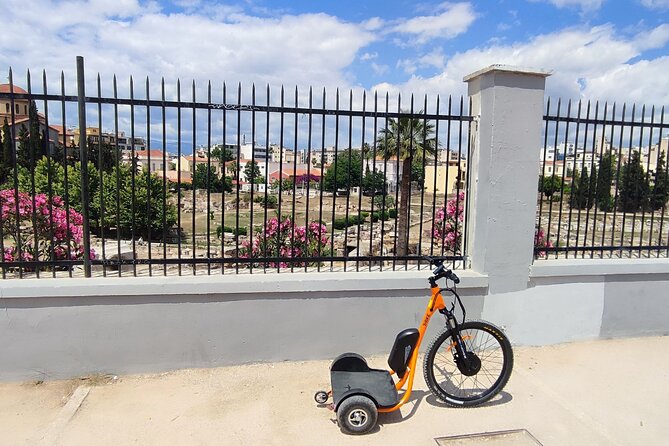
The tour does not function as an Acropolis excavation visit. Instead, you stop close to the rock and look up toward the Parthenon and the fortified hill. That distinction matters. If your main goal is to stand beside the Parthenon columns, you will need to buy a separate ticket and return for a proper visit.
Still, this quick stop is useful early in your stay. You get the setting, scale, and orientation before deciding how much time you want to spend inside. The Acropolis can feel confusing when approached without context, so a guide’s explanation from below helps you understand how the hill relates to the neighborhoods and ancient sites around it.
The 10-minute timing also keeps the tour moving. You will not lose half the excursion in a ticket line or a long interior visit. For a first look, that is efficient. For detailed archaeology, it is not enough on its own.
Pnyx explains where democracy took shape
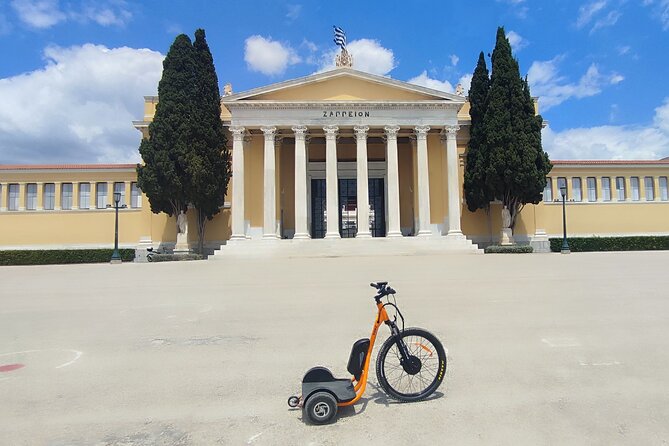
Pnyx is one of the most worthwhile stops because it gives the tour a stronger civic story. This hill is linked with the beginnings of democracy, and the guide points out the place where public meetings were held.
The setting is also calmer than the main Acropolis approaches. Pnyx sits within an archaeological area that functions partly as a park, with open ground and views toward the Acropolis. The 15-minute stop gives you time to hear why the site mattered and to look across the ancient center of Athens.
This is where a quick vehicle tour can offer something a simple checklist walk may miss. You are not just collecting famous monuments. You are seeing the place where political life was discussed and decisions were made. If Dimitris is guiding your group, his ability to explain the importance of the meeting site has been one of the stronger parts of the experience.
More Historic Bike Tours in Greece
- Historic Athens: Small Group Electric Bike Tour
★ 4.9 · 966 reviews - Athens: Small Group E-Bike Tour of Historic Highlights
★ 4.9 · 154 reviews - Athens Highlights by E-Bike: Small-Group Historic Tour
★ 5.0 · 131 reviews - Athens: Bike Tour of Athens Historical Centre
★ 5.0 · 61 reviews
The Hill of the Nymphs and National Observatory
The route continues to the National Observatory of Athens, on the Hill of the Nymphs. It was the first observatory in Athens, and the surrounding archaeological area adds another open-air stop away from the busiest streets.
You spend about 15 minutes here. The attraction is less about entering the observatory and more about the hill, the setting, and the story of Athens as a city that kept adding new layers to its ancient core. The tour description lists admission as included for this stop, though the overall terms say archaeological-area tickets are not included, so it is sensible to confirm the exact admission arrangement when booking.
The hill also shows one of the practical reasons to choose an electric vehicle. You can reach places that may feel too far or too steep when walking between the Acropolis and the Agora. One Spanish-language review put the point plainly: the electric ride lets you reach hills you might skip on foot, especially in summer.
Ancient Agora gives the tour its everyday life
The Ancient Agora is not just another ruin. It was the main market and civic center of ancient Athens, so it helps you picture how ordinary life worked around the grand temples and theaters.
The planned stop is about 20 minutes, the longest pause on the route. That extra time makes sense. The Agora covers a broad archaeological area, and the guide can point out how commerce, politics, and social life overlapped here.
An admission fee of €4 is listed for the Ancient Agora. The general tour information says archaeological tickets are not included, so budget for this separately unless the operator confirms otherwise. The tour gives you a useful introduction, but you should not expect to explore every path or building during a 20-minute visit.
If you plan to return later, this is one of the best places to do so. The quick stop tells you what you are looking at; a longer independent visit lets you examine the site at your own pace.
Kerameikos adds a quieter archaeological stop
Kerameikos sits close to the Ancient Agora and is named for the pottery production once carried out in the area. It is an archaeological zone with a different feel from the Acropolis and the central squares.
The stop lasts about 10 minutes and is listed as free. That short pause is enough for an introduction, but not a full archaeological visit. Its value is in showing how the ancient city extended beyond monuments built for rulers or gods. Here, the name of a modern Athens neighborhood connects with the work that once took place there.
The stop also breaks up the familiar sequence of Acropolis, Agora, and Plaka. If you have already seen the headline sights, Kerameikos gives the guide another way to explain how the city was organized.
Monastiraki and the Roman Agora

Monastiraki is one of the busiest squares in Athens and a useful place to understand the modern city. Bars, restaurants, shops, and streets leading into the old center surround the square. You spend about 10 minutes here, enough to get your bearings before moving on.
The next stop is the Roman Agora, built in the second century AD as a Roman counterpart to the older Greek Agora. Its best-known feature is the Tower of the Winds, an unusual ancient structure that served as a timekeeping and weather device.
The Roman Agora has a listed ticket price of €4, but the itinerary also identifies admission as free at this stop, which is inconsistent. Since the general terms exclude archaeological-area tickets, ask the operator what is covered on your date. This is a small point, but it prevents confusion when several sites are packed into a short outing.
Plaka finishes the route with a neighborhood feel
Plaka is the traditional neighborhood below the Acropolis, known for its narrow streets and island-like appearance. The 10-minute visit gives you a glimpse rather than a full neighborhood walk.
That is enough to mark places you may want to revisit for a meal, a drink, or a slower wander. The guide can also help you see how Plaka fits beside Monastiraki and the ancient sites, rather than treating it as a separate tourist pocket.
The tour returns to the original meeting point. This makes the experience easy to fit into a first or second day in Athens, especially if you want to continue sightseeing afterward.
What the $72.09 price really buys you
At $72.09 per person, this is not the cheapest way to look at Athens. You are paying for the electric Trikke, helmet, insurance, a guide, and the ability to cover a wide area in about two hours.
The value improves if you are visiting during hot weather, have limited time, or want to avoid a long uphill walk. It can also be a good opening activity because it shows you where the major sights are before you choose which ones deserve a longer return visit.
The price is less attractive if you already know Athens well or plan to spend the day inside the Acropolis and Agora. You will still need to pay separate admission fees, and most stops are brief. Think of this as a moving orientation tour, not a replacement for archaeological visits.
Who should book this Athens ride
I would recommend it to first-time visitors who want a fast overview, families who need to keep children engaged, and anyone concerned about heat or hills. The equipment appealed to children aged 9, 12, 13, and 15 in one family booking, so it can work well for older children and teenagers when they can follow safety instructions.
It also suits visitors with only a short window in central Athens. The route packs in major landmarks without requiring you to map the streets yourself.
I would be more cautious if you dislike standing for long periods, feel uneasy on a motorized vehicle, or want deep archaeological detail at every stop. The tour is active, even though it does not require pedaling, and the short schedule favors breadth over long study.
The small-group limit of 12 is helpful. Guides such as Dimitris have adjusted the route around sights people had already seen, which can make the two hours feel more personal. Kevin is also named among the guides associated with the experience.
Booking is flexible with free cancellation up to 24 hours before the start time. Changes or cancellations inside that window are not accepted for a refund. Poor weather can lead to a different date or a full refund, since the activity depends on safe riding conditions.
Should you book the Ancient Athens E-Bike Tour?
Book it if you want to cover the Acropolis area quickly, avoid exhausting climbs, and get a clear introduction to Athens from a guide. The mix of famous monuments, Pnyx, Kerameikos, and the city’s central neighborhoods gives you more than a simple photo circuit.
Skip it if your priority is entering every archaeological site and spending time with individual ruins. In that case, use the tour as an orientation only, then return independently with tickets and several hours to spare. For most first visits, though, the Trikke is a smart way to get your bearings before exploring Athens on foot.
FAQ
How long does the Ancient Athens E-Bike Tour last?
The tour lasts approximately two hours.
How much does the tour cost?
The listed price is $72.09 per person.
What type of vehicle do I use?
You use a standing electric Trikke, a motorized three-wheeled vehicle. You do not need to pedal.
Is a helmet provided?
Yes. Helmet use is included with the experience.
Is insurance included?
Customer insurance is included.
What sights are included on the route?
The route includes the Theatre of Dionysus, Odeon of Herodes Atticus, Acropolis viewpoints, Pnyx, National Observatory of Athens, Ancient Agora, Kerameikos, Monastiraki, Roman Agora, and Plaka.
Are archaeological admission tickets included?
The general information says archaeological-area tickets are not included. Individual stop details list different admission information, so confirm the exact ticket arrangements with the operator before booking.
Where does the tour begin and end?
It begins at Leoforos Andrea Siggrou 22, Athens 117 42, and ends back at the same meeting point.
How large is the group?
The activity allows a maximum of 12 people.
When does the tour operate?
It operates Monday through Saturday from 10:00 a.m. to 4:00 p.m., for the listed period from January 5, 2023, through December 22, 2026.
More Historic Bike Tours in Athens
- Explore Athens Historical Centre by Bike
★ 5.0 · 54 reviews - Athens: Old Town Electric Bike Tour with Local Mezes
★ 4.8 · 21 reviews - Historical Singapore Bike Tour on Full-Sized Bicycles
★ 5.0 · 1,421 reviews - Barcelona: 2.5-Hour Bike or E-Bike Historical Tour
★ 4.5 · 1,262 reviews
More E-Bike Tours in Athens
- Athens Electric Bike Tour
★ 5.0 · 836 reviews - Athens: Discover the City Electric Bike Tour
★ 4.9 · 544 reviews - Athens: 2-Hour Highlights Tour by E-Bike After Sunset
★ 4.9 · 532 reviews - Athens Acropolis Official E-Scooter Guided Tour Fat E-Bike
★ 5.0 · 504 reviews
Latest bike tours added in Athens
- Sustainable Athens Bike tours with photos★ 5.0 · 13 reviews
- Private Athens Electric Bike Tour★ 5.0 · 56 reviews
- Bike tour ! It’s Ride through Athens’ Local Treasures★ 5.0 · 90 reviews
- Athens Street Art Bike Tour★ 5.0 · 20 reviews
- Private Athens Electric Bike Tour★ 5.0 · 173 reviews
- Discover the City e-bike night tours★ 5.0 · 23 reviews
- Discover the City e-bike day tours★ 5.0 · 22 reviews
- Athens Sights Highlights on eBike Tour with Local Food & Drinks★ 5.0 · 13 reviews
E-Bike Tours, compared.

3-Hour Porto Highlights on a Electric Bike Guided Tour
Read our review →
Hills, Alfama, and Mouraria Tour by Electric Bike
Read our review →
Athens Scenic Electric Bike Tour with optional Acropolis visit
Read our review →
City Highlights 3-Hour Guided Electric Bike Tour
Read our review →

Rome EBike Tour: Appian Way, Catacombs & Roman Aqueducts
Read our review →
Top Highlights & Hidden Gems Tour by Cannondale E-Bike
Read our review →Browse the lists this tour appears in