Review · E-BIKE TOURS
Bratislava: City and Iron Curtain and Bunker by E-Bike Tour
The most unusual part of this Bratislava tour comes after the city sights: you pedal out to concrete bunkers built in the 1930s to guard Czechoslovakia’s western border, then see the former Iron Curtain zone near Austria. World War II fortifications and Cold War history make this far more than a standard city ride.
I like the high-quality electric fat bikes, which take the sting out of the longer ride, and I like the small group limit of eight. Guides such as Juraj add local stories about life under communist rule, while the visits to BS-4 and BS-8 give the history a physical, walk-through setting.
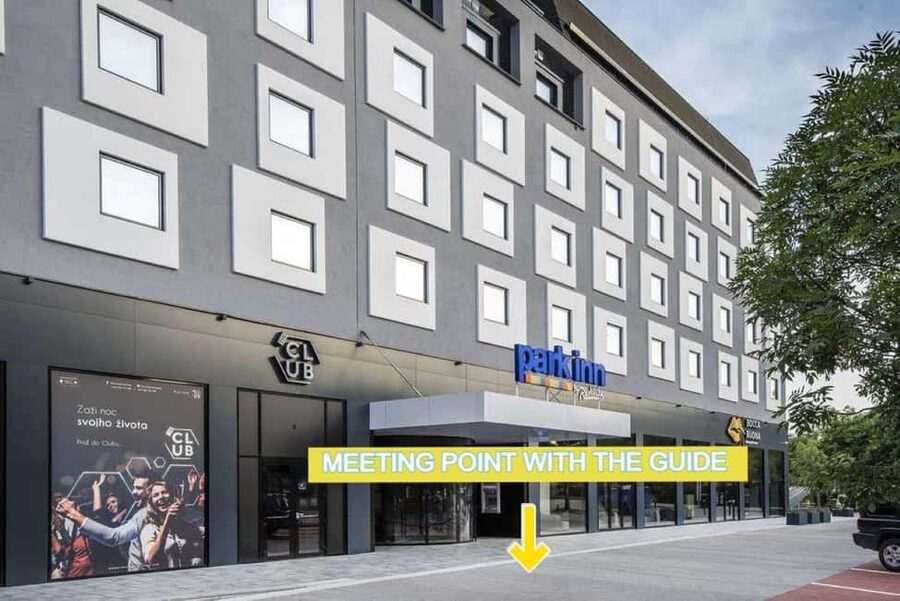
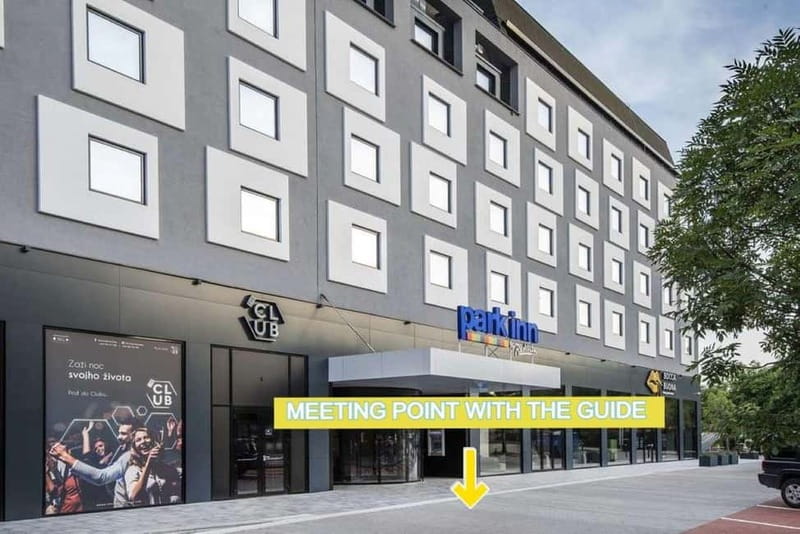
The main drawback is the slow start and the four-hour commitment. You need to be comfortable riding a bike, and the city portion can feel less exciting if you are mainly interested in the bunkers. The meeting point is in front of the Park Inn by Radisson, then you walk a few minutes to collect the bikes.
Key points to know before you ride
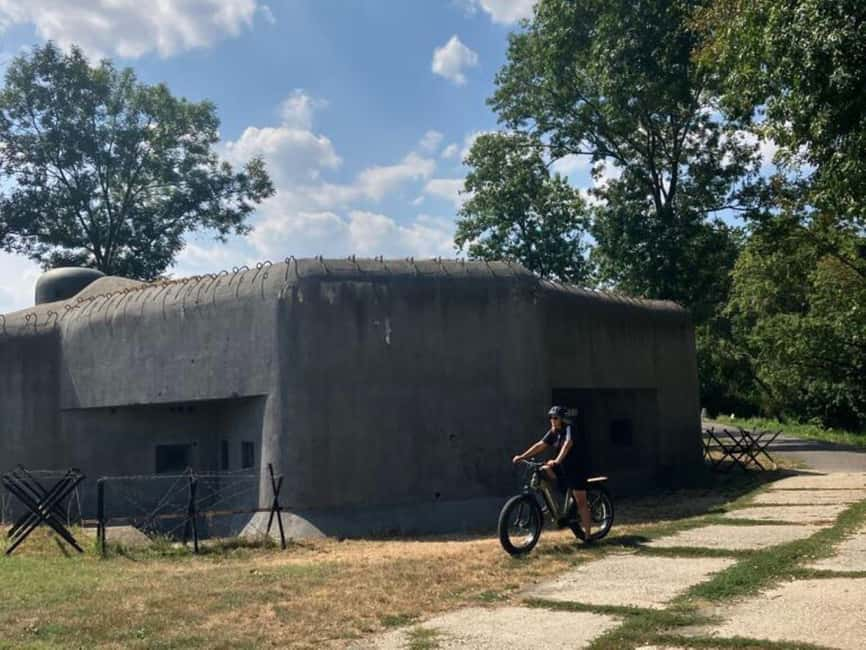
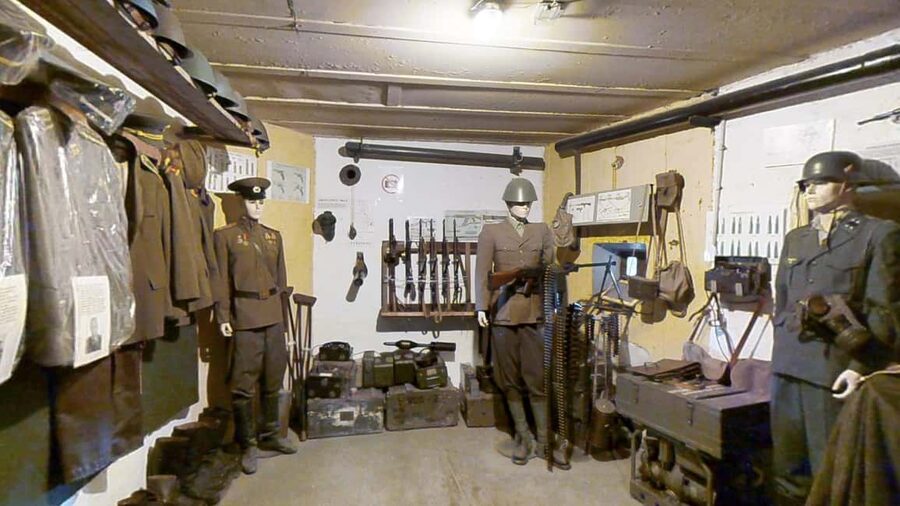
- Two very different bunker visits: BS-4 gives you the stark concrete fortification, while BS-8 adds an indoor museum with original equipment and weapon systems.
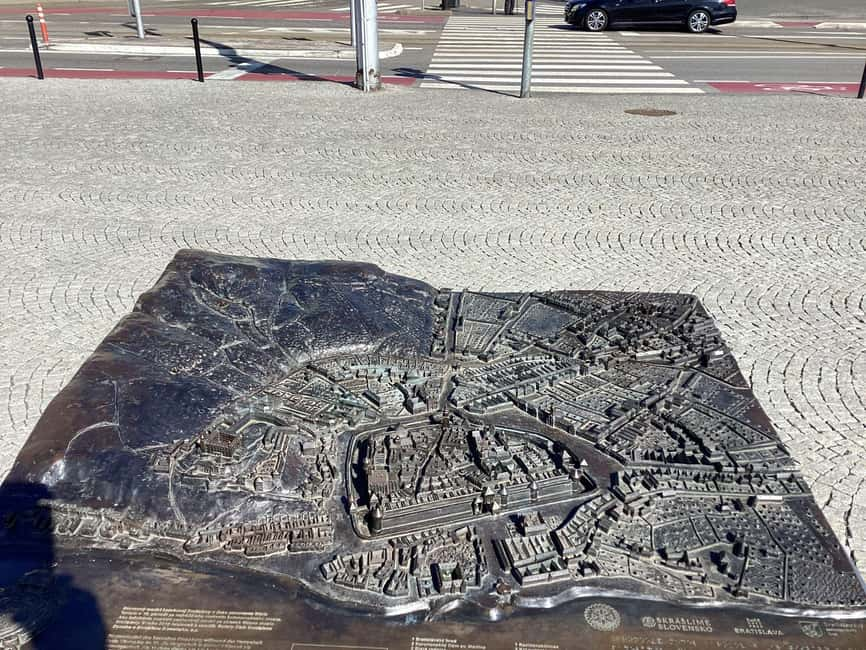
- A city ride with a serious historical turn: You pass the Blue Church, Old Bridge, SNP Bridge, and Hviezdoslav Square before heading toward the old border zone.
- Electric fat bikes make the distance manageable: The motor helps on hills and longer stretches, though you still need basic cycling ability.
- Small groups keep the history personal: With no more than eight people, it is easier to hear the guide and ask questions.
- The Cold War section is especially strong: You learn how the Iron Curtain was watched and how illegal crossings could bring the death penalty.
- Budget around four hours: The tour includes bikes, helmet, museum entry, a snack, and a small drink, but not hotel transfers.
From the Danube hotel to Bratislava’s old center
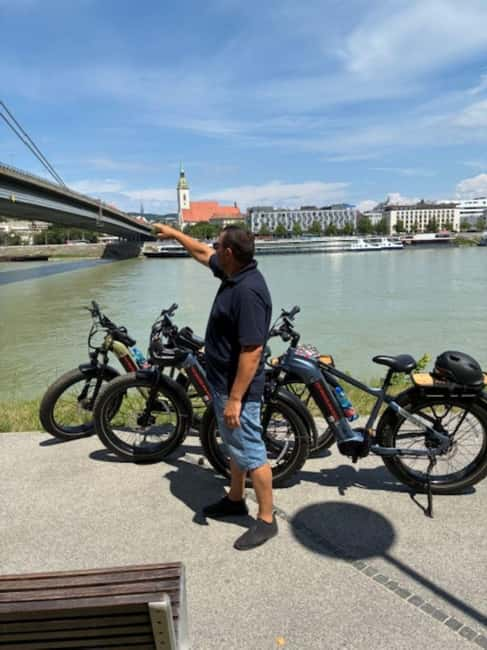
Your meeting point is in front of the Park Inn by Radisson Danube, close to the SNP Bridge. This is a useful location because you are already near the river and central sights, but do not expect to mount the bike right at the hotel door. You first meet the guide, receive a safety briefing, and walk about five minutes to the e-bike pickup point.
The welcome includes a small drink and snack. You also get a helmet and an explanation of the electric assistance. This matters because an e-bike can feel unfamiliar for the first few minutes, particularly when the motor engages. Take the short practice period seriously and make sure you are comfortable with the controls before the group moves off.
The bikes are fat-tire electric models. That means a steady, comfortable ride rather than a sporty road-bike outing. The electric support is useful on inclines and on the longer route toward the bunkers, but it does not remove the need to steer, balance, brake, and pay attention around other cyclists.
More E-Bike Tours in the world:
- 3-Hour Porto Highlights on a Electric Bike Guided Tour
★ 5.0 · 4,392 reviews - Lisbon: Hills, Alfama, and Mouraria Tour by Electric Bike
★ 4.8 · 3,438 reviews - Athens Scenic Electric Bike Tour with optional Acropolis visit
★ 5.0 · 3,350 reviews
SNP Bridge and the first Danube views
The ride begins along cycling paths by the Danube and passes beneath or around the SNP Bridge, Bratislava’s familiar UFO-topped bridge. From here, you get a quick sense of the city’s layout, with the river separating the old center from Petržalka on the opposite bank.
This opening section is not a nonstop sightseeing circuit. The guide pauses to explain what you are seeing, and the early route helps connect modern Bratislava with the city’s political past. You will also get scenic river views, though the exact conditions depend on weather and traffic on the cycle paths.
The benefit of using an e-bike here is simple: you cover more ground than you would on a walking tour without spending the whole afternoon pedaling hard. The trade-off is that you have less time at each city sight than on a dedicated old-town walking tour.
Hviezdoslav Square and the Blue Church
The route reaches Hviezdoslav Square, one of the most recognizable public spaces in central Bratislava. You stop for a guided look rather than simply passing through, so this is a good point to ask about the city’s changing architecture and political story.
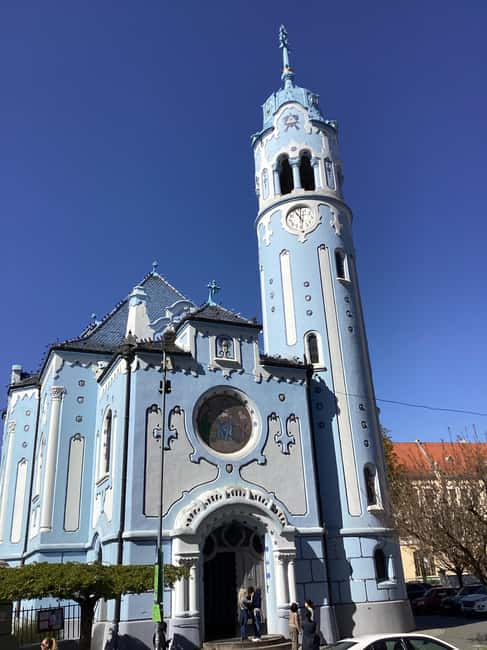
The Blue Church, formally the Church of St. Elizabeth, provides a very different visual pause. Its pale blue exterior and decorative details make it one of Bratislava’s most photographed buildings. You do not spend a long time here, but the stop breaks up the cycling and gives the guide a chance to explain more of the city’s past.
I would not book this tour solely for the Blue Church or the old center. A walking tour will usually give you more time with those sights. Here, they act as the first chapter of a longer story that moves from imperial and urban Bratislava toward the guarded border beyond the city.
Old Bridge and the route toward Petržalka
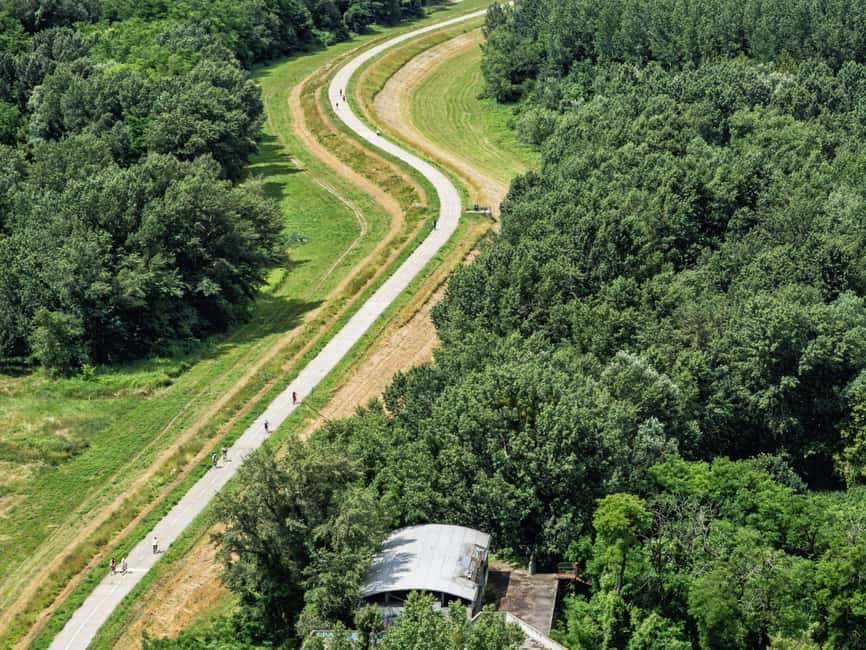
The ride continues to the Old Bridge, another useful viewpoint over the Danube. You see the river from a different angle and begin to move away from the compact historic core. The route then continues on cycling paths toward the bunkers, with occasional stops for stories about the area between Bratislava and Austria.
This is where the e-bike earns its keep. The total ride is not presented as a race, and the guide controls the pace, but the tour covers enough distance that a regular bicycle could make the outing tiring for some people. The motor lets you concentrate on the surroundings and the guide instead of worrying about every incline.
The route also gives you a look at how quickly Bratislava changes outside its central squares. You move from recognizable city sights to quieter stretches and former military territory. That change is part of the appeal, but it can also make the middle of the tour feel less packed with attractions.
More bike tours in the world:
- Lion City Bike Tour of Singapore
★ 5.0 · 6,211 reviews - Big Bike tour Amsterdam – See all in 3 unforgettable hours
★ 4.7 · 4,929 reviews - Ninh Binh Full-Day Tour from Hanoi to Hoa Lu, Tam Coc & Mua Cave Via Boat & Bike
★ 5.0 · 4,384 reviews - Small Group Guided Bike Tour of Amsterdam’s Hidden Gems
★ 5.0 · 3,936 reviews
BS-4 Lány and the concrete border defenses
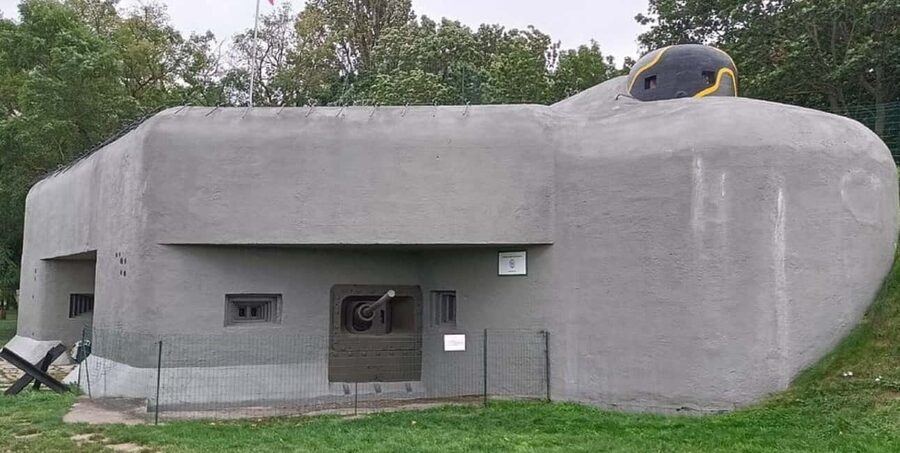
The first major bunker stop is BS-4 Lány. These bunkers were built along Czechoslovakia’s western borders between 1935 and 1938, before the Second World War, in response to the rise of Hitler’s Germany. Their purpose was to protect the country from attack, and their thick concrete construction gives you a blunt sense of the threat officials expected.
Bratislava’s Petržalka area has around 15 such bunkers, but only BS-4 and BS-8 have been restored. That makes the two selected stops especially useful. You are not merely looking at an abandoned military structure from the outside. You get to see how the fortifications fit into the border system and how their purpose changed over time.
BS-4 is a good first encounter because the building itself does much of the explaining. The concrete is heavy, plain, and practical. The visit helps you picture a defensive line rather than a single isolated building.
You should expect the bunker portion to be more rugged than the city sights. Wear clothes that are comfortable for cycling and suitable for walking around old military buildings. Bring a camera if you like, but the main value is seeing the structure in person and hearing the guide connect it to the wider border story.
BS-8 and the Iron Curtain story
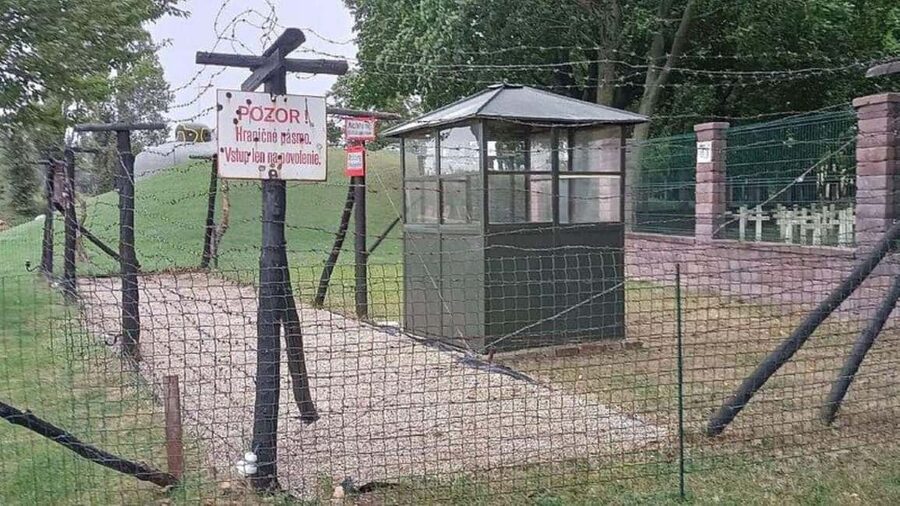
BS-8 is the more detailed stop. Along with the bunker and the nearby Iron Curtain setting, you see a military cemetery and a museum collection containing original bunker fittings, devices, special weapon systems, fortress turrets, and other military material from the years 1920 to 1938.
The museum covers four main chapters of the bunker’s history. That makes the visit more than a pre-war military display. The guide can show you how the fortification was built, how it functioned, and how its meaning changed after the war and during communism.
The Cold War section is the part I would give your full attention. In the early 1950s, the communist government built Iron Curtain border fortifications. The border was watched continuously, and people who tried to cross illegally could face the death penalty.
That fact changes the way you see the open border near Bratislava today. You are cycling through a place where movement was once tightly controlled, while now free movement within the European Union is normal. The contrast is especially clear because the tour does not keep the story at the level of dates and political labels. Guides discuss what it meant to live under communist rule, including personal and local experiences from the 1960s onward.
Guide quality matters here. Juraj has been praised for fluent English, friendly presentation, and strong knowledge of Bratislava and its past. Martin, described as a bunker specialist, may lead or contribute to the bunker portion. Since guide assignments can vary, you should treat those names as examples rather than a guarantee for every departure.
Stories, surprises, and the pace of the ride
The tour is designed around conversation, not just transport between stops. You can expect stories and fun facts during the city ride, along with explanations of the places between Bratislava and Austria. The guides also add occasional surprises, games, or small prizes along the route.
Those touches help a four-hour outing avoid becoming a long lecture. A game break beside the Danube has been part of the experience, and one guide offered extra time when the schedule allowed. Another guide adapted the plan when an afternoon bunker visit was delayed, using the available morning time to ride toward the castle.
That flexibility is a plus, but it also means the exact rhythm may vary. One departure might feel leisurely, while another could move more directly to the bunkers. A comment about the start being slow is worth noting: the welcome, bike fitting, and city introduction take time before the route reaches the countryside.
The small group size helps. With up to eight people, you can hear the guide more easily and ask about the border, communist Bratislava, or the bunker equipment without shouting across a large crowd. It also makes it easier for the guide to adjust the pace, though the tour still needs to keep the group together.
What the $93 price includes
At $93 per person, this is not the cheapest way to see Bratislava. The value depends on whether you want the bunker and Iron Curtain material. If you only want the Blue Church, Old Bridge, and central sights, a walking tour or self-guided ride will cost less and allow more time in the old town.
For the full package, the price is easier to justify. You get a quality e-bike, helmet, English-speaking local guide, snack, small bottled drink, and entry to a bunker museum. You also avoid arranging your own route through the less central military sites, which is a real benefit when your time in Bratislava is limited.
I see the tour as a good use of money for anyone who wants both city orientation and a serious history stop in one half-day. The e-bike rental alone also matters because the route would be more demanding on an ordinary bicycle.
Hotel pickup and drop-off are not included. You need to reach the Park Inn by Radisson Danube yourself, and you should allow a few extra minutes to find the guide in front of the hotel before the short walk to the bikes.
Who should book this e-bike tour?
You should consider it if you can ride a bike confidently and want to see a side of Bratislava that most short city tours skip. It suits history-minded visitors, couples, small groups of friends, and anyone who prefers active sightseeing to sitting on a bus.
It is also a strong choice if you have already seen the main old-town sights. The route adds context about Petržalka, the border with Austria, the Second World War, and communist rule. You leave with a better sense of how recent political history shaped ordinary movement through this part of Europe.
I would be more cautious if you dislike cycling, want a slow architectural tour, or have limited energy for four hours outdoors. The ride is assisted, not effortless, and weather can affect your comfort. Wear suitable clothing, check the forecast, and bring water if you prefer more than the supplied small drink.
The tour is offered in English and has a maximum of eight participants. Smoking is not allowed, and people who cannot ride a bike should choose another activity.
My verdict: a worthwhile history ride beyond central Bratislava
I would book this tour if the Iron Curtain and bunker visits interest you. The city stops are pleasant, but the real reason to go is the shift from river paths and colorful architecture to concrete defenses, military equipment, and a border once watched under threat of death.
The strongest points are the high-quality e-bikes, the small group, and the guides’ ability to connect the sites with personal stories about communist life. The main limitation is pace: you will not get a long, detailed visit at every central sight, and the opening section may feel slow while everyone gets fitted out.
Choose it for a practical half-day that combines exercise, Bratislava orientation, and difficult twentieth-century history. Skip it if you want only the postcard center or cannot ride comfortably. For the right visitor, $93 buys access to places that are awkward to reach alone and gives them a clear human story.
FAQ
How long is the Bratislava e-bike and bunker tour?
The tour lasts four hours. It begins at the Park Inn by Radisson Danube in Bratislava and returns there after the city ride and bunker visits.
Where do I meet the guide?
You meet the guide in front of the Park Inn by Radisson Danube Hotel, near the SNP Bridge. From there, you walk about five minutes to collect the electric bikes.
What sights do I see in central Bratislava?
The route includes the SNP Bridge, Hviezdoslav Square, the Blue Church, and the Old Bridge. You also cycle along the Danube and hear about Bratislava’s history during stops along the way.
Are the electric bike and helmet included?
Yes. The tour includes an electric bike rental and a helmet. The guide also explains how to use the electric assistance before you set off.
Do I visit the bunkers from inside?
Yes. You visit BS-4 Lány and BS-8, seeing the bunkers externally and internally. BS-8 also includes a museum collection with original bunker equipment, weapon systems, turrets, and other military material.
Is the tour suitable if I cannot ride a bike?
No. You need to be able to ride a bicycle. Comfortable clothing suitable for biking is recommended, and you should check the weather before setting out.
Latest bike tours added in the world
- Brooklyn Neighborhoods Small-Group Bike Tour★ 5.0 · 137 reviews
- Hudson Valley Craft Brewery Bike Tour★ 5.0 · 23 reviews
- The Best of Bristol Bike Tour★ 5.0 · 39 reviews
- A Day in Brooklyn Bike Tour★ 5.0 · 59 reviews
- Brisbane Kayak, Bike★ 4.5 · 23 reviews
- Brisbane Electric Mountain Bike Experience Tour★ 5.0 · 48 reviews
- 2 Hour Private Brisbane Mountain Bike Coaching Session and Ride★ 5.0 · 24 reviews
- Private Bike Tour with Olive Oil Tasting★ 4.5 · 15 reviews
E-Bike Tours, compared.
3-Hour Porto Highlights on a Electric Bike Guided Tour
Read our review →
Hills, Alfama, and Mouraria Tour by Electric Bike
Read our review →
Athens Scenic Electric Bike Tour with optional Acropolis visit
Read our review →
City Highlights 3-Hour Guided Electric Bike Tour
Read our review →
Rome EBike Tour: Appian Way, Catacombs & Roman Aqueducts
Read our review →