
Review · CITY HIGHLIGHTS BIKE TOURS
Highlights and hidden gems of Milan Bike Tour
Milan reveals itself quickly from a bicycle. In about three hours, you move from Roman ruins and medieval fortifications to fashion streets, modern towers, art-filled lanes, and the Gothic Duomo. Paolo, Sandra, Angelo, and Marco are among the guides who lead these rides, each adding local stories to the route.
I like the wide view of Milan and the easy pace. You cover much more ground than on foot, yet still stop often for photos and short explanations. I also like the contrast between the old city and the new one, from Sforza Castle to Bosco Verticale. The main thing to consider is traffic and rough pavement. Narrow streets, cobbles, brick paths, and busy pedestrian areas can make riding less relaxed for anyone who lacks solid bike skills.
Key points at a glance
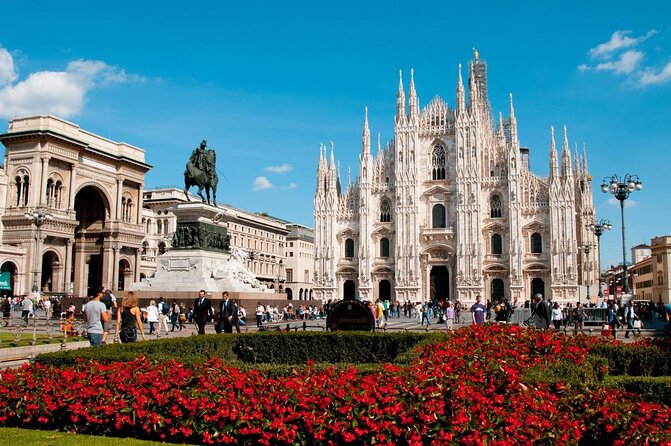
- Three centuries of Milan in one ride: Move from Roman columns and a Gothic cathedral to Renaissance walls and new skyscrapers.
- A useful first-day activity: The route gives you a strong sense of Milan’s layout and helps you decide where to return later.
- Classic bikes included: A bike and helmet come with the price. E-bikes cost an additional €15, subject to availability.
- Guides add the value: Paolo, Sandra, Angelo, Marco, and other guides explain the city’s history, architecture, music, and daily life.
- Easy, but not effortless: The route is generally manageable, though cobblestones, narrow roads, and pedestrians require attention.
- Good family option: The minimum age is 9, and younger riders between 135 and 155 centimeters need a suitable bike reserved ahead of time.
Why a bicycle works so well in Milan
Milan is flat, spread out, and packed with sights that are too far apart for a comfortable walking tour in a single morning. A bicycle solves that problem. You can see the cathedral, opera house, castle, Roman ruins, artist quarter, and modern business district without spending much of the day on public transport.
The route also gives you a better sense of how Milan fits together. On foot, the Duomo and La Scala feel like separate stops. On a bike, you see how quickly the elegant center gives way to Brera, how the castle connects to Parco Sempione, and how the old southern districts lead toward the canals and Roman remains.
The tour begins at 10:00 a.m. at Via Vetere 11, near Porta Ticinese, and returns to the same place after roughly three hours and 15 minutes. The tour is offered in English, and the maximum group size is 30. That upper limit matters. A smaller group should feel more nimble, while a larger one may need extra patience at crossings and in pedestrian areas.
More City Bike Tours in Italy
- Rome: Top Highlights & Hidden Gems Tour by Cannondale E-Bike
★ 4.9 · 1,760 reviews - Florence: 2-Hour Guided Sightseeing Bike Tour
★ 4.5 · 1,004 reviews - Naples: City Highlights Guided Bike Tour
★ 4.7 · 850 reviews
Starting at Porta Ticinese
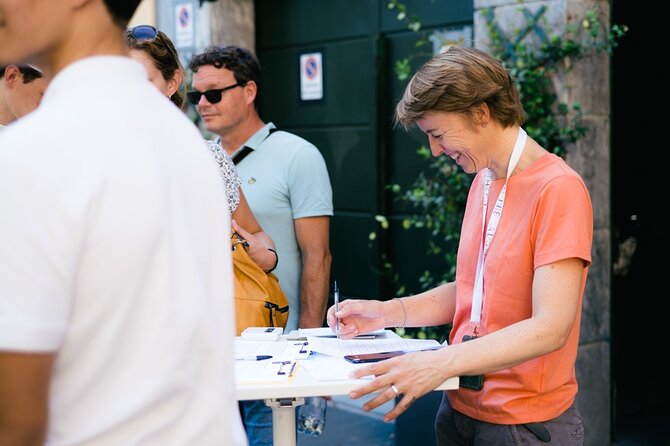
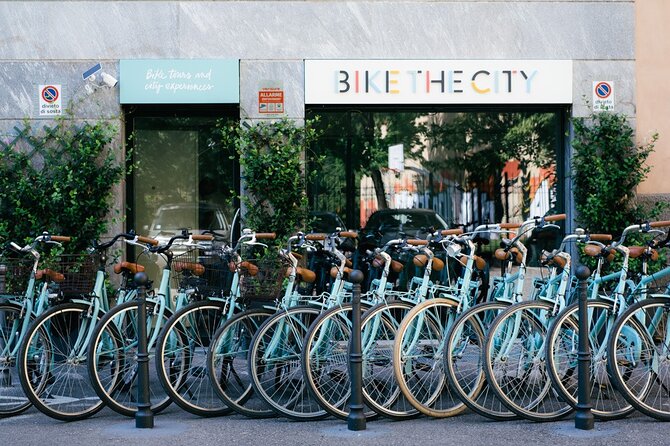
Porta Ticinese is a fitting place to begin. This old city district has a bohemian feel and takes its name from the historic gate. You receive a short safety briefing, collect your classic Dutch-style bike and helmet, and set off through central Milan.
The opening section is useful because it lets you settle into the bike before the major sights begin. The bikes are basic, often with a single gear, but that is enough for Milan’s mostly flat streets. Bags can be carried in bike bags, which helps keep your hands free.
You should arrive ready to ride, not dressed as if you are heading straight into a formal restaurant. Comfortable clothes and shoes make the morning easier. The tour does not appear to be strenuous, but you still need to steer, brake, and keep pace in city traffic.
The Duomo and Milan’s grand center
The Duomo is one of the major stops, with about 20 minutes to take in the cathedral and nearby buildings. You see the cathedral from outside, along with the Royal Palace, the Museo del Novecento, and the Galleria Vittorio Emanuele II.
This is not an interior visit to the Duomo, so you should book separate admission if you want to explore the cathedral or rooftop terraces. The value here is the setting and the explanation. From the saddle, you get a clear introduction to Milan’s civic and artistic center without using up hours in a queue.
The square can be crowded, and bicycles are not always easy to manage among pedestrians. Your guide will organize the stop, but you should expect to walk the bike briefly or remain alert around foot traffic. That is one of the tradeoffs of seeing Milan by bicycle: you cover more ground, but some famous spaces are designed for people on foot.
La Scala and the theater district
From the Duomo, the group rides to Piazza della Scala. The stop at Teatro alla Scala is brief, about five minutes, and takes place outside. It is enough time for photographs and a short explanation of the opera house’s role in Milan.
The theater is tied to some of the great singers and conductors in opera, and the guide adds the useful context that a bare photo stop would miss. You will not tour the interior during this ride, so anyone especially interested in opera should plan a separate visit.
I like this stop because it shows another side of Milan. The Duomo is monumental and public. La Scala is more refined and inward-looking, linked to performance, patrons, and the city’s long musical life. The short pause keeps the tour moving.
Another way to spend a morning on two wheels:
- Rome EBike Tour: Appian Way, Catacombs & Roman Aqueducts
★ 5.0 · 1,766 reviews - Rome: Appian Way & Aqueducts E-Bike Tour (Catacombs & Food)
★ 4.9 · 1,498 reviews - Rome: Appian Way, Catacombs, & Roman Aqueducts E-bike Tour
★ 4.9 · 1,421 reviews - Rome City Small Group Bike Tour with quality Cannondale EBike
★ 5.0 · 1,380 reviews
Brera, where Milan slows down
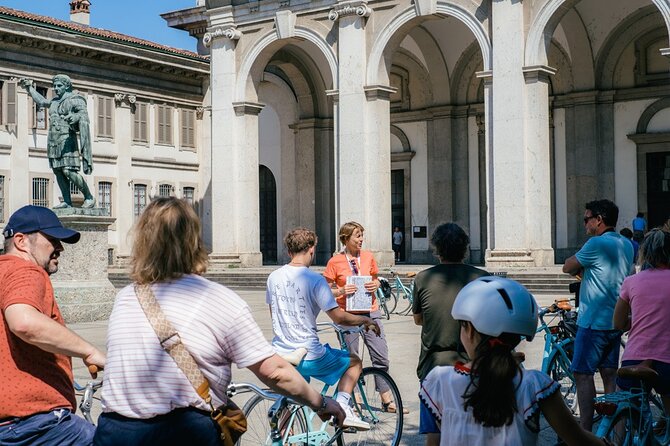
Brera is one of the most enjoyable parts of the route. Its narrow streets are lined with old Milanese houses, churches, workshops, and small details that are easy to miss from a car or tourist bus.
The district is also home to the Pinacoteca di Brera, Milan’s major art gallery. You see the area from outside rather than visiting the gallery, but the guide helps explain why Brera became associated with art and creative work.
This is a good place to slow down and look around. It is also one of the sections where riding can become awkward. Streets may be narrow, pedestrians may step into your path, and the group can stretch out. You need reasonable bike control, especially if the group is large.
Porta Nuova and Milan’s modern face
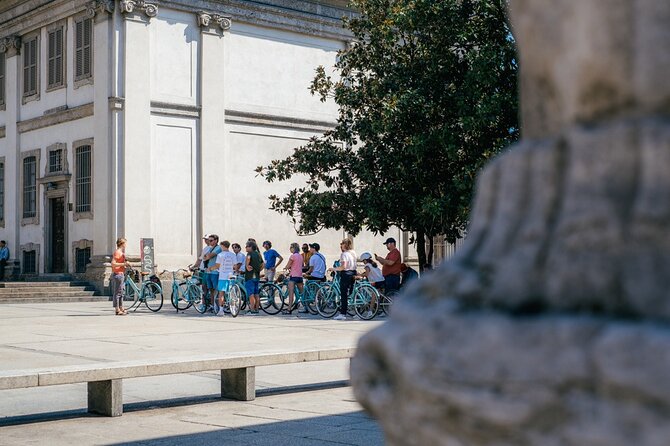
The move from Brera to Porta Nuova feels like a sharp change of subject. You pass newer architecture, including Palazzo Lombardia, the Biblioteca degli Alberi, the Unicredit Tower, and Bosco Verticale.
For me, this is one of the route’s strongest ideas. Milan is often sold through the Duomo and fashion, but its current identity also comes from business towers, public spaces, and experimental building design. Bosco Verticale, with its planted balconies, gives you a quick lesson in how the city is presenting itself today.
The stop lasts about 15 minutes. That is enough for an overview and photos, though not enough for a detailed architecture tour. If contemporary design interests you, make a note of the places you want to revisit independently.
Sforza Castle and Leonardo’s Milan
Sforza Castle brings the ride back to the city’s older layers. This large fortress was built for Milan’s first duke in the 14th century and later became linked with the Renaissance court. Leonardo da Vinci worked in Milan after being called there by Ludovico il Moro in 1482, and the castle’s story includes his connection to the city.
The castle stop lasts about 25 minutes, making it one of the longer pauses. You enter the courtyards and hear about the structure’s political and military role. The route does not include a full museum visit, so you should return later if you want to see the castle collections in depth.
This is also a good rest point. The scale of the walls makes the city’s past feel physical rather than abstract. You are not simply hearing that Milan was powerful. You are looking at the place where that power was defended and displayed.
Parco Sempione and the Peace Arch
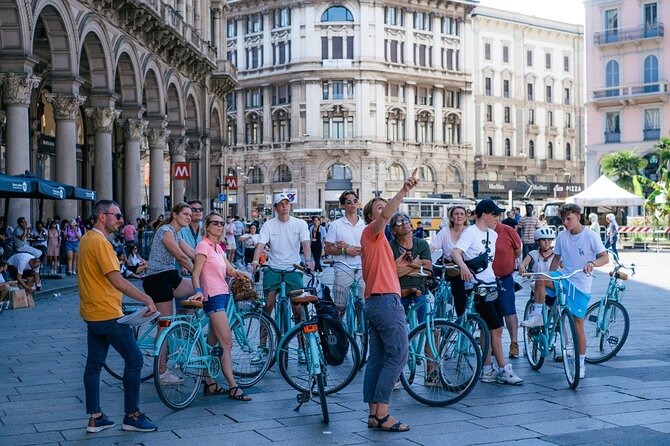
After the castle, the ride moves into Parco Sempione, Milan’s large central green space. The park provides a welcome change from traffic, stone, and busy squares. You can breathe, slow down, and take in the neoclassical Peace Arch.
The pause is about 10 minutes. It is not a long picnic break, but it gives your legs and attention a reset. Some people have wished for a longer break or a stop at a water fountain, so do not expect a leisurely café interval built into the tour.
If the day is warm, the shaded pauses matter. One family with children appreciated the water stops and breaks in the shade, and the guide kept a close eye on safety as the temperature rose. That makes this tour more practical for families than the length alone might suggest.
Roman Milan at Colonne di San Lorenzo
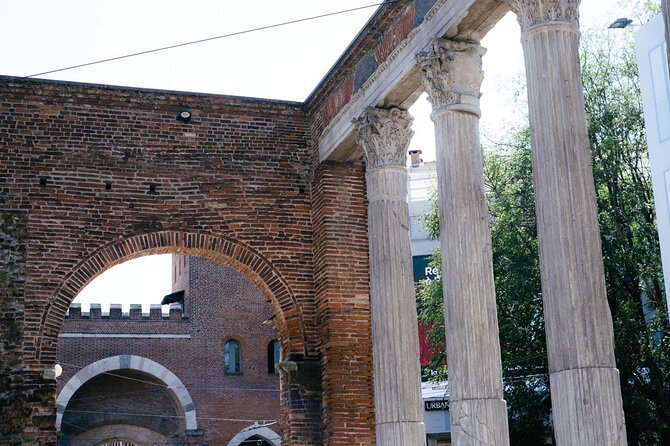
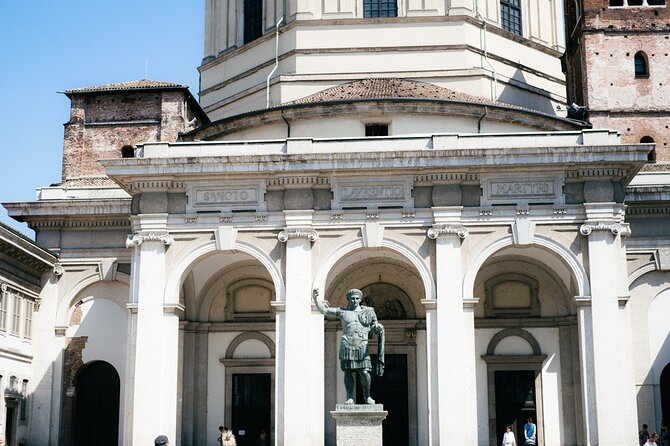
The final major stop is Colonne di San Lorenzo, near the starting district. Here you see Roman remains from the imperial era, when Milan was an important Roman capital. The columns are part of a larger story that includes a palace, circus, amphitheater, and the city’s role in the Roman world.
This stop gives the route a satisfying historical arc. You begin in an old Milanese neighborhood, pass through medieval and Renaissance Milan, see the modern towers, and finish with the Roman foundations beneath the city.
The Roman remains are outdoors, and the stop lasts about 15 minutes. You get an introduction rather than a full archaeological visit, but it is enough to show why Milan is more than a fashion and shopping destination.
How much riding is involved?
The experience lasts around three hours and 15 minutes, with stops at each major sight. Several riders have described the pace as easy and not overly tiring, even though the route covers a large part of central Milan.
That distinction is important. You are not racing from landmark to landmark, but you are on a bike for most of the morning. The streets are not uniformly smooth. Expect cobblestones, brick paving, narrow lanes, and some paths that are less comfortable than a clean cycleway.
You should have basic bike skills. You do not need to be a serious cyclist, but you should feel comfortable starting, stopping, turning, and riding near pedestrians. Milan’s streets can be busy, and a long line of bicycles needs care at crossings and in crowded spaces.
Rain can also affect the ride. Raincoats have been provided when needed, but the experience requires good weather and may be canceled if conditions are poor. In that case, you can receive a different date or a full refund.
Guides, group size, and the English experience
The guide is central to the tour’s value. Paolo is often praised for his clear history stories and friendly manner. Sandra has led families safely through the city, while Angelo, Marco, and Simone have also guided rides along this route.
English is the stated tour language. Guide accents and speaking styles can vary, so you may occasionally need to pay close attention. Still, the format helps: explanations come in short sections at stops rather than as one long lecture while you ride.
The maximum group size is 30. That is a fairly large possible group for city cycling. A group of 14 already felt crowded to one rider in pedestrian areas, particularly where the pavement was rough. If you want the most personal experience, ask about the expected group size when booking, though the supplied details do not promise a smaller departure.
Is the $47.16 price good value?
At $47.16 per person, the tour is reasonably priced for a guided morning that includes the bike and helmet. You are paying not only for equipment, but also for route planning, local explanations, and the ability to connect distant parts of Milan in one outing.
The value is strongest if you have only a day or two in town. A walking tour would cover fewer districts, while exploring all these areas alone would require more planning and navigation. The ride also helps you choose where to spend more time later.
The price does not include an e-bike. An electric bicycle costs an additional €15 per person, subject to availability. You may want one if you are concerned about stamina, but the standard bikes are generally described as comfortable and adequate for the route.
Who should book this ride?
I would choose this tour for a first morning in Milan, especially if you want orientation before visiting museums and interiors. It suits couples, active families, solo visitors, and anyone who prefers seeing a city in motion rather than standing in one square at a time.
Families should note the minimum age of 9. Riders between 135 and 155 centimeters need to email ahead to reserve a suitable bike, and availability is limited. Children should be able to follow safety instructions and manage a bike around pedestrians.
I would be more cautious if you dislike city cycling, have limited bike control, or want a slow, highly detailed visit to each site. This is an overview ride, not a replacement for the Duomo interior, La Scala interior, Brera’s art collection, or the museums at Sforza Castle.
Free cancellation is available up to 24 hours before the start time. Changes made inside that window are not accepted, and the tour requires both good weather and a minimum number of participants.
Should you book the Milan Bike Tour?
Book it if you want to get your bearings fast, see both old and new Milan, and enjoy a bit of exercise while a guide handles the route. The strongest parts are the range of neighborhoods, the shift from Roman ruins to modern towers, and the personal stories added by guides such as Paolo and Sandra.
Skip it if rough pavement, traffic, or a possible large group would spoil the morning. For most reasonably confident cyclists, though, the ride offers a lot for the price and gives you a useful first look at Milan that is hard to match on foot.
FAQ
Where does the Milan bike tour start and finish?
The tour starts at Via Vetere 11, 20123 Milano MI, Italy, at 10:00 a.m. It ends back at the same meeting point.
How long does the tour last?
The tour lasts approximately three hours and 15 minutes.
What sights are included?
The route includes Porta Ticinese, the Duomo, Teatro alla Scala, Brera, Porta Nuova, Sforza Castle, Parco Sempione, and Colonne di San Lorenzo.
Are bikes and helmets included?
Yes. Bike and helmet rental are included in the tour price.
Can I use an e-bike?
E-bikes are available for an additional €15 per person, subject to availability.
What is the minimum age?
The minimum age is 9. Riders between 135 and 155 centimeters tall should email ahead to reserve a suitable bike, and availability is limited.
What happens if the weather is poor?
The tour requires good weather. If it is canceled because of poor conditions, you will be offered another date or a full refund.
Latest bike tours added in Italy
- Private Bike Tour with Olive Oil Tasting★ 4.5 · 15 reviews
- E-Bike tour and Wine tasting from Desenzano Inland★ 5.0 · 24 reviews
- Desenzano e-bike tour★ 5.0 · 17 reviews
- E-bike tour in Ostuni. Oil mill, Dolmen and huge olive trees★ 5.0 · 13 reviews
- Guided E-bike Tour in Bologna with aperitif★ 5.0 · 97 reviews
- Bologna Panoramic Bike Tour★ 4.0 · 14 reviews
- E-bike tour Bergamo★ 5.0 · 85 reviews
- e-bike tour of Bergamo and its surroundings★ 5.0 · 27 reviews
City Highlights Bike Tours, compared.
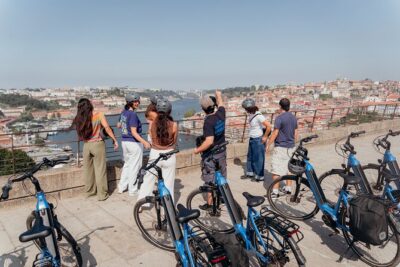
3-Hour Porto Highlights on a Electric Bike Guided Tour
Read our review →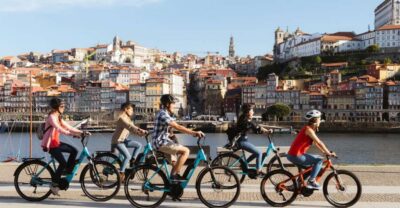
City Highlights 3-Hour Guided Electric Bike Tour
Read our review →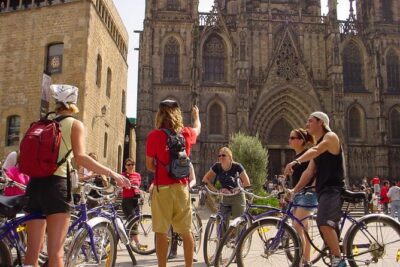
Highlights & Hidden Spots of Barcelona Bike Tour w/ Local Guide
Read our review →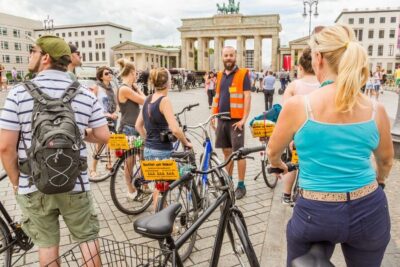
Sights and Highlights Bike Tour with a Local Guide
Read our review →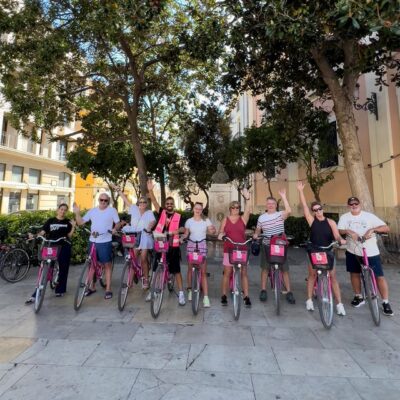
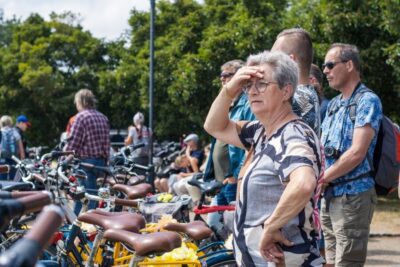
Highlights 3 Hour Bike Tour with a Local Guide
Read our review →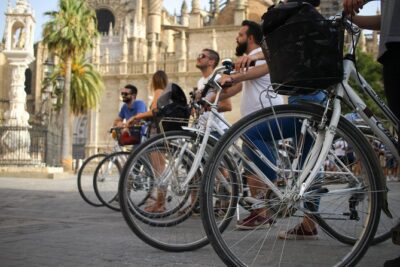
Browse the lists this tour appears in