
Review · HISTORIC & LANDMARK BIKE TOURS
Explore Athens Historical Centre by Bike
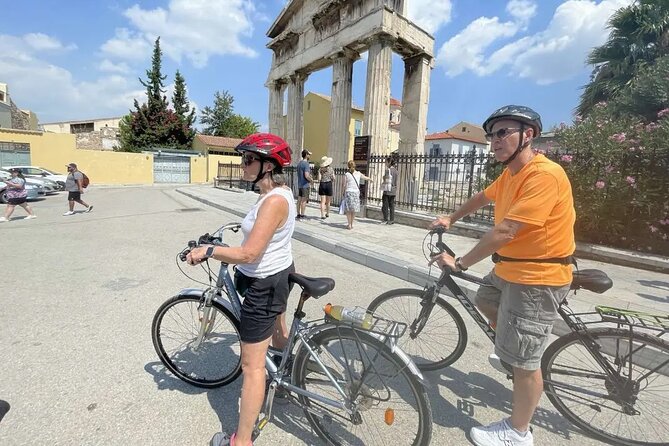
Athens is easier to understand from a bicycle seat. This 2.5-hour ride links ancient ruins, food markets, leafy gardens, busy squares, and local neighborhoods without making you retrace the same street all day. Guide Stavros leads the group, with a route designed to avoid the worst traffic while still showing you the city’s many faces.
I like the small group of up to 10 people, which makes it easier to hear the guide and adjust the pace. I also like the mix of major sights and everyday Athens, from the Panathenaic Stadium and Temple of Olympian Zeus to Psirri’s back streets and the Varvakios food market.
The main consideration is physical rather than cultural: you need to be comfortable riding in an urban setting. Most of the route is described as easy, but you will encounter cobblestones, foot traffic, city streets, and a few short hills. In hot weather, the ride can feel demanding.
Key points at a glance
- A full central Athens loop: See the Acropolis area, Plaka, Syntagma, the National Gardens, Kallimarmaro, the Agora, Monastiraki, and more in one outing.
- Stavros leads the ride: He is described as both the owner and guide, with long experience cycling in Athens and a strong grasp of local history and city life.
- Small-group format: The group is capped at 10, allowing for a more personal pace and clearer explanations.
- Mostly easy cycling: Expect quiet roads and flat stretches, with some cobbled surfaces and short hills.
- Bikes and helmets included: You receive a 28-inch Trekking bike, helmet, and bottled water.
- Useful on your first day: The route gives you a practical sense of Athens neighborhoods and helps you decide where to return later.
Why a bicycle works so well in central Athens
Athens can feel scattered when you explore it on foot. The Acropolis sits above a broad spread of neighborhoods, ancient sites appear between modern streets, and several key places are close enough to visit together but far enough apart to make walking tiring.
A bicycle connects those pieces. You can cover more ground than you would on foot, yet still move slowly enough to notice side streets, market stalls, old facades, and changes between districts. This is not a race from one landmark to the next. The route includes regular stops, local streets, and short pauses for explanation.
The ride begins at Flat Tyres Psycling Club on Thessalonikis 140 in Athens. It ends back at the same meeting point, so you do not need to arrange a separate return transfer. The activity is offered in English, and several start times are available, which helps if you are working around museum visits, meals, or an arrival schedule.
The bikes are 28-inch Trekking bikes, with helmets provided. Bottled water and taxes are included. Hotel pickup, food, and extra drinks are not included, so plan your route to the shop and carry anything else you need.
More Historic Bike Tours in Greece
- Historic Athens: Small Group Electric Bike Tour
★ 4.9 · 966 reviews - Athens: Small Group E-Bike Tour of Historic Highlights
★ 4.9 · 154 reviews - Athens Highlights by E-Bike: Small-Group Historic Tour
★ 5.0 · 131 reviews
From Kerameikos to Psirri
The ride heads into central Athens using the metropolitan bike lane before reaching Kerameikos Cemetery. This ancient burial ground gives you an early look at Athens beyond its most famous hilltop monument. It is a useful first stop because it places the city’s ancient past inside the modern urban grid rather than separating archaeology from daily life.
From Kerameikos, the route turns toward Psirri. This neighborhood is known for its narrow streets, small businesses, informal corners, and changing street scene. The guide takes you through less direct streets here, giving the ride a sense of discovery without losing the overall route.
You then reach Athens Town Hall and the Varvakios food market, described as the city’s traditional and largest food market. This is one of the tour’s most useful contrasts. One moment you are looking at ancient remains, and the next you are seeing the practical food center of modern Athens.
The market area can be lively and crowded, so cycling may slow down here. That is not a flaw so much as a reminder that this is an active part of the city, not a staged attraction. You should be ready to walk the bike briefly or follow the guide carefully through foot traffic.
Plaka, Syntagma, and the National Gardens
The route continues through paved streets into Plaka, the old neighborhood below the Acropolis. Plaka is one of the most atmospheric parts of central Athens, but its narrow streets and heavy pedestrian use require careful riding. This is a place to focus on the guide’s directions rather than trying to look everywhere at once.
At Syntagma Square, you see the Greek Parliament. The square is a major reference point for understanding Athens, and it also gives you a clear sense of how the political center fits into the historic core.
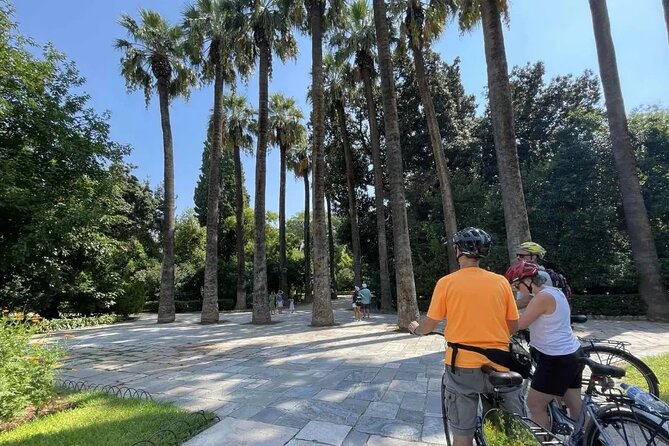
From Syntagma, the ride enters the National Gardens. This is a welcome change after city streets, especially in warm weather. The route then reaches Zappeion Hall, a grand building used for conferences and exhibitions. The setting gives you a break from traffic while adding another layer to the city’s public architecture.
The gardens and Zappeion area also show why a bicycle is practical here. You can move between the square, the park, and the next group of monuments without spending much of your limited sightseeing time on long walks.
Kallimarmaro and the Temple of Zeus
The Panathenaic Stadium, also called Kallimarmaro, is one of the strongest stops on the route. Its white marble seating and long oval form make it easy to grasp from outside, even during a short visit. The stadium is tied to the ancient Panathenaic Games and the modern Olympic story, so it connects several periods of Greek sporting history in one place.
The ride then passes through the Zappeion area toward the Temple of Olympian Zeus and Hadrian’s Arch. The temple’s surviving columns give you a clear sense of its original scale, while Hadrian’s Arch marks the boundary between older Athens and the Roman expansion of the city.
These stops are close together, which keeps the ride efficient. You are not burning time on long transfers between monuments. The tradeoff is that the tour is designed for orientation and outdoor viewing, not for an extended archaeological visit. If you want to examine each site in detail or enter museums, set aside separate time.
More Historic Bike Tours in Athens:
- Athens: Bike Tour of Athens Historical Centre
★ 5.0 · 61 reviews - Ancient Athens E-Bike Tour
★ 5.0 · 48 reviews - Athens: Old Town Electric Bike Tour with Local Mezes
★ 4.8 · 21 reviews - Historical Singapore Bike Tour on Full-Sized Bicycles
★ 5.0 · 1,421 reviews
The Acropolis area and Herod Atticus Odeon
The route brings you to the Acropolis Museum, located below the sacred rock of the Parthenon. The itinerary also identifies the Parthenon and the Herod Atticus Odeon among the main sights. Here, the bicycle gives you a useful view of how the Acropolis relates to the neighborhoods and ancient monuments around it.
The Herod Atticus Odeon is a particularly striking outdoor sight, with its theater form set against the Acropolis slope. The tour does not promise a concert or a full interior visit, so think of this portion as a guided look at the setting and history from the route.
This is also where traffic and pedestrians can become more demanding. The guide’s experience matters. Several riders specifically appreciated Stavros’s directions through vehicle traffic, foot traffic, and busy crossings. You should still remain alert and follow his instructions closely.
A pause on Filopappou Hill and Pnyka
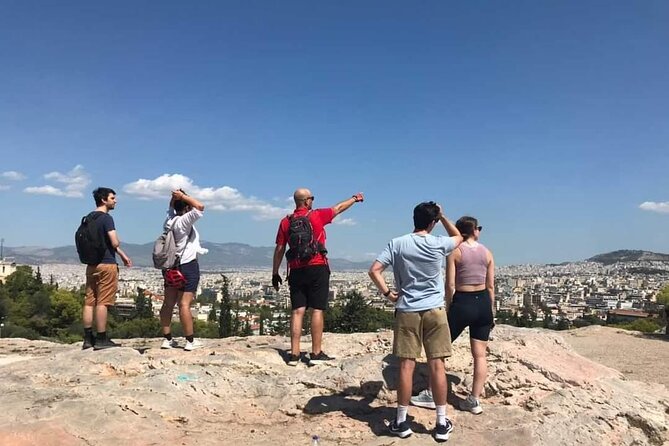
A short break at Filopappou Hill and Pnyka is one of the best features of the route. After several central-city stops, you get space to pause and look across Athens. The panoramic view helps you place the Acropolis, surrounding districts, and the wider city in relation to one another.
Pnyka also carries historical weight as a meeting place associated with ancient civic life. The stop is not only about taking photographs. It helps connect Athens as a modern capital with the political traditions linked to its ancient identity.
The hill does introduce some effort. The ride includes a few short hills, and this part may feel harder in strong heat. You do not need to be a serious cyclist, but you should be ready for a moderate urban ride rather than a completely flat promenade.
The Agora, Monastiraki, and Thiseio
After the hill, the route reaches the Ancient Agora of Athens and the Roman Agora. These are important stops because they show how Athens functioned as a public and commercial center across different eras. The Ancient Agora was tied to civic, social, and commercial life, while the Roman Agora reflects the later Roman period.
The tour also passes through Monastiraki’s open market area. This is one of the city’s best places to see modern shopping, street activity, and historic surroundings sharing the same few blocks. The mix can be crowded, so expect a slower pace and careful navigation.
The final stretch runs through the paved streets of Thiseio before returning to Petralona and the meeting point. Thiseio is a pleasant area for seeing the Acropolis from street level, though the exact amount of time spent at each point depends on the group’s pace and traffic conditions.
The full loop is ambitious for 2.5 hours. That is its strength if you want a broad first look at Athens. It is less suitable if you prefer long, quiet stops at every ruin.
What makes the guide important
A city bike tour succeeds or fails on route management. Athens has busy roads, pedestrians, uneven surfaces, and crowded historic districts. The guide needs to choose sensible streets, keep the group together, and give clear signals.
Stavros is repeatedly described as friendly, calm, and enthusiastic. He is also said to tailor the pace to the group and answer questions about history, city politics, cycling, and social life in Greece. That broader context is useful because you are not simply being handed dates and names. You get a sense of how the ancient center fits into present-day Athens.
His cycling experience is another practical plus. The route is planned to avoid the worst vehicle and pedestrian traffic when possible, and the group rides mostly on quiet or easy streets. Still, Athens remains an active capital. You should not expect a closed course or a completely traffic-free ride.
How hard is the ride?
The ride is described as mostly flat and easy to pedal, with a few short hills. Some parts use paved streets, while others include cobbled surfaces. Several riders who had not cycled for years were able to keep up, and one rider who felt unsure on a bike received close attention from the guide.
That said, the tour is not a good choice if you cannot ride confidently in a city. You need to steer, brake, watch for pedestrians, and follow directions around traffic. Hot weather can add to the challenge, particularly during the hill section.
Wear comfortable clothes and shoes, bring sun protection, and use the supplied water sensibly. Since snacks and drinks beyond bottled water are not included, eat before the ride if you tend to get hungry during active sightseeing.
Is $41.03 a fair price?
At $41.03 per person, this is a reasonable price for a small-group city tour that lasts about two and a half hours. You are paying for the guide, bike, helmet, water, and a route that covers a large part of central Athens.
The value is strongest if this is your first visit or if your time is limited. In one outing, you see ancient cemeteries, temples, Roman remains, markets, government buildings, parks, neighborhoods, and a hilltop view. You also gain a practical map of the city that can help you plan the rest of your stay.
The value is lower if you want long visits inside archaeological sites. This is an outdoor sightseeing ride. Entry to individual attractions is not listed as part of the experience, and food is not included. Treat the tour as a city orientation with historical commentary, then return on foot or by public transport to the places you want to study more closely.
Who should book this Athens bike tour?
I would choose this tour for a first full day in Athens, especially if you want an overview before deciding where to spend more time. It also suits people with only a short stay, since the route covers much more ground than a relaxed walking tour.
It works well for couples, friends, and families with older children who can manage city cycling. The maximum group size of 10 keeps the ride personal without making it a private tour.
I would think twice if you dislike bikes, feel uneasy around traffic, or want a slow archaeological tour with long indoor visits. The route is easygoing in pace, but it is still an urban ride with hills, cobbles, and busy public spaces.
Free cancellation is available up to 24 hours before the start time. The experience depends on good weather, so a poor-weather cancellation results in a different date or a full refund.
Should you book it?
Book it if you want to see the shape of Athens quickly and prefer local streets to a strict monument-to-monument route. The strongest reasons are the broad itinerary, the small group, Stavros’s careful navigation, and the useful mix of ancient sites and ordinary city life.
Skip it if your main goal is to spend hours inside the Acropolis Museum, Ancient Agora, or other archaeological sites. For most first-time visitors who are comfortable on a bike, though, this is a smart way to get your bearings, learn the city’s layout, and save your walking energy for the places you want to explore in depth.
FAQ
Where does the Athens bike tour start?
The tour starts at Flat Tyres Psycling Club, Thessalonikis 140, Athina 118 53, Greece.
Where does the tour end?
The activity ends back at the meeting point.
How long does the tour last?
The tour lasts approximately 2 hours and 30 minutes.
What language is the tour offered in?
The tour is offered in English.
What is the maximum group size?
The group can include a maximum of 10 people.
Are bikes and helmets provided?
Yes. A 28-inch Trekking bike and helmet are provided.
Is bottled water included?
Yes. Bottled water is included.
Are hotel pickup and drop-off included?
No. Hotel pickup and drop-off are not included.
Are food and extra drinks included?
No. Snacks and drinks beyond the included bottled water are not included.
What happens if bad weather cancels the tour?
Because the experience requires good weather, you will be offered a different date or a full refund if poor weather causes cancellation.
More history tours in Athens
- Barcelona: 2.5-Hour Bike or E-Bike Historical Tour
★ 4.5 · 1,262 reviews - Asheville Historic Downtown Guided Electric Bike Tour with Scenic Views
★ 5.0 · 1,234 reviews - Bordeaux: Historic Center & Chartrons District Bike Tour
★ 4.8 · 709 reviews - Intramuros, Manila: Historical Bamboo Bike Tour
★ 4.8 · 583 reviews
Latest bike tours added in Athens
- Sustainable Athens Bike tours with photos★ 5.0 · 13 reviews
- Bike tour ! It’s Ride through Athens’ Local Treasures★ 5.0 · 90 reviews
- Private Athens Electric Bike Tour★ 5.0 · 56 reviews
- Athens Street Art Bike Tour★ 5.0 · 20 reviews
- Private Athens Electric Bike Tour★ 5.0 · 173 reviews
- Discover the City e-bike night tours★ 5.0 · 23 reviews
- Discover the City e-bike day tours★ 5.0 · 22 reviews
- Athens Sights Highlights on eBike Tour with Local Food & Drinks★ 5.0 · 13 reviews
Historic & Landmark Bike Tours, compared.

Historical Singapore Bike Tour on Full-Sized Bicycles
Read our review →

Asheville Historic Downtown Guided Electric Bike Tour with Scenic Views
Read our review →
Krakow: Bike Tour of Old Town, Jewish Quarter and the Ghetto
Read our review →
Historic Athens: Small Group Electric Bike Tour
Read our review →
Barcelona e-Bike Tour: Gaudí & Old Town Small Group
Read our review →
Bordeaux: Historic Center & Chartrons District Bike Tour
Read our review →Browse the lists this tour appears in