
Review · BELGIUM BIKE TOURS
Ghent: Guided Urban Bike Tour
Ghent’s postcard center is only the beginning. This 150-minute bike tour takes you from the old heart of town into changing neighborhoods, using the original tracks of a local who knows where street art, parks, cultural spaces, and less obvious history turn up. You cover far more ground than on foot, without treating the city like a checklist.
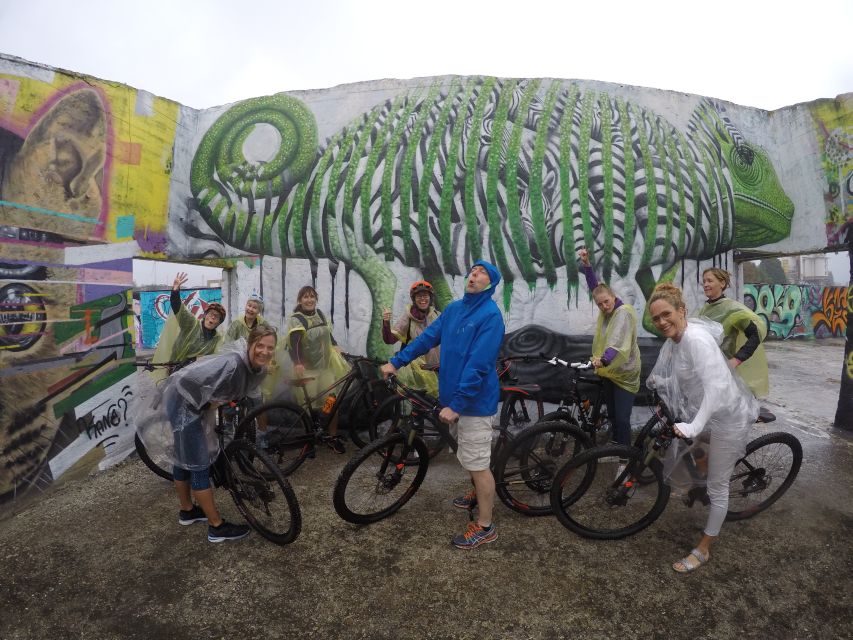
I like two things here: the small groups of no more than 10 and the excellent mountain bikes, which are useful on cobblestones, tram tracks, and uneven city streets. I also like the personal extras, including a water bottle to keep, a Polaroid photo, and digital GoPro pictures sent after the ride.
The main consideration is simple: you need to be comfortable riding a bike in city traffic. This is not a gentle sightseeing bus with a quick bicycle photo stop. One rider found the early pace brisk for an e-bike user, so ask for a slower start if you need time to settle in.
Key points at a glance
- A local route beyond the old center: Ride from Ghent’s historic core toward dynamic suburbs and areas most visitors miss.
- Street art is a major theme: Expect colorful walls, unusual installations, and creative spaces rather than only medieval façades.
- Quality bikes matter here: The semi-pro mountain bikes handle cobblestones, tram lines, and rougher surfaces better than basic rental bikes.
- Christophe brings the city to life: The main guide is known as Christophe or Chris, a Ghent native with a lively, personal style.
- The route can follow your interests: The tour may shift according to the group, with room for questions about politics, culture, food, and daily life.
- Useful keepsakes are included: You receive a water bottle and Polaroid, while tour photos are sent by email or file transfer.
Why this Ghent bike tour feels different
Many Ghent tours stay within the compact center, where the castle, canals, guildhalls, and cathedral make an easy sightseeing circuit. Those sights matter, but they show only the polished face of the city. This ride uses the center as a starting point, then heads toward the places where modern Ghent expresses itself.
That change of scenery is the point. You may pass old buildings, newer developments, parks, repurposed spaces, cultural institutions, and walls covered in art. The guide explains how the city works today, not just what happened centuries ago. You get stories about local life, social questions, art, politics, and the small details that are easy to miss from a pavement.
I especially like this approach for a second visit to Ghent. If you have already seen the central landmarks, the ride gives you a fresh angle. For a first visit, it works best when you pair it with a separate walk through the historic center before or after the tour.
More guided departures in Belgium:
- Antwerp: City Highlights Guided Bike Tour
★ 4.7 · 529 reviews - Bruges: Guided Retro Bike Tour of Highlights and Hidden Gems
★ 4.9 · 374 reviews - Guided Bike Tour: 2 Hours Highlights of Antwerp
★ 5.0 · 347 reviews
Starting with Christophe, Chris, or another local guide
Christophe is the name that comes up most often in the available tour information, sometimes shortened to Chris. He was born and raised in Ghent, and his style is less formal lecture and more local friend showing you around town. He is energetic, humorous, and happy to explain why a place matters to residents.
That personality shapes the ride. You are not simply handed dates and architectural labels. You can ask about local culture, current issues, food, nightlife, or the meaning behind a piece of street art. One group used the time to discuss the life and politics of the area, while another received restaurant and activity tips for later.
The guide may adapt the route to the group’s interests. That flexibility is valuable, but it also means the exact sequence is not fixed. If you want a particular subject, bring it up early. The tour can then feel more personal instead of following a rigid script.
The advertised languages are Dutch and English. A few comments in the feedback note that English delivery can occasionally require patience, especially when a guide is using English less often. The overall strength is the guide’s enthusiasm and local perspective, not polished museum-style narration.
Leaving the postcard center by bike
The first practical benefit of cycling is distance. In two and a half hours, you can move between the central sights and outlying districts far more efficiently than on foot. You still stop regularly for explanations, photos, and street art, so this is not a race.
The route is described as mostly flat, which makes it manageable for many riders. Several people in their fifties and sixties found the pace comfortable, and families with riders who were not especially experienced managed well with guidance. You need to know how to ride and follow traffic rules, but you do not need to be a strong cyclist.
Ghent is well suited to bikes, yet city cycling still asks you to pay attention. You will need to steer, brake, watch traffic, and keep up with the group. If you normally use an e-bike and are less used to a standard bike, say so before setting off. A short practice run and a slower first section would help.
One useful detail is safety. The guides are described as taking care with crossings and streets, and the mountain bikes offer a stable ride. Still, your own comfort matters more than the advertised pace. Tell the guide if you need to slow down.
Street art, parks, and the city behind the façades
Street art is one of the strongest reasons to choose this tour. Ghent has more creative work than you are likely to find by simply walking between the major monuments. The ride brings you to painted walls, unusual installations, cultural corners, and art that reflects local ideas and disagreements.
The appeal is not only visual. The guide adds context, pointing out artists, themes, and the way Ghent uses public space. You may see work that is playful, political, strange, or deliberately provocative. This gives the city a more current voice than a standard old-town circuit.
Parks and quieter corners break up the urban riding. They give you a pause from traffic and a chance to hear more of the explanation. The route also includes places connected with repurposed buildings and recycled materials, details that show how Ghent has made use of older spaces rather than treating the center as a museum set.
Do not expect every stop to be a grand attraction. Some points may be valuable because they reveal how local people use the city, not because they are instantly photogenic. That is a strength if you want everyday Ghent. It may feel less satisfying if your only goal is to see every famous monument.
More bike tours in Belgium:
- Ghent Bike Tour Off-the-beaten-track
★ 5.0 · 505 reviews - Brussels: City Highlights and Hidden Gems Bike Tour
★ 4.8 · 443 reviews - Bruges: Guided Bike Tour with a Local to Sights & Secrets
★ 4.8 · 278 reviews - Antwerp Bike Tours: The Highlights & Beyond
★ 4.8 · 207 reviews
The mountain bikes on cobblestones and tram lines
The bikes are semi-professional mountain bikes, with Cube models mentioned in the tour feedback. This is a real advantage. Basic city-tour bikes can feel heavy, stiff, or awkward when a route crosses rough paving. These bikes are described as light, sturdy, well maintained, and comfortable for the urban terrain.
Their tires are suited to cobblestones and are less likely to slip. Riders also appreciated that the tires should not catch as easily in tram tracks. That matters in Ghent, where rough surfaces and rails can make an ordinary bicycle feel nervous.
There is a short adjustment period. One rider found the suspension and brakes took time to get used to, while another noted that the seat was not especially comfortable. You may also need to adapt to the bike’s handling if you normally ride a simple city bike.
A helmet is provided, and a rain poncho is available if needed. The tour runs in wet weather, and one particularly rainy outing was still considered worthwhile. Even so, wear practical clothing and expect some road spray when conditions are poor.
A personal route rather than a fixed sightseeing list
The phrase off the beaten path is useful here, provided you understand what it means. You will not be shown a secret version of every famous sight. Instead, you will see a broader mix of Ghent, including areas that a normal visitor might pass without stopping.
The route can include historical places, street art, parks, cultural institutions, and small details about the city’s development. The guide may point out a sculpture, a repurposed building, a local art project, or a social issue that has no place on a traditional highlights list.
This is also why the tour works for people who dislike standard guided sightseeing. The commentary can move from medieval history to present-day culture, then to a food suggestion or a curious local story. The ride has a loose, conversational feel, though the guide still needs to keep the group moving.
A microbrewery stop is mentioned as an option on one outing, but do not treat that as a guaranteed part of every departure. The same applies to particular restaurants or art sites. The route may change with weather, group interests, and the guide’s plan for the day.
The small extras that make the ride memorable
The water bottle is yours to keep. It is a practical inclusion, especially on a ride lasting two and a half hours, and it gives you something useful rather than another disposable souvenir.
The Polaroid photo is taken during the tour, with a graffiti-art area mentioned as one memorable setting. You take that picture home at the end. GoPro photos from the ride are sent to your email or by file transfer afterward, adding a record of the group and the route without requiring you to stop and manage your own camera constantly.
These extras do not transform the tour, but they show care. The same is true of small gestures such as lending a backpack or waiting for a group member who became lost on the way to the meeting point. You should not count on every special favor, yet the experience is clearly designed to feel personal.
The guide also gives recommendations for places to eat, drink, and visit after the ride. Take notes. A bike tour early in your stay can help you choose what deserves a longer visit later.
Is $56 a fair price for 150 minutes?
At $56 per person, this is not the cheapest way to see Ghent. You can walk around the center for free, and standard bicycle rentals may cost less. The price makes more sense when you count what is included: a quality mountain bike, helmet, guide, water bottle, Polaroid, digital photos, and a route that covers districts you might not reach on foot.
The small-group format is the real value. With no more than 10 people, the guide can answer questions and adjust the pace more easily than on a large coach or mass bicycle tour. You are paying for access to local judgment as much as for the bike.
For a first day in Ghent, the ride can also save time. It gives you a broad picture of the city, then helps you decide where to return. For a repeat visitor, the value is stronger because the route focuses less on the standard sights.
I would consider the price fair for riders who want a personal, active introduction. It is less compelling for someone who wants a slow, exhaustive explanation of each central monument, or for anyone uncertain about cycling in traffic.
Who should book it, and who should think twice?
Book this tour if you enjoy seeing how a city lives beyond its main square. It suits couples, families with teenagers, solo riders, and groups who want a local guide rather than a standard script. The stated age range is 16 to 75, and teenagers must be accompanied by an adult.
You should be able to ride confidently enough to follow traffic rules and manage a bike for 150 minutes. You do not need athletic ability, and the route is mostly flat, but basic bike control is essential. Unaccompanied minors are not allowed.
I would be cautious if you dislike bicycles, have trouble with uneven surfaces, or want a completely fixed itinerary. I would also make your pace needs clear at the start, especially if one person in your group is a less confident rider.
Cancellation is flexible up to 24 hours before the tour for a full refund, and you can reserve now and pay later. Check the available departure time when booking, since the tour lasts two and a half hours.
Should you book the Ghent Urban Bike Tour?
Yes, if your idea of sightseeing includes street art, local stories, changing neighborhoods, and a few surprises. The strongest parts are the guide’s personal connection to Ghent, the quality of the bikes, the small group, and the chance to see more than the postcard center.
I would book it early in a Ghent stay, then return on foot to the places that caught your attention. If your trip is short, this gives you a fast but meaningful orientation. If you have already seen the famous sights, it offers the fresh angle you are likely seeking.
Skip it only if you are not comfortable cycling or want a quiet, tightly scripted walking tour. For everyone else, $56 buys a lively local introduction, useful city advice, and a much wider view of Ghent than two feet can usually manage.
FAQ
How long does the Ghent Guided Urban Bike Tour last?
The tour lasts 150 minutes, or two and a half hours.
How much does the tour cost?
The listed price is $56 per person.
What languages are available?
The live tour guide speaks Dutch and English.
How many people are in the group?
The tour is offered for a small group of no more than 10 people.
Are bikes included?
Yes. A semi-professional mountain bike is included in the booking.
Is a helmet provided?
Yes. Helmet rental is included.
Do I receive anything to take home?
Yes. You receive a drinking bottle and a Polaroid picture. Photos taken with a GoPro are sent to your email.
Is the tour suitable for children?
The stated suitable age range is 16 to 75. Teenagers must be accompanied by an adult, and unaccompanied minors are not allowed.
Do I need to be an experienced cyclist?
You do not need to be a strong cyclist, but you must be able to ride a bike and follow traffic codes. You should be comfortable cycling in an urban setting.
What happens if it rains?
A rain poncho is available if required. The tour can operate in rainy conditions, though you should dress for the weather.
Can I cancel the booking?
You can cancel up to 24 hours in advance for a full refund. Reserve now and pay later is also available.
Latest bike tours added in Belgium
- Antwerp Bike Tours★ 5.0 · 200 reviews
- 3-Hour Antwerp Bike Tour★ 5.0 · 113 reviews
- Ghent: City Highlights and Hidden Gems Guided Bike Tour★ 4.7 · 196 reviews
- From Bruges: Family-Friendly Countryside Guided Bike Tour★ 4.8 · 15 reviews
- Brussels: Sightseeing Bike Tour★ 4.7 · 106 reviews
- Bruges: City Bike Tour with a Local★ 5.0 · 116 reviews
- Bruges by bike with family and friends!★ 4.4 · 22 reviews
- Bruges: E-Bike Rental and Trip Tips★ 5.0 · 12 reviews
Belgium Bike Tours, compared.
Brussels: City Highlights and Hidden Gems Bike Tour
Read our review →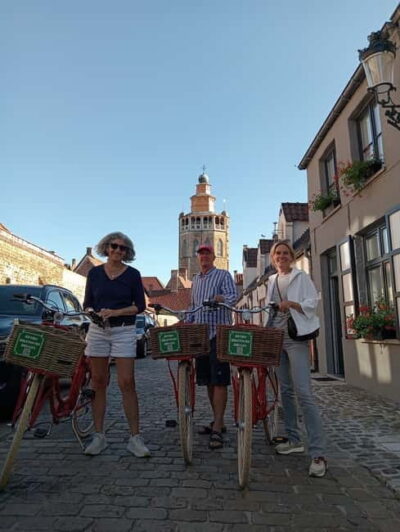
Bruges: Guided Retro Bike Tour of Highlights and Hidden Gems
Read our review →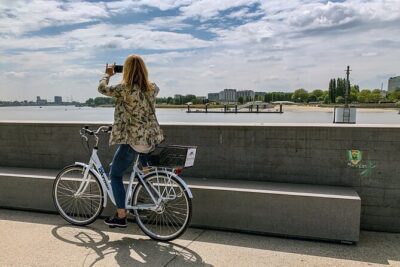
Guided Bike Tour: 2 Hours Highlights of Antwerp
Read our review →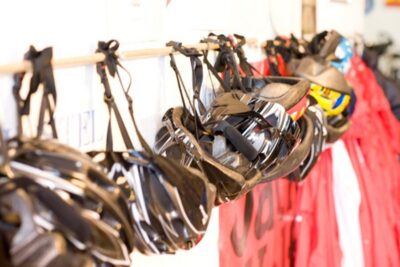
Bruges: Guided Bike Tour with a Local to Sights & Secrets
Read our review →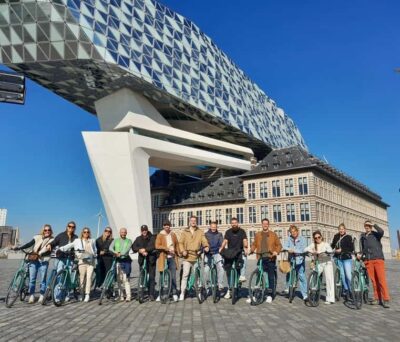
Browse the lists this tour appears in