
Review · AUSTRALIA BIKE TOURS
The Best of Melbourne Bike Tour
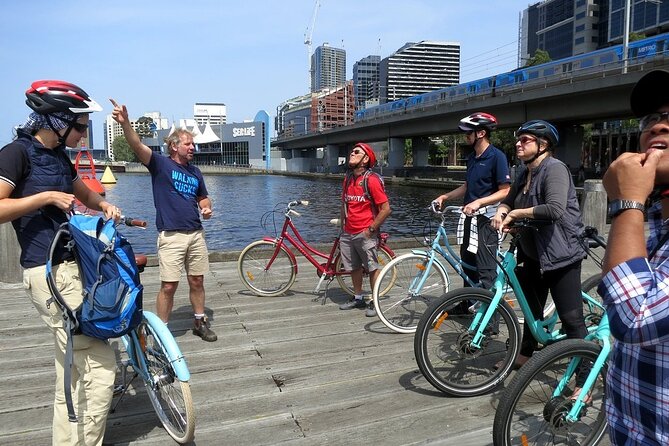
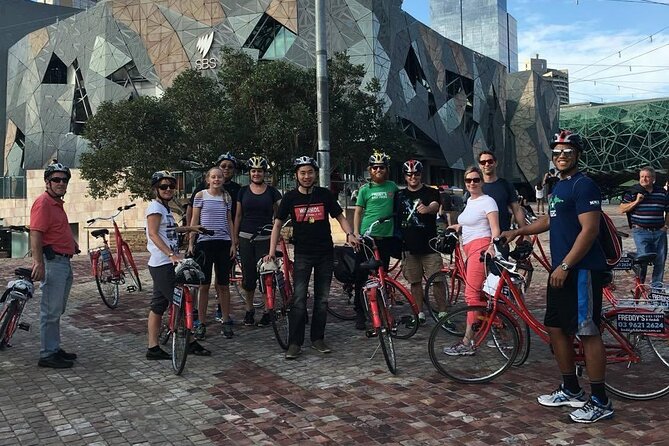
Melbourne opens up quickly from a bicycle. In four and a half hours, you can reach the river, the Shrine of Remembrance, the MCG, Fitzroy Gardens, Chinatown, Hosier Lane, and Federation Square without spending the day walking between them. The ride also makes room for stories about Melbourne’s Aboriginal past, gold-rush wealth, immigration, and present-day city life.
I like the small group size of up to 10, which makes it easier to hear the guide and keep the ride relaxed. I also like the one-hour Fitzroy stop, since you get time for lunch rather than trying to eat while standing beside a monument. The main caution is city riding: some sections can involve pedestrians, traffic, and busy paths, and one rider found the pace too slow while another found it reassuring.
Key points before you book
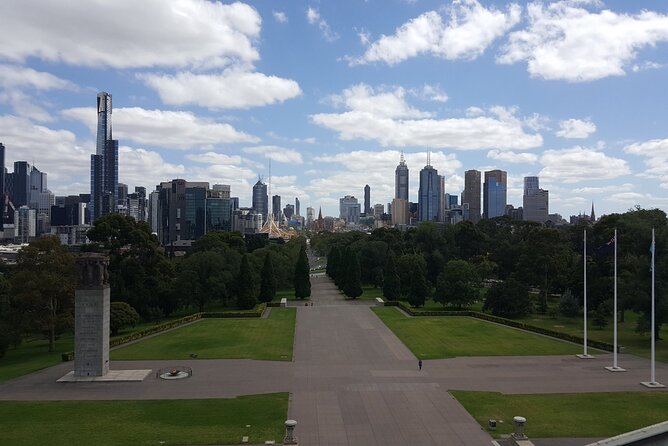
- A full city overview in 4.5 hours: You cover major sights on both sides of central Melbourne without the legwork of a walking tour.
- Aboriginal history is part of the route: The tour acknowledges the Kulin Nation and introduces William Barak, an important Aboriginal leader and advocate.
- Fitzroy provides the real break: The scheduled one-hour stop gives you time to buy lunch and enjoy one of Melbourne’s best-known neighborhoods.
- The guide shapes the experience: Finn, Marcus, Matt, Max, Freddy, and Ciarán are among the guides praised for clear stories, safety, and friendly conversation.
- Bike choice matters: Regular bicycles and e-bikes are offered, so check exactly which option you are booking.
- It is good value for active sightseers: At $78.18 per person, the price includes the bike, helmet, guide, and a broad city introduction, but not food or drinks.
Why a bicycle is a smart way to see Melbourne
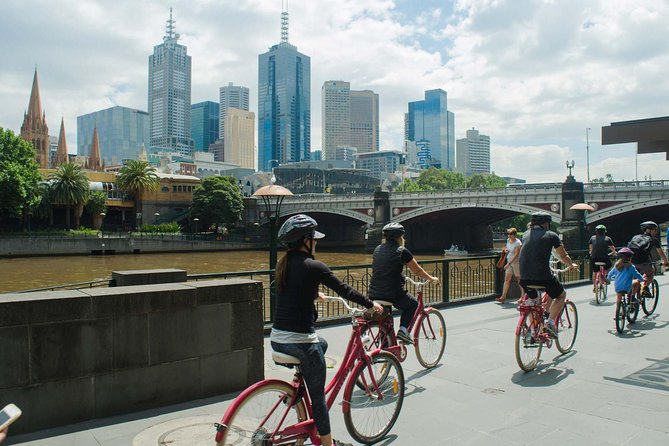
Melbourne’s central sights are spread out. Southbank sits along the Yarra River, the MCG is east of the center, Fitzroy is farther north, and Federation Square brings you back toward the river. On foot, you would spend a fair amount of time walking between these points. By bike, the city feels connected.
This is not a race or a serious cycling workout. The route is designed as a sightseeing ride, with frequent stops and a generally relaxed pace. That suits you if you want time to look around, listen to local stories, and take photographs. Several guides, including Finn, Marcus, and Matt, received strong praise for keeping a steady pace while explaining Melbourne’s past and present.
The group limit of 10 is useful. A large cycling group can stretch across intersections and make it hard to hear. Here, you should have a better chance of staying close to the guide and asking questions. Still, you need basic confidence on a bicycle. The route passes through an active city, and one account described busy pedestrian areas as an obstacle course at times. That is a fair warning, especially if you rarely cycle in urban settings.
Bikes and helmets are included, so you do not need to arrange a rental. Some bookings use e-bikes, while others use regular bicycles. One rider accidentally booked the standard bike instead of the e-bike and found the mostly flat route manageable, but another specifically recommended the electric option because of some hills. Read the bike choice carefully before paying.
More bike tours in Australia:
- From Perth: Rottnest Island Full-Day Bike and Ferry Trip
★ 4.7 · 2,548 reviews - Sydney Bike Tours
★ 5.0 · 1,125 reviews - From Fremantle: Rottnest Island Ferry and Bike Day Tour
★ 4.6 · 805 reviews
Southbank begins with place and memory
The meeting point is at 20 Rebecca Walk, and the tour begins at 10:00 am. The first stop is Southbank, where the guide acknowledges the Kulin Nation and the fact that its land was never ceded. That opening gives the ride a useful frame. Melbourne is not presented only as a Victorian gold-rush city or a modern food and sports capital.
You also hear about settler figures who helped shape the city. The stop is short, around five minutes, but it sets up the historical themes that return throughout the morning. You can expect a quick orientation rather than a long lecture.
Southbank is also a practical starting point. You are close to the Yarra and central Melbourne, with plenty of city activity around you. Take a moment to settle onto the bike before the route gathers speed.
The Shrine and William Barak
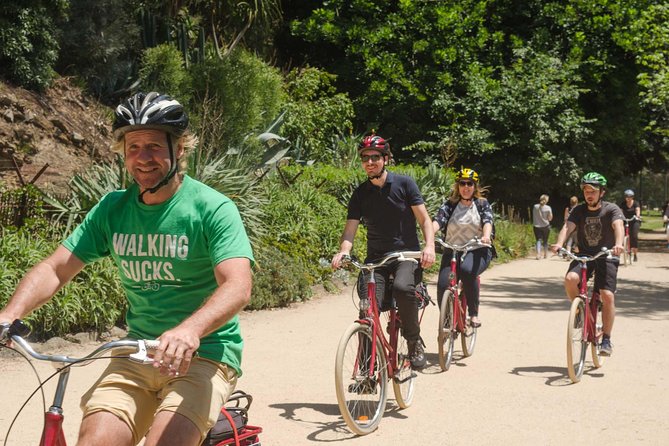
The ride continues to the Shrine of Remembrance, Victoria’s largest and most visited war memorial. Its formal design and broad setting give you a clear sense of the importance Melbourne places on military memory.
The stop also introduces William Barak, an Aboriginal leader, activist, cultural ambassador, educator, and advocate for Aboriginal rights. That pairing is worthwhile. You are not simply looking at a grand memorial; you are also being asked to consider whose stories have shaped Victoria and how those stories are remembered.
The scheduled stop is only about five minutes, so do not expect an interior visit or a long guided tour of the shrine. The value here is the setting, the explanation, and the way the guide links the site to wider Australian history.
The MCG and Melbourne’s sporting identity
The Melbourne Cricket Ground is a natural stop for anyone interested in sport, large stadiums, or the social life of the city. Melbourne calls itself the sporting capital of the world, and the MCG helps explain why.
You will see the stadium area and learn about its role rather than attend a match as part of the tour. One rider even managed to see some tennis for free during the day, but that was a bonus tied to what was happening in the city, not a standard part of the experience.
The five-minute stop is brief. I would think of it as a useful orientation point, not a stadium tour. If the MCG is a top priority for you, plan a separate visit on another day.
Another way to spend a morning on two wheels:
- Famous Melbourne City Bike Tour
★ 5.0 · 779 reviews - From Perth: Rottnest Island Ferry & Bike Trip
★ 4.5 · 627 reviews - Manly Self-Guided Bike Tour
★ 4.5 · 573 reviews - From Fremantle: SeaLink Rottnest Ferry and Bike Hire
★ 4.7 · 465 reviews
Fitzroy Gardens and Cook’s Cottage
Fitzroy Gardens brings a change of pace. The greenery provides a pleasant contrast to the broad roads, buildings, and stadium grounds you have just passed.
The unusual feature here is Cook’s Cottage, which was shipped from England and rebuilt brick by brick in the gardens. The detail is memorable because it captures the way Melbourne often layers imported British traditions over an Australian setting.
Again, the official stop is short, about five minutes. You should have enough time to see the cottage area and hear the story, but not enough for a full garden stroll. If you want photographs or a closer look at the cottage, you may wish to return independently.
Parliament House and gold-rush wealth
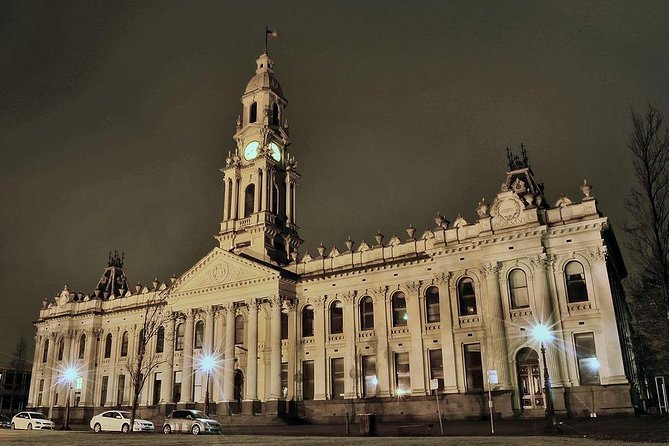
Parliament House of Victoria offers a quick lesson in Melbourne’s nineteenth-century confidence. The building was constructed to show the wealth created by the gold rush, when Melbourne was one of the world’s richest cities.
That context makes the architecture easier to read. This is not just a government building on a cycling route. It reflects a period when gold transformed the city, funded ambitious construction, and helped create the grand civic center you see today.
The stop lasts about four minutes. Expect an exterior view and commentary, not an interior parliamentary visit. The short stop works well on a bike tour, where the goal is to connect many parts of the city rather than spend an hour at each one.
The Royal Exhibition Building and a proper lunch in Fitzroy
The Royal Exhibition Building is one of the route’s most impressive architectural stops. It was built for the international exhibition movement of the nineteenth century, when countries gathered to exchange goods, technology, ideas, culture, and values.
That purpose gives the building more meaning than a quick photograph might suggest. Melbourne was presenting itself to the world, and the grand scale reflects that ambition. You get about five minutes here, enough for the guide to explain why the building matters and for you to take in the exterior.
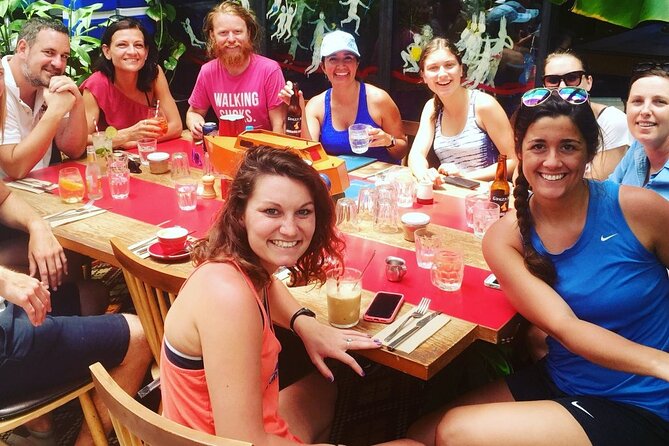
Then the tour reaches Fitzroy, where the schedule changes from sightseeing to lunch. The stop lasts one hour, and you pay for your own food and drinks. Some riders enjoyed the café selected by the guide, while one person hoped for a smaller, more distinctly local café rather than a larger venue. Your experience may depend on the day’s choice and your own taste.
This is still one of the tour’s strongest design choices. A mid-morning start lets you ride before the heat or fatigue builds, then pause for a genuine meal. Bring money or a payment method for lunch. The break also gives you time to talk with the guide and the rest of the group.
Fitzroy is known for its eclectic character, and a stop here gives you a look at Melbourne beyond formal landmarks. You are not simply passing through a string of monuments. You get a chance to sit down, eat, and notice how the city lives between the major attractions.
Chinatown and the gold-rush connection
After lunch, the route heads to Chinatown. Melbourne’s Chinatown was established in 1851 in response to the gold rush and is described as the second-oldest Chinatown in the world.
The stop lasts about five minutes, so you will not have time for a meal or extended wandering here. Instead, the guide gives you a short introduction to the district’s origins and its place in central Melbourne.
That connection to the gold rush ties Chinatown back to the earlier stops. Melbourne’s wealth and growth did not come from one group alone. The city was shaped by migration, commerce, and people arriving from many parts of the world.
Hosier Lane puts modern Melbourne on the route
Hosier Lane shows the city in a different mood. Its bluestone surface and layers of street art give you the Melbourne most often seen in photographs and city guides.
You pull the bike aside and let the lane do the work. The stop is brief, but the setting is visually strong and easy to enjoy without a long explanation. If you like urban art, this may be one of the most satisfying stops of the day.
Do not expect a fixed gallery or a permanent display. Street art changes. The appeal is the lane itself, the concentration of painted surfaces, and the contrast with the formal buildings earlier in the route.
Federation Square and the Yarra finish
Federation Square brings the ride back toward the river and central Melbourne. It is the city’s first public square, designed to connect Flinders Street with the Yarra and surrounded by heritage buildings, including St Paul’s Cathedral.
The mix of old and new is very Melbourne. The square’s modern architecture sits beside older civic and religious buildings, while pedestrians, cafés, events, and river traffic give the area its daily energy.
The stop takes about five minutes. You get a concise explanation and a chance to take in the layout, rather than a long architectural talk. It is a sensible late-tour stop because it helps you understand where several central neighborhoods fit together.
Immigration history at the final stop
The final stop overlooks the Immigration Museum. Melbourne’s population includes a large immigrant community, and the tour uses this point to consider the city through the experience of people who arrived from elsewhere.
The supplied information identifies immigrants as making up 50 percent of the population. The tour does not include admission to the museum, so think of this as an outside orientation and a prompt to return if the subject interests you.
Ending with immigration gives the route a broader human focus. You have seen the gold rush, public buildings, Aboriginal history, sport, art, and food districts. This final viewpoint helps connect those pieces to the people who have made Melbourne home.
Guides, pace, and safety
The guide can make or break a city bike tour. The strongest reports singled out Finn, Marcus, Matt, Max, Freddy, and Ciarán for friendly conversation, strong local background, clear explanations, and attention to safety.
Finn received especially warm praise for keeping a good pace and making riders feel supported in wet conditions. Marcus was appreciated for his city stories and relaxed riding style. Matt was noted for explaining Melbourne’s history well, while Max was praised for both safety and useful food recommendations.
The picture is not perfect. One rider felt the pace was too slow, although that can be a benefit if you want more time to look around. Another had a guide who appeared distracted by a phone and did not keep the group together as well as expected. A separate account noted that a guide needed help replacing a bike chain. These incidents do not define the tour, but they are reasonable reminders that group rides depend on the guide on duty and the conditions that day.
Rain can also change the experience. One ride took place in heavy rain, yet the bicycle worked well and the rider still enjoyed the route. The tour requires good weather, though, and may be canceled if conditions are poor.
Is $78.18 a fair price?
At $78.18 per person, the tour is not the cheapest way to see central Melbourne. You are paying for the guide, bicycle, helmet, route planning, safety support, and the ability to cover a wide area in half a day. Food and drinks are extra, and hotel pickup is not included.
I see good value here if you have limited time or want a clear introduction at the start of a longer Melbourne visit. You can use the tour to identify places such as Fitzroy Gardens, Chinatown, Hosier Lane, and Federation Square that you may want to revisit on foot.
The price is harder to justify if you already know central Melbourne well, dislike cycling near pedestrians, or prefer long visits inside museums and monuments. This experience gives you breadth, stories, and movement. It does not give you extended admission time at the Shrine, MCG, Royal Exhibition Building, or Immigration Museum.
Who should book this ride?
I would choose this tour if you enjoy being outdoors, can ride a bicycle with basic confidence, and want a practical city overview. It suits active couples, families, solo visitors, and small groups who prefer seeing a city in motion.
It is also a good first-day activity. You get a sense of where the river, gardens, sports grounds, historic buildings, food districts, and laneways sit in relation to one another. The later lunch break keeps the morning from feeling like a long workout.
You may want another option if you need a slow, indoor-focused day, have difficulty cycling in busy areas, or want a highly specialized tour of Aboriginal history, architecture, sport, or street art. This ride introduces all those subjects, but it cannot explore any one of them at length.
My verdict on the Best of Melbourne Bike Tour
I would book it for a first look at Melbourne, especially with an e-bike selected if you prefer less effort. The combination of a small group, a relaxed route, strong local guides, a proper Fitzroy lunch break, and useful historical context makes the $78.18 fare reasonable.
Check the bicycle type before booking, bring money for lunch, and leave room in your schedule to revisit the places that catch your attention. If you want to cover a lot of central Melbourne while still hearing the stories behind it, this is a smart and enjoyable choice. If you want deep museum visits or a quiet ride away from city traffic, choose a more specialized outing.
FAQ
How long does the Best of Melbourne Bike Tour last?
The tour lasts approximately 4 hours and 30 minutes, beginning at 10:00 am and ending back at the meeting point.
Where does the tour start?
It starts at 20 Rebecca Walk, Melbourne VIC 3000, Australia.
Does the tour include a bicycle and helmet?
Yes. Use of a bicycle and helmet is included.
Are food and drinks included?
No. Food and drinks are not included unless specifically stated. The tour has a one-hour lunch stop in Fitzroy, so bring money for your meal.
Does the tour use regular bikes or e-bikes?
Both options are offered. Check your booking carefully to make sure you select the type of bicycle you want.
How large is the group?
The activity has a maximum of 10 participants.
Can I cancel for a full refund?
Yes, if you cancel at least 24 hours before the local start time. Cancellations or changes made less than 24 hours before the start are not refunded or accepted. If poor weather or an insufficient number of participants causes the tour to be canceled, you can receive a different date or a full refund.
Latest bike tours added in Australia
- Brisbane Kayak, Bike★ 4.5 · 23 reviews
- Brisbane Electric Mountain Bike Experience Tour★ 5.0 · 48 reviews
- 2 Hour Private Brisbane Mountain Bike Coaching Session and Ride★ 5.0 · 24 reviews
- E-bike (electric) – Blue Mountains – Hanging Rock – SELF-GUIDED Hire Service★ 5.0 · 101 reviews
- Blue Labyrinth PRIVATE Tour: Sydney Blue Mountains by E-Bike★ 5.0 · 29 reviews
- Experience Barossa Valley by E-bike★ 5.0 · 29 reviews
- Narooma – E-Bike Hire 2 Hour Rental★ 5.0 · 35 reviews
- Mount Lofty Descent Bike Tour from Adelaide★ 5.0 · 116 reviews
Australia Bike Tours, compared.
From Fremantle: Rottnest Island Ferry and Bike Day Tour
Read our review →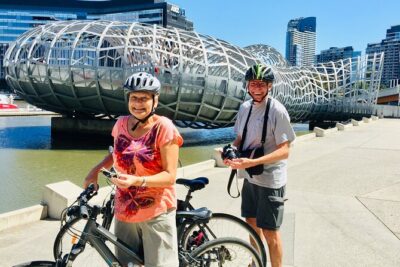
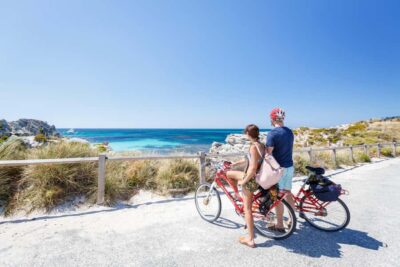
From Fremantle: SeaLink Rottnest Ferry and Bike Hire
Read our review →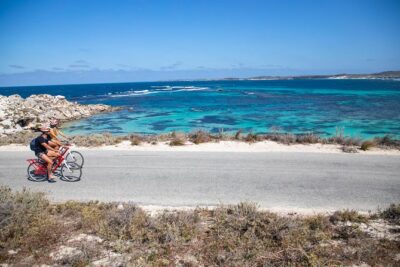
Browse the lists this tour appears in