Review · TOURS
Swakopmund: “UP CLOSE” Living Desert E-FatBike Tour
The most memorable part of this Swakopmund outing is not simply riding across the dunes. It is learning to notice life that most people would miss: a chameleon, a sand viper, a gecko, a spider web, or the faint track of a hyena. Your guide turns a quiet patch of Namib into a living field lesson, while the electric fatbike lets you cover ground without engine noise.
I like the way the tour keeps you close to the desert instead of viewing it from a vehicle. I also like the flexible pace. Guides such as Hanjo can focus more on animals, plants, geography, or dune riding, depending on your interests. The main consideration is physical effort. The e-bike helps, but riding over sand and dunes can still be tiring, especially during an unusually hot morning.
Key points at a glance
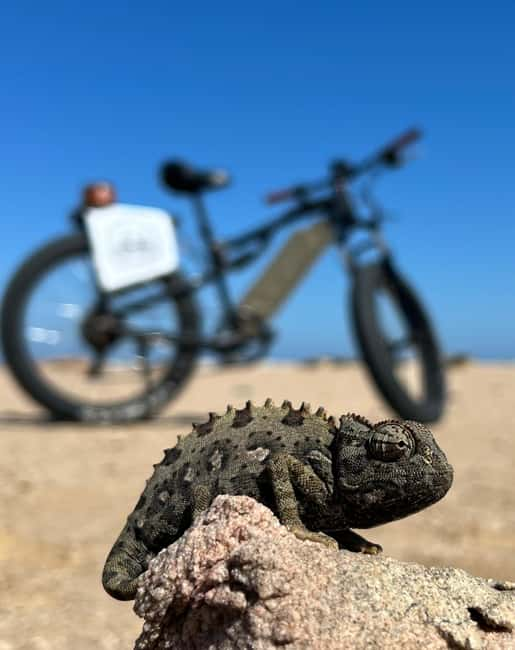
- Search for small desert life: You may see chameleons, snakes, geckos, slow worms, insects, tracks, and webs.
- Ride four distinct settings: The route includes Swakopmund, the Swakop Riverbed, gravel plains, dunes, and beach.
- Use an eco-friendly bike: The fat tires and electric assistance allow quiet travel with no exhaust fumes.
- Expect a 3.5-hour outing: This is long enough for riding, stops, explanations, and wildlife searches.
- Bring your own water: Water is not included, though you can buy it or refill a reusable bottle at the office.
- Best for ages 12 and older: The trip suits families, but children under 12 cannot join.
Why the Namib feels alive from an e-fatbike
At first glance, the Namib can seem empty. That impression changes when you stop looking for large animals and begin reading the ground. A tiny mark in the sand, a disturbed plant, or a delicate web can tell you that something was active nearby.
That is the real purpose of this tour. You are not simply pedaling through desert scenery. You are learning how animals and plants manage life in one of the harshest places on Earth. The guide may stop to explain a plant, follow a track, or look beneath the sand for a small creature. Some of the best moments come from these pauses, not from covering distance.
The e-fatbike makes this approach practical. A regular bicycle could make the dunes a serious workout, while a vehicle would keep you farther from the ground and make quiet observation harder. The electric assistance helps you ride across uneven surfaces, and the fat tires are suited to sand.
You should not expect a motorized thrill ride. The bike is there to support exploration, not replace it. You still pedal, steer, climb, and work with the surface. That active role is part of the appeal, but it also means you need reasonable fitness and a willingness to get warm.
More bike tours in the world:
- Lion City Bike Tour of Singapore
★ 5.0 · 6,211 reviews - Big Bike tour Amsterdam – See all in 3 unforgettable hours
★ 4.7 · 4,929 reviews - 3-Hour Porto Highlights on a Electric Bike Guided Tour
★ 5.0 · 4,392 reviews
Starting in Swakopmund and following the riverbed
The tour takes place around Swakopmund, in Namibia’s Erongo region. The route begins by taking you through the town and toward the Swakop Riverbed, a dry environment that helps explain how the town meets the desert.
A riverbed in this part of Namibia is not a typical flowing river scene. Its value is in the contrast between water-shaped ground and the surrounding dryness. Your guide can use this section to explain local geography, plants, and the way life survives around a place that may remain dry for long periods.
This early part of the ride is also useful for settling into the bike. You get a feel for steering, braking, and electric assistance before the more demanding dune riding. Listen carefully to the guide’s instructions and use this time to check that your helmet and bike feel comfortable.
The ride is conducted in English. Hanjo has been especially praised for explaining the country, geography, plants, and animals in a clear and enthusiastic way. The guide’s role matters here because the riverbed and gravel plains can look simple until someone points out what you are seeing.
Crossing the gravel plains
From the riverbed, the route continues across gravel plains. This section may feel less dramatic than the dunes, but it is important for understanding the Namib as a whole. Desert is not one uniform surface. Sand, rock, dry channels, plants, and open flats create different conditions for wildlife.
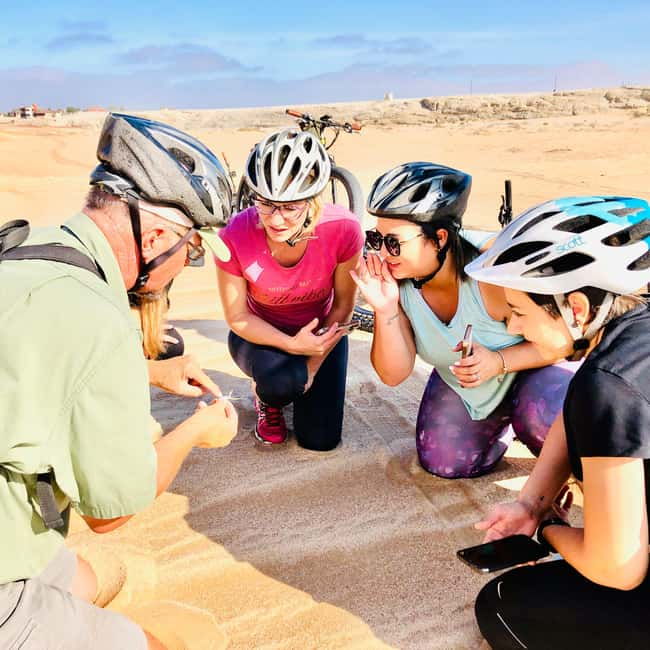
The gravel plains also provide a good setting for learning to read tracks. Small marks can be easy to overlook when you are moving quickly. Your guide may stop to investigate signs of animal activity and explain what they reveal. One outing included a hyena track, despite no sighting of the animal itself. That is a useful reminder that this tour is about evidence as much as direct encounters.
You may also stop to examine plants or small creatures. Guides have been described carefully digging up tiny animals and returning them, while leaving nocturnal creatures undisturbed. That approach is worth noting. The aim is not to handle everything you find or force a sighting. It is to observe with as little disruption as possible.
For you, this means the tour rewards patience. If you want constant movement and large wildlife, the pace may feel slow. If you enjoy learning why a desert works, the pauses add much of the value.
Riding over the dunes
The dune section brings the most obvious sense of adventure. Here, you ride over the soft, rolling sand that makes Swakopmund’s desert famous. The fat tires help distribute the bike’s weight, and the electric motor gives you assistance when the surface becomes difficult.
Even with that support, dune riding is not effortless. You may need to pedal steadily and adjust your balance. The tour has been described as suitably strenuous for people of average fitness, but heat can change the equation quickly. One particularly hot outing made the ride much more exhausting than expected.
This is where the tour’s flexible format helps. If your small group wants more time on the dunes, the guide can shape the outing around that interest. If you prefer to look for animals and plants, you can spend more time searching and listening. On one trip with only two participants, the route was adjusted to match their preferences.
The dunes also create some of the trip’s best views. From higher ground, you can appreciate the scale of the Namib and the way the sand meets the open coast near Swakopmund. The setting is impressive, but the practical point is simple: the higher and softer the dune, the harder the riding may be.
Another way to spend a morning on two wheels:
- Ninh Binh Full-Day Tour from Hanoi to Hoa Lu, Tam Coc & Mua Cave Via Boat & Bike
★ 5.0 · 4,384 reviews - Small Group Guided Bike Tour of Amsterdam’s Hidden Gems
★ 5.0 · 3,936 reviews - 3-hour Complete Prague Bike Tour
★ 5.0 · 3,674 reviews - Bangkok: Temples, Canals & Local Life Bike Tour
★ 4.9 · 3,511 reviews
Looking for chameleons, snakes, and tracks
The wildlife search gives this tour its strongest sense of discovery. A chameleon is a prized find, and several outings treated it as a highlight. Finding one is not guaranteed, though. Guides may follow warm tracks and inspect likely spots without success.
That uncertainty is part of the experience. You are not visiting an enclosure where animals appear on schedule. The desert decides what you see. You might find a chameleon, or you might come away with tracks, plant knowledge, and a better understanding of how animals move through the sand.
Recorded sightings have included two sand vipers, a gecko, a slow worm, and a spider’s web. A guide may also point out camel evidence or other tracks. These are not big safari encounters, but they fit the Namib. The reward comes from seeing the small signs that reveal an active world beneath the apparent emptiness.
You should follow the guide’s instructions closely around snakes and other wildlife. The tour is designed for respectful observation, not touching or chasing animals. That is especially important in a place where creatures may be conserving energy and sheltering from heat.
Reaching the beach and seeing the route come together
The final part of the route includes the beach. This gives the ride a satisfying change of scenery and shows how close Swakopmund is to both the desert and the Atlantic coast.
The route links several environments in one half-day outing: town, riverbed, gravel plains, dunes, and beach. That variety is a major advantage over a short ride confined to one area. You get a broader sense of Swakmund’s setting and how quickly the surroundings change.
The beach section may also feel like a welcome break after the dunes. You have been working with sand and sun, so the open coast provides a different rhythm. Still, the tour remains active until the end. It is not a sightseeing drive with only occasional steps out of a vehicle.
The full outing lasts about 3.5 hours. That is enough time to make the route feel substantial without taking an entire day away from other Swakopmund plans. I would avoid scheduling a demanding afternoon activity immediately afterward, especially if the weather is hot or you spend extra time riding the dunes.
What the $65 price buys you
At $65 per person, the tour sits in a reasonable range for a guided half-day activity, particularly because the price includes an e-fatbike, helmet, experienced guide, and snack. The bike is the main value item. Renting equipment separately and finding your own way across varied desert surfaces would not give you the same guidance or safety support.
The guide adds value in a less obvious way. Without someone trained to read tracks and identify desert life, much of the ride could become a scenic pedal through sand. With Hanjo or another guide, a small mark on the ground can become a lesson about animal behavior, geography, or plant survival.
Water is not included. You can buy it or fill a reusable bottle at the office, so plan for this before leaving. Do not treat the included snack as a substitute for proper hydration. Bring enough water for an active 3.5-hour outing, particularly if temperatures are high.
Transport to and from your accommodation is also not included. You need to make your own way to the starting point and return afterward. This is a minor cost and planning issue, but it matters if you are staying outside central Swakopmund or arranging several activities in one day.
Group size, pace, and personal attention
The available outings have included very small groups, with only two or three people riding together. That can make a real difference. A small group is easier to adjust, and the guide can spend more time answering questions or searching for wildlife.
You may be able to express a preference for animals, plants, geography, or more dune riding. That does not mean every request can be guaranteed, since the route and wildlife remain dependent on conditions. It does mean the experience can feel less rigid than a fixed sightseeing circuit.
The family-friendly label needs a little context. The tour is suitable for children aged 12 and older, but it is not a passive family excursion. Young participants should be ready to ride for several hours, handle uneven ground, and manage heat. Adults who are not regular cyclists may also find the dunes demanding.
Comfortable shoes are the only listed clothing requirement, but practical clothing and sun protection make sense for a desert bike ride. The tour provides helmets, so you do not need to bring one.
The guide’s role in making the desert readable
A good guide changes the character of this experience. Hanjo has been singled out for his broad explanations of Namibia, including geography, plants, animals, and the country itself. He also adapts the outing to individual interests rather than treating every group exactly alike.
His attitude toward wildlife is just as important as his ability to identify it. The guide leaves nocturnal animals alone and treats small creatures with care. That matters in a fragile environment where an exciting photo or forced sighting should not come at the animal’s expense.
You will get the most from the tour if you ask questions. Ask why a plant grows in a certain place, how a track can be identified, or what a web tells you about its maker. The ride gives you access to the desert, but curiosity helps turn access into understanding.
When the tour works best for you
I would choose this outing if you want an active way to see Swakopmund’s natural setting and enjoy close observation. It fits especially well if you like small wildlife, photography, natural history, and guides who explain rather than simply lead.
It also suits people who want a quieter alternative to engine-powered desert activities. The electric bike produces no air pollution and avoids the constant noise of a motor. You still get movement and adventure, but you remain close to the ground and the desert’s small details.
I would think twice if you want a relaxed ride with almost no physical effort. The electric motor helps, but it does not remove the need to pedal. Heat can make the outing much tougher, and the dunes are not always easy.
You should also set realistic expectations about wildlife. A chameleon may become the highlight, and snakes or geckos may appear, but no animal sighting is assured. The tour is strongest when you value the search itself and appreciate tracks, plants, and small clues.
Should you book the Swakopmund e-fatbike tour?
Book it if you want to combine exercise, dunes, and close-up desert knowledge in one 3.5-hour outing. The price is fair for the bike, helmet, guide, and snack, and small groups can receive a more personal route.
Before booking, check that everyone in your party is at least 12, comfortable with active cycling, and prepared to bring water. If you prefer wildlife searching to dune riding, say so early. If you want the most energetic part, ask for more time on the dunes.
This is not the right choice for a guaranteed animal encounter or a fully restful sightseeing trip. It is a strong choice for an attentive, active introduction to the Namib, especially when the guide helps you notice the life hiding in plain sight.
FAQ
How long is the Swakopmund e-fatbike tour?
The tour lasts approximately 3.5 hours.
What areas does the route cover?
The route goes through Swakopmund, along the Swakop Riverbed, across gravel plains, over dunes, and along the beach.
What is included in the price?
The $65 price includes an e-fatbike, helmet, experienced guide, and snack.
Is water included?
No. You can buy water or fill a reusable water bottle at the office.
Is transport from my accommodation included?
No. Transport to and from your accommodation is not included.
What age group can join?
Children under 12 cannot join. The tour is suitable for participants aged 12 and older.
What language is the tour offered in?
The tour is offered in English.
What happens if I need to cancel?
You can cancel up to 24 hours in advance for a full refund. You can also reserve your place and pay later, which keeps your plans flexible.
Latest bike tours added in the world
- Brooklyn Neighborhoods Small-Group Bike Tour★ 5.0 · 137 reviews
- Hudson Valley Craft Brewery Bike Tour★ 5.0 · 23 reviews
- The Best of Bristol Bike Tour★ 5.0 · 39 reviews
- A Day in Brooklyn Bike Tour★ 5.0 · 59 reviews
- Brisbane Kayak, Bike★ 4.5 · 23 reviews
- Brisbane Electric Mountain Bike Experience Tour★ 5.0 · 48 reviews
- 2 Hour Private Brisbane Mountain Bike Coaching Session and Ride★ 5.0 · 24 reviews
- Private Bike Tour with Olive Oil Tasting★ 4.5 · 15 reviews
Tours, compared.

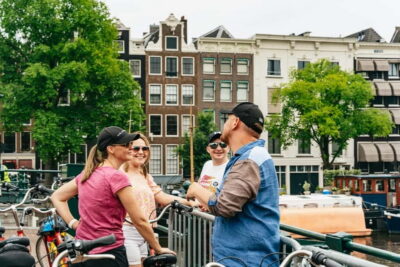
Big Bike tour Amsterdam – See all in 3 unforgettable hours
Read our review →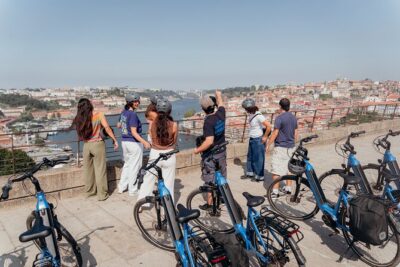
3-Hour Porto Highlights on a Electric Bike Guided Tour
Read our review →
Ninh Binh Full-Day Tour from Hanoi to Hoa Lu, Tam Coc & Mua Cave Via Boat & Bike
Read our review →
Small Group Guided Bike Tour of Amsterdam’s Hidden Gems
Read our review →