
Review · STOCKHOLM BIKE TOURS
Stockholm’s Best Bike Tour!
Stockholm’s best feature is its water, and this bike tour keeps putting you beside it. In three hours, you pedal from Östermalm through the royal center, Gamla Stan, Riddarholmen, City Hall, and Djurgården, with about ten stops for stories and photos. It is a fast, useful introduction to a city spread across islands.
I like the small groups of no more than 10, which make street crossings and guide commentary easier to manage. I also like the mix of famous sights and everyday districts, plus the guide’s list of places for fika, meals, viewpoints, and lower-cost choices. The catch is the pace: these are non-electric bikes with three gears and back-pedal brakes, so you need solid cycling skills and moderate fitness.
Key points to know before you book
- You cover a lot of Stockholm: City Hall, Parliament, Gamla Stan, the Royal Palace, Östermalm, and Djurgården all fit into one ride.
- The group stays small: A maximum of 10 people gives the guide room to help with pace, traffic, and questions.
- The bikes require adjustment: They have three gears and back-pedal brakes, which can feel unfamiliar if you normally ride with hand brakes.
- The tour is best early in your stay: Local restaurant, fika, viewpoint, and budget tips are useful for the rest of your visit.
- It is sightseeing from the outside: Entrance fees and museum visits are not included, so plan separate time for the Vasa Museum, ABBA The Museum, or Skansen.
- Age and height limits matter: The minimum age is 15, and the recommended minimum height is 160 centimeters, or 5 feet 2 inches.
Why a bike is a smart way to see Stockholm
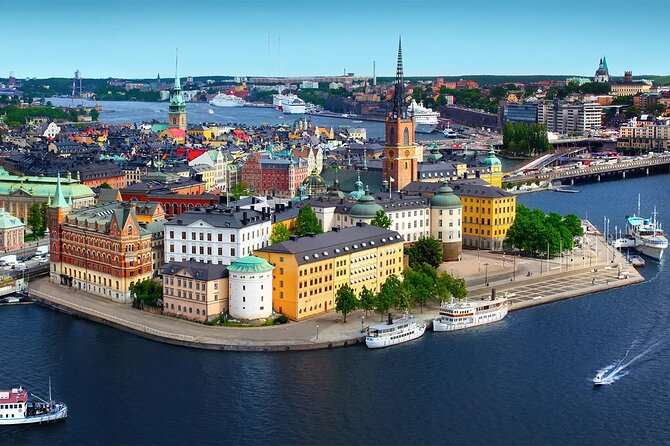
Stockholm can feel scattered when you first look at a map. Its central districts sit on several islands, and the sights are connected by bridges, waterfront roads, parks, and bike paths. Walking is pleasant, but covering Östermalm, Gamla Stan, City Hall, and Djurgården on foot in one morning would take much longer.
This ride gives you a useful map in your head. You see where the old town ends, where the royal center begins, how Djurgården relates to the rest of town, and which waterfront areas deserve a return visit. I especially like this format for a first full day in Stockholm, when you want orientation before choosing which museums and neighborhoods deserve more time.
The tour costs $55 per person. That is fair for a three-hour guided ride with a bike, helmet, local guide, photo stops, historical pictures, music, and personal recommendations. You are not paying for museum admission, a meal, or a long stop at any one sight. You are paying for range and context.
That distinction matters. If you want to enter the Vasa Museum or hear a long lecture inside the Royal Palace, this is not the right product. If you want to see the shape of the city and decide where to return, the price makes good sense.
More bike tours in the world:
- Lion City Bike Tour of Singapore
★ 5.0 · 6,211 reviews - Big Bike tour Amsterdam – See all in 3 unforgettable hours
★ 4.7 · 4,929 reviews - 3-Hour Porto Highlights on a Electric Bike Guided Tour
★ 5.0 · 4,392 reviews
Starting in Östermalm and moving through the city center
The ride begins at Sandelsgatan 25, though the exact meeting point depends on the option you book. Arrive at least 15 minutes early. You can use that time to get fitted to the bike, ask about the back-pedal brake, and settle any concerns before the group leaves.
The first major area is Östermalm, including Östermalmshallen. This food hall is a good opening stop because it places you in one of Stockholm’s more polished central districts. You then ride toward Kungsträdgården, the Royal Swedish Opera, and Sagerska huset.
This stretch gives you a quick look at Stockholm’s civic and cultural center. Kungsträdgården is an easy place to recognize later, while the Opera and Sagerska huset help explain the city’s formal side. The stop-by-stop format means you do not simply pass buildings without context. The guide pauses, shows relevant old and modern photographs, and explains what you are seeing.
The ride moves at a practical pace. You should expect to cycle between stops rather than coast slowly behind the guide at all times. Swedish-themed music plays from a small speaker between stops, unless rain makes that impractical. It is a light touch, not a concert, and it gives the ride a more local feel without taking the place of the guide’s stories.
Parliament, City Hall, and Riddarholmen
From the central streets, you continue past Parliament House and toward Stockholm City Hall. These are two of the most useful orientation points in the city.
Parliament introduces Sweden’s political center, while City Hall is one of Stockholm’s best-known buildings and a key waterfront view. Since you are seeing both from outside, the value here is visual context. You learn where they are, how they face the water, and how they relate to the old center.
From City Hall, the route heads toward Riddarholmen and Riddarholmsbron. Riddarholmen gives the ride another change of mood. The island is closely tied to Stockholm’s older royal and religious history, and the bridge offers a good sense of how water shapes the city.
Your guide uses the stops to connect present-day streets with earlier photographs. That is helpful because Stockholm’s history can otherwise feel like a collection of attractive buildings without a clear sequence. The ride does not try to cover every date or detail. Instead, it gives you enough background to recognize the major districts when you return on foot.
Gamla Stan, Prästgatan, and the Royal Palace
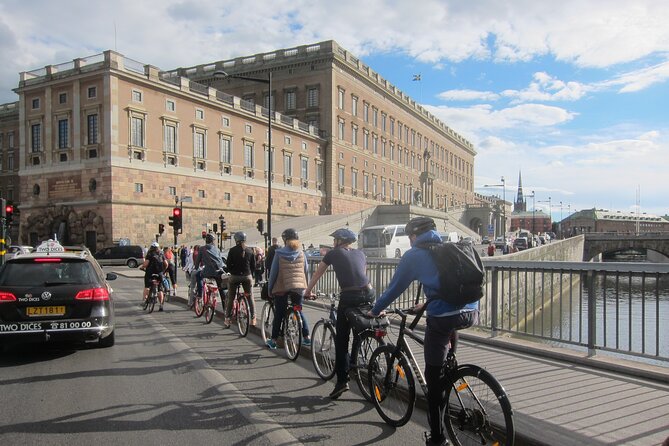
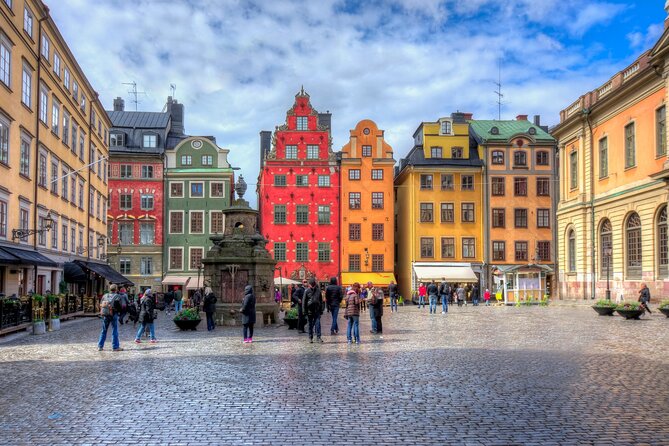
Gamla Stan is where the pace slows for some of the most rewarding stops. The route includes Prästgatan and Stortorget, the famous square at the heart of the old town.
Prästgatan gives you a closer look at the compact medieval street pattern. Stortorget offers the broad, photogenic view many people come to Stockholm hoping to find. Here, you should expect to park the bikes and listen rather than ride through the narrowest lanes.
The Royal Palace follows. The palace is best understood as part of a larger royal district, not just a single façade. The nearby Stockholm Cathedral adds another layer, even when the tour only passes the area from outside. You get a quick introduction to the buildings, the square, and the role this part of Gamla Stan still plays.
There is a tradeoff. You will see many important places, but you will not have time to wander every lane or browse every shop. If Gamla Stan captures your interest, return later with your camera and comfortable walking shoes. The bike tour tells you where to begin.
Another way to spend a morning on two wheels:
- Ninh Binh Full-Day Tour from Hanoi to Hoa Lu, Tam Coc & Mua Cave Via Boat & Bike
★ 5.0 · 4,384 reviews - Small Group Guided Bike Tour of Amsterdam’s Hidden Gems
★ 5.0 · 3,936 reviews - 3-hour Complete Prague Bike Tour
★ 5.0 · 3,674 reviews - Bangkok: Temples, Canals & Local Life Bike Tour
★ 4.9 · 3,511 reviews
Grand Hôtel, the National Museum, and the waterfront
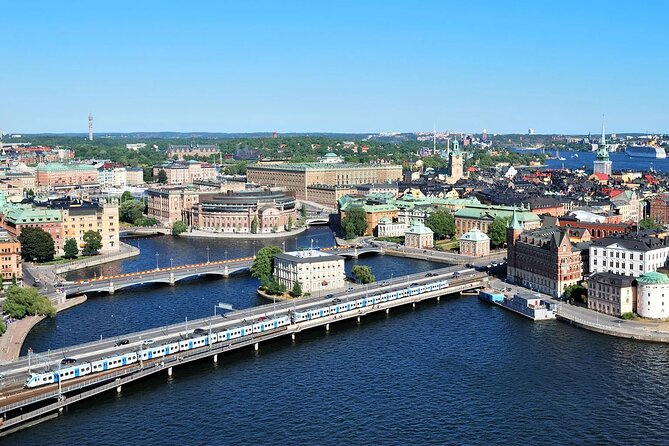
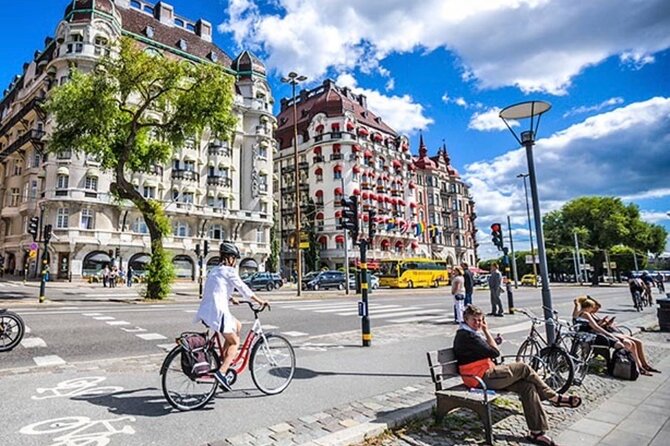
After Gamla Stan, the route crosses back toward the water and passes Grand Hôtel, the National Museum, and Nybrokajen. This section helps you see Stockholm’s grand waterfront without getting stuck in one sightseeing zone.
The National Museum marks Stockholm’s art and design side. Grand Hôtel adds a look at the city’s formal hotel tradition, while Nybrokajen gives you another waterfront angle. These stops are short, but together they show why Stockholm feels both royal and maritime.
You continue along Strandvägen, one of the city’s most attractive boulevards. The broad street, water views, and grand buildings make this an enjoyable cycling stretch. It is also a useful contrast with Gamla Stan. Within a short time, you move from narrow old streets to open avenues and waterfront promenades.
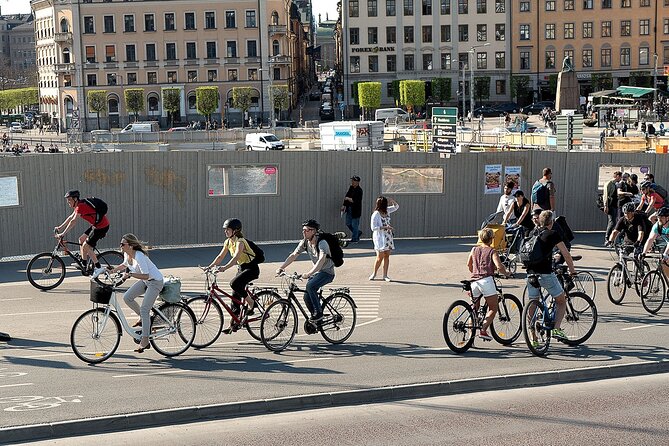
This is where the bicycle earns its keep. You cover the distance quickly, but still have time to stop, look, and take pictures. The guide also keeps an eye on the group, which matters when the route includes city traffic, crossings, and changing surfaces.
Djurgården and Stockholm’s museum island
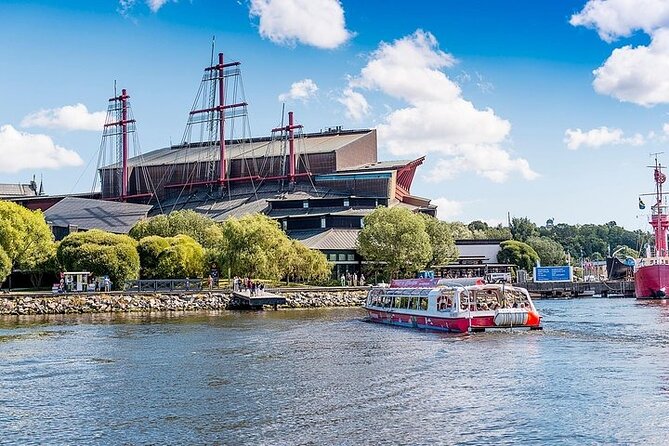
The ride then enters Djurgården, often called Stockholm’s museum island and national park. The route passes Nordiska Museet, the Vasa Museum, ABBA The Museum, and Skansen.
You do not enter these attractions, so keep your expectations clear. You are getting an outside view and a helpful introduction, not a museum visit. The Vasa Museum deserves separate time if you are interested in maritime history. Skansen also needs its own visit if you want to explore its open-air exhibits. ABBA The Museum is a separate indoor experience for music fans.
Seeing these places by bike helps you plan your next move. You learn that several major attractions sit close together, which makes a return visit easy to organize. You also get a feel for Djurgården as more than a line of museums. The park setting gives the tour a greener, quieter section after the formal center and busy old town.
The route continues along Djurgårdsvägen toward Rosendals Trädgård. This is the scheduled break, lasting about 15 minutes. It is a welcome pause after a long run of cycling and stops. A previous booking included fika, and the company encourages you to visit its office early for coffee and a cinnamon bun, but you should not assume food is included in the tour price. Bring water and check what is available when you arrive.
Rosendals Trädgård, Kärleksudden, and Karlaplan
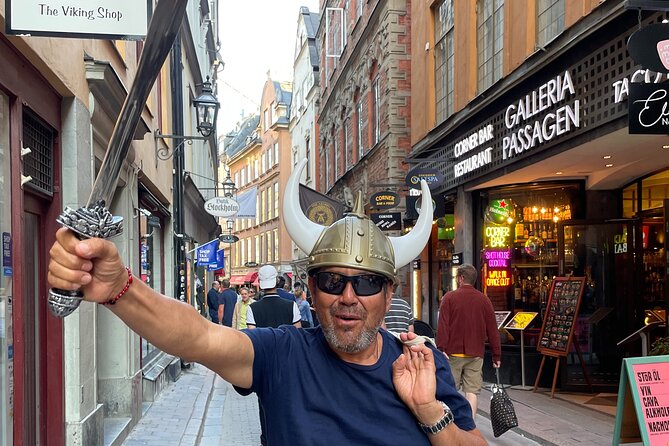
After the break, the ride continues to Kärleksudden and then back toward Östermalm along Narvavägen. The name Kärleksudden suggests a romantic viewpoint, and the route uses the area for another short look at Stockholm’s water and park setting.
The return through Narvavägen and Karlaplan brings you back into a more urban district. This final section is useful because you see how the open spaces of Djurgården connect with Östermalm’s streets and public squares. The tour finishes at Sandelsgatan 25.
By the end, you have crossed several distinct parts of Stockholm without changing buses or studying a transit map. You also have a list of local suggestions from the guide. Take a photo of it before you leave. Restaurant ideas, fika stops, viewpoints, and budget-friendly options are most useful when you have several days left in town.
The bikes, pace, and fitness question
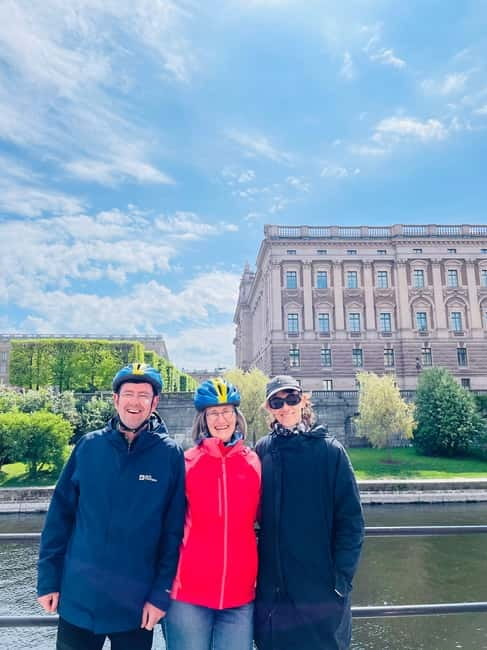
The bikes are three-gear city bikes, not electric. They use back-pedal brakes, so you stop by pressing backward on the pedals rather than squeezing a hand lever. That can take a little practice. One rider specifically found the pedal brakes took time to get used to, so give yourself a few minutes before the group starts.
There are hills, varied speeds, and outdoor riding for the full tour. You do not need racing fitness, but you should be comfortable riding a regular bicycle for three hours with breaks. If you have not ridden for many years, you may still manage it, but be honest with yourself about balance, braking, and hills.
The bikes are one size, with no children’s sizes available. The recommended minimum height is 160 centimeters. Large bags and luggage are not allowed. A front basket is meant for a water bottle or small item, while a backpack must stay on your back during the ride.
The company can accommodate your own bike or helmet if you arrange it beforehand. The provided bike and helmet are included in the price.
The guides and the small-group advantage
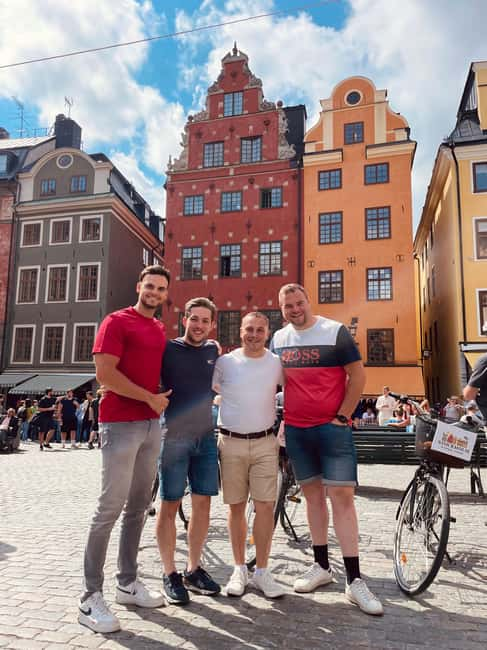
Guides named Andre, Andreas, Sophie, and Sofie have led this experience. The strongest pattern is clear: the guide matters a great deal here. A good leader keeps the pace comfortable, explains the stops in plain language, takes useful pictures, and makes a fast tour feel organized rather than rushed.
The maximum group size of 10 is a real advantage. The guide can speak to everyone at each stop, and the group is less awkward to manage on bridges and bike paths. Smaller groups also make it easier to ask questions about places to eat or what to do next.
The tour is offered in English and German. If you have mobility, cycling, or safety concerns, raise them before departure. The guide may refuse participation if someone cannot meet the cycling requirement or behaves unsafely. That rule is sensible, since one unstable rider can affect the entire group.
Who will get the most from this ride
I would choose this tour for a first or second day in Stockholm. The guide’s recommendations can shape the rest of your visit, and the broad route helps you decide where to return for a longer look.
It suits adults and teenagers aged 15 and older who already know how to ride a bike. It is especially useful for people who want to see several districts without spending the whole day walking. It also works well for visitors with limited time, provided they accept that most sights are viewed from outside.
I would not choose it for children under 15, anyone who cannot ride confidently, or anyone below the recommended height. I would also skip it if you want a slow, highly detailed tour of one neighborhood. The route is deliberately broad and active.
Comfortable shoes, weather-appropriate clothing, and a charged phone are sensible choices. Check the weather closely. The tour runs outdoors, and the music may be left off in rain, but the cycling itself still takes place in changing conditions.
Should you book Stockholm’s Best Bike Tour?
Book it if you want a fast city orientation with real geographic range. For $55, you get a bike, helmet, guide, small group, photo stops, music, and advice you can use after the ride. The route covers enough ground to make the tour valuable even if you later return to only two or three of the areas.
Think twice if back-pedal brakes sound intimidating, if you dislike hills, or if your main goal is going inside museums. The best booking choice is an early date in your stay, when the local suggestions and city map will still help you plan. Arrive early, pack light, and treat the ride as an overview rather than a substitute for Stockholm’s major museums.
FAQ
How long is the Stockholm bike tour?
The scheduled duration is three hours, including cycling and stops. The route also includes a break at Rosendals Trädgård.
How much does the tour cost?
The listed price is $55 per person.
What sights does the bike tour include?
The route passes City Hall, Parliament, Gamla Stan, Stortorget, the Royal Palace, Stockholm Cathedral, Östermalm, Strandvägen, Djurgården, the Vasa Museum, ABBA The Museum, Skansen, and several waterfront areas.
Does the tour enter the museums or palace?
No. The tour passes the sights from outside, and entrance fees are not included.
What type of bike is provided?
You receive a three-gear, non-electric city bike with a back-pedal brake and a helmet.
Is the tour suitable for children?
The minimum age is 15. There are no children’s bike sizes, and the recommended minimum height is 160 centimeters, or 5 feet 2 inches.
How large is the group?
The group is limited to 10 participants.
Can I cancel or pay later?
You can cancel up to 24 hours before the tour for a full refund. Reserve now and pay later is also available.
Latest bike tours added in the world
- Brooklyn Neighborhoods Small-Group Bike Tour★ 5.0 · 137 reviews
- Hudson Valley Craft Brewery Bike Tour★ 5.0 · 23 reviews
- The Best of Bristol Bike Tour★ 5.0 · 39 reviews
- A Day in Brooklyn Bike Tour★ 5.0 · 59 reviews
- Brisbane Kayak, Bike★ 4.5 · 23 reviews
- Brisbane Electric Mountain Bike Experience Tour★ 5.0 · 48 reviews
- 2 Hour Private Brisbane Mountain Bike Coaching Session and Ride★ 5.0 · 24 reviews
- Private Bike Tour with Olive Oil Tasting★ 4.5 · 15 reviews
Stockholm Bike Tours, compared.

Stockholm: Fat Bike Forest Adventure with Lunch and Sauna
Read our review →Browse the lists this tour appears in