
Review · USA BIKE TOURS
New Orleans Creole Odyssey Small-Group Bike Tour
New Orleans opens up once you leave the French Quarter behind. This three-hour ride carries you through Faubourg Marigny, Mid-City, City Park, St. Louis Cemetery No. 3, and Bayou St. John, giving you a better sense of how the city fits together. The route is flat and leisurely, so you spend less time struggling with hills and more time looking around.
I like the small group of no more than 10 because it gives the guide room to answer questions and adjust the pace. I also like the mix of places: old streets, burial grounds, oak-lined park paths, a historic waterway, and Congo Square. You get more than a French Quarter introduction.
The main consideration is physical comfort. Three hours on a bicycle requires a solid fitness level, and the basic one-speed bike may feel plain to experienced cyclists. Closed-toed shoes are preferred, and flip-flops are not allowed.
Key points to know before you book
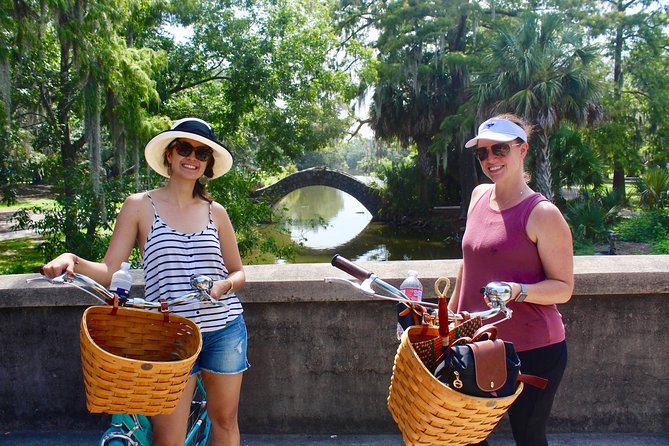
- A real neighborhood ride: Leave the French Quarter and see Faubourg Marigny, Mid-City, City Park, and Bayou St. John.
- Flat and manageable route: The ride suits most reasonably fit cyclists, but three hours still takes stamina.
- History with local character: Guides including Eric and bilingual Gomez are noted for clear explanations, humor, and a strong feel for New Orleans.
- Small-group setting: The maximum group size is 10, making questions and conversation easier.
- Good value at $55: Bike, helmet, bottled water, and a professional guide are included.
- Practical age and shoe rules: Participants must be at least 13 and taller than 4 feet 11 inches. Wear shoes that stay firmly on your feet.
Why this bike tour shows you more than the French Quarter
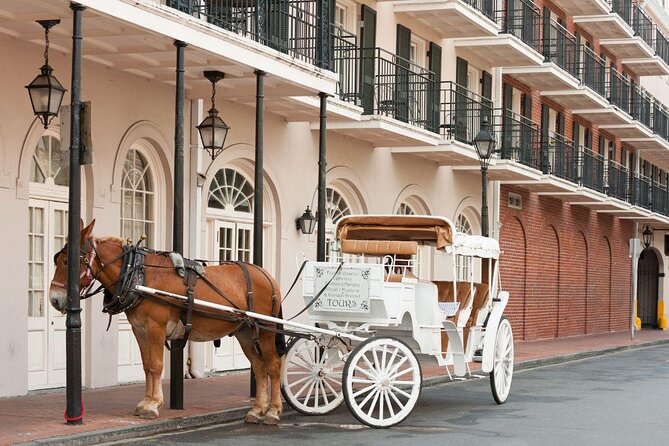
The French Quarter is the natural starting point for a first visit to New Orleans, but it can also become your entire picture of the city. This ride helps correct that. You begin at 626 N Rampart Street, then head toward neighborhoods where daily life, local architecture, parks, music, and burial customs tell a broader story.
The route is especially useful early in a New Orleans visit. You get a sense of direction, see which areas you may want to return to, and hear how the city grew beyond its oldest streets. Cycling also lets you cover more ground than walking without the sealed-window distance of a bus.
The tone depends partly on your guide. Eric is praised for a warm, personal style and a clear affection for New Orleans. Gomez is described as engaging and fully bilingual. The strongest part of this experience is not simply reaching each stop. It is having someone connect the streets, waterways, music, and customs into one understandable picture.
More bike tours in the USA:
- NYC: Central Park Bike Rentals
★ 4.2 · 2,528 reviews - Red Rock Canyon eBike Half-Day Tour
★ 5.0 · 1,870 reviews - NYC: Central Park Bike Rental
★ 4.1 · 1,651 reviews
Starting near Rampart Street
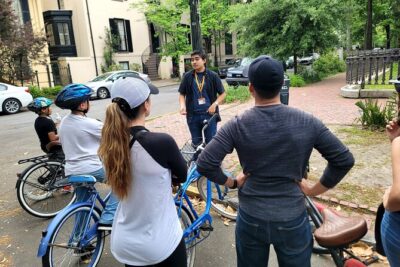
You meet at Flambeaux Bicycle Tours on North Rampart Street. The shop provides the bicycle, helmet, and bottled water, with a short period at the start to get ready and settle onto the bike.
You should arrive dressed for the weather. New Orleans can feel hot and humid, and cycling adds its own heat. Closed-toed shoes are the safest choice. Sandals with heel straps are acceptable, but flip-flops and loose slippers are prohibited because they can slip while you ride.
The minimum age is 13, and everyone must be taller than 4 feet 11 inches. These rules matter for bike fit and control. The tour also calls for a strong level of physical fitness, so this is not the right pick if you are looking for a mostly stationary sightseeing experience.
If you need coffee before setting out, Twelfth Night Coffee is next door to the shop. It serves coffee, espresso drinks, and pastries, which is a useful detail for an early start.
The oldest streets and the move toward Faubourg Marigny
The opening section passes through the French Quarter, including a stop to point out the oldest building in the city. This gives the tour a clear starting point: New Orleans begins with its oldest core, but the ride does not stay there.
You then reach Faubourg Marigny, an area tied closely to Frenchmen Street, music, and the cultural life of the city. A bicycle is a good way to see this district because you can pause for context without spending the whole morning walking from one block to the next.
The stop is fairly short, so do not expect a full neighborhood walk or a long visit inside specific venues. Think of it as an introduction to the district and its role in New Orleans. If music is high on your list, make a note of the area so you can return later on foot.
Two hours through Mid-City
Mid-City takes up the largest portion of the ride, about two hours. That timing is important. This is not a quick loop that touches several districts only long enough for a photograph. You spend a substantial part of the tour moving through a less familiar side of New Orleans.
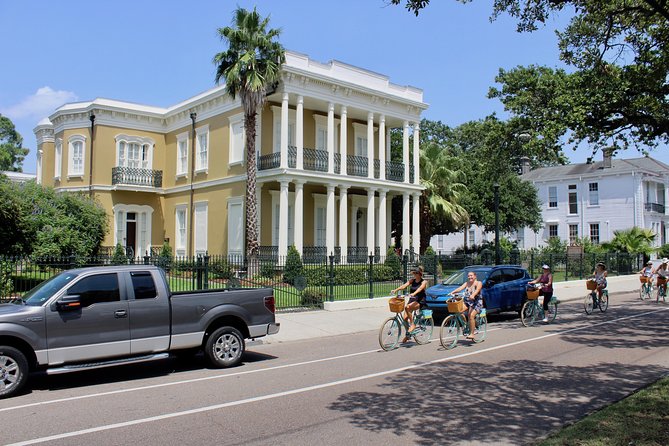
The route is flat, which makes it easier to pay attention to the surroundings. You pass leafy streets and open areas on the way toward City Park and Bayou St. John. The guide uses the ride to explain the city’s Creole background, its geography, and the way its neighborhoods relate to one another.
The long Mid-City section is also where the ride feels most local. You are not simply checking off famous landmarks. You are watching the city change as the streets become quieter and greener. That is the main reason to choose this tour over a short French Quarter bike loop.
Still, two hours on a bicycle can feel long if you rarely ride. The pace is described as leisurely, but leisurely does not mean effortless. If you have concerns about stamina, the flat route helps, yet you should still be comfortable sitting and pedaling for much of an afternoon.
Another way to spend a morning on two wheels:
- Central Park Bike Rental
★ 4.7 · 1,509 reviews - Austin Biker Gang E-Bike Tour
★ 5.0 · 1,399 reviews - Asheville Historic Downtown Guided Electric Bike Tour with Scenic Views
★ 5.0 · 1,234 reviews - Siesta Key Electric Bike Sunset Tour
★ 5.0 · 1,075 reviews
St. Louis Cemetery No. 3 and New Orleans burial customs
St. Louis Cemetery No. 3 provides one of the tour’s most distinctive stops. Here, the guide explains local burial practices and the cemetery traditions that make New Orleans different from many American cities.
You get about 20 minutes at the cemetery. That is enough for an introduction and a closer look, though not a lengthy guided cemetery visit. The stop works well because it adds a cultural subject that is easy to miss when you focus only on food, music, and architecture.
This is also a place where a good guide matters. Burial customs can be reduced to a few familiar clichés, but a careful explanation gives you a better sense of how local conditions and customs shaped the city. Listen closely and ask questions if the subject interests you.
City Park, oak-lined paths, and a Café du Monde break
City Park brings a welcome change of pace. You ride through the city’s largest urban park, with more open space and greenery than the dense French Quarter provides.
The group stops at the City Park location of Café du Monde for a 10-minute break. Food and drinks are not included, so bring money if you want to buy something. The stop is short, but it gives your legs a rest and creates a natural chance to grab a snack.
I like this part of the route because it is practical as well as scenic. A break in the middle of a three-hour ride helps keep the outing comfortable, especially in warm weather. The tradeoff is that 10 minutes passes quickly. You may need to choose between ordering food, using the break to rest, and taking photographs.
City Park also helps explain why a bicycle works well here. You can move through a large public space without making the day revolve around a long walk. The ride remains active, but the setting feels calmer than the central districts.
Bayou St. John and the city’s watery edge
Bayou St. John is one of the most memorable stops because it links the present-day city with its earlier geography. Native Americans and French settlers used this natural waterway, and the guide explains its place in the city’s development.
The stop lasts about 15 minutes, with time to ride along the waterway and hear its story. This is not a boat trip or a swamp excursion. You are seeing a historic urban water route by bicycle, which gives you a different sense of how New Orleans grew around water.
The bayou also offers a useful pause from landmark collecting. Instead of focusing only on buildings, you begin to understand the physical setting that shaped movement, settlement, and trade. If you enjoy learning how a place works, this is one of the tour’s most worthwhile sections.
Congo Square and the roots of jazz
The return route includes Congo Square, a sacred place connected with the origins of jazz. The stop lasts about 15 minutes and focuses on the cultural traditions that developed there.
This is a strong closing subject because music is central to how many people understand New Orleans. The guide connects the site to the city’s African American heritage and to the beginnings of a musical tradition that later traveled far beyond Louisiana.
The visit is brief, so you should not expect a performance or a full music history lesson. Its value is in the setting and the explanation. You leave with a location to remember when you hear New Orleans music later in your trip.
What the $55 price covers
At $55 per person, the tour offers good value if you want both transportation and interpretation. You receive a bicycle, helmet, bottled water, and a professional guide. The three-hour duration also gives the price more weight than a quick one-hour rental or a short guided loop.
The main value comes from the distance covered. You see several districts and major sites without arranging separate transportation between them. You also get context at places that may not make sense on their own, such as the cemetery, bayou, and Congo Square.
Food, drinks, and gratuities are extra. The Café du Monde stop is therefore not an all-inclusive refreshment break. Bring some spending money if you want coffee or a snack, and budget separately for a tip if your guide provides the kind of personal service this tour is designed to offer.
The basic bike may not satisfy a serious cycling enthusiast. One rider described it as a one-speed model with an old-fashioned seat and a somewhat primitive feel. That is a fair warning. This experience is about sightseeing, not high-performance cycling.
Group size, guide style, and comfort
The maximum group size is 10 people, a useful limit for city riding. A smaller group can stay together more easily, and you have a better chance to hear the guide and ask questions at each stop.
The guide style is a major part of the experience. Eric is praised for being personable, informed, and enthusiastic about New Orleans. Gomez is noted for answering questions and guiding in both English and Spanish. You cannot request a particular guide based on the information provided, but these examples show the kind of hosting you may encounter.
The route is suitable for most fitness levels only if you are comfortable with sustained cycling. The operator specifically asks for strong physical fitness, so take that seriously. The ride is flat and not presented as strenuous, but heat, humidity, and three hours in the saddle can still affect your energy.
Weather, cancellation, and practical planning
Good weather is required. If poor weather cancels the tour, you are offered another date or a full refund. You can cancel for a full refund if you do so at least 24 hours before the start time. Within 24 hours, refunds and changes are not accepted.
The mobile ticket makes it easy to keep your booking on your phone. The meeting point is near public transportation, which helps if you are staying outside the French Quarter.
Plan to arrive ready to ride rather than treating the first stop as a casual dress-up outing. Wear weather-appropriate clothing, secure footwear, and anything you need to stay comfortable outdoors. Water is provided, but you may still want to think ahead about sun and heat.
Who should book this ride
I would choose this tour for a first visit when you want a wider view of New Orleans than the French Quarter alone can provide. It also suits repeat visitors who have already covered the central sights and want neighborhoods, parks, music history, and the bayou.
Families with teenagers can find it a good fit, provided everyone meets the age and height rules and is comfortable riding for three hours. The youngest permitted rider is 13, so this is not a small-child activity.
It is also a good choice if you like learning while moving. The stops are short enough to keep the day active, but the guide has time to explain the city’s origins, burial customs, waterways, and musical roots.
I would skip it if you dislike bicycles, have difficulty riding for long periods, or want a fully relaxed sightseeing outing. I would also think twice if you expect premium bikes or a fast cycling experience. The emphasis is on access, local stories, and seeing more ground, not equipment.
Should you book the New Orleans Creole Odyssey?
Book it if you want a friendly, active way to get beyond the French Quarter. The flat route, small group, included equipment, and mix of Mid-City, City Park, Bayou St. John, and Congo Square make $55 a fair price.
The best reason to go is the range of subjects packed into three hours. You see where the city began, how it spread, how people honored the dead, how waterways shaped settlement, and where important musical traditions took root.
Skip it if three hours of cycling sounds tiring or if you need a high-end bike. For everyone else, especially first-time visitors with a curious guide such as Eric or Gomez, this is a practical way to get your bearings and see a more complete New Orleans.
FAQ
How long is the New Orleans Creole Odyssey bike tour?
The tour lasts approximately three hours.
Where does the tour begin?
It begins at Flambeaux Bicycle Tours, 626 N Rampart St, New Orleans, Louisiana 70116.
What is included in the price?
A professional guide, bicycle, helmet, and bottled water are included. Food, drinks, and gratuities are not included.
How old must participants be?
The minimum age is 13 years.
Is there a height requirement?
Yes. All participants must be taller than 4 feet 11 inches.
What should I wear for the ride?
Dress for the weather and wear closed-toed shoes if possible. Flip-flops and loose slippers are not permitted. Sandals with heel straps are an acceptable alternative.
What happens if bad weather cancels the tour?
You can choose another date or receive a full refund. You may also cancel at least 24 hours before the start time for a full refund.
Latest bike tours added in the USA
- Brooklyn Neighborhoods Small-Group Bike Tour★ 5.0 · 137 reviews
- Hudson Valley Craft Brewery Bike Tour★ 5.0 · 23 reviews
- A Day in Brooklyn Bike Tour★ 5.0 · 59 reviews
- Ridden- Fat Bike Beer & Distillery Tour★ 5.0 · 160 reviews
- Ridden-Spring and Summer E-Bike Rentals Breckenridge To Frisco★ 5.0 · 40 reviews
- Best Family Small-Group E-Bike Guided Tour in Boulder, Colorado★ 5.0 · 28 reviews
- Original eBike Tour – Best of Boulder – guided Bike Tour★ 5.0 · 236 reviews
- Comfort Hybrid Boston City Bike Rental★ 4.0 · 15 reviews
USA Bike Tours, compared.




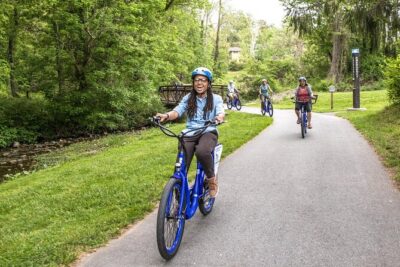
Asheville Historic Downtown Guided Electric Bike Tour with Scenic Views
Read our review →
Browse the lists this tour appears in