
Review · POLAND BIKE TOURS
Hidden Krakow Bike Tour
Krakow’s most powerful wartime sites are across the river from the Old Town, and this three-hour bike tour links them in one steady ride. You’ll visit Kazimierz, Skalka Basilica, the former Jewish ghetto, Ghetto Heroes Square, part of the old ghetto wall, and a former resistance headquarters. I like the small group of no more than 15 and the way the tour pairs difficult history with quieter, greener parts of Krakow.
I also like that the tour gives you more than a quick look at Schindler’s List locations. Guides named Bram Hoffman and Nikki have led this experience, with a style described as informative, fun, and easy to follow. The main drawback is that nearly three hours are spent on wartime sites in Podgórze, so this is not the best choice if you want a broad tour of Krakow’s churches, castle, and Old Town.
Key points at a glance
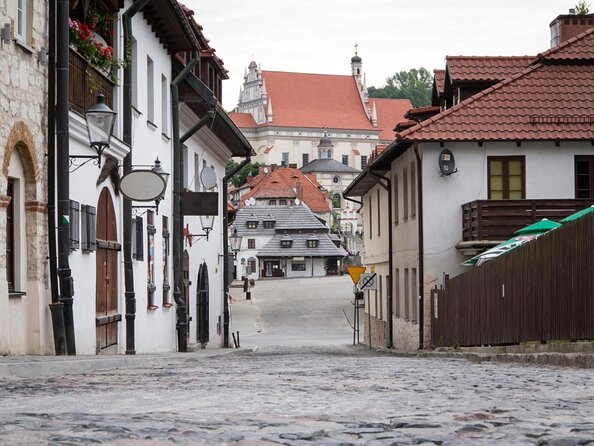
- Kazimierz comes first: See Skalka Basilica and get a short introduction to the film Schindler’s List.
- Podgórze gets most of the time: About two hours and 45 minutes are devoted to the former Jewish ghetto and its wartime sites.
- The group stays small: A maximum of 15 people makes it easier to hear the guide and ask questions.
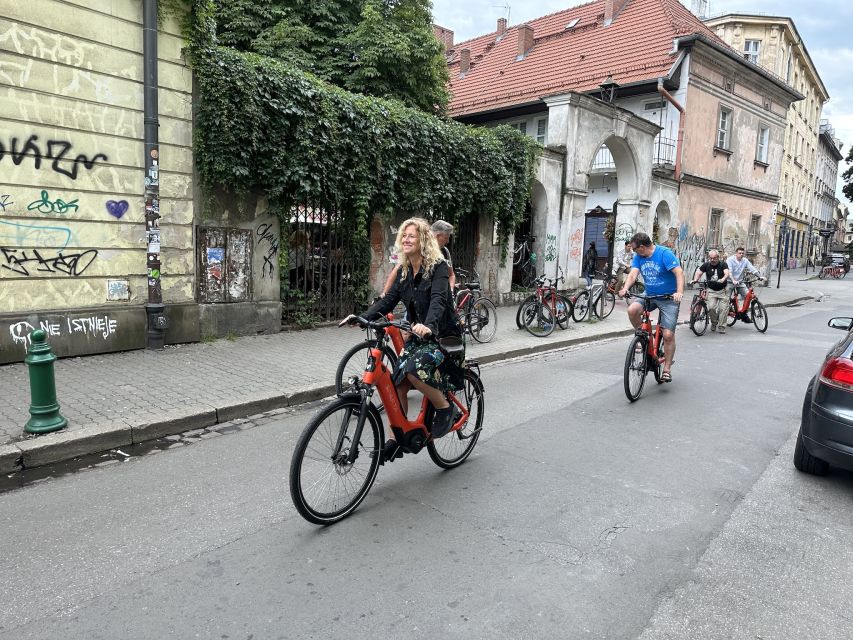
- The bikes are part of the appeal: The tour has been praised for comfortable, easy-to-ride bikes that feel safe in the city.
- The focus is serious and specific: Ghetto Heroes Square, the remaining wall, and a former resistance headquarters give the history a physical setting.
- It starts and ends in the same place: Meet at Józefa Dietla 59 at 2:00 pm and return there after the ride.
Why this bike tour focuses on Krakow’s wartime past
This is not a general orientation ride. It does not try to cover every major Krakow sight in one afternoon. Instead, it follows a clear thread from Kazimierz, the former Jewish district, across to Podgórze, where the Nazis created the Jewish ghetto during World War II.
That focused approach matters. Krakow’s wartime story can feel scattered if you see one square here and one museum there. By bicycle, you move between the places while the guide explains how they connect. The distance becomes part of the lesson rather than dead travel time.
I find this useful for a first visit, especially if you plan to explore the Old Town separately. You get a strong introduction to two districts that are central to Krakow’s modern identity, without spending the whole afternoon on the usual Royal Route and Main Market Square.
The tone is likely to be thoughtful rather than light. There is room for humor and an engaging guide, but the main subject is persecution, resistance, and loss. If you prefer tours built around food, architecture, or nightlife, this one may feel heavy. If you want history tied to real streets and squares, it offers a direct way to understand the city.
More bike tours in Poland:
- Complete Cracow Bike Tour (small group of maximum 15 people!)
★ 5.0 · 1,322 reviews - Krakow: Bike Tour of Old Town, Jewish Quarter and the Ghetto
★ 4.9 · 1,155 reviews - Highlights of Krakow Bike Tour – Small group
★ 5.0 · 662 reviews
Kazimierz and the Skalka Basilica
The tour begins at Józefa Dietla 59 and moves into Kazimierz, once Krakow’s Jewish district. The first listed stop is Skalka Basilica, a striking church with a long connection to Krakow’s religious past.
The visit here is brief, about 15 minutes, and admission is free. Do not expect an extended church tour or a long architectural lecture. Instead, the stop helps set the scene before the group turns toward the Jewish district and the wartime story.
Kazimierz is an important starting point because the district carries several layers of Krakow’s past. The tour gives you an introduction to the area and also explains its connection to Schindler’s List. That film brought international attention to Krakow’s wartime history, but the real value of this stop is seeing the district as more than a movie set.
I like the short format here. A bike tour can lose momentum if every stop becomes a long indoor visit. Fifteen minutes gives you a taste of Skalka Basilica and leaves enough time for the main part of the afternoon in Podgórze.
You should also keep your expectations in check. The tour does not list entry to museums or a full visit inside several buildings. The emphasis is on outdoor places, commentary, and the route between them. That makes the tour easy to follow, but it also means you will not receive the same depth as you would from a dedicated museum guide.
Crossing into Podgórze and the former Jewish ghetto
The heart of the tour is Podgórze. About two hours and 45 minutes are set aside for this district, which tells you where the experience puts its weight.
Podgórze was the site of Krakow’s Jewish ghetto during World War II. Here, the guide brings you to locations connected with the ghetto, wartime resistance, and the physical boundaries that once controlled people’s movement.
This is where the bicycle format works particularly well. You can cover more ground than on foot, but still stop often enough to listen and look around. The group does not simply roll past the sites. The listed stops include time for explanations, so you can connect each place with the larger story.
The long Podgórze section also means you should be ready for a serious history lesson. This is not a quick photo stop followed by another attraction. The guide may spend time explaining what happened at each location and why it mattered. I would choose this tour for its historical focus, not merely as a way to get exercise.
The experience is offered in English. That makes the guide’s storytelling especially important, since the tour depends on spoken context rather than a large number of indoor displays or printed explanations.
Ghetto Heroes Square and the remaining wall
Ghetto Heroes Square is one of the tour’s key locations. The name points to the Jewish people who resisted Nazi persecution, and the square gives the story a public, urban setting rather than keeping it inside a museum.
The tour also visits a remaining section of the wall that surrounded the ghetto. This kind of fragment can be more affecting than a reconstruction because it is an actual surviving part of the barrier. It helps you understand the scale and presence of the ghetto in a way that dates and names alone cannot.
I appreciate that the route includes both a memorial space and a physical remnant. One helps you consider the people and their courage. The other shows the machinery of separation and control. Together, they give the tour a stronger sense of place.
There is a practical point here too. Outdoor historical sites rarely provide the same comfort or structure as a museum. You may be standing in an open square while listening, and the experience depends on staying close enough to the guide. The maximum group size of 15 should help, but you still need to pay attention when the group stops.
Another way to spend a morning on two wheels:
- 3-Hour Guided Cycling Tour of Warsaw
★ 4.9 · 624 reviews - Full Bike Tour – the Old Town, Jewish Qtr & the Ghetto NEW BIKES
★ 5.0 · 437 reviews - Krakow: Highlights of Krakow Bike Tour – Small Group
★ 4.9 · 421 reviews - Gdańsk: Highlights Bike Tour
★ 4.9 · 173 reviews
The former resistance headquarters
The route also includes a former headquarters of the resistance. This adds another side to the story. The tour is not limited to the suffering created by the ghetto. It also looks at the people and networks that opposed Nazi control.
The exact details of the building and the explanation provided are not specified, so you should not expect a full interior visit unless the guide says otherwise. Treat this as an outdoor location tied to the history of resistance, with the guide supplying the meaning.
That is one reason the guide matters so much on this experience. A wall, square, or building can look ordinary without context. A good guide links the site to the people who used it, the decisions made there, and the risks involved.
Bram Hoffman and Nikki are names associated with guiding this tour. The strongest descriptions of their style point to clear information, a fun manner, and an ability to keep the ride engaging even when the subject is difficult. Guides can vary from date to date, so you should not assume one particular person will lead your departure.
What the bike format adds
A bike gives you a useful middle ground between a walking tour and a bus trip. You cover more ground than you could on foot, but you remain close to the streets, squares, and buildings that make the story real.
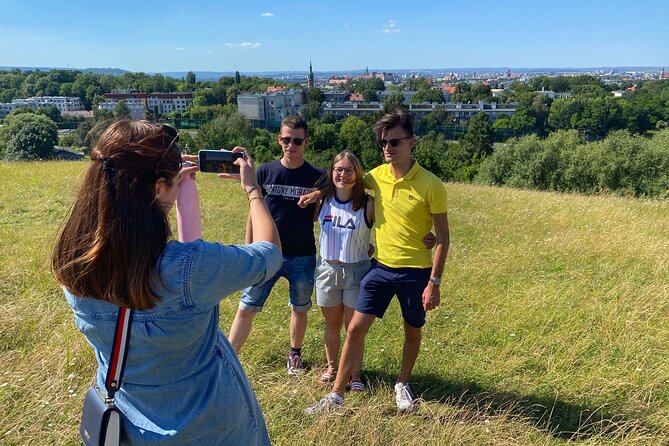
The route also includes some of Krakow’s greener areas and less obvious corners. That gives the afternoon a little breathing room between the heavier historical stops. You are not locked inside a vehicle, and you are not spending the whole time on major roads or tourist corridors.
The bikes have been praised as comfortable, easy to ride, and safe. That is important because a poorly fitted or awkward bike can distract from the guide. Here, the available feedback suggests that the equipment supports the experience rather than getting in its way.
Still, a bike tour always asks for more physical effort than a walking lecture or coach tour. The exact route, terrain, and pace are not provided, so I would not assume the ride is strenuous or completely effortless. Most people can participate, but you should be comfortable cycling for roughly three hours, with stops along the way.
The small group also helps. With no more than 15 people, you have a better chance of hearing the commentary and staying together. It is not a private tour, but it should feel more personal than a large coach outing.
Price and what you receive for $39.32
At $39.32 per person, this sits in the moderate range for a guided city experience. The price is easier to justify if you want both transportation between districts and a sustained history lesson.
You are not paying for museum admissions here. The listed stops have free admission, and the value comes from the guide, the bicycle, the planned route, and the time saved connecting Kazimierz with Podgórze.
I would compare the price with the cost of arranging the same route alone. You could walk or cycle between these districts, but you would need to research the sites, work out the route, and understand how the places fit together. The tour handles that work and gives you a local narrator.
The value is strongest for first-time visitors and anyone who wants a clear introduction to Krakow’s World War II history. It is less compelling if you already know Podgórze well or plan to spend hours inside dedicated museums. In that case, you may prefer a standard bike tour covering more of the city.
Group discounts are available, so the per-person cost may work better for families or friends booking together. Since the group is capped at 15, you still get a more contained experience rather than joining a very large crowd.
Timing, meeting point, and practical planning
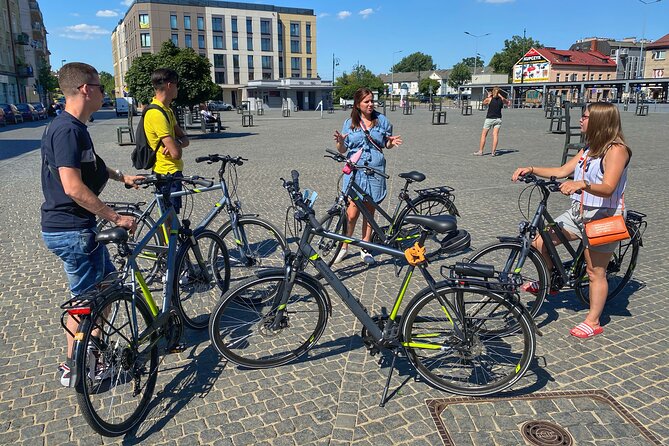
The tour begins at 2:00 pm at Józefa Dietla 59, 31-054 Kraków. It ends back at the same meeting point, which makes planning the rest of your day simpler.
The afternoon departure is useful if you want a relaxed morning for Krakow’s Old Town, the castle, or breakfast. On the other hand, you should not plan a tight evening appointment immediately afterward. The stated duration is approximately three hours, and city traffic, group pace, and stops can affect the finish time.
The meeting point is near public transportation. Confirmation is sent at the time of booking, so check the booking details before you set out and allow enough time to reach Józefa Dietla 59.
The tour is offered in English only. If you need another language, this experience will not meet that need based on the information available.
Free cancellation is allowed up to 24 hours before the start time for a full refund. Changes or cancellations made less than 24 hours before departure are not accepted for a refund. The tour also requires a minimum number of people. If that minimum is not reached and the activity is canceled, you will be offered another date or experience, or receive a full refund.
Who will get the most from this ride
I would choose this tour if you want history with a strong sense of place. It suits first-time visitors who want to understand Kazimierz and Podgórze before exploring them on their own.
It is also a good match if you like active sightseeing but do not want a fast, athletic ride. The pace includes several stops, and the purpose is listening and looking rather than racing across town.
The tour may suit you especially well if you have seen Schindler’s List and want to place the film’s subject in the real city. The film introduction is short, though, so this is not a movie-location tour in the usual sense.
I would choose something else if your main goals are Krakow’s medieval center, major churches, or the Wawel area. Those places are not the focus here. I would also think twice if a long, serious discussion of World War II is not what you want during an afternoon ride.
The 100 percent recommendation rate and five-star rating from 275 ratings point to a very strong response, particularly for the guides, the comfortable bikes, the small group, and the balance of information with an enjoyable ride. Those strengths match what this tour promises best: a focused route, a capable guide, and a thoughtful look at two important districts.
Should you book the Hidden Krakow Bike Tour?
Book it if you want a focused history tour by bicycle, especially one centered on Kazimierz, Podgórze, the former ghetto, and resistance sites. The small group, English-language guiding, comfortable bikes, and return to the same meeting point make it a practical afternoon choice.
Skip it if you want a broad survey of Krakow or a lighter sightseeing ride. This experience spends most of its time on World War II, and that focus is its main strength as well as its main limitation.
FAQ
How long is the Hidden Krakow Bike Tour?
The tour lasts approximately three hours.
What time does the tour start?
The tour starts at 2:00 pm.
Where does the tour begin?
You meet at Józefa Dietla 59, 31-054 Kraków, Poland.
Where does the tour end?
The activity ends back at the meeting point on Józefa Dietla 59.
What language is the tour offered in?
The tour is offered in English.
How many people can join the tour?
The maximum group size is 15 travelers.
Which parts of Krakow does the tour visit?
The route visits Kazimierz, including Skalka Basilica, and Podgórze, including the former Jewish ghetto, Ghetto Heroes Square, part of the ghetto wall, and a former resistance headquarters.
Is admission included at the stops?
The listed stops have free admission. No paid attraction admission is listed for this tour.
Can I cancel for a full refund?
Yes. You can cancel at least 24 hours before the start time for a full refund. Cancellations or changes made less than 24 hours before the start time are not accepted for a refund.
Latest bike tours added in Poland
- Secrets of Warsaw 4-hour Bike Tour★ 5.0 · 25 reviews
- Krakow: Old Town Bike Tour with a Guide★ 4.5 · 54 reviews
- Krakow: Complete Bike tour with all the highlights★ 4.9 · 90 reviews
- Krakow: 3-Hour Small Group Tour on E-Bike★ 4.8 · 135 reviews
- Gdansk Private Bike Tour★ 5.0 · 21 reviews
- Gdańsk: Highlights Bike Tour★ 4.9 · 173 reviews
- Krakow: Highlights of Krakow Bike Tour – Small Group★ 4.9 · 421 reviews
- Full Bike Tour – the Old Town, Jewish Qtr & the Ghetto NEW BIKES★ 5.0 · 437 reviews
Poland Bike Tours, compared.
Complete Cracow Bike Tour (small group of maximum 15 people!)
Read our review →
Krakow: Bike Tour of Old Town, Jewish Quarter and the Ghetto
Read our review →
Full Bike Tour – the Old Town, Jewish Qtr & the Ghetto NEW BIKES
Read our review →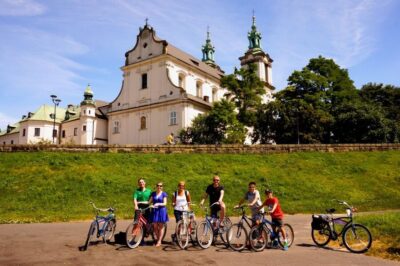
Krakow: Highlights of Krakow Bike Tour – Small Group
Read our review →
Browse the lists this tour appears in