
Review · HISTORIC & LANDMARK BIKE TOURS
Anuradhapura Heritage Mountain bike / bicycle Tour
Anuradhapura is far too spread out for a pleasant walking tour, and this 10 km bicycle loop solves the problem neatly. You move between enormous stupas, old monastery ruins, sacred sites, forest tracks, and quiet water tanks without spending the day in a vehicle. Guide Saranga leads the ride at an easy pace and adds cultural context along the way.
I like two things in particular: the chance to reach quieter routes through rice fields and wooded areas, and the balance between major sights and small details such as carved moonstones and ancient bathing pools. The included vegetarian meal from Hela Bojun is another welcome touch. The main drawback is the extra UNESCO entrance fee, which costs $30 per adult and $15 for children under 13, on top of the $25 tour price.
Key points to know before you book
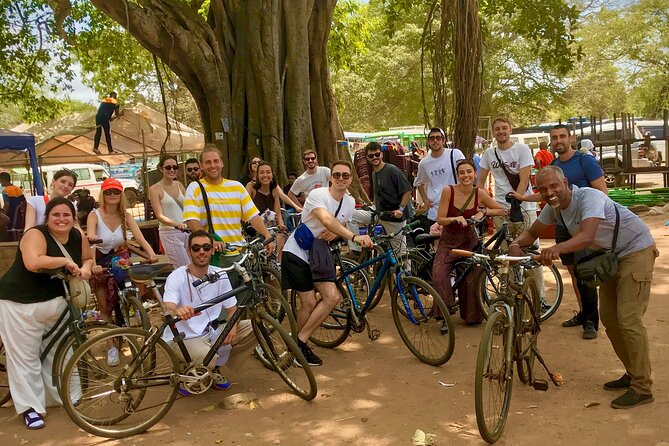
- A 10 km private loop: You return to the same meeting point after roughly four and a half hours.
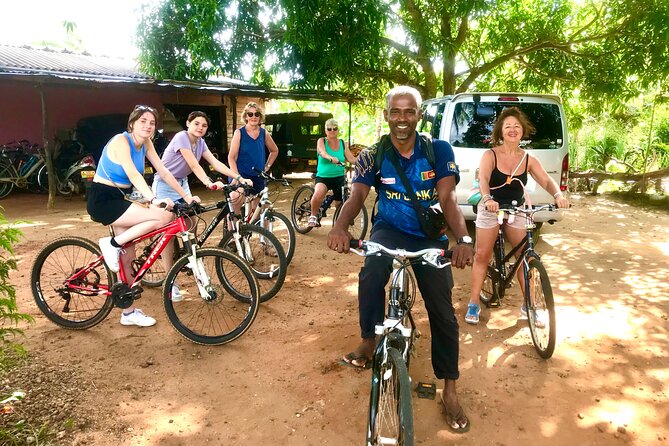
- Top-brand mountain bikes: The operator provides bicycles from brands such as Giant, Trek, and Louis Garneau.
- Major sacred sites included: The route visits Jetavanaramaya, Abhayagiriya, Ruwanweliseya, and Sri Maha Bodhi.
- Quiet scenery between monuments: Expect forest paths, ancient tanks, and rice-field views rather than a nonstop road ride.
- Vegetarian food is included: A local meal prepared through Hela Bojun forms part of the experience.
- Temple clothing matters: Bring a wraparound cloth if your knees are not covered.
Why a bicycle makes sense in Anuradhapura
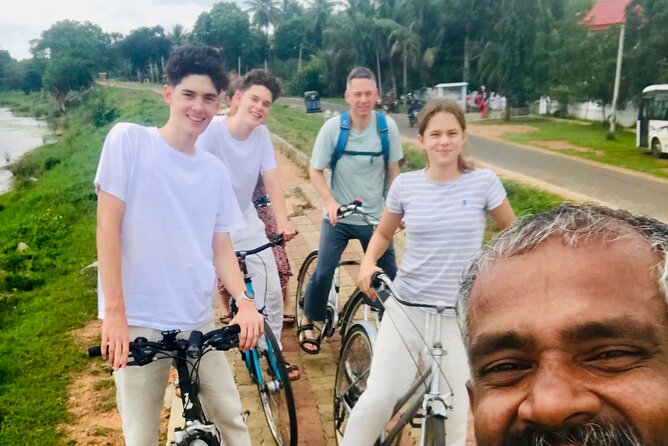
Anuradhapura’s ancient city is not one compact ruin field. Its monuments, monasteries, tanks, gardens, and sacred places are spread across a large area. By bicycle, you can cover useful ground while still noticing the shade trees, village edges, water, and daily religious life between the headline sights.
This is not a hard-core mountain-bike outing. The route is described as a 10 km loop, but the four-and-a-half-hour timing allows for stops, explanations, food, and a comfortable pace. You need a moderate level of fitness, yet the schedule is not built around racing from one monument to the next.
I also like the fact that this is a private activity. Your own group rides with Saranga, rather than being folded into a large bicycle convoy. That gives you a better chance to ask about Buddhism, local customs, architecture, and the meaning of each place.
The supplied bicycles are professional mountain bikes from recognized brands including Giant, Trek, and Louis Garneau. That does not guarantee that every rider will find the exact size or setup perfect, so it is sensible to check the fit before setting off. Still, the equipment sounds more suitable for a half-day ride than a basic town rental.
More Mountain Bike Tours in the world:
- From Ubud: Downhill Bike Tour with Rice Terraces and Meal
★ 4.9 · 664 reviews - Waimea Canyon Downhill Bike Ride
★ 5.0 · 650 reviews - Ubud: Downhill Cycling with Volcano, Rice Terraces and Meal
★ 5.0 · 536 reviews
Jetavanaramaya begins with scale
The first major stop is Jetavanaramaya, the huge brick stupa associated with King Mahasena, who ruled from 273 to 301. At about 122 metres, or 400 feet, it was once the tallest stupa in the world and one of the tallest structures anywhere.
Give yourself time to look beyond its size. The broad base, worn brick surface, and open setting help you picture the engineering needed to build such a monument more than a thousand years ago. The scheduled stop is about 15 minutes, so this is a quick introduction rather than a long archaeological study.
Cycling makes this first visit useful. You arrive with enough energy to appreciate the scale, then move on before the monument becomes the only focus of the morning.
Samadhi Statue and the stillness of meditation
The Samadhi Buddha is a smaller and quieter kind of sight. The statue shows the Buddha in the Dhyana Mudra, the meditation position, at Mahamevnawa Park.
The planned visit lasts about 20 minutes. That is enough time to look closely at the seated pose and hear about its place in Buddhist practice. Compared with Jetavanaramaya, this stop asks you to slow down and observe rather than simply measure size.
Dress and behavior matter at religious sites throughout the route. Modest clothing is required, and you may need a cloth wrap if your knees are uncovered. Shoes and other site-specific rules may also apply, so follow Saranga’s instructions and keep the tone respectful.
Abhayagiriya reveals a whole monastic center
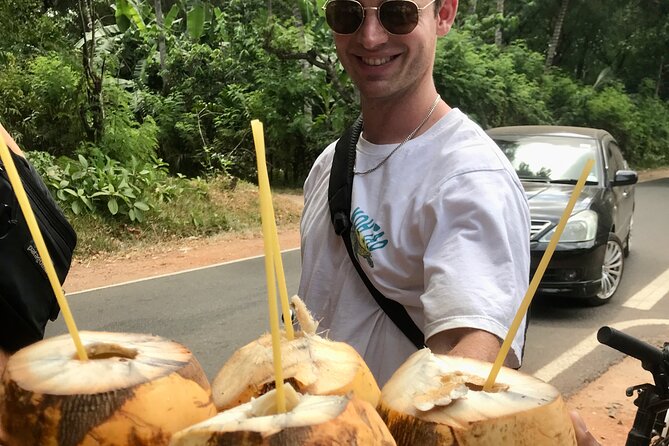
Abhayagiriya Stupa is not just another large mound on the route. It was the center of a major monastery complex linked with Mahayana, Theravada, and Vajrayana Buddhist traditions. The wider site is among the largest ancient monastic areas in the world.
You have about 20 minutes here. That is enough for an introduction to the stupa and a sense of the scale, though not enough to inspect every ruin in the complex. This is one reason the guided format helps. Saranga can point out what deserves your attention instead of leaving you to guess which weathered foundations mattered.
The ride between the monuments is part of the appeal. The route is intended to use less obvious paths, so you are not simply pedaling from parking area to parking area. Forest sections and open views toward rice fields give the ancient city a calmer rhythm.
More Historic Bike Tours in the world:
- Historical Singapore Bike Tour on Full-Sized Bicycles
★ 5.0 · 1,421 reviews - Barcelona: 2.5-Hour Bike or E-Bike Historical Tour
★ 4.5 · 1,262 reviews - Asheville Historic Downtown Guided Electric Bike Tour with Scenic Views
★ 5.0 · 1,234 reviews - Krakow: Bike Tour of Old Town, Jewish Quarter and the Ghetto
★ 4.9 · 1,155 reviews
Kuttam Pokuna shows ancient comfort and engineering
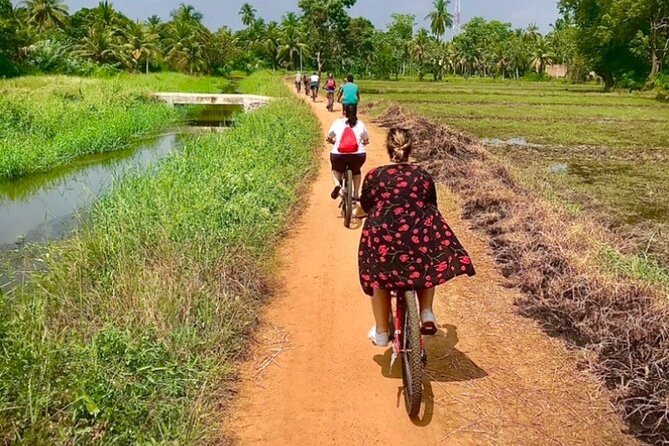
The Twin Baths, or Kuttam Pokuna, are two carefully built bathing pools connected with the Abhayagiri monastery. Their stone steps and water-management features offer a more intimate look at ancient life than the giant stupas do.
The stop lasts around 20 minutes. Look for the fine stonework and the practical design. These pools were not decorative swimming holes. They formed part of a functioning monastic setting, where water, hygiene, and daily routine had to be organized with care.
This is also a good place to appreciate the bicycle format. You can reach a site that might feel secondary on a rushed car itinerary, yet it gives you a clearer sense of how the religious community operated.
Eth Pokuna puts the water system in perspective
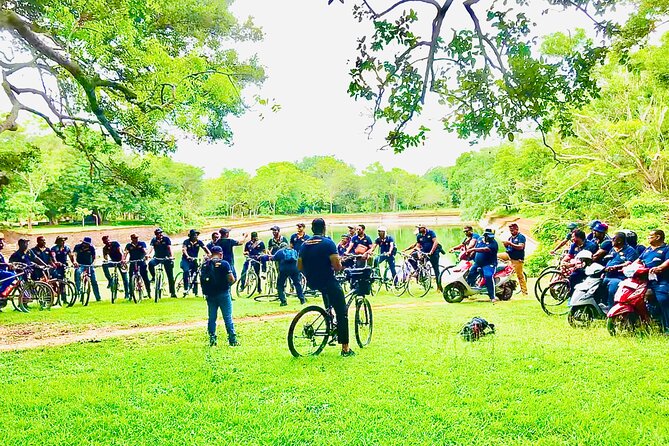
Eth Pokuna, or Elephant Pond, is an enormous ancient reservoir measuring roughly 159 metres long and 52 metres wide. Its name reflects its size, and the scale helps explain how much planning and labor went into supporting Anuradhapura’s population and monasteries.
Plan on about 20 minutes here. The pond offers a welcome change from carved stone and brick. It also points toward the wider irrigation system that made settlement in this part of Sri Lanka possible.
If you enjoy ancient engineering, this may be one of the most rewarding stops. The monument is less instantly famous than the major stupas, but it explains the practical foundation beneath Anuradhapura’s religious life.
The moonstone rewards a close look
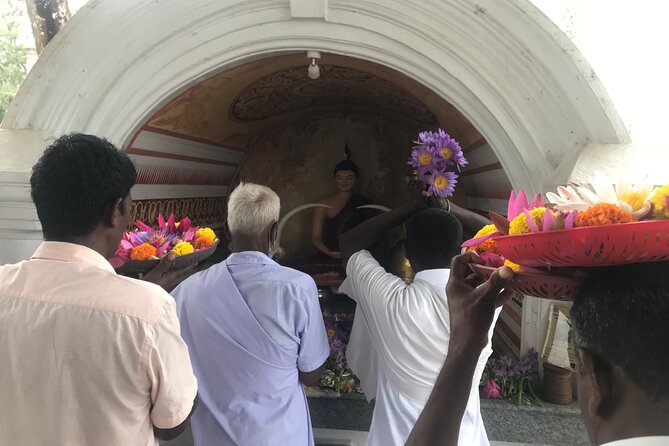
The Sandakada Pahana, or moonstone, is a semicircular carved stone placed at the bottom of stairways and entrances. It is a distinctive feature of ancient Sri Lankan architecture, and the details become more interesting when you stop rather than pedal past.
The scheduled visit is about 25 minutes. Use the time to inspect the bands of carving and ask Saranga about their symbolism and placement. This is a small object compared with the stupas, but it may be one of the clearest examples of how art and religious meaning were built into everyday movement through the city.
The stone can also be busy around visitors arriving independently, so patience is useful. The guide can help you understand what you are seeing while allowing time for photographs.
Basawkkulama Tank connects the ruins to daily survival
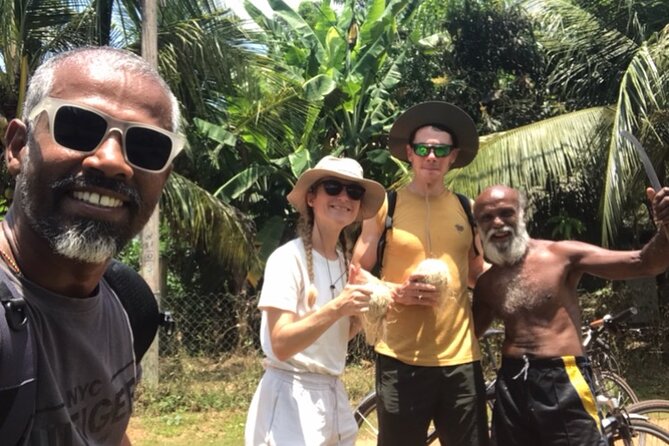
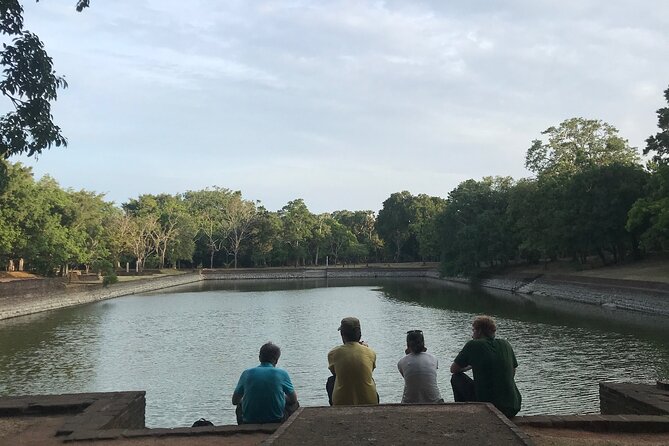
Basawkkulama Tank introduces Anuradhapura’s irrigation story. Sri Lanka developed complex water systems very early, with some of the first works dating to around 430 BCE during the reign of King Pandukabhaya.
The visit lasts roughly 20 minutes. Here, the important sight is not a single carved object. It is the relationship between the tank, agriculture, settlement, and the city’s long history. The quiet water and open surroundings also provide a natural break after several religious monuments.
I like this part of the route because it prevents the day from becoming a parade of stupas. You see the infrastructure that allowed the ancient capital to grow, not just the ceremonial buildings that survive most dramatically.
Abhayagiri’s refectory makes the monastery feel human
The Main Refectory of Abhayagiri Monastery is scheduled for a shorter 10-minute stop, but it adds useful scale to the monastic complex. The Chinese monk Fa-Hien, who visited in the fifth century, recorded that as many as 5,000 monks lived at Abhayagiri.
A refectory for a community of that size gives you a practical way to picture the monastery. Religious centers needed kitchens, dining areas, water facilities, storage, and organized routines. These remains help translate the site from an impressive ruin into a place where thousands of people once lived and ate.
Do not expect a long visit here. The value comes from the context Saranga provides and from linking this building with the nearby baths, pond, stupa, and monastery grounds.
Ruwanweliseya brings the grand finish
Ruwanweli Maha Seya, also called Ruwanweliseya, is one of Anuradhapura’s most important stupas. King Dutugamunu began the monument in the second century BCE, and it was completed by his younger brother after his death.
The tour allows about 30 minutes here, which is more generous than the time at Jetavanaramaya. Use it to take in the white dome, the surrounding religious activity, and the scale of the compound. This is an active sacred place, not merely an archaeological object.
The mood can shift quickly from quiet sightseeing to formal devotion. Dress modestly, keep your voice low, and follow local instructions. If a ceremony is taking place, Saranga can help you understand what you are seeing without interrupting it.
Sri Maha Bodhi is the most sacred stop
The final major visit is Sri Maha Bodhi, a sacred fig tree in the Mahamevnawa Gardens. It is regarded as the closest living link to Gautama Buddha and is one of the most important pilgrimage sites in Sri Lanka.
The planned visit lasts about 30 minutes. This is not a place to treat as a quick photo stop. You may see people offering flowers, praying, or taking part in ceremonies. Your role is to observe carefully and give worshippers space.
The tree also gives the tour a fitting ending. After the size of the stupas, the waterworks, and the remains of a vast monastery, the route finishes with a living religious focus. That shift from stone and brick to ritual and devotion is one of the strongest parts of the day.
Food, water, and the real value of the $25 price
The tour costs $25 per person and includes the mountain bicycle, guide, bottled water, parking fees, and a vegetarian meal prepared through Hela Bojun. For a private four-and-a-half-hour experience with a named guide and several major sites, that is a reasonable base price.
The important catch is the UNESCO entrance charge. Adults pay an additional $30, while children under 13 pay $15. For an adult, the effective total is therefore about $55 before any other personal spending. That is still fair for the amount of guiding and coverage, but you should budget for the entrance fee rather than treating the advertised price as the final cost.
The included food improves the value. A local vegetarian meal is more useful than another generic snack, especially after cycling in the heat. The details of the menu and serving time are not specified, so do not book this expecting a particular dish. If you have dietary concerns, ask before departure.
Bottled water is supplied, but bring your own refill bottle if you prefer to carry more. An early start may also be more comfortable than riding during the hottest part of the day, though the exact start time is not provided.
Who will enjoy this ride most
I would choose this tour if you want to see Anuradhapura’s major monuments but do not want to spend half a day moving between them by car. It suits people who enjoy light exercise, open-air sightseeing, and explanations that connect architecture with Buddhist practice and ancient water management.
It is also a good fit for couples, families with suitably active older children, and small private groups. Children under 13 receive a reduced entrance price, but the tour still requires moderate physical fitness. The activity is not presented as suitable for people who cannot comfortably cycle between multiple stops.
You may prefer a different format if you want a slow, highly detailed archaeological study of every ruin. Four and a half hours gives you a strong overview, but the schedule includes ten stops and a 10 km ride. Some visits are brief, especially the refectory and Jetavanaramaya.
Meeting point and practical details
The ride begins and ends at Rides Hubwela Mada Gedara, Garage Waththa, near the old car park, at No. 116/1 Watawandana Road in Anuradhapura. It is near public transportation, and the activity is confirmed at booking with a mobile ticket.
Wear comfortable clothing that allows easy cycling. For temple visits, cover your shoulders and knees, or carry a wraparound cloth. Bring sun protection and enough personal water for a half-day outdoors, even though one bottle is included.
The tour requires good weather. If poor conditions force cancellation, you can receive a full refund or choose another date. You can also cancel for a full refund up to 24 hours before the local start time. Changes or cancellations inside that window are not accepted.
Should you book the Anuradhapura bicycle tour?
Book it if you want an active, personal introduction to Anuradhapura, especially if the thought of cycling through forest paths, rice fields, and ancient ruins appeals to you. Saranga’s role is central: the best parts are not only the monuments, but the links between Buddhism, local customs, irrigation, and daily life.
The price becomes less of a bargain once the $30 adult entrance fee is added, but the private guide, bicycle, water, parking, and local vegetarian meal make the package sensible. Choose it with realistic expectations: this is a well-paced overview, not an all-day excavation tour.
If you have moderate fitness, dress properly for temples, and want to see more than the standard roadside sights, this is a strong way to experience Anuradhapura.
FAQ
How long does the Anuradhapura bicycle tour last?
The tour lasts approximately four hours and 30 minutes.
How far do you cycle?
The route is a 10 km loop through the Anuradhapura heritage area.
Is this a private tour?
Yes. Only your group participates in the activity.
Who guides the tour?
The guide is Saranga, an English-speaking guide from the Anuradhapura area.
What bicycle brands may be available?
The tour provides professional mountain bicycles from brands such as Giant, Trek, and Louis Garneau.
What is included in the tour price?
The price includes bottled water, parking fees, use of a mountain bicycle, the guided tour, and a vegetarian meal prepared through Hela Bojun.
Is the UNESCO entrance fee included?
No. The UNESCO entrance ticket costs $30 for adults and $15 for children under 13.
What should I wear for the temples?
You should wear clothing that covers your knees. If your knees are uncovered, bring a wraparound cloth.
Where does the tour start and finish?
It starts and ends at Rides Hubwela Mada Gedara, Garage Waththa near the old car park, No. 116/1 Watawandana Road, Anuradhapura.
What happens if the weather is poor?
The experience requires good weather. If it is canceled because of poor conditions, you can choose another date or receive a full refund.
More history tours in the world
- Historic Athens: Small Group Electric Bike Tour
★ 4.9 · 966 reviews - Bordeaux: Historic Center & Chartrons District Bike Tour
★ 4.8 · 709 reviews - Intramuros, Manila: Historical Bamboo Bike Tour
★ 4.8 · 583 reviews - Historic Bike Tour in Tucson
★ 5.0 · 553 reviews
Latest bike tours added in the world
- Brooklyn Neighborhoods Small-Group Bike Tour★ 5.0 · 137 reviews
- Hudson Valley Craft Brewery Bike Tour★ 5.0 · 23 reviews
- The Best of Bristol Bike Tour★ 5.0 · 39 reviews
- A Day in Brooklyn Bike Tour★ 5.0 · 59 reviews
- Brisbane Kayak, Bike★ 4.5 · 23 reviews
- Brisbane Electric Mountain Bike Experience Tour★ 5.0 · 48 reviews
- 2 Hour Private Brisbane Mountain Bike Coaching Session and Ride★ 5.0 · 24 reviews
- Private Bike Tour with Olive Oil Tasting★ 4.5 · 15 reviews
Historic & Landmark Bike Tours, compared.
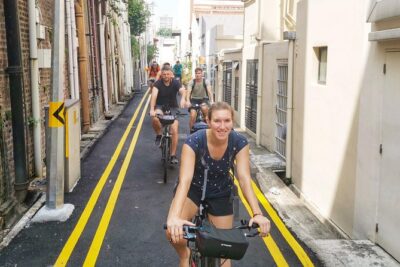
Historical Singapore Bike Tour on Full-Sized Bicycles
Read our review →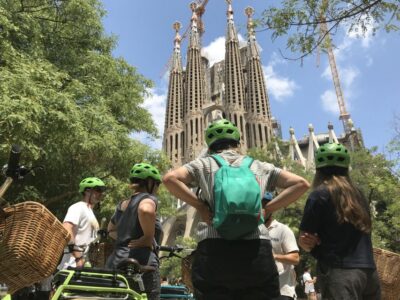
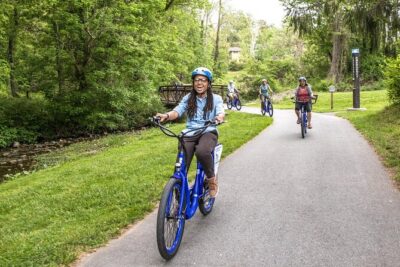
Asheville Historic Downtown Guided Electric Bike Tour with Scenic Views
Read our review →
Krakow: Bike Tour of Old Town, Jewish Quarter and the Ghetto
Read our review →
Historic Athens: Small Group Electric Bike Tour
Read our review →
Barcelona e-Bike Tour: Gaudí & Old Town Small Group
Read our review →
Bordeaux: Historic Center & Chartrons District Bike Tour
Read our review →Browse the lists this tour appears in