
Review · PARIS BIKE TOURS
Paris Local Districts and Stories Off the Beaten Track Guided Bike Tour
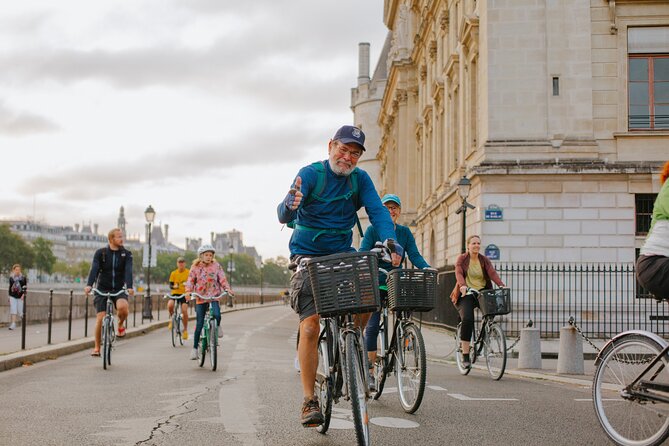
Paris reveals itself differently from a bicycle. This tour carries you from the medieval lanes of Le Marais to the Roman Arenes de Lutece, then along the quieter edges of Notre-Dame and Ile Saint-Louis. You cover a lot of ground without spending the morning underground or trapped in a sightseeing bus.
I like the small maximum of 12 people, which makes street crossings and questions easier. I also like the mix of famous places and local corners, plus the useful food and drink tips guides such as Simon, Ryan, Jude, and Marley give along the way.
The main consideration is timing. Most tours run about three to three and a half hours, but one outing lasted only two hours and 20 minutes and missed several advertised points. The route is easy for most reasonably fit riders, though you may encounter a couple of gentle hills and city traffic.
Key points to know before you ride
- Start with coffee and a waffle: Meet at Le Peloton Café, where the tour begins and ends.
- See more than the usual postcard Paris: The route includes the Wall of Philip II Augustus, the Paris Mosque, the Roman amphitheater, and quiet corners of Ile Saint-Louis.
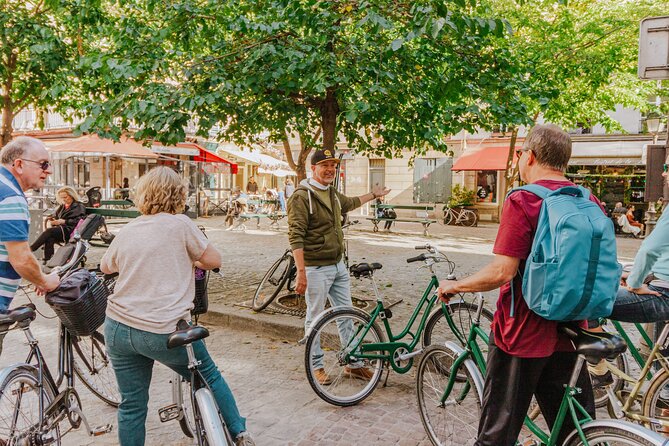
- Ride in a small group: No more than 12 people means better contact with your guide and a calmer pace.
- Expect stories, not just sightseeing: Guides combine French history, neighborhood anecdotes, humor, and personal tips.
- The route is family-friendly: Children from age 8 to 16 have enjoyed it, and the cycling is generally easy.
- Plan for Paris weather: Tours run in rain or shine, with rain ponchos available.
Starting at Le Peloton Café
Your meeting point is Le Peloton Café at 17 Rue du Pont Louis-Philippe in the 4th arrondissement. Arrive 15 minutes early for check-in. The café gives the tour a pleasant start, and you can order a waffle or craft coffee before setting off. Food and drinks are not included, so budget separately if you want breakfast.
This location is handy for a first day in central Paris. It sits close to the Seine, Hotel de Ville, and Le Marais, so you begin in an area where the city’s medieval past and modern café life sit side by side.
The tour ends back at the same café. That makes the morning simple to plan. You can continue on foot into Le Marais, stop for lunch, or take public transportation to another part of the city.
More guided departures in Paris:
- Highlights of Paris Bike Tour w/ a Local Guide (English or Dutch)
★ 4.5 · 1,176 reviews - Versailles Bike Tour with Market, Gardens & Guided Palace Tour
★ 5.0 · 1,121 reviews - Paris: Guided Bike Tour Like a Local
★ 4.8 · 425 reviews
Hotel de Ville and the first look at Paris
The bikes are stored beneath Hotel de Ville, the grand city hall beside the Seine. You get a close look at the building before riding away, rather than merely seeing it from a passing bus.
This opening stop is short, but it helps you get comfortable with the bicycle and the group. Your guide can set the pace, explain how the ride will work, and lead you onto the city streets.
A bicycle gives you a useful middle ground in Paris. You move faster than you would on foot, but you can still notice doorways, courtyards, street signs, and small changes in each neighborhood. The tour does not aim to take you inside major museums or monuments. Its value comes from the spaces between the main sights.
Le Marais, from Jewish quarter to royal square
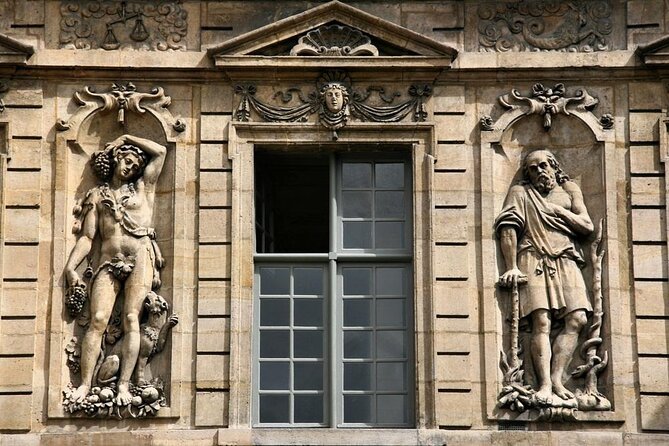
Le Marais is one of the strongest parts of the route. The neighborhood has narrow streets, grand townhouses, small gardens, and layers of Jewish, aristocratic, and modern Parisian life. You stop at several points instead of simply pedaling through.
Your guide explains the area’s past and points out details that can be easy to miss when walking alone. The short stops keep the morning moving, though they also mean you should not expect a long visit inside any one place.
The route then reaches the remaining sections of the Wall of Philip II Augustus, one of the oldest defensive walls in Paris. Only fragments survive, which is exactly what makes the stop useful. You begin to see Paris as a city built in layers, with older boundaries still tucked between later buildings.
At Place des Vosges, you get a change of pace. This formal square has a handsome park and was once connected with royalty. It was also home to Victor Hugo, the novelist behind Les Miserables and The Hunchback of Notre-Dame. You have time to take in the geometry of the square before moving on.
Place de la Bastille and the story of revolution
The ride continues to Place de la Bastille, where the famous prison once occupied the ground. There is no intact fortress to tour today, so the guide’s explanation matters. You learn how the prison became a symbol of the French Revolution and how the square changed into a major Paris crossroads.
This stop works best if you enjoy context. The physical remains are limited, but the location is central to understanding how French political history is remembered in the city.
The cycling between stops also matters here. You are not spending the whole morning standing in front of monuments while a guide delivers a lecture. You hear a story, ride a few streets, and then shift into another neighborhood. That rhythm keeps the history approachable.
More bike tours in Paris:
- Versailles Palace Bike Tour with Market & Marie-Antoinette hamlet
★ 5.0 · 2,680 reviews - Paris: Charming Nooks and Crannies Bike Tour
★ 4.8 · 2,585 reviews - From Paris: Versailles Bike Tour w/ Palace, Gardens, & Picnic
★ 5.0 · 2,150 reviews - Paris: City Highlights Bike Tour
★ 4.7 · 1,835 reviews
The Latin Quarter and a slower side of Paris
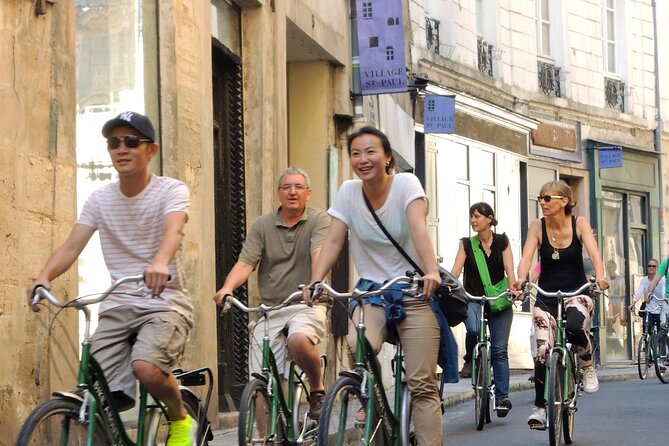
The route glides through the small streets of the academic quarter, generally known as the Latin Quarter. This section gives you a closer look at the old university district, with lanes that feel more intimate than the broad avenues around the Louvre or Champs-Elysees.
The route is described as relaxed, but it is not completely flat. Several riders found the cycling only moderately taxing, with one or two small hills. You do not need to be a seasoned cyclist, yet you should feel comfortable riding for several hours and starting and stopping in city streets.
Safety is one of the strongest reasons to book with a guide. Simon, Jude, Cedric, and other guides are praised for keeping the group together and choosing manageable streets. That does not remove every challenge of urban cycling, but it gives you a leader to follow rather than forcing you to navigate Paris traffic alone.
Jardin-des-Plantes and the Paris Mosque
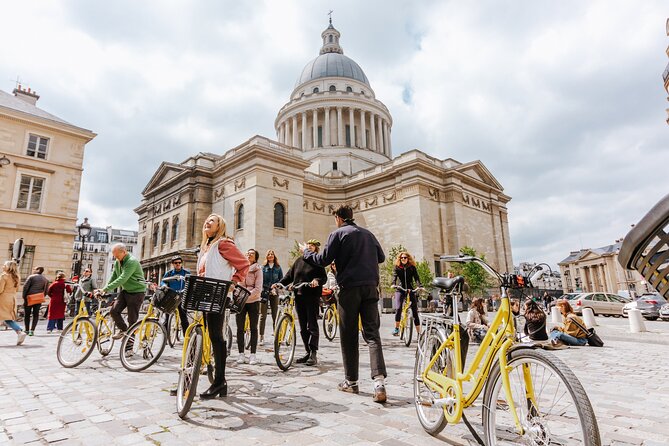
The Jardin-des-Plantes brings a welcome stretch of greenery into the route. You enter the botanical gardens and get a sense of their size and formal beauty. The stop is brief, so think of it as an introduction rather than a full garden visit.
If you want time to study plants, museums, or garden paths, return later on your own. The tour gives you the location and a reason to come back, but its main purpose is to connect several parts of Paris in one ride.
Nearby, the Paris Mosque adds one of the route’s most distinctive stops. You see the building and explore its gardens when they are open. The gardens are reserved for prayer during holidays, so access can vary.
This part of the tour is valuable because it broadens your picture of Paris. The city’s story is not limited to kings, revolutions, and famous churches. You also get a look at Muslim and Jewish communities, neighborhood traditions, and the different cultures that have shaped the capital.
A previous rider used the tour’s introduction to return the next day and visit the mosque’s interior and garden more fully. That is a good way to handle the schedule: use the bike tour for orientation, then come back when you have more time.
The Arenes de Lutece, Paris’s Roman past
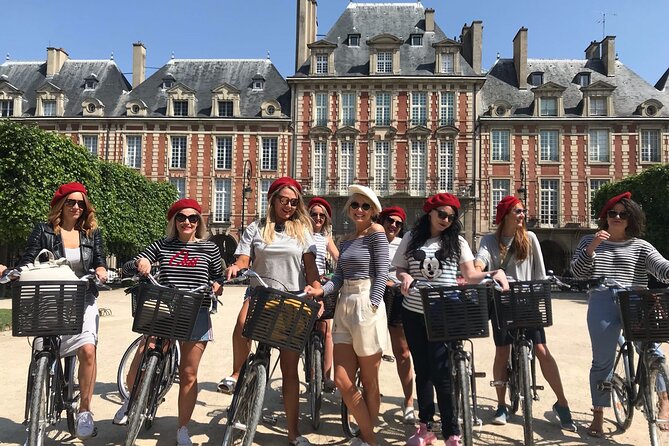
The Arenes de Lutece is one of the route’s best surprises. This ancient Roman amphitheater once held around 15,000 people. Today, it is a quieter place where you can imagine public games and performances taking place long before modern Paris existed.
You do not get the same scale as at Rome’s Colosseum, but the site’s setting makes it memorable. It sits within the city, surrounded by the Latin Quarter, yet its age can feel out of place among the surrounding streets.
The stop also shows why cycling works well here. The amphitheater is not always part of a first-time Paris walking route, especially if your time is focused on the Eiffel Tower, Louvre, and Notre-Dame. A bicycle lets you connect this older site with several other less familiar places without spending half the day on foot.
Behind Notre-Dame after the fire
The ride reaches Ile de la Cite and circles behind Notre-Dame Cathedral. This angle gives you a different view from the broad approach in front of the cathedral. You learn about the building’s architecture and see how reconstruction work is progressing.
One guide, Simon, has shared his personal experience of the Notre-Dame fire. Details like this can make the stop feel more immediate, but the quality of the explanation will depend on the guide assigned to your departure.
The cathedral itself is not an included interior visit. The tour is about the exterior, its setting, and the story of the building. If you want to go inside, you will need to make a separate plan.
This stop can also be busy. The guide helps you position the bikes and keep the group together, but you should not expect a quiet private view. The advantage is that you reach Notre-Dame after already seeing several less crowded districts, rather than spending your entire morning in the busiest central streets.
Ile Saint-Louis and the ride home
Ile Saint-Louis has a calmer feel than nearby Ile de la Cite. Its small streets and compact blocks invite you to slow down and look upward at the old façades. The guide uses the island to explain its past while taking you through lanes that are easy to miss on a standard city walk.
The route is deliberately not a race. Guides keep a leisurely pace, make regular stops, and leave room for photographs. Families have found the ride manageable, including groups with children between 8 and 16. Still, each child should be comfortable on a bicycle and able to follow directions in an urban setting.
The final stretch returns you to Le Peloton Café. This is a useful moment to ask for restaurant recommendations. Guides such as Ryan and Marley are praised for offering practical suggestions, and several people used the advice to find lunch or a good crepe afterward.
How the small group changes the experience
The maximum group size is 12. That is small enough for a guide to notice if someone is falling behind, answer questions without shouting, and keep the group together at intersections.
The group size also affects the feel of the stops. You are not part of a large rolling crowd that blocks a narrow street or takes a long time to gather. A smaller group can still take a few minutes to get organized, but it is easier to hear the guide and stay connected.
The guide is central to the experience. Names attached to especially strong outings include Simon, Ryan, Jude, Marley, Hannah, Mara, James, and Cedric. The consistent strengths are humor, clear storytelling, calm leadership, and useful suggestions for the rest of your stay.
English is the tour language. The guide’s fluency is usually a benefit, though one person found a particularly high level of English difficult to follow. If you are not comfortable listening to fast spoken English, ask questions early and stay close to the guide during explanations.
Price, pace, and practical value
At about $54.42 per person, the tour costs more than renting a bicycle for a few hours. You are paying for the bike, helmet, guide, route planning, historical interpretation, and the confidence of riding through central Paris with someone who knows the streets.
The value is strongest if you have only a short time in Paris or if you have already visited the main sights. You see several districts in one morning and get ideas for places to revisit later. The route also helps you understand how central neighborhoods connect.
The price is less compelling if you want long visits at each stop, museum entry, or a private experience. Food, drinks, hotel pickup, and drop-off are not included. The tour starts and ends at the café, so plan your own way there by public transportation or on foot.
Tours operate in all weather. Rain ponchos are available, but you should still dress for the forecast and wear comfortable clothing. A helmet is provided. The activity calls for a moderate fitness level, and service animals are allowed.
Free cancellation is available up to 24 hours before the start time. If the operator cancels because too few people have booked, you can receive a different option or a full refund.
Who should book this Paris bike tour?
I would choose this ride early in a Paris visit. It gives you a useful map of the center, introduces neighborhoods you might otherwise skip, and leaves you with restaurant and sightseeing ideas for later.
It suits solo visitors, couples, families, and anyone who wants a relaxed way to cover ground. It is also a good choice if city traffic makes you nervous, since the guide leads the way and keeps the group together.
I would think twice if you dislike bicycles, struggle with moderate physical activity, or want a tightly timed tour that guarantees every advertised stop. The route is broad, and the amount of time at each place can vary.
Should you book it?
Book this tour if you want local districts, small streets, and stories beyond the usual monument circuit. The combination of Le Marais, the old city wall, Place des Vosges, Bastille, the Latin Quarter, the Paris Mosque, the Roman amphitheater, Notre-Dame, and Ile Saint-Louis gives you a wide view of central Paris in about three hours.
Go early in your stay if possible, then use the guide’s food and sightseeing tips. Arrive 15 minutes ahead, expect a few hills, and allow some flexibility in case the ride runs shorter or skips a stop. For most reasonably fit visitors, this is a friendly and efficient way to see a less familiar side of Paris.
FAQ
Where does the Paris bike tour start?
The tour starts at Le Peloton Café, 17 Rue du Pont Louis-Philippe, 75004 Paris, France.
Where does the tour end?
The activity ends back at the same meeting point, Le Peloton Café.
How long does the tour last?
The scheduled duration is approximately three to three and a half hours. One reported outing lasted two hours and 20 minutes, so allow for some variation.
What is included in the price?
A local English-speaking guide, bicycle, and helmet are included. Food, drinks, hotel pickup, and hotel drop-off are not included.
How many people can join the tour?
The group has a maximum of 12 participants.
What happens if it rains?
Tours operate in all weather conditions. Rain ponchos are available, and you should dress suitably for the forecast.
Latest bike tours added in Paris
- The Best of Paris by Bike with a Local★ 4.8 · 15 reviews
- The Best of Paris: Small Group Bike Tour like a Local★ 4.7 · 12 reviews
- Paris: Afternoon E-Bike Guided Small Group Tour★ 4.8 · 152 reviews
- Private Highlights of Paris Bike Tour★ 4.9 · 12 reviews
- Paris: Guided Private E-bike Sightseeing Tour★ 4.4 · 19 reviews
- Paris: Versailles Palace and Queen Hamlet E-Bike Tour★ 5.0 · 126 reviews
- Paris: Street Art Open-Air Museum Bike Tour★ 4.8 · 51 reviews
- Paris : Private guided tour Rickshaw bike – Saint-Germain★ 4.7 · 15 reviews
Paris Bike Tours, compared.
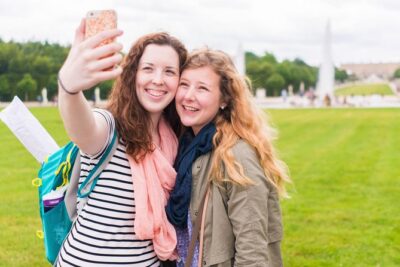
Versailles Palace Bike Tour with Market & Marie-Antoinette hamlet
Read our review →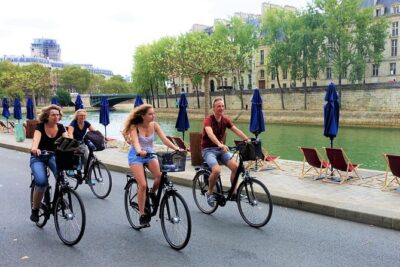
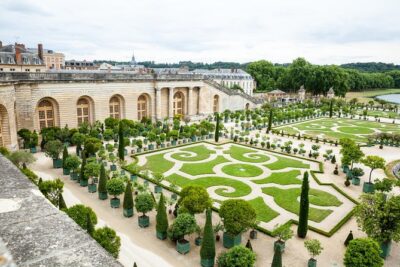
Versailles Bike Tour w/ Palace, Gardens, & Picnic
Read our review →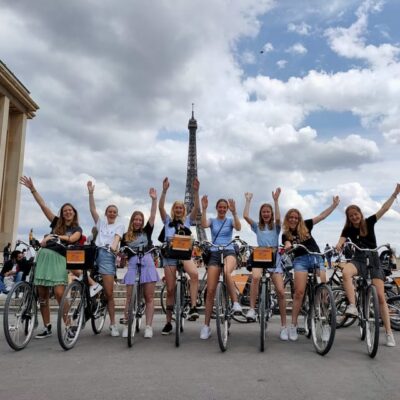
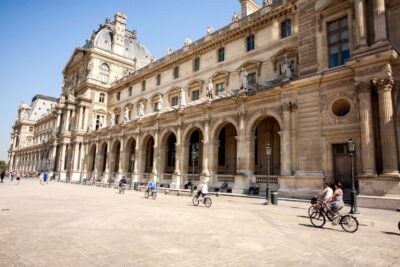
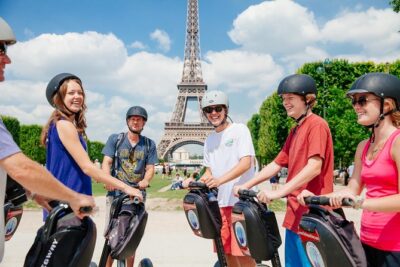
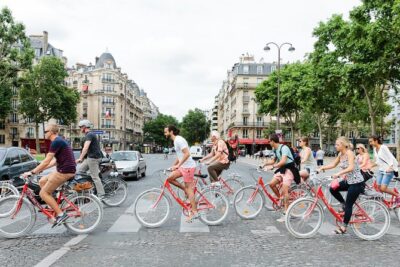
Highlights of Paris Bike Tour w/ a Local Guide (English or Dutch)
Read our review →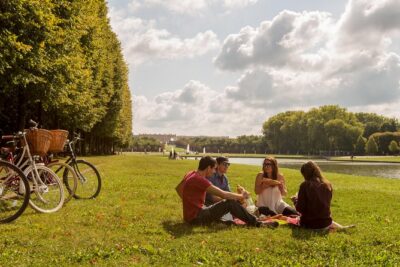
Versailles Bike Tour with Market, Gardens & Guided Palace Tour
Read our review →Browse the lists this tour appears in