
Review · MARRAKECH BIKE TOURS
Cycling Adventure in Marrakech
Marrakech makes more sense from a bicycle seat. With Pikala Bikes, you move from the Medina’s tight lanes to Gueliz’s wider streets, passing palaces, gardens, workshops, and ordinary neighborhoods that are easy to miss on foot. The local guides, including Yasser, Hamit, Khawla, and Zouhair, add personal stories about family, religion, work, and modern Morocco.
I like the focus on everyday Marrakech, especially the public bakery, traditional hammam, secondhand market, and tile-making workshop. I also like the small cultural stops, from juice and sweets at Cafe Clock to bread and snacks along the way. The main caution is traffic: riding here can feel chaotic, and several riders found the streets and bicycles demanding.
Key points to know before you ride
- The route mixes famous sights and local life: See the Koutoubia, Kasbah, Agdal gardens, Medina, and Gueliz, then turn toward bakeries, markets, workshops, and neighborhood streets.
- Local young Moroccans lead the ride: Guides are trained by Pikala and discuss growing up in Morocco, family life, religion, and social change.
- The three-hour route is active and unpredictable: You may handle narrow lanes, busy crossings, pedestrians, scooters, and changing road surfaces.
- Food and drink are part of the experience: Expect bottled water, juice, sweets, bread, and a cafe stop.
- Pikala is a nonprofit project: Your booking supports a social program that trains young Moroccan bicycle guides.
- The price is reasonable for a small cultural tour: At $33.28 per person, you receive a guided ride, bicycle, local interpretation, refreshments, and several unusual stops.
Why a bicycle changes your view of Marrakech
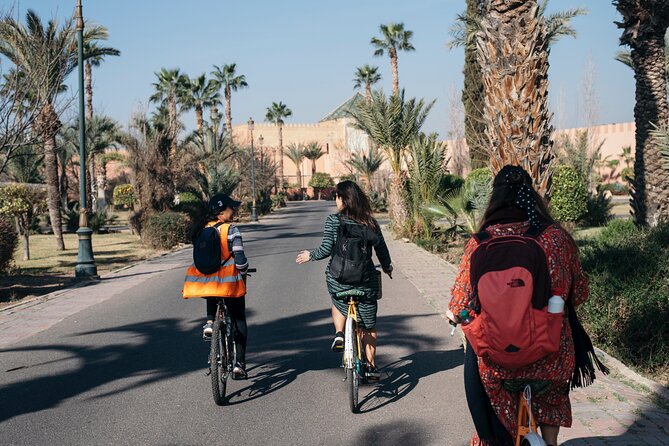
Marrakech is often explored by walking from one major sight to the next. That works well in the central Medina, but it can leave you with a narrow picture of the city. A bicycle lets you cover more ground while still moving slowly enough to notice daily life.
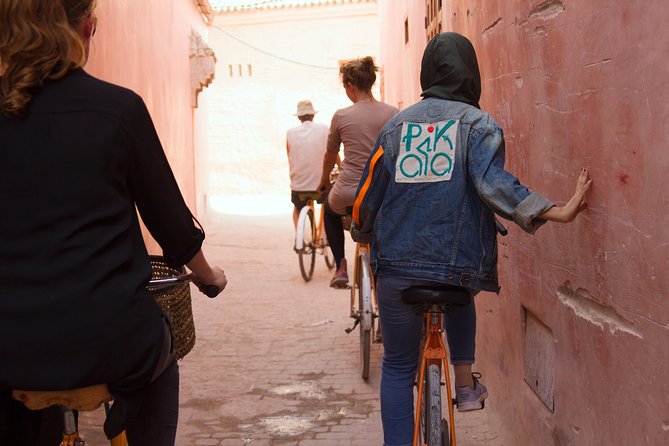
The Pikala route links the historic center with Gueliz, the newer part of town. That contrast matters. In one stretch, you may be threading through narrow streets filled with people, carts, and scooters. Later, the roads feel more open and the ride easier. The shift gives you a clearer sense of how old and new Marrakech sit side by side.
This is not a polished sightseeing circuit built only around monuments. The famous sights provide orientation, but the real purpose is to show you places that usually sit outside a first visit. You see where bread is baked, how a traditional bathhouse fits into neighborhood life, and where local people shop for used goods.
The experience also has a social purpose. Pikala trains young Moroccans as bicycle guides, so your guide is not simply reciting dates. Guides talk about growing up in Morocco, the role of family, religion, and the push and pull between tradition and modernization. That personal angle is one of the strongest reasons to choose this ride over a standard city tour.
More bike tours in the world:
- Lion City Bike Tour of Singapore
★ 5.0 · 6,211 reviews - Big Bike tour Amsterdam – See all in 3 unforgettable hours
★ 4.7 · 4,929 reviews - 3-Hour Porto Highlights on a Electric Bike Guided Tour
★ 5.0 · 4,392 reviews
Starting at 29 Rue Riad Laarous
The tour starts at 29 Rue Riad Laarous in Marrakech and returns to the same place. The location is near public transportation, and confirmation arrives when you book. Morning and afternoon departures give you some control over the rest of your day.
The experience lasts about three hours. That is long enough to see several parts of the city without taking over your whole day, but you should still treat it as a proper physical activity. You will not simply sit on a bicycle while a guide points out sights. You will ride through changing conditions and stop often for explanations, photographs, and local visits.
The group can include up to 20 people. That is not a private ride, and the experience may feel different depending on the mix of cycling abilities. Guides have handled groups well, including splitting a group when language needs or riding levels called for it, but you should expect a shared pace rather than a custom route.
Koutoubia, the Kasbah, and the Agdal gardens
The first part of the ride connects you with some of Marrakech’s best-known sights. The Koutoubia gives you a familiar landmark and a sense of direction within the city. The Kasbah adds a historic layer, while the Agdal gardens bring a change of pace from the tighter streets.
These stops are useful because they anchor the less familiar parts of the tour. You get the classic Marrakech names, but you do not spend the whole three hours looking at postcard views. The route uses these places as part of a wider picture.
Expect time to stop for photographs and explanations rather than a long formal visit at each monument. The focus is on seeing the city in motion. You may pass through the kings’ palace gardens area and other historic sections, but this is not a palace-entry tour or a garden-only excursion.
The cycling itself becomes part of the sightseeing. You notice sounds, smells, shopfronts, traffic patterns, and small changes between neighborhoods. On foot, some of these transitions can feel slow. By bicycle, they become clear within minutes.
Riding through the Medina without losing your nerve
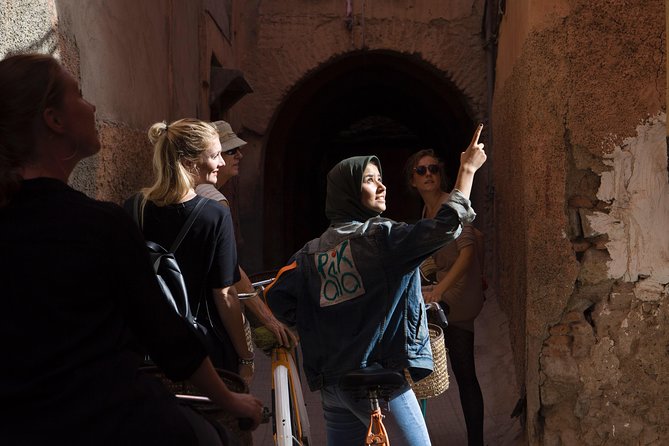
The Medina is where the tour becomes most distinctive and most demanding. Narrow lanes, pedestrians, scooters, and traffic can arrive from several directions. You need to watch the road, listen to your guide, and stay ready to slow down.
Some riders describe this part as exhilarating. Others warn that it is not for an inexperienced cyclist, especially when the streets are busy. Both reactions make sense. The challenge is not a long hill or a fast road. It is the need to make quick decisions in a crowded urban setting.
Your guide helps set the pace and leads the group through the maze. Still, you should be comfortable riding a bicycle and keeping your balance while people and vehicles move around you. If you are nervous in traffic, the Medina portion may feel stressful rather than fun.
The bicycles have received mixed comments. Some riders found the bikes modern and easy to handle, while others felt that the bicycle did not suit them well. This is a practical point worth taking seriously. If you have a strong preference for a particular frame size or riding position, tell the staff before setting off if possible.
The payoff is a view of Marrakech that a walking tour cannot quite match. You are close to daily life, but you also cover enough distance to understand the city’s shape. The ride feels active, immediate, and occasionally a little wild.
Another way to spend a morning on two wheels:
- Ninh Binh Full-Day Tour from Hanoi to Hoa Lu, Tam Coc & Mua Cave Via Boat & Bike
★ 5.0 · 4,384 reviews - Small Group Guided Bike Tour of Amsterdam’s Hidden Gems
★ 5.0 · 3,936 reviews - 3-hour Complete Prague Bike Tour
★ 5.0 · 3,674 reviews - Bangkok: Temples, Canals & Local Life Bike Tour
★ 4.9 · 3,511 reviews
A bakery, hammam, market, and tile workshop
The most valuable stops are often the least famous. A visit to a local public bakery shows an everyday service that is easy to overlook when you focus only on monuments. Bread is central to Moroccan daily life, so this short stop gives the tour a practical cultural focus.
The traditional hammam offers another look at neighborhood life. This is an old-style public bathhouse, not a luxury spa visit. The point is to understand its social role and place in local routines. You should expect an explanation and a look at the setting, not a bathing session.
The route can also include a large secondhand market. This adds a useful dose of ordinary commerce to the experience. Instead of seeing Marrakech only through craft shops aimed at tourists, you get a glimpse of a market serving local needs and interests.
A zellij workshop may also feature on the ride. Moroccan zellij is known for its careful geometric tile work, and seeing the process helps explain the detail behind the decorative surfaces found across the city. This is the kind of stop that gives more meaning to the patterns you notice later in palaces, mosques, and riads.
The exact balance of stops can vary with traffic, group pace, and the guide. You should think of the route as a guided introduction to local places, not a fixed museum program with a guaranteed amount of time at every stop.
Cafe Clock, juice, sweets, and a slower pause
The refreshments give the tour a welcome rhythm. Juice and sweets are included at the cross-cultural Cafe Clock, and some routes also include bread, iced tea, or other simple snacks. Bottled water is provided as well.
Cafe Clock is more than a quick drink stop. It gives the group a chance to sit, talk, and reset after the more active sections of the ride. One guide-led group even played cards there, which captures the informal tone of the experience better than a rushed coffee break would.
Do not expect a full meal. The food is a pleasant addition, not the reason to book. If you need lunch or have dietary concerns, plan separately because the included refreshments are described as snacks, juice, sweets, and water.
A pause like this also lets you ask questions that may not fit into the ride. Guides such as Khawla and Zouhair have been praised for sharing personal stories and explaining local customs in a friendly, conversational way. The cultural discussion is strongest when you treat it as a chance to ask rather than a formal lecture.
Ending with one of Marrakech’s seven saints
The tour finishes back at the meeting point after a final visit connected with one of the seven saints of Marrakech. This adds a religious and local dimension to the route, especially after the guide has discussed faith and social life.
You should approach this stop with respect. It is not simply another photo opportunity. The value comes from understanding how religious figures and places fit into the city’s identity. Your guide can provide context, but the quality of the explanation may depend on the person leading your group.
This final stop helps keep the tour from feeling like a collection of unrelated sights. The route moves from royal and historic landmarks to work, shopping, food, neighborhood customs, and religion. That range is the strongest feature of the experience.
How much value do you get for $33.28?
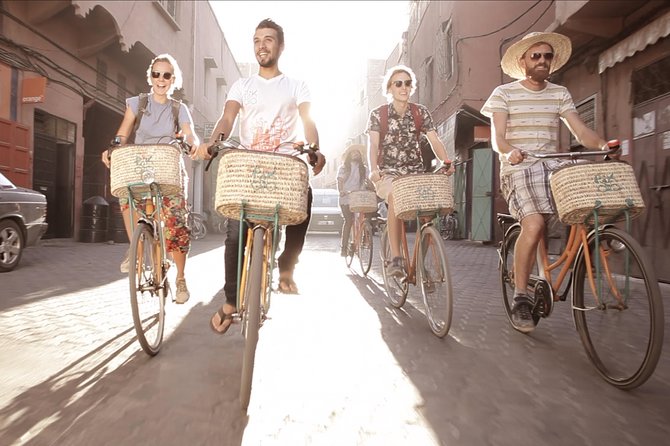
At $33.28 per person, this is a good-value city activity if you want more than a basic bicycle rental. The price includes a guide, bicycle, roughly three hours of sightseeing, cultural interpretation, bottled water, and several refreshments.
A regular sightseeing tour may take you to the Koutoubia and Kasbah, but it is less likely to include a public bakery, hammam, secondhand market, Cafe Clock, and local workshop. Pikala’s nonprofit model adds another reason to spend the money here: your booking supports a project that trains young Moroccan guides.
The value depends on your comfort with the ride. If you want a calm, polished tour on quiet roads, the price will not compensate for stressful traffic. If you want to see a lot of Marrakech quickly and are happy with a rougher, more active experience, it is a strong use of half a day.
The three-hour duration is also practical. You can schedule it in the morning or afternoon and still have time for other plans. The return to the original meeting point makes the day easier to organize.
Who should book this ride?
I would recommend it most strongly to confident cyclists who enjoy city riding. You do not need to be a racer, but you should be able to ride attentively around pedestrians, scooters, and unpredictable traffic.
It suits you if you want:
- A first look at both the Medina and Gueliz
- Local stories instead of only monument facts
- Unusual stops tied to work, food, faith, and neighborhood life
- A social project with a clear local purpose
- A healthy, active way to cover more ground
- A guide-led experience with snacks and conversation
Families and mixed groups may enjoy it, but riding ability matters. One group had a positive experience when the guide adjusted the arrangement for different language needs, yet the route still requires alertness. If someone in your party is a hesitant cyclist, consider how they handle crowded streets before booking.
The season and time of day may also affect how comfortable the ride feels. One rider who was not a strong cyclist preferred the idea of doing it outside the busiest summer period. The tour offers morning and afternoon departures, so choose the time that suits your heat and traffic tolerance.
Practical details before you go
Wear clothing that allows easy movement and shoes suitable for cycling. Bring your own sun protection, even though bottled water is supplied. You will want your phone or camera ready for the many stops, but keep your attention on the road while riding.
The tour is sold with a mobile ticket, and most people can participate. The maximum group size is 20. If you need special support, contact Pikala Bikes before booking rather than assuming the route can be adapted.
Free cancellation is available if you cancel at least 24 hours before the local start time. Changes or cancellations made inside that window are not accepted for a refund.
Should you book Pikala Bikes?
Book this tour if you want to meet Marrakech at street level. The Koutoubia, Kasbah, and gardens are useful landmarks, but the bakery, hammam, market, workshop, cafe, and personal stories are what make the experience worthwhile.
Skip it if busy urban cycling makes you anxious or if you want a quiet, luxury-style outing. The traffic can be chaotic, bicycle fit may not be perfect for everyone, and the Medina demands concentration.
For a confident cyclist who wants a lively introduction to local Marrakech, $33.28 buys more than a ride. It buys access to parts of the city and conversations you are unlikely to find on a standard sightseeing loop.
FAQ
How long does the Marrakech bicycle tour last?
The tour lasts approximately three hours and ends back at the meeting point.
Where does the tour start?
The meeting point is 29 Rue Riad Laarous, Marrakesh 40000, Morocco.
What places does the bicycle tour visit?
The route includes parts of the Medina and Gueliz, with sights such as the Koutoubia, Kasbah, and Agdal gardens. It also includes local places such as a bakery, traditional hammam, secondhand market, Cafe Clock, and possibly a zellij workshop.
Are food and drinks included?
Yes. Bottled water, juice, sweets, and snacks such as bread are included during the experience.
How many people can join the tour?
The maximum group size is 20 people.
Can I cancel for a full refund?
Yes, if you cancel at least 24 hours before the experience start time. Cancellations or changes made less than 24 hours in advance are not accepted for a refund.
Latest bike tours added in the world
- Brooklyn Neighborhoods Small-Group Bike Tour★ 5.0 · 137 reviews
- Hudson Valley Craft Brewery Bike Tour★ 5.0 · 23 reviews
- The Best of Bristol Bike Tour★ 5.0 · 39 reviews
- A Day in Brooklyn Bike Tour★ 5.0 · 59 reviews
- Brisbane Kayak, Bike★ 4.5 · 23 reviews
- Brisbane Electric Mountain Bike Experience Tour★ 5.0 · 48 reviews
- 2 Hour Private Brisbane Mountain Bike Coaching Session and Ride★ 5.0 · 24 reviews
- Private Bike Tour with Olive Oil Tasting★ 4.5 · 15 reviews
Marrakech Bike Tours, compared.
Guided City Cycling Tour – Culture, Colors & Charm
Read our review →
Marrakech’s Best Cycling Tour: Culture, Colors, and Charm
Read our review →
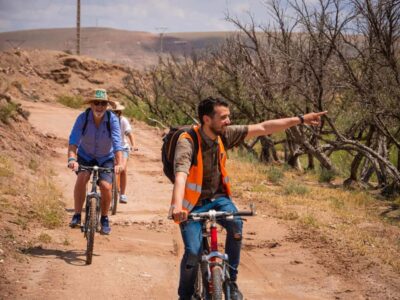
Cycling Tour in Palm Groove with Local Breakfast
Read our review →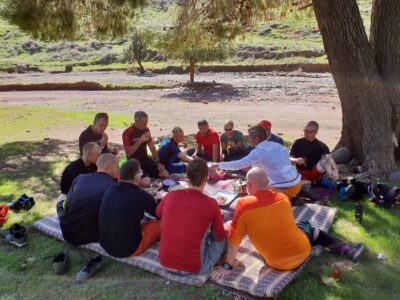
Marrakesh: Toubkal National Park Mountain Bike Trip w/Lunch
Read our review →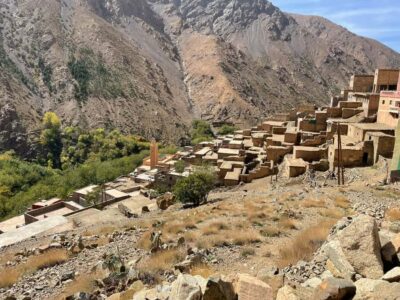
Browse the lists this tour appears in