
Review · HISTORIC & LANDMARK BIKE TOURS
Intramuros, Manila: Historical Bamboo Bike Tour
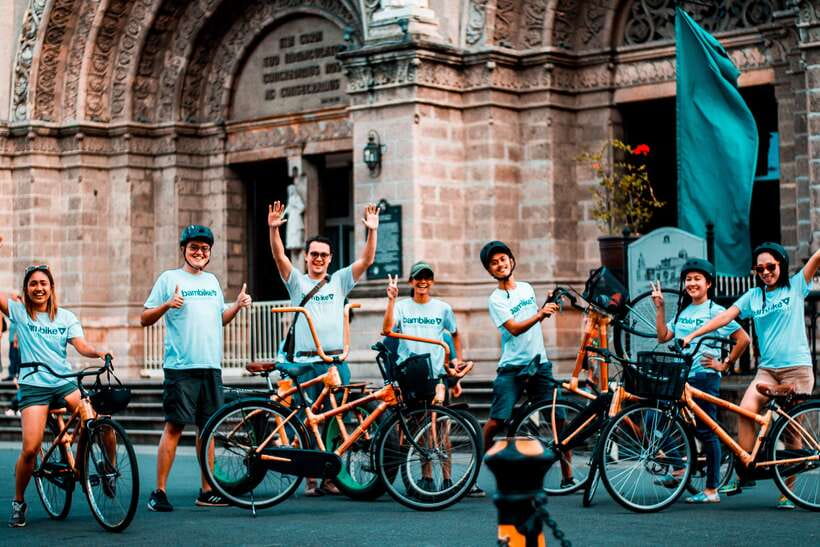
Intramuros is easier to understand from a bicycle than from a car or on foot. This small-group tour carries you from a Japanese World War II cannon to colonial gateways, churches, gardens, and Fort Santiago, while your guide explains how each place fits into Manila’s past. The bamboo bikes are locally made, sturdy, and simple to ride.
I like two things here: first, you cover a large area without wearing yourself out; second, the guides make the stops meaningful instead of leaving you to stare at old walls. Guides such as Josh, Prime, Paolo, Anj, Chi, and JD have been praised for mixing clear facts with humor and friendly help. The main drawback is Manila’s heat, especially on late-morning rides, so bring water, sunscreen, and a sweat towel.
Quick reasons to choose this Intramuros tour
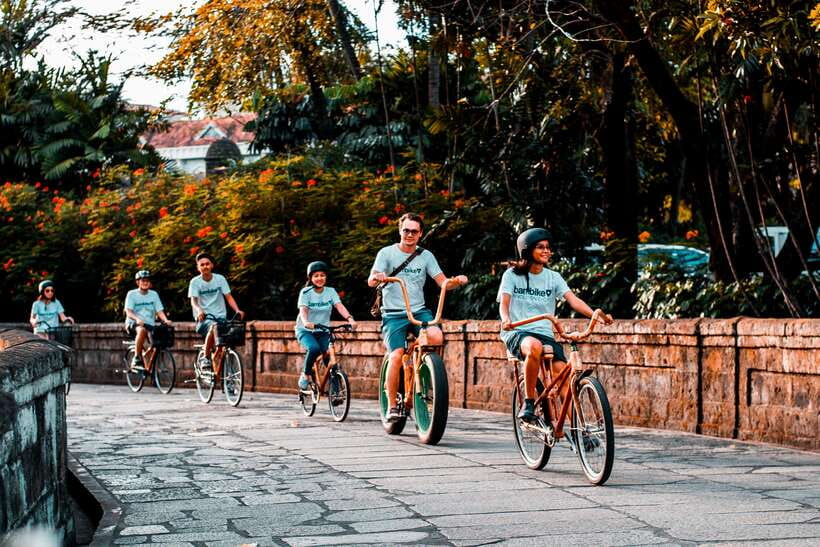
- A flat, easy route: The ride uses simple bikes without gears, and the pace is gentle enough for less confident cyclists.
- Locally crafted bamboo bikes: You can choose from different bike styles, including city cruisers with baskets and mountain-bike designs.
- More than just a bike ride: The route links the Japanese cannon, Puerta Real Gardens, Puerta del Parian, Manila Cathedral, Fort Santiago, and San Agustin Church.
- Guides who make the past approachable: Josh, Prime, Paolo, Anj, Chi, Mica, JD, and others explain the sites in English or Tagalog.
- Useful small comforts: Helmets, entrance fees, rain ponchos when needed, cold towels, and ice cream are included.
- Good value at $27: For two to three hours of transport, guiding, and sightseeing, the price is sensible, especially if you want an introduction to Intramuros.
Why a bamboo bike works so well in Intramuros
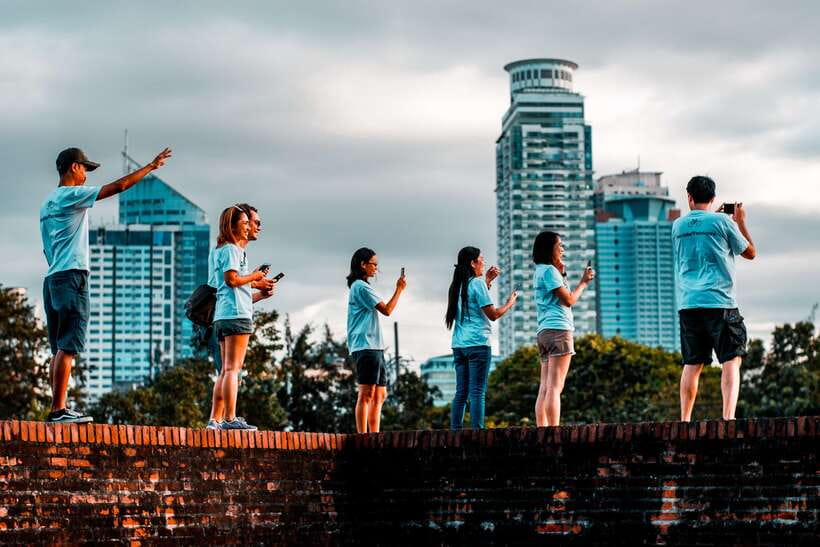
Intramuros is Manila’s old walled district, with important sites spread across a compact but sizeable area. Walking is possible, but the sun, humidity, and uneven sightseeing pace can make a full circuit tiring. A bike lets you move between stops quickly, then pause when the guide begins explaining a site.
The bikes are made by local craftsmen and are built for a relaxed ride rather than speed. They have no gears, and the route is flat. That matters if you are nervous on a bicycle or have not ridden for a while. You are not being asked to tackle hills or keep up with a racing group.
You normally choose the bike that fits you at the start. Options can include a city cruiser with a basket, a mountain-bike style bicycle, and smaller bikes for children. One useful detail from the practical side of the experience is that some bikes have kickstands, so you do not need to lean them against a wall every time you stop.
The ride is not completely separate from city traffic. Guides and support staff help the group cross roads and move safely, and some stops have bike lanes. Still, you should be comfortable steering, stopping, and following instructions. Children aged 4 to 12 must ride with an adult, and unaccompanied minors are not allowed.
More Historic Bike Tours in the world:
- Historical Singapore Bike Tour on Full-Sized Bicycles
★ 5.0 · 1,421 reviews - Barcelona: 2.5-Hour Bike or E-Bike Historical Tour
★ 4.5 · 1,262 reviews - Asheville Historic Downtown Guided Electric Bike Tour with Scenic Views
★ 5.0 · 1,234 reviews
Starting with the Japanese cannon and Puerta Real Gardens
The opening stop is a Japanese cannon inside Intramuros, linked to the district’s World War II story. It is a short guided visit, but it gives the tour an important starting point. Intramuros is not only a Spanish colonial quarter. Its buildings and grounds also carry the marks of the war and the destruction that changed Manila.
From there, the group rides to Puerta Real Gardens. You have about 30 minutes here, making it one of the longer stops. The garden setting gives your guide room to explain the district’s development, its role during the Spanish period, and the way local plants and open spaces fit into the old fortified city.
This is where the tour’s format works best. You listen for a while, then have a moment to look around and take pictures. The guides generally keep the explanations lively, with facts and stories rather than a long classroom lecture. Anj, Mica, Josh, and Prime have all been praised for setting a comfortable pace and making room for questions.
The heat can be noticeable even early in the day. The operator may have sunscreen, insect repellent, and drinking water available, but I would still apply sunscreen before you arrive. A resealable bottle, light clothes, and comfortable shoes will make the ride easier.
Puerta del Parian and the colonial center
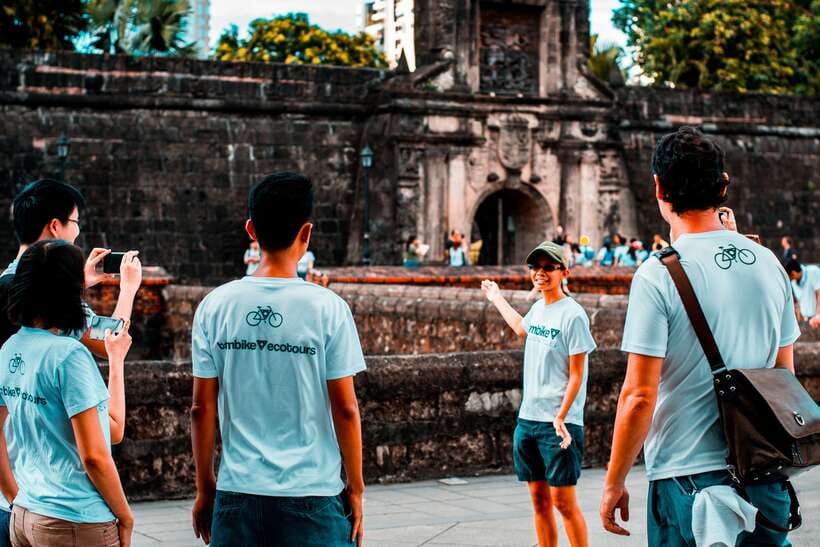
Puerta del Parian was one of the early gateways into Intramuros. The stop is short, around 15 minutes, but its location helps you picture how people entered and moved through the walled district.
The guide will explain why gateways mattered in a fortified colonial city. You also get the benefit of arriving by bicycle, since the group can stop close to the site without dealing with a long walk between landmarks. This is one of the practical advantages of the tour: you see a lot without spending the whole morning getting from one place to the next.
There is also a café break of about 15 minutes. This is useful in Manila’s heat, although you should not think of it as a full meal stop. The route is organized around the historic sites, so bring a small snack if you know you need one.
The tour then continues toward Manila Cathedral and Plaza de Roma. Plaza de Roma is the historic center of Spanish colonial Manila, and the cathedral is one of Intramuros’s key landmarks. Your guide connects the architecture and public square to the larger story of Spanish rule and Manila’s role in the region.
You will have time to listen, take photographs, and ask questions. The pace is unhurried, but the group keeps moving, which is helpful if you want to see the main district in one morning.
Fort Santiago gives the tour its strongest historical stop
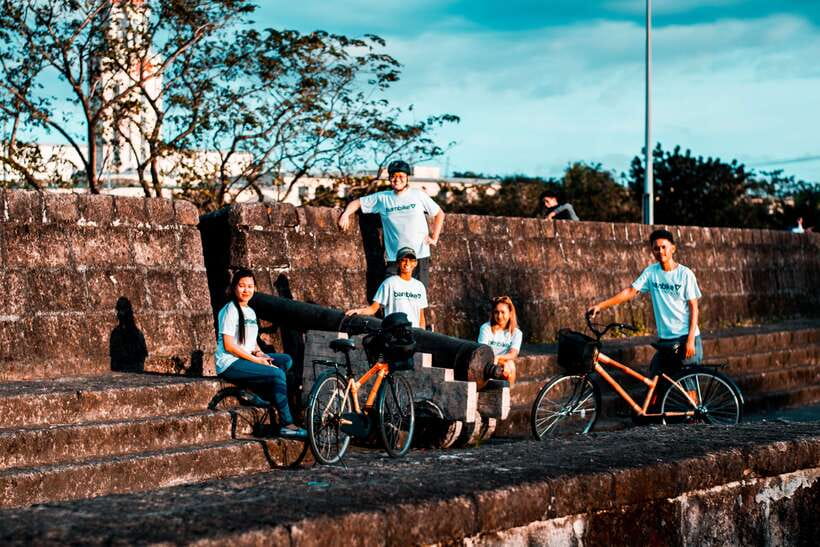
Fort Santiago receives the longest scheduled visit, about 45 minutes. That extra time is well placed. It is not simply a quick photo stop, and the guide can give the fort’s history proper attention.
You ride through the streets of Intramuros before stopping to explore the fort on foot and by bike. The route is described as easy and flat, but the fort itself is a place where you will want to slow down and look closely. The walls, gateways, and military setting help you understand why Intramuros was built as a protected colonial center.
This is also a good point to ask questions. Guides such as Paolo, Prime, and JD have been praised for answering follow-up questions instead of rushing through prepared facts. If you are interested in Philippine history, this stop will likely be the part you remember best.
The fort is also where the tour’s time limit becomes clear. Forty-five minutes gives you a useful introduction, not an exhaustive study. If you want to read every sign or explore every corner at length, you may prefer to return later on your own. The bike tour is designed to show you the main sites and give you a framework for understanding them.
More history tours in the world:
- Historic Athens: Small Group Electric Bike Tour
★ 4.9 · 966 reviews - Bordeaux: Historic Center & Chartrons District Bike Tour
★ 4.8 · 709 reviews - Historic Bike Tour in Tucson
★ 5.0 · 553 reviews - Berlin: Cold War & Berlin Wall History Guided Bike Tour
★ 4.8 · 422 reviews
San Agustin Church closes the historic circuit
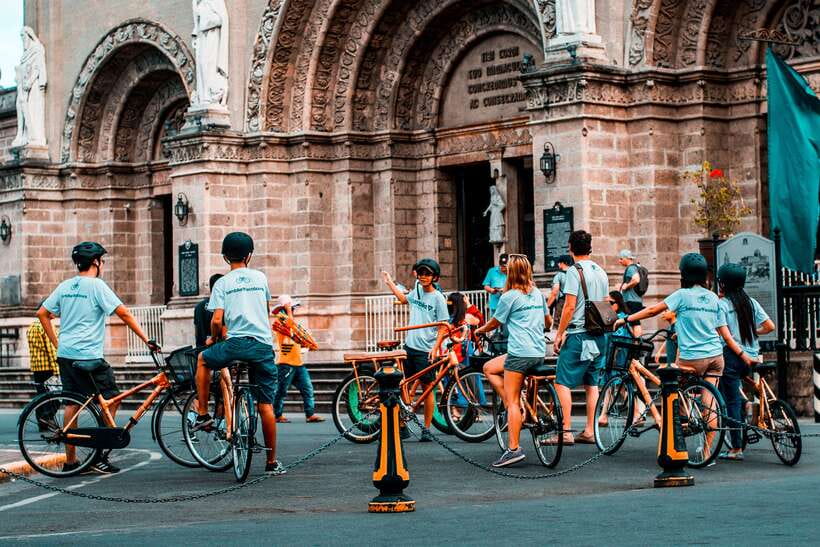
The final major stop is San Agustin Church, with about 15 minutes of guided time. It provides a different mood from the fort and gateways, shifting the focus toward religious architecture and the Spanish colonial period.
The short stop means you should listen carefully to the guide’s explanation and use your free moments for photographs. The church is part of a larger story about religion, power, and daily life in old Manila. Seeing it after the cathedral and fort helps you compare the district’s military, civic, and religious landmarks.
The route does not try to make every stop lengthy. That is a strength if you want a broad introduction, but a limitation if you prefer spending an hour at each building. Think of this as a guided overview with enough context to plan a second visit.
The cold towel and ice cream are more than a gimmick
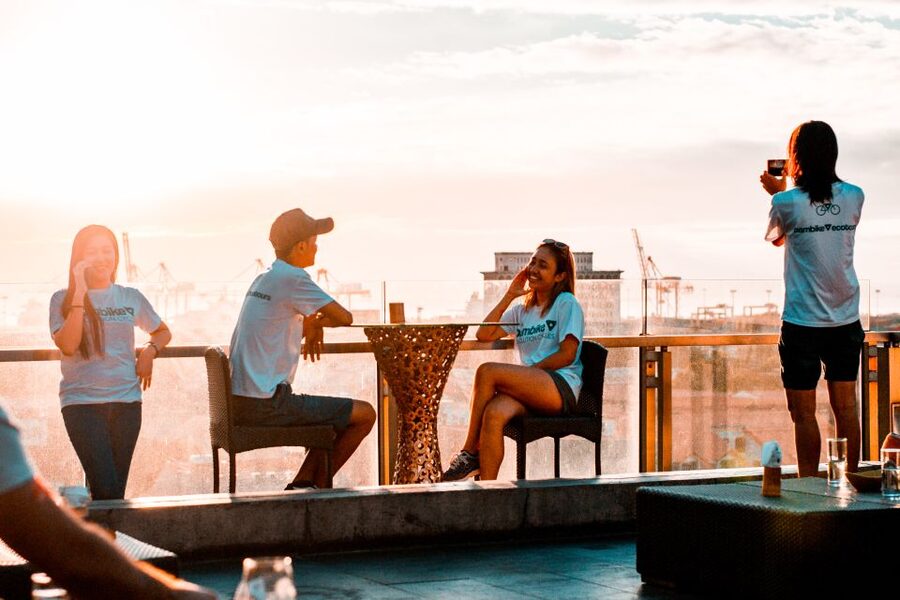
At the end, you receive a cold towel and ice cream. It sounds like a small extra, but after cycling in warm, humid conditions it is genuinely useful. The cold towel gives you a quick reset, while the ice cream makes a pleasant finish to a history-heavy morning.
The tour team also helps with photographs at many stops. This is particularly handy for solo visitors. You can ask the guide or support staff to take a picture rather than trying to balance your bike and camera at the same time.
Rain ponchos are available if needed, and the tour operates in most weather conditions except a tropical storm. If the forecast calls for light rain, the activity may still go ahead, so dress for changing conditions. The bikes and route can handle a little drizzle, but you should be ready for wet roads and a less comfortable ride.
What the $27 price includes
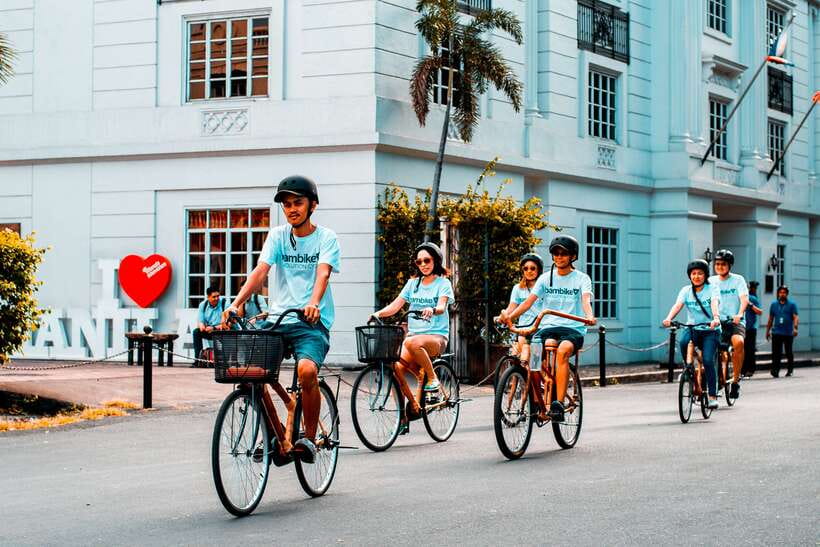
At $27 per person, this is a reasonable way to cover Intramuros. You are paying for the bamboo bicycle, helmet, local guide, entrance fees, and rain protection when needed. You also get a planned route that links the district’s main points of interest.
The value is strongest if you are visiting Manila for a short time or want historical context before exploring alone. Hiring transport between the sites would cost more and would not give you the same running explanation. Walking independently costs less, but you would need to organize the route and research the background yourself.
Hotel pickup and drop-off are not included. You need to make your own way to the Bambike Ecotours meeting point, and the exact meeting location can vary by booking option. Check the confirmation carefully rather than assuming every departure uses the same spot.
One detail deserves attention: the supplied location information lists Nueva Vizcaya, while the route and operator are clearly centered on Intramuros in Manila. Treat Intramuros as the actual touring area, but confirm the meeting point and address before setting out.
Free cancellation is available up to 24 hours before the activity, and you can reserve now and pay later. Those terms are useful if your Manila plans are still moving around.
Choosing the best time and preparing for the heat
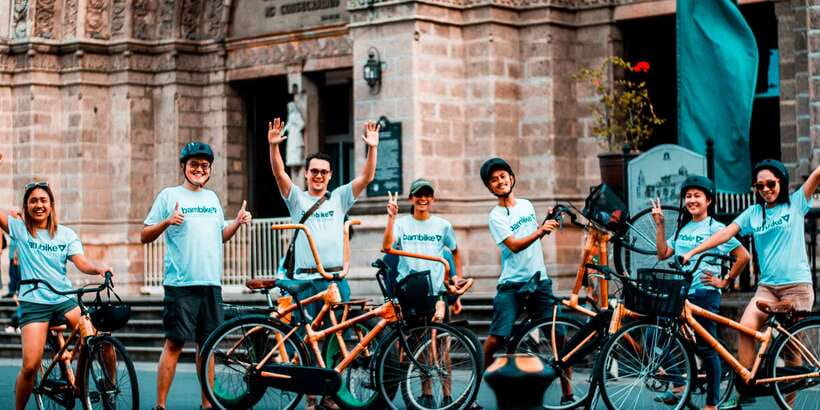
A 9:30 a.m. departure is a sensible choice if it is available. You finish around lunchtime and avoid the worst of the afternoon heat, though even the morning can be hot and humid. A later departure may suit your schedule, but you should expect stronger sun.
Wear comfortable clothes and closed, comfortable shoes. Bring sunscreen and a drink you can reseal while riding. A small towel, hat, and portable fan could also help, especially during the warmer months.
The pace is casual, with regular stops for explanations and rest. You are not cycling continuously for three hours. Still, this is an outdoor activity, so it will feel warmer than a museum visit. The route is easy for most casual cyclists, but anyone who dislikes cycling in heat should think carefully before booking.
Children can take part with the right arrangements. Infant seats for ages 2 to 4 are available on request if you mention the need at booking. Children from 4 to 12 must be accompanied by an adult. No provision is made for unaccompanied minors.
The guides make the biggest difference
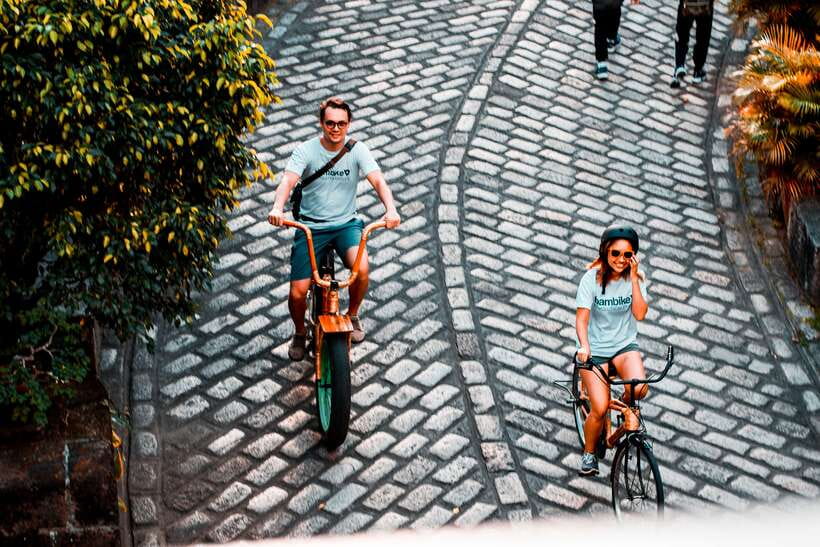
The bikes are the memorable hook, but the guide determines how much you get from the tour. The strongest descriptions of the experience consistently point to guides who are funny, clear, patient, and attentive to safety.
Josh is a good example of the style you can expect: he has been praised for explaining a great deal while keeping the experience light. Prime is known for storytelling and for making cyclists feel included. Paolo has been singled out for clear English, historical detail, and a welcoming manner. Anj has been praised for keeping a steady pace and answering questions.
Other guides named in the operation include Chi, Mica, JD, Justine, Inah, Jenjie, Dinah, Noe, Gab, NAO, and Chaz. You cannot necessarily choose your guide, but the repeated strength of the team is encouraging. The guide also acts as part historian, part ride leader, and part practical helper.
The tour is offered in English and Tagalog. If you want a history lesson with a formal academic tone, this may feel more relaxed than expected. If you want clear explanations without a dry lecture, that relaxed style is an advantage.
Who should book this ride?
I would choose this tour for a first visit to Intramuros, especially if you want to see the major landmarks in one compact outing. It suits solo visitors, couples, families with older children, and anyone who prefers active sightseeing to a standard walking tour.
It is also a smart choice for visitors who know little about Philippine history. You will not leave with every date and detail, but you will understand the basic story behind the walls, gates, churches, fort, and wartime sites.
Less suitable are people who want a slow architectural study, a private tour with a custom route, or a strenuous cycling adventure. The ride is gentle and the group follows a set circuit. You also need to accept the heat and occasional exposure to city traffic.
Should you book the Intramuros bamboo bike tour?
Yes, if you want an easy, well-organized introduction to Manila’s historic core. The $27 price covers the practical pieces that matter, and the bicycle saves energy while letting you see more than you would on foot.
Choose the longer option if you have the time. The extra minutes give Fort Santiago and the other stops room to breathe. Book an early start when possible, arrive ready for heat, and confirm the meeting address because the pickup point may vary.
Skip it only if you dislike cycling, want long independent visits inside each monument, or already know Intramuros well. For most first-time visitors, the combination of local bamboo craft, clear guiding, major historic sites, and a cold finish makes this one of the more useful ways to get oriented.
FAQ
How long does the Intramuros bamboo bike tour last?
The tour lasts about two to three hours, depending on the option and schedule you book.
What language is the tour offered in?
Live guiding is available in English and Tagalog.
What is included in the price?
The price includes a local guide, bamboo bicycle rental, helmet, entrance fees, and rain ponchos if needed. Hotel pickup and drop-off are not included.
Is the route difficult to cycle?
The route is flat and generally easy. The bikes have no gears, and the pace is casual, with stops to rest and hear explanations.
Can children join the tour?
Children aged 4 to 12 must be accompanied by an adult. Infant seats for children aged 2 to 4 are available on request if you advise the operator when booking. Unaccompanied minors are not allowed.
What should I bring?
Bring comfortable shoes, sunscreen, and comfortable clothing. Water is especially useful because Manila can be hot and humid. The tour provides helmets and may provide rain ponchos when needed.
Latest bike tours added in the world
- Brooklyn Neighborhoods Small-Group Bike Tour★ 5.0 · 137 reviews
- Hudson Valley Craft Brewery Bike Tour★ 5.0 · 23 reviews
- The Best of Bristol Bike Tour★ 5.0 · 39 reviews
- A Day in Brooklyn Bike Tour★ 5.0 · 59 reviews
- Brisbane Kayak, Bike★ 4.5 · 23 reviews
- Brisbane Electric Mountain Bike Experience Tour★ 5.0 · 48 reviews
- 2 Hour Private Brisbane Mountain Bike Coaching Session and Ride★ 5.0 · 24 reviews
- Private Bike Tour with Olive Oil Tasting★ 4.5 · 15 reviews
Historic & Landmark Bike Tours, compared.
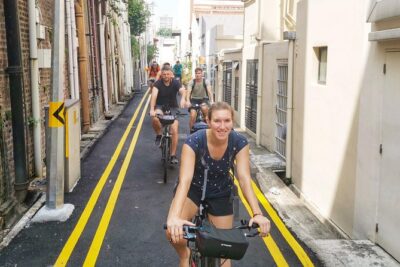
Historical Singapore Bike Tour on Full-Sized Bicycles
Read our review →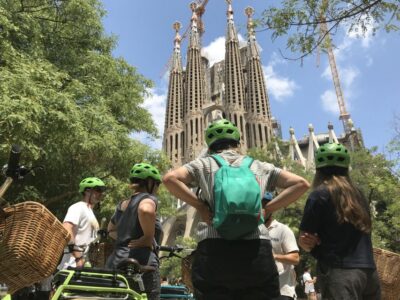
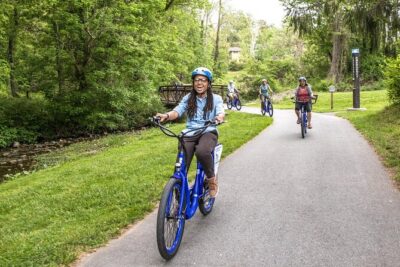
Asheville Historic Downtown Guided Electric Bike Tour with Scenic Views
Read our review →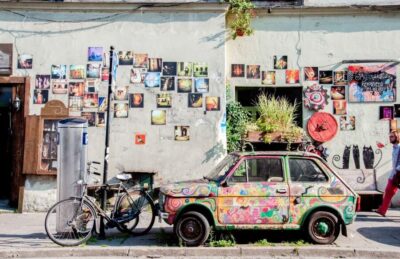
Krakow: Bike Tour of Old Town, Jewish Quarter and the Ghetto
Read our review →
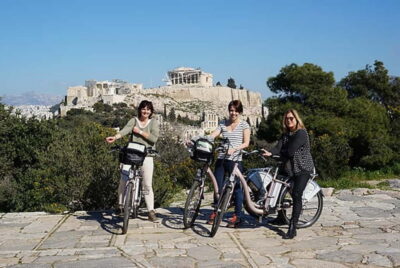
Historic Athens: Small Group Electric Bike Tour
Read our review →
Barcelona e-Bike Tour: Gaudí & Old Town Small Group
Read our review →
Bordeaux: Historic Center & Chartrons District Bike Tour
Read our review →Browse the lists this tour appears in